Europeupdated 2h ago2 min read
Albanian Police Fire Rubber Bullets As Students Demand PM Edi Rama Resign In Tirana
This article is an automated aggregation of coverage from news outlets. Our editorials offer in-depth analysis curated by the NewsCord team.
Protests in Tirana enter fifth day calling for Prime Minister Rama's resignation Police used rubber bullets against protesters as demonstrations entered fifth day
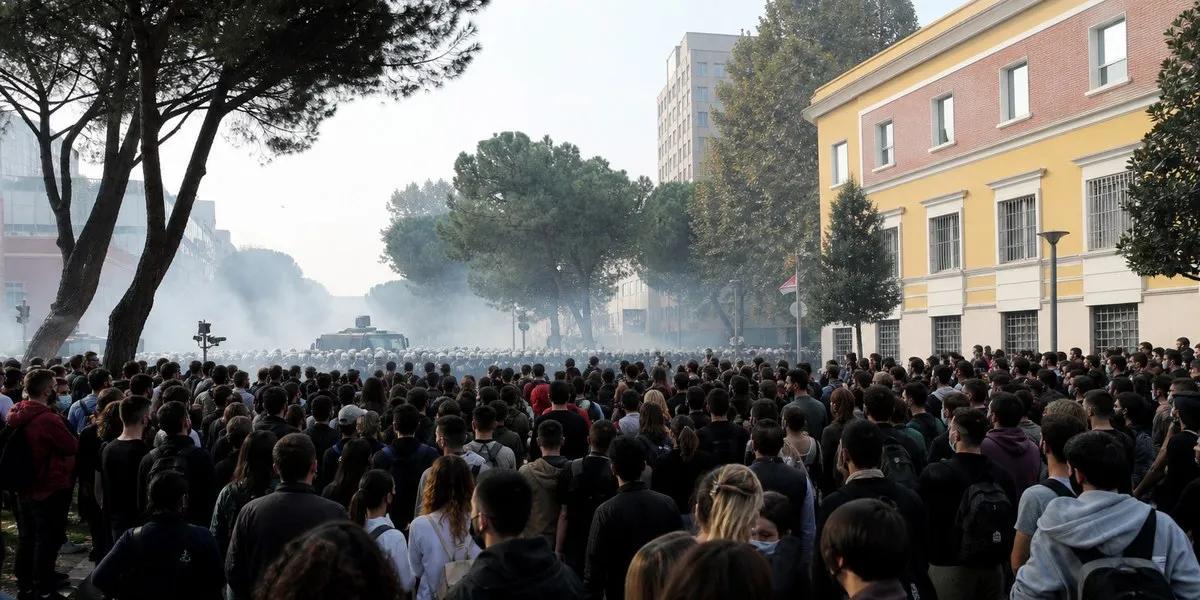
Tirana protests turn violent
Thousands of young Albanians gathered outside the Education Ministry in the center of the capital Tirana on Saturday on the fifth day of a growing student-led movement to force Prime Minister Edi Rama to resign. Police responded to protesters who hurled rocks with stun grenades, tear gas and a water cannon, and the unrest spread across Albania’s cities as demonstrators attacked government buildings and banks.
Albanian police appeared to use rubber bullets against demonstrators in Tirana as mass student protests entered their fifth day, and two Reuters journalists and several protesters were struck by pellets that left circular marks. Al Jazeera reported that riot police clashed with protesters outside the education ministry for the fourth day in a row as thousands of young Albanians marched through Tirana on Friday to protest government corruption and poor university conditions.

Rama blames foreign hands
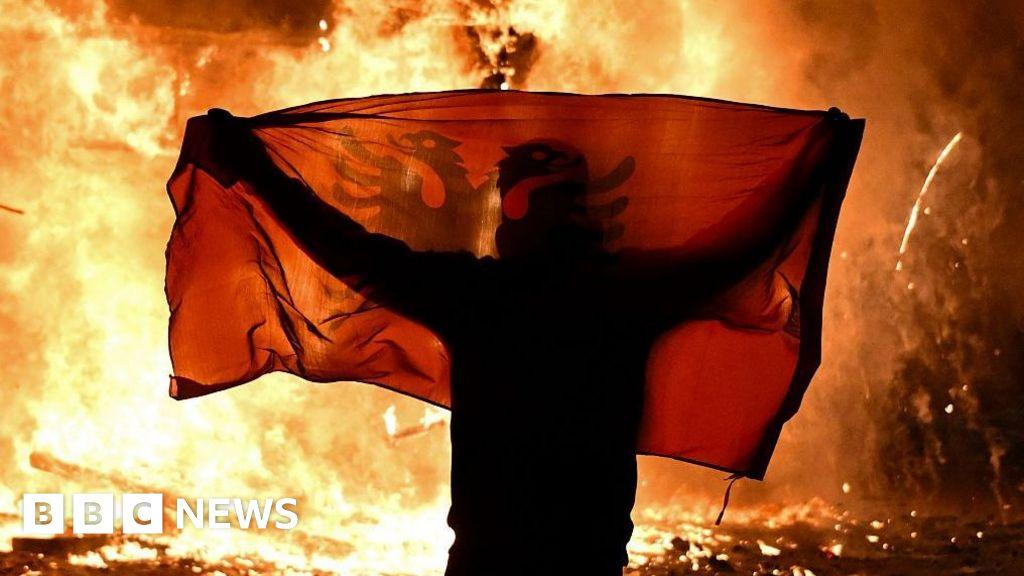
Edi Rama blamed “foreign hands” for the increasingly violent student-led protests that are calling on him to resign, and he said, “This is not a student phenomenon,” in a video address on Friday. Rama also insisted that the protest had “absolutely nothing to do with the hardships, problems or legitimate aspirations of anyone who desires a better life,” while police used water cannon and tear gas as demonstrators hurled rocks.
Skender Hita told reporters that “All means that were used were employed in a limited manner, including the most recent ones,” and he reported that seven officers had been suspended pending disciplinary investigations. The BBC said Rama ruled out resigning and promised to “listen, address legitimate concerns and keep Albania moving forward,” while the BBC also described the protests as spreading beyond Tirana to Durrës, Shkodër, Lezhë and Vlora.
Arrests, injuries, and EU stakes
Albanian police said 167 people had been arrested and 132 officers injured during the five days of unrest, and Skender Hita said seven police officers were suspended pending investigations into allegations of excessive force. The BBC described the protests as a new phase born of the previous movement and said “the eyes of Europe are now watching what happens next in a country viewed as one of the top candidates for EU membership.”
An AP report said police detained several demonstrators and that National police chief Skender Hita urged police to act with “professionalism and restraint,” adding: “The national police guarantee the right to peaceful protest and assembly but that cannot be used as cover for violence, arson and vandalism.” The BBC said the protests began over a mega-tourism project on the Adriatic coast linked to US President Donald Trump's son-in-law, Jared Kushner, and it described the public anger as allegations of corruption among ministers and other senior officials growing louder.