Syriaupdated 1h ago3 min read
MapAleppo University Denies Gender Separation Decision, Says Students Choose Faculty Medicine Groups
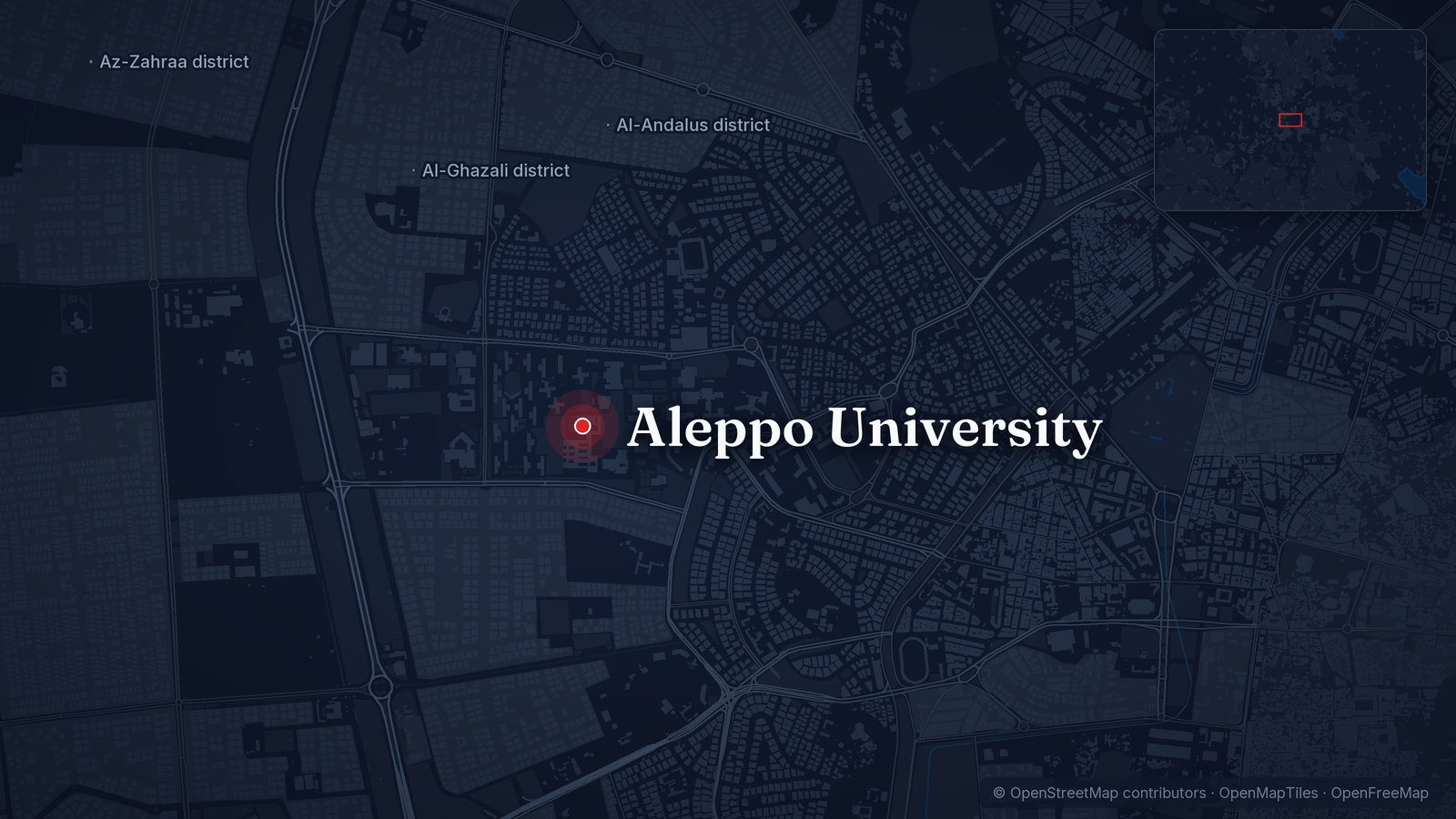
7 West AsianMap: © OpenStreetMap contributors, ODbL · Cropped for layout
This article is an automated aggregation of coverage from news outlets. Our editorials offer in-depth analysis curated by the NewsCord team.
Aleppo University denied issuing a gender-separation decision; cited administrative organizational measure. Faculty of Medicine split the 59th class into gender-based groups, triggering protests.
Save coverage image
7 outlets in this story. Read their headlines below.
Aleppo denies segregation decision
Aleppo University Presidency denied issuing any decision to separate male and female students in some faculties, saying the recent social media claims were baseless and not based on accurate information. The presidency told SANA that the arrangement was an administrative organizational measure to distribute students into practical groups, with the formation left to the desires of male and female students and their personal coordination and circumstances, without any intervention or direction from the university administration. The University of Aleppo student body at the Faculty of Medicine said the mechanism for sorting the 59th cohort was based on students’ desires and free choice, and it described a form that allowed each student to select 20 names.
The student body said the sorting process ran on a tight timeline of 36 to 48 hours after a delay in receiving lists from the preparatory year, and it said about 1,400 students, roughly 140 students per category, were involved. The student body added that it sorted 70 percent of students with their friends according to recorded choices in the forms, while it said the remaining students who did not register any preference were sorted randomly to balance the categories and prevent overcrowding.
Protests and a summons
Student protests erupted after the College of Medicine at Aleppo University separated male and female students during the practical sessions of the 59th class, with objections also focused on fears the separation could widen to lectures and university facilities.
The Observatory described the 59th class as divided into 10 groups, with 4 for males including more than 500 students, 3 for females including about 400 female students, and 3 mixed groups.
The student body justified the practical separation as a response to students’ wishes, while objecting students called for reconsideration and a new survey that would allow all members of the class to express their opinions.
SYRIA.NEWS reported that the Vice Dean for Administrative Affairs, Dr. Khaled Al-Hafez, summoned one student after he published a video clip on Instagram criticizing the separation.
SYRIA.NEWS said the student later posted that he pledged to delete the clip after the meeting, and it reported that the student body told him that the students agreed to the decision.
Switching rules and next semester
Al-Modon reported that the debate over the 59th cohort’s gender-based sorting included questions about the mechanism for group changes and whether requests to change groups were rejected as the semester began. The Faculty of Medicine student body said the deanery decided to close the door on switching currently due to the limited time and the approaching practical exams, to avoid randomness and attendance recording errors. The student body said it would seek with the administration to allow switching with a substitute in the next semester, while taking into account special cases such as travel and work conditions.
Al-Modon also reported that Mohammad, a student in the same cohort, said protests about the distribution mechanism did not receive a response from the college administration, citing time constraints and the approaching rehearsals and clinical exams. Ensured’s verification account said the platform could not verify whether the sorting results matched students’ preferences, and it said it raised questions about how the freedom of choice described by the university’s media office director was being implemented.