Crimeupdated 1h ago3 min read
MapAli al-Zaidi Orders Army, Police Takeover of Jurf al-Sakhar After Oil Smuggling Probe
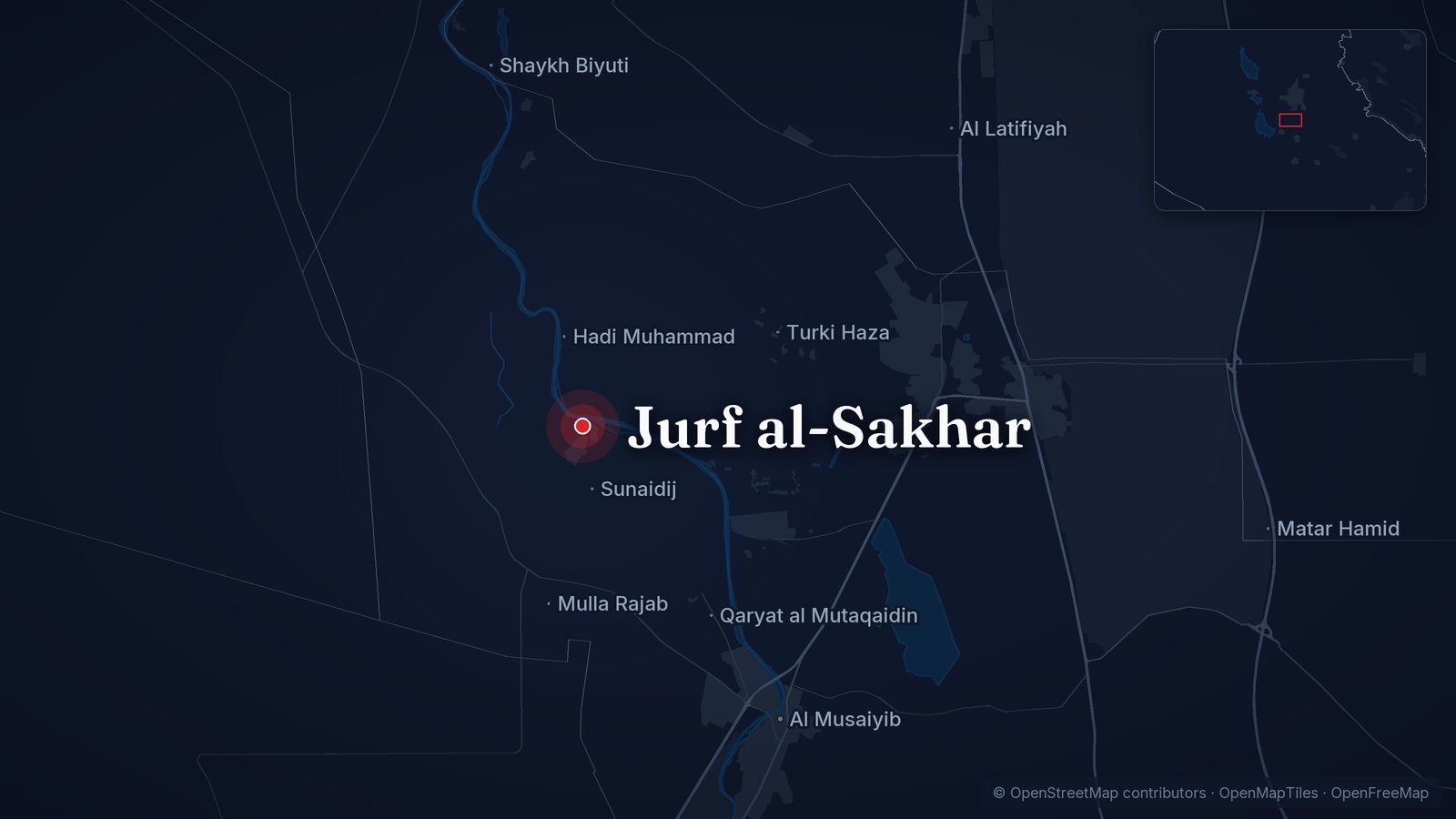
5 West Asian2 Western Alternative1 OtherMap: © OpenStreetMap contributors, ODbL · Cropped for layout
This article is an automated aggregation of coverage from news outlets. Our editorials offer in-depth analysis curated by the NewsCord team.
Iraqi government ordered army entry into Jurf al-Sakhar over oil-smuggling allegations. Parliamentary inquiry documented oil smuggling in Jurf al-Sakhar, including 25 tanker trucks.
Save coverage image
Baghdad moves on Jurf
Iraqi Prime Minister Ali al-Zaidi ordered the replacement of the forces holding Jurf Al-Sakher after an investigation into alleged oil smuggling, and the Supreme Committee for Security Sector Reform chaired by al-Zaidi ordered joint units from the Iraqi army, federal police, and other Popular Mobilization Forces brigades to take over. IraqiNews.com said the Energy Police, an Interior Ministry force, was assigned to secure the three branches of the strategic Basra-Haditha oil pipeline running through the area, and it said findings from a government investigative committee were referred to the judiciary for legal action. SANA said al-Zaidi ordered the armed forces Monday to enter Jurf al-Sakhar in Babil province and set a deadline for Kataib Hezbollah militia forces to withdraw so government security forces could assume control.
Jurf al-Sakhar lies about 60km southwest of Baghdad and spans roughly 345 square kilometres. A leaked intelligence report alleged crude oil valued at millions of dollars was siphoned from two state-owned pipelines passing through the closed area since 2021, and the document alleged makeshift underground refineries were built to process the oil.
Claims, evidence, and denial
A high-level investigative committee entered the restricted zone on November 13 with military backing to confirm illicit facilities, and the committee identified several locations linked to smuggling operations without naming those allegedly implicated. Iraqi parliamentary inquiry examined documents, photographs and drone footage confirming oil smuggling operations in Jurf al-Sakhar, and it quoted committee member Ali Anhair saying investigators’ reports and thermal imaging showed around 25 tanker trucks, each capable of carrying 36,000 liters. Government investigators inspected six sites Friday and found evidence of pipeline tampering and attempts to conceal it, and they also found two refineries, a tanker truck and storage tanks.
Kataib Hezbollah denied involvement in oil smuggling Sunday, and Anadolu Ajansı said the militia claimed investigators found no pipeline tampering and that the facilities supplied fuel for military vehicles. Iraqi writer and journalist Hamza Mustafa said, “What the brigades are doing through field mobilisation is perhaps the last line of defence for them after their position appeared weak regarding the oil-smuggling operations,” and security expert Saif Raad said, “The desperation over this area is not for security reasons but for financial reasons.”
Deadline, escalation, and stakes
The state Iraqi News Agency reported the government ordered the armed forces to enter Jurf al-Sakhar and set a deadline “for the armed faction to exit the area,” and it said reports put the deadline for withdrawal on Friday. The National said the official deadline for Kataib Hezbollah’s withdrawal from the area was 8pm on Friday, November 20, according to a security source, and it said the government planned a limited counter-terrorism entry rather than a storming scenario if no agreement was reached. The September 30, 2026 deadline was postponed to June 2027, and reports stated that Ismail Qaani traveled to Baghdad for mediation and that he and al-Idāyi reached a preliminary agreement for Hezbollah Brigades to withdraw soon.
Kataib Hezbollah accused al-Zaidi of corruption and framed the crackdown as a political extortion campaign, and the militia mobilised approximately 8,000 fighters from various provinces towards Jurf al-Sakhar ahead of the government committee’s arrival. The standoff deeply divided Iraq’s ruling Coordination Framework, and Fadel Abu Ragheef said, “They harden their position if they hear the word disarmament or containment, so the concepts have shifted from disarmament and containment to organisation and management.”