Britain02 September, 20263 min read
Andy Burnham Faces Kemi Badenoch Over Spending, Welfare, Tax, and Defence Commitments
This article is an automated aggregation of coverage from news outlets. Our editorials offer in-depth analysis curated by the NewsCord team.
Burnham defends public spending and welfare while not ruling out tax rises. He pledges fully funded plan to boost defence spending to 3.5% of GDP.
The Guardian was read line by line by the Watchdog: 3.4. See the score →
PMQs debut and sparring
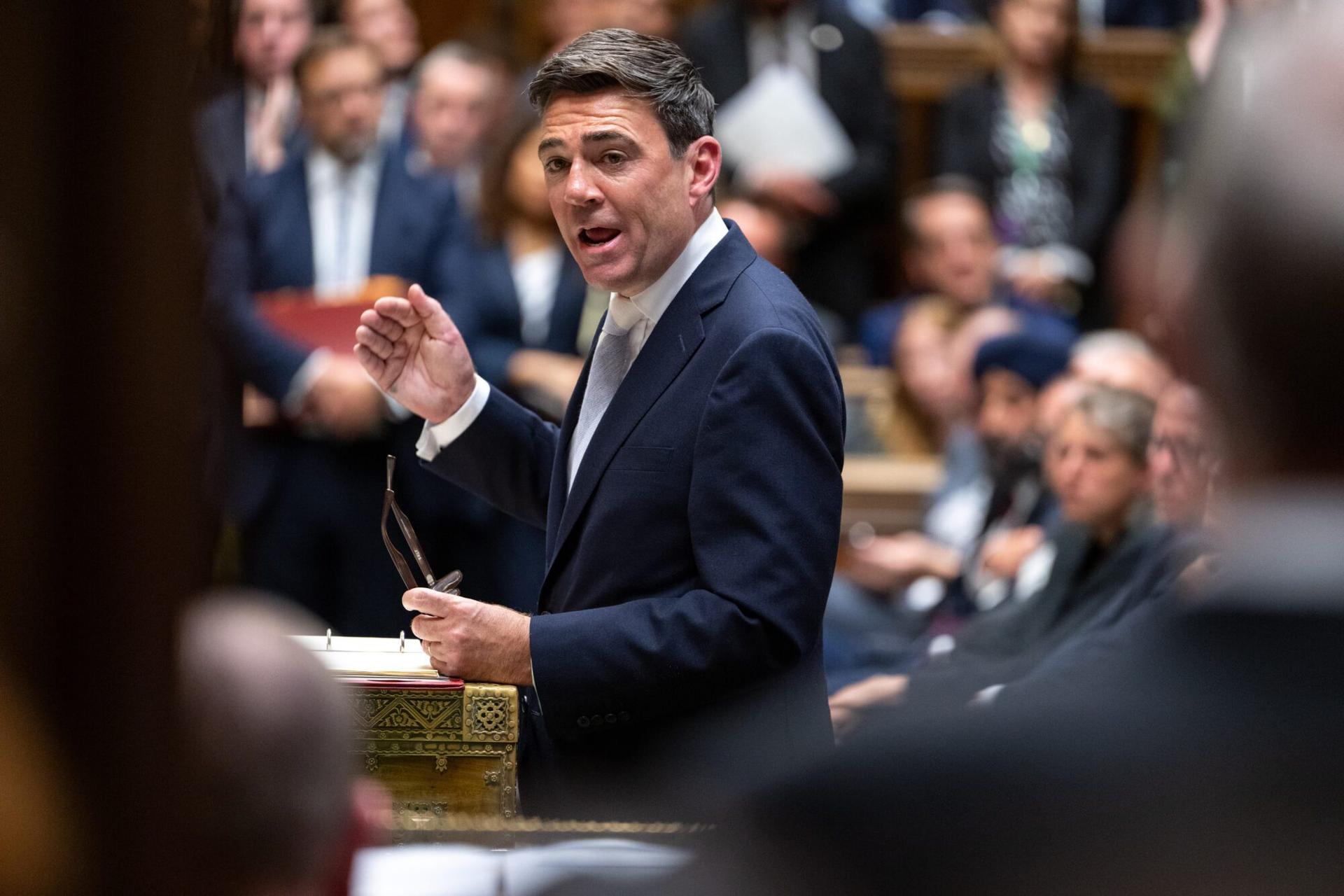
Andy Burnham began his first Prime Minister’s Questions by thanking the Speaker, Lindsay Hoyle, for his assistance with (or tolerance of) his marathon 125-question Q&A yesterday, which lasted for almost three and a half hours. The exchanges quickly turned from ceremony to the central question of whether Burnham could fund his programme as government borrowing costs put pressure on public finances, with Kemi Badenoch challenging him on spending, welfare reform, taxation and Britain’s defence commitments. Badenoch opened by congratulating Burnham on his “stamina” after his marathon Commons appearance before asking whether he could identify a single spending request that he had rejected.
Burnham refused to rule out tax rises at PMQs, telling MPs he would not “announce the Budget at Prime Minister’s Questions” and pointing to early decisions including cancelling the Government’s digital ID programme. He also reaffirmed the Government’s commitment to increase defence spending to 3.5 per cent of GDP by 2035, saying a fully funded route to reaching that target would be presented at the spending review.

New battle lines
As Burnham and Badenoch clashed over tax, welfare and defence, The Guardian described Badenoch’s next PMQs opponent as “a very different opponent” and said her reshuffle had placed Andrew Griffith at the centre of the economic fight.
The Guardian reported that Badenoch instigated a reshuffle in which out went the unassuming shadow chancellor, Mel Stride, replaced by the Thatcherite Andrew Griffith, with Richard Fuller and Claire Coutinho joining the frontbench lineup.
Conservative peer and polling expert Robert Hayward said Badenoch “has to change tack because she’s facing different opposition,” comparing it to a football manager adjusting to the people being played against.
In the Commons, Badenoch accused Burnham of wanting to please everyone rather than taking difficult decisions, telling MPs, “I think it’s delightful that he wants to make everyone happy. But a prime minister needs to be a leader, not a people pleaser,”
Burnham responded by focusing on welfare, telling MPs that the benefits bill needed to fall and arguing it was not acceptable for so many young people to remain dependent on benefits.
What’s at stake next
The BBC framed Burnham’s PMQs debut as a test of delivering more than a change in tone, noting that while his exchanges with Badenoch were initially jocular, they soon slipped into barbs over tax and borrowing. It said the backdrop to Burnham’s first few days was the increased cost of borrowing and that it “looks likely to limit the chancellor's room for manoeuvre at the budget come the end of October.” The BBC also said Burnham has promised a transformational government but is facing “many of the same challenges as Sir Keir Starmer,” with difficult decisions on defence spending, welfare and social care approaching.
In the political argument over whether Burnham can reduce household costs, expand investment, increase defence expenditure and control borrowing, the refusal to rule out tax rises was described as likely to remain significant as Chancellor John Healey prepares for the Budget on 28 October. Against that pressure, Burnham told MPs he had laid out a “clear, coherent, credible plan for growth based on ten years of delivering it myself,” and said it was grounded in reality as he sought to take it to all parts of the country.