Full story
Ballroom Halted by Appeals Court
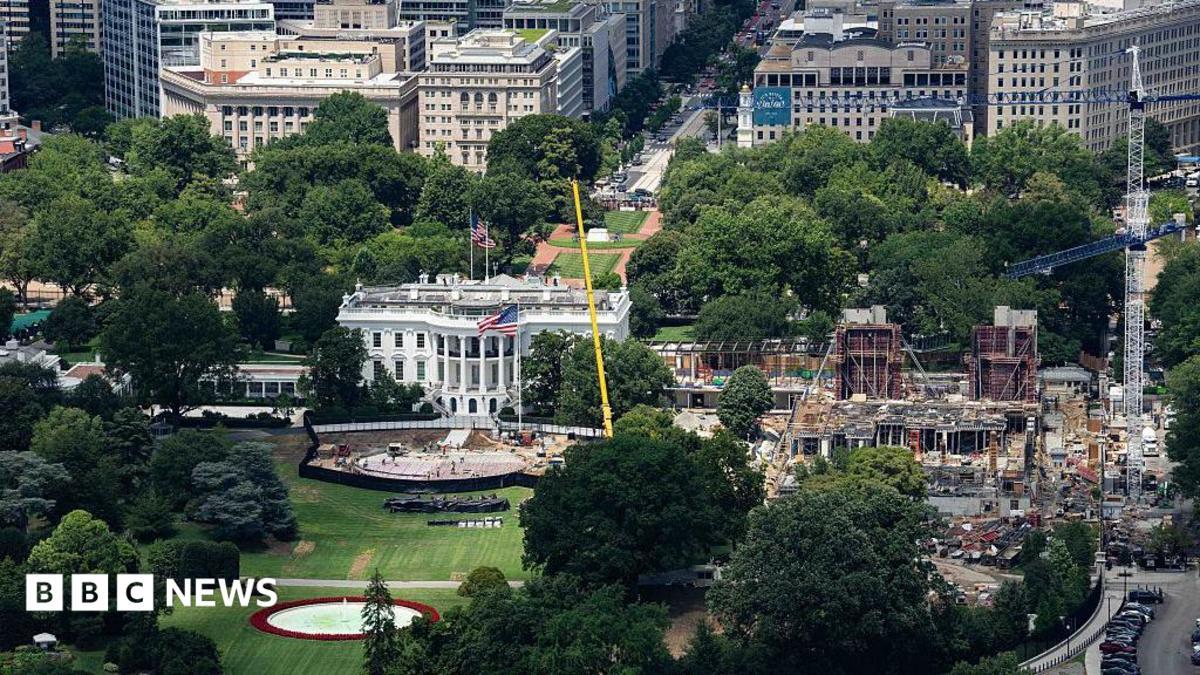
A U.S. federal appeals court ordered President Donald Trump’s administration to stop construction of a $400 million White House ballroom on the site of the demolished East Wing, ruling that congressional approval is needed for the project.
“ordered Donald Trump's administration on Friday to stop construction on a $400 million ballroom”
The Washington-based U.S. Court of Appeals for the District of Columbia Circuit said the order upheld a preliminary injunction won by the National Trust for Historic Preservation after the administration tore down the East Wing and began building a 90,000-square-foot ballroom without seeking authorization from Congress.

In a 2-1 decision, the panel said, "Whether or not a massive ballroom should be constructed is for Congress to decide and is not a matter for Executive self-help," and it placed its ruling on hold for 14 days to allow the Trump administration to appeal to the U.S. Supreme Court.
Trump said he would appeal, and in a social media post he called the decision "horrendous" and politically motivated, arguing it left him, other White House officials and visitors exposed to attack.
The majority also wrote that "Each President is a temporary tenant, not the owner, of the White House," and that the Executive cannot fundamentally reshape it without congressional approval.
Dissent, Security Claims, and Praise
Trump blasted the appeals court ruling and vowed to "immediately" appeal to the Supreme Court, while the National Trust for Historic Preservation praised the decision as protecting the public’s right to weigh in on the historic White House.
NBC News reported that the appeals court affirmed U.S. District Judge Richard Leon’s modified preliminary injunction in a 2-1 decision, while allowing below-ground work to move forward and staying the appeals court’s own ruling for 14 days.
In the dissent, Judge Neomi Rao argued the lower court’s order was an "abuse of discretion" and said it elevated "the aesthetic displeasure of a single passerby over the government's security interests" in the ballroom and the risks of leaving an open construction site.
The appeals court majority rejected the idea that security concerns automatically override the law, saying national security arguments are not an "automatic get-out-of-law-free card" and that the Executive cannot act with "utter lawlessness" to destroy protected landmarks.
Brent Leggs, president and CEO of the National Trust, called the ruling a "great day for our country" and said the White House "belongs to the American people" in a statement after the decision.
What Happens Next and What’s at Risk
The appeals court’s ruling does not permanently bar construction of a ballroom, but it halts above-ground work during the district court’s litigation and until the White House secures approval from Congress, according to the majority’s reasoning.
“The appeals court placed its ruling on hold for 14 days”
Reuters reported that Trump described the ballroom plan as including bomb shelters, medical facilities, shielding from drones and missiles and other security features that are "all tied together as one big, expensive, and very complex unit," while the court said national security arguments are not an automatic exemption from congressional authorization.
The BBC said the appeals court’s order upholds the block on above-ground construction without congressional approval after a federal judge twice blocked above-ground work while allowing underground work to proceed.
In its explanation, the appeals court said its holding "has nothing at all to do with whether the proposed ballroom is desirable" and that it instead means the defendants may not proceed during litigation without Congress’s authorization.
The dispute is set for a Supreme Court showdown as the appeals court delayed implementation for 14 days, and Trump said the decision must be overturned by the Supreme Court in its entirety.