Published

West Bank

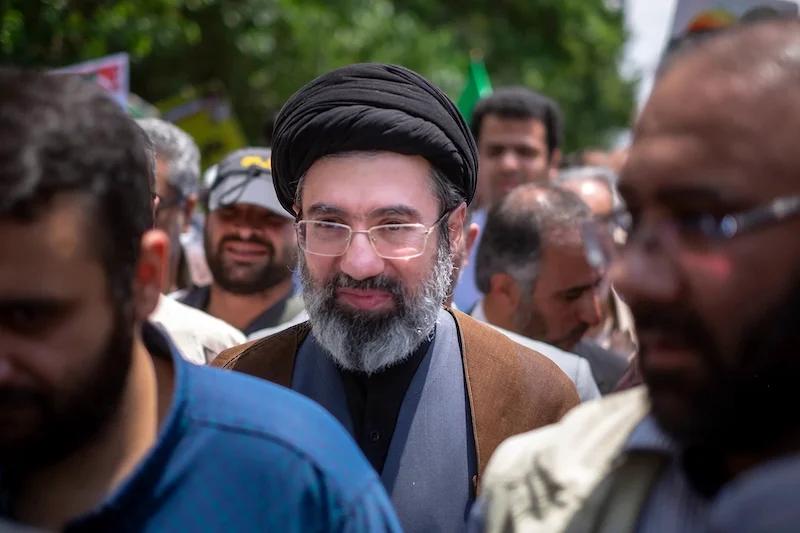
Ayatollah Ali Khamenei Calls for Muslim Unity Against the United States and Israel

Image via 조선일보

At a glance

  1. Khamenei urged Muslim nations, especially Gulf states, to unite against the enemy: US and Israel.
  2. Message published for Islamic Unity Week marking Prophet Muhammad's birthday.
  3. Divisions among Muslims empower enemies; unity strengthens regional resilience and defense.

Khamenei’s Unity Message

Iran’s Supreme Leader Ayatollah Ali Khamenei called for unifying ranks within the Muslim world in a message tied to the Week of Unity and the anniversary of the Prophet’s birth, framing solidarity as a way to address “political and security challenges facing the region.”

The message urged rulers of Islamic states to “identify what they consider the real enemy, understand its moves, and confront it,” linking the United States and Israel to what he described as targeting the Islamic Republic and the Iranian people.

Consistent coverage

Where the coverage agrees

Al Jazeera and A News both report the same Gaza strike deaths; no major bias signal

Khamenei also stressed that cooperation among Islamic countries and peoples should be based on “goodness, benevolence, and shared interest,” and warned against moves that could provoke divisions within Islamic communities.

In the same message, he called for strengthening unity within Iran itself, urging officials and Iranian citizens to set aside differences to preserve social cohesion under “political, economic, and military pressures facing the country.”

Hormuz and Gulf Tensions

Separately, Al Jazeera reported that Iran’s Supreme Leader Ayatollah Mojtaba Khamenei urged Gulf leaders to identify their “real enemy” and confront it, as Tehran maintained its hard line over the Strait of Hormuz.

Al Jazeera said Khamenei’s message was published on Sunday to mark the birthday of the Prophet Muhammad, and noted that he “has not appeared publicly since the US-Israeli attacks on February 28 that killed his father and predecessor, Ayatollah Ali Khamenei.”

The same Al Jazeera report quoted Deputy Foreign Minister Kazem Gharibabadi saying, “The Strait of Hormuz is closed,” and added that any vessel seeking to cross would have to coordinate with Iran.

Al Jazeera also cited the International Maritime Organization saying that “up to 400 ships carrying about 6,000 seafarers have been unable to leave the Gulf safely” since the US-Israel war on Iran began.

Escalation Fears in West Bank

While Khamenei’s unity message emphasized confronting external enemies, Al-Manar TV Lebanon cited “Israel Hayom” reporting growing concerns that some members of the Israeli government may be seeking escalation in the occupied West Bank for political reasons.

Al-Manar TV Lebanon framed the warning alongside a broader line that “US, ‘Israel’ Are Enemies of All Muslims, Not Just Iran: Leader Urges Islamic Unity,” attributing the stance to Sayyed Mojtaba Khamenei.

In parallel, Al Jazeera’s coverage of Gaza described an Israeli strike near a bakery in Deir el-Balah that killed two Palestinians including a 3-year-old child, and said Hamas did not immediately comment on the strike.

Al Jazeera also reported that “at least 1,303 Palestinians” had been killed and “4,336 injured” since the ceasefire began, underscoring the continuing stakes across the region as the West Bank escalation concern was raised.

Explore the original reporting

Compare all 137 sources

How each outlet frames it

Every outlet we compared, the headline it ran, and a link to the original article.

We scored these line by line

Our Watchdog read these 10 articles sentence by sentence. 0 means no framing found, 10 means severe. How we score.

The Jerusalem Post

Khamenei shared written statement calling for 'unity' among Gulf States

30 August, 2026

Ynetnews
Ynetnews5.3 / 10

Trump promised ‘regime change’: the hard-line core that has taken control of Iran

29 August, 2026

Anadolu Ajansı

Rulers of Muslim nations should recognize 'true enemy,' says Iran's supreme leader

30 August, 2026

Israel National News

Khamenei calls US and Israel 'sworn enemies' of Muslim unity

31 August, 2026

Reuters
Reuters2.9 / 10

Iran's Khamenei urges Gulf rulers in written message to confront 'real enemy'

30 August, 2026

Al Jazeera
Al Jazeera2.7 / 10

Iran’s Khamenei calls for Gulf unity as Hormuz tensions persist

30 August, 2026

The Independent

Iran’s Khamenei tells Gulf rulers to confront ‘real enemy’ for Islamic Unity Week

30 August, 2026

Tehran Times
Tehran Times2.5 / 10

Leader: US, Israel 'sworn enemies' of Muslim unity and friendship

30 August, 2026

Tehran Times
Tehran Times2.1 / 10

Iran’s unity led to defeat of US and Israel in three wars: Hezbollah chief

30 August, 2026

Al-Monitor
Al-Monitor1.4 / 10

Israeli strike kills two people including a 3-year-old boy, Gaza medics say

30 August, 2026

West Asian

Source

Khamenei Calls for Islamic Unity in the Face of America and Israel

30 August, 2026

Aajil
Aajil

Two Palestinians killed, including a child, in an Israeli airstrike in central Gaza.

30 August, 2026

ABNA
ABNA

Top religious authority: Normalizing relations with Israel is treason against the Islamic nation, and unity is a religious duty

29 August, 2026

ABNA English
ABNA English

Tehran Islamic Unity Conference urges Muslim resistance against regimes of Israel, US

29 August, 2026

Ain Libia
Ain Libia

Majl Majed Khamenei, addressing Gulf states: you must know who your real enemy is

30 August, 2026

Al Jazeera
Al Jazeera

Israeli strike kills 3-year-old child in Gaza | Gaza News

31 August, 2026

Al-Arabiya
Al-Arabiya

Two killed, including a child, in Israeli airstrike on Gaza

30 August, 2026

Al-Ayyam News
Al-Ayyam News

From Islamic unity to collective security… Iran presents a new vision for the Gulf’s future

30 August, 2026

Al-Jazirah Net
Al-Jazirah Net

Iran’s Supreme Leader calls on Iranians to avoid disagreements and on Islamic nations to unite.

30 August, 2026

Al-Manar TV Lebanon
Al-Manar TV Lebanon

Sayyed Mojtaba Khamenei: Muslims have played key roles throughout history, and we are witnessing with our own eyes the prospect of their victory over their enemies

30 August, 2026

Al-Manar TV Lebanon
Al-Manar TV Lebanon

A Message from the Leader of the Revolution and the Islamic Republic, Sayyed Mojtaba Khamenei, on the occasion of Unity Week

30 August, 2026

Al-Manar TV Lebanon
Al-Manar TV Lebanon

“US, ‘Israel’ Are Enemies of All Muslims, Not Just Iran: Leader Urges Islamic Unity”

30 August, 2026

Al-Masri Al-Yawm
Al-Masri Al-Yawm

“Know your real enemy”.. Majid Khamenei delivers a message to the Gulf states

30 August, 2026

Al-Yawm as-Sābi
Al-Yawm as-Sābi

This evening around the world.. American leaders warn against prolonging the war on Iran.. Mojtaba Khamenei calls for 'unity'.. Nepal intensifies rescue efforts to reach hundreds of people stranded due to floods.. Libyan agreement to hold presidential and parliamentary elections

30 August, 2026

Ala-ya11a
Ala-ya11a

Khamenei: Iran is closer than ever to victory... He sent a message to the Gulf

30 August, 2026

Arab 48
Arab 48

World News Summary for Sunday

30 August, 2026

Ariibi21
Ariibi21

Khamenei: Iran is closer than ever to victory.. He directed a message to Gulf rulers

30 August, 2026

Ayn Libia
Ayn Libia

South Lebanon under Israeli bombardment… Qassem: Any retreat before the enemy will lead to our extermination

30 August, 2026

Caliber.Az
Caliber.Az

Iran's supreme leader calls on Muslim countries to unite against US, Israel

30 August, 2026

Daily Sabah
Daily Sabah

Iran's Khamenei urges Muslim states to unite, oppose 'real enemy'

30 August, 2026

Hespress
Hespress

Khamenei Calls for Unity Among the Islamic Ummah

30 August, 2026

Hürriyet Daily News
Hürriyet Daily News

Iran supreme leader calls for unity among Muslim countries

30 August, 2026

Independent en Español

U.S. attacks Iranian missile-launchers in the Strait of Hormuz in its first military action in weeks

30 August, 2026

Iran International
Iran International

Iranian Parliament Speaker: Muslim neighbors should rely on their own capabilities instead of foreigners

29 August, 2026

Jaridat al-Ghad
Jaridat al-Ghad

Khamenei calls for unity among Islamic countries against the United States and Israel

30 August, 2026

Jordan News
Jordan News

Khamenei Urges Muslim Unity Against US, Israel...

30 August, 2026

Khabargazari Fars
Khabargazari Fars

Fars News | Sheikh Naim Qassem on Unity Week: Resilience Sinks the Enemy’s Project… and Retreat Will Lead to Our Annihilation

30 August, 2026

Masrawy
Masrawy

Mojtaba Khamenei calls Gulf rulers to form an alliance: "Know your enemy and Islam will prevail"

30 August, 2026

Mawqiʿ Kalima al-ikhbari

Two Palestinians were killed, including a child, in an Israeli airstrike in central Gaza.

30 August, 2026

Mehr News Agency
Mehr News Agency

Leader issues message on Unity Week

30 August, 2026

Mont Karlo ad-Dawliya

Khamenei addresses the rulers of Islamic countries: The United States and Israel are not Iran’s only enemies.

30 August, 2026

NedaeLWatan
NedaeLWatan

Naim Qassem calls for Islamic unity and emphasizes: resilience defeats American and Israeli projects | Nidaa al-Watan

30 August, 2026

PressTV
PressTV

‘Criminal’ US, Israel enemies of all Muslims not just Iran, says Leader, urging unity

30 August, 2026

PressTV
PressTV

Islamic Unity Week: Iran’s enduring vision of Muslim brotherhood, resistance, and a secure region

31 August, 2026

Roya News
Roya News

Khamenei urges Muslim leaders to confront the 'true enemy'

30 August, 2026

Tasnim
Tasnim

Shahriari: The Islamic unity must move from discourse to practical implementation

30 August, 2026

The New Arab
The New Arab

Israel kills three-year-old child in latest Gaza airstrikes

30 August, 2026

TRT World
TRT World

Israel kills more Palestinians in Gaza

30 August, 2026

Türkiye Today
Türkiye Today

Iran never attacked Muslim neighbors but targeted US bases: Araghchi

29 August, 2026

WANA News Agency
WANA News Agency

Unity Brought Defeat to the Enemy, Says Ghalibaf

29 August, 2026

yalibnan
yalibnan

Live update – Iran’s supreme leader calls for Muslim unity against US and Israel

30 August, 2026

yalibnan
yalibnan

Iran cannot call for Muslim unity while attacking its Muslim neighbors

31 August, 2026

تسنیم
تسنیم

Leader: US, Zionist Regime Are Sworn Enemies of Muslim Unity

30 August, 2026

خبرگزاری دفاع مقدس
خبرگزاری دفاع مقدس

Unity is the key to the victory of the Islamic Iran and the factor of the enemies’ disheartenment

28 August, 2026

نورنیوز
نورنیوز

Maintaining unity brought defeat to the enemy: Ghalibaf

29 August, 2026

Other

104.5 WOKV
104.5 WOKV

Iran's leader calls for Muslim unity, NBC crew attacked in West Bank and other Mideast news

30 August, 2026

A News
A News

Israeli strike kills two Gazans including a 3-year-old boy - medics

30 August, 2026

Ambito
Ambito

Mojtaba Khamenei urged Muslim countries to unite against the US and Israel: "They are the true enemy"

30 August, 2026

ASHARQ AL-AWSAT English

Iran Supreme Leader Calls for Unity Among Muslim Countries

30 August, 2026

CiudadCCS
CiudadCCS

TEXT_2: Jamenei exhorts Muslim countries to stand united against the United States

30 August, 2026

Clarin
Clarin

Supreme Leader of Iran calls for Muslim unity against the U.S. and Israel

30 August, 2026

Daily Press
Daily Press

Iran’s leader calls for Muslim unity, NBC crew attacked in West Bank and other Mideast news

30 August, 2026

Demócrata
Demócrata

Khamenei calls for a united Islamic front against the United States and Israel

30 August, 2026

eciks.org
eciks.org

Khamenei urges Muslim unity against US and Israel in written message

30 August, 2026

heraldo.es
heraldo.es

Khamenei called from Iran for "Islamic unity" against the U.S. and Israel

31 August, 2026

Informat.ro
Informat.ro

The Supreme Leader of Iran calls on Muslim countries to unite against the United States and Israel.

30 August, 2026

La Verdad Noticias
La Verdad Noticias

Iran calls on Muslim countries to unite against their enemies.

30 August, 2026

Misión Política
Misión Política

The Supreme Leader of Iran Calls for the Unity of the Islamic World Against the United States and Israel

30 August, 2026

Nuevo Poder
Nuevo Poder

Supreme Leader of Iran calls on Muslim countries to unite against the U.S. and Israel

30 August, 2026

Proceso
Proceso

Iran’s Supreme Leader makes a call for Muslim unity against the United States and Israel

30 August, 2026

Reforma
Reforma

Pide Jamenei unidad musulmana contra 'verdadero enemigo'

30 August, 2026

Sitio Andino
Sitio Andino

Iran: Khamenei called for unity against the United States and Israel as the country faces "problems in daily life"

30 August, 2026

The Transylvania Times

Iran's leader calls for Muslim unity and other Mideast news

30 August, 2026

thereport.live
thereport.live

Iran urges Muslim nations to unite against foreign influence

30 August, 2026

WBKB11
WBKB11

US forces strike Iran's Larak Island, US official says

30 August, 2026

www.taghribnews
www.taghribnews

Islamic Unity Is a Fundamental Principle of Islam and a Necessity in the Modern Era

29 August, 2026

Межа. Новини України.

Mojtaba Khamenei urges Muslim states to unite against the US and Israel

30 August, 2026

ایرنا
ایرنا

Unity, the enduring symbol of the revolution

30 August, 2026

خبرگزاری شبستان
خبرگزاری شبستان

Unity in the Thought of the Martyr Leader

28 August, 2026

صبح زاگرس
صبح زاگرس

Unity of Muslims is the condition for victory over global disbelief.

30 August, 2026

香港電台新聞網
香港電台新聞網

Iran leader calls for unity among Muslim countries

30 August, 2026

Asian

ANI News
ANI News

"Solution to Islamic Ummah's problems ...": Iran's Supreme Leader Mojtaba Khamenei calls for Muslim unity against US, Israel

30 August, 2026

China Daily
China Daily

Iran's supreme leader calls for Muslim unity to confront 'true enemies'

30 August, 2026

Free Press Kashmir
Free Press Kashmir

Unite against real enemy: Iran Supreme Leader Mojtaba Khamenei to Muslim countries

30 August, 2026

India Today
India Today

Khamenei urges Muslim nations to unite against Israel, US amid unrest

30 August, 2026

India Today
India Today

Iran urges Muslim unity against Israel, US amid fresh Middle East flare-ups

31 August, 2026

Kashmir Observer
Kashmir Observer

Iran Leader Calls for Muslim Unity Against US, Israel

31 August, 2026

Malay Mail
Malay Mail

Six months into war, Iran’s new supreme leader calls for Muslim unity against US, Israel

30 August, 2026

Moneycontrol
Moneycontrol

Iran's Khamenei urges Gulf rulers to unite against 'real enemy' amid US tensions

30 August, 2026

The Business Times
The Business Times

Iran's Supreme Leader urges Gulf rulers to confront 'real enemy' in message marking Islamic Unity Week

30 August, 2026

The Manila Times
The Manila Times

Iran supreme leader calls for unity among Muslim countries

30 August, 2026

Vietnam.vn
Vietnam.vn

The Leader of Iran called for regional unity in the Persian Gulf against the “real enemy.”

30 August, 2026

조선일보
조선일보

Khamenei: U.S., Israel Are 'Enemies of Islamic Community'

30 August, 2026

Western Mainstream

AP News
AP News

Iran’s leader calls for Muslim unity and other Mideast news

30 August, 2026

BBC
BBC

Khamenei addresses the Gulf states... what do we know about him after six months of his injury?

30 August, 2026

BBC
BBC

Deaths and injuries in Israeli airstrikes on Gaza, and families of the missing say: "Our loved ones are not numbers"

30 August, 2026

CBC
CBC

3-year-old boy among 2 Palestinians killed by Israeli strike, Gaza medics say

30 August, 2026

DW
DW

Khamenei calls for unity among Muslim countries in light of the United States.

30 August, 2026

DW
DW

Khamenei calls for the unity of Muslim countries in the face of the United States.

30 August, 2026

DW
DW

The Leader of Iran Calls for Muslim Countries to Unite

30 August, 2026

France 24
France 24

Iran: Supreme Leader Ayatollah Ali Khamenei calls on Gulf rulers to know their “true enemy” and confront it

30 August, 2026

LaSexta
LaSexta

Live Iran war: The Supreme Leader of Iran calls on Muslim countries to unite against the United States and Israel

30 August, 2026

NBC News
NBC News

Iran’s Mojtaba Khamenei urges Gulf rulers in written message to confront ‘real enemy’

30 August, 2026

Radio Free Europe/Radio Liberty

US Testing Giant Suspends TOEFL, GRE Exams In Iran After Sanctions

30 August, 2026

Reuters
Reuters

Medics: Two killed, including a child, in Israeli strike on Gaza

30 August, 2026

The Washington Post
The Washington Post

Iran's supreme leader calls for Muslim unity against US and Israel, and other Mideast news

30 August, 2026

U.S. News & World Report

Iran's Leader Calls for Muslim Unity, NBC Crew Attacked in West Bank and Other Mideast News

30 August, 2026

Local Western

Bozeman Daily Chronicle

Iran's leader calls for Muslim unity and other Mideast news

30 August, 2026

Las Vegas Review-Journal

Iran’s leader calls for Muslim unity against Israel and US

30 August, 2026

San Bernardino Sun
San Bernardino Sun

US strikes Iranian rocket launchers on the Strait of Hormuz in first military action in weeks

30 August, 2026

The Virginian-Pilot
The Virginian-Pilot

Iran’s supreme leader calls for Muslim unity against US and Israel, and other Mideast news

30 August, 2026

WKMG
WKMG

Iran's supreme leader calls for Muslim unity against US and Israel, and other Mideast news

30 August, 2026

Українські Національні Новини (УНН)

Iran's Supreme Leader called on Muslim countries to unite against the United States and Israel

31 August, 2026

Latin American

Cadena 3 Argentina
Cadena 3 Argentina

Iranian Supreme Leader calls for Muslim unity against the United States and Israel

30 August, 2026

Cadena 3 Argentina
Cadena 3 Argentina

Supreme Iranian leader calls for Muslim unity in face of the US and Israel

30 August, 2026

El Comercio Perú
El Comercio Perú

The Supreme Leader of Iran calls for unity among Muslim countries against the “true enemy”: the United States and Israel.

30 August, 2026

El Universo
El Universo

Supreme Leader of Iran Calls on Muslim Countries to Unite and Confront the United States and Israel

30 August, 2026

Europa Press
Europa Press

At least three dead, including a three-year-old child, in a new Israeli attack in the Gaza Strip.

30 August, 2026

Folha de S.Paulo
Folha de S.Paulo

Supreme leader of Iran calls for unity among Muslim countries in the face of the 'true enemy'.

30 August, 2026

Infobae
Infobae

Two dead, including a child, in an Israeli attack in Gaza against a Hamas member

30 August, 2026

teleSUR
teleSUR

Supreme Leader of Iran Points to the United States and Israel as “enemies of all Muslims”

30 August, 2026

Univision
Univision

The Supreme Leader of Iran calls on Muslim countries to unite against Israel and the United States

30 August, 2026

Israeli

Haaretz
Haaretz

Iran's Khamenei Urges Gulf Rulers in Written Message to Confront 'Real Enemy'

30 August, 2026

Haaretz
Haaretz

Live updates • Iran's IRGC vows to respond to U.S. strike, state broadcaster IRGC reported

30 August, 2026

JNS.org
JNS.org

Khamenei calls US, Israel ‘sworn enemies’ of Muslim unity

30 August, 2026

JNS.org
JNS.org

Khamenei labels the United States and Israel as 'fiercest enemies' of Muslim unity

30 August, 2026

The Jerusalem Post
The Jerusalem Post

Durban Conference launched modern anti-Israel campaign, NGO Monitor founder says

30 August, 2026

The Jerusalem Post
The Jerusalem Post

New York governor pledges increased High Holiday security for Jewish communities

29 August, 2026

Ynetnews
Ynetnews

'We decided we would not be taken alive': Female IDF observers recall Oct. 7 attack on Re'im base

29 August, 2026

Western Alternative

Middle East Eye
Middle East Eye

Live: US and Israel 'sworn enemies' of Muslim unity, says Khamenei

30 August, 2026

Middle East Eye
Middle East Eye

Live: US and Israel 'sworn enemies' of Muslim unity, says Khamenei

31 August, 2026

Middle East Eye
Middle East Eye

Three-year-old among two killed in Israeli strike in Gaza

30 August, 2026

Middle East Eye
Middle East Eye

Live: US and Israel 'sworn enemies' of Muslim unity, says Khamenei

31 August, 2026

SRN News
SRN News

Iran's leader calls for Muslim unity, NBC crew attacked in West Bank and other Mideast news

30 August, 2026

teleSUR English
teleSUR English

Critical Warnings from Iran Leader US Israel Enemies Message

30 August, 2026

WION
WION

Iran's Supreme leader Mojtaba Khamenei calls for Muslim unity against 'enemies of Islam'

30 August, 2026

WION
WION

Israeli strikes kill 2 Palestinians in Gaza, including 3-year-old child; Ben Gvir posts video berating female inmates

30 August, 2026

Read stored source text:

Homepage»International News»Khamenei Calls for Islamic Unity in the Face of America and Israel Hajar Emghri The Supreme Leader of the Islamic Republic, Ayatollah Ali Khamenei, called for unifying ranks within the Muslim world in a message that plainly invites overcoming differences and strengthening cooperation among Islamic states and communities, in the midst of continuing repercussions of the war in the Middle East region and rising tensions between Iran on one side and the United States and Israel on the other. Khamenei’s call came on a religious occasion tied to the Week of Unity and the anniversary of the Prophet’s birth, where he focused in his message on the importance of solidarity among Muslims, deeming that overcoming internal divisions constitutes a fundamental entry point to dealing with the political and security challenges facing the region. He also stressed that cooperation among Islamic countries and peoples should be based on what he described as goodness, benevolence, and shared interest. This call acquires particular importance given the tense regional circumstances, as it comes after months of war in the Middle East and its accompanying mutual strikes and tensions whose repercussions extended to a number of countries. In this context, Khamenei sought to emphasize that the current phase requires, in his view, more coordination among Islamic countries rather than engaging in disputes that could intensify division. The Supreme Leader warned against any moves that could provoke divisions within Islamic communities, deeming internal splits to serve the interests of the enemies of the Muslim world. Therefore, he urged various parties to handle contentious files with caution, to protect social harmony, and to avoid anything that could open the door to further tension. Khamenei addressed a direct message to the rulers of the Islamic states in the region, asking them, according to the content of his message, to identify what they consider the real enemy, understand its moves, and confront it. He linked in this context the United States and Israel with what he described as targeting the Islamic Republic and the Iranian people, deeming that the repercussions do not stop at Iran alone but extend to the wider Islamic world. These statements come at a time when the effects of the latest military confrontation still cast their shadow over Iran’s relations with a number of Arab countries. The region witnessed Iranian attacks on sites and bases linked to the American military presence in Arab states allied with Washington, while some strikes also targeted civilian facilities and sites, raising fears about widening the scope of the confrontation and turning it into a more complex regional crisis. Parallel to the call for Islamic unity, Khamenei stressed the need to strengthen unity within Iran itself. He urged officials and Iranian citizens to set aside differences and not allow the emergence of divisions that could affect social cohesion, especially under the political, economic, and military pressures facing the country. This emphasis on internal unity reflects a desire to preserve social stability during a highly sensitive phase for Iran. War, external pressures, and economic sanctions pose multiple challenges to the authorities, while maintaining internal harmony becomes a key factor in crisis management and in facing its repercussions. The presence of Mojtaba Khamenei in the Iranian scene emerges as a notable political development, especially since he took office as Supreme Leader in March, succeeding his father Ali Khamenei, according to the information in the text. Since assuming the position, his public appearances have been limited, with his stances limited to written statements and messages in his name, which has made every message issued by him receive wide attention due to the exceptional circumstances the country is going through. The content of the new message also reveals an attempt to combine religious and political dimensions, as Khamenei based his message on the occasion of unity and the anniversary of the Prophet’s birth to emphasize the necessity of solidarity, before moving to issues related to the regional conflict and relations with the United States and Israel. In this sense, the message came in a form that blends calls for religious rapprochement with warnings against political and social divisions. In addition, the Supreme Leader reaffirmed the importance of protecting social harmony inside Iran, after he had warned in a previous message against taking actions or doing things that could harm societal consensus. This reflects official recognition of the sensitivity of the internal situation, at a time when the country is confronting the effects of many years of sanctions alongside new pressures generated by the war. Economically, Khamenei called for gradually reducing dependence on the dollar, synchronized with a focus on domestic production. This call falls within a vision aimed at strengthening the Iranian economy’s resilience to sanctions and external pressures, especially after months of economic restrictions and the American naval blockade that affected trade and the economy. He also bets on increasing domestic production as a means to mitigate the effects of sanctions and improve the economy’s ability to face crises. This comes amid a need to achieve sustainable economic growth, a goal that collides with a set of challenges related to investment, trade, sanctions, and geopolitical tensions. The latest message places the issue of Islamic unity at the core of Iran’s current political discourse, as Khamenei seeks to present cooperation among Islamic countries as a necessary factor in facing successive crises. In contrast, the call to overcome internal differences reflects an awareness of the risks that could arise from continuing divisions amid the region’s military and political escalation. Khamenei’s new stances remain largely linked to developments in the Middle East, especially since any further escalation between Iran, the United States, and Israel could impact the security and stability of several countries. Therefore, the call for unity, whether inside Iran or among Islamic states, seems to be part of a rhetoric aimed at dealing with a regional phase open to multiple possibilities. In light of continuing political and economic pressures, the message directed to the Muslim world appears to reaffirm the importance of solidarity, while the messages directed to Iran’s interior underscore the priority of maintaining social cohesion, boosting production, and reducing reliance on external sources. Between these two tracks, the Iranian leadership is attempting to cement a discourse based on unity in the face of pressure, awaiting the forthcoming regional developments. Your email address will not be published. Required fields are marked with * Comment* Name* Email* Website Save my name, email, and website in this browser for the next time I comment. Latest news National News International News Politics Economy Society About us Terms and Conditions Privacy Policy

Read stored source text: 104.5 WOKV

Opens in a new window Opens an external website Opens an external website in a new window <!---->Close this dialog<!----> Cox Media Group sites use technologies such as cookies to enable site functionality, analyze site use, and facilitate advertising. Data may be transferred to third parties using tracking technologies. You may change your settings at any time or accept the default settings. You may close this banner to continue with only essential cookies. Privacy Policy Storage Preferences Targeted Advertising Personalization * Analytics Save Accept All Reject Non-Essential <!---->Close Cookie Preferences<!----> We’re Sorry! This website is unavailable in your location. Error 451 It appears you are attempting to access this website from a country outside of the United States, therefore access cannot be granted at this time.

Read stored source text: A News

Reklamı Kapat News World Israeli strike kills two Gazans including a 3-year-old boy - medics Israeli strike kills two Gazans including a 3-year-old boy - medics An Israeli airstrike killed two Palestinians, including a three-year-old child, in the central Gaza Strip on Sunday, according to Palestinian health officials. Reuters WORLD Published August 30,2026 03:57 PM Subscribe An Israeli airstrike killed two Palestinians, including a three-year-old child, in the central Gaza ⁠Strip on Sunday, ⁠health officials said. Gaza medics said the Israeli airstrike near a bakery in Deir Al-Balah killed one ⁠man, Hussam Nusair, a three-year-old boy, Tayyem Hamdan, and wounded several others. An ⁠October 2025 U.S.-backed ceasefire halted major fighting in the shattered territory, but it failed to end strikes by the Israeli military. Hamas ⁠accuses Israel of violating the ceasefire and undermining efforts to implement a broader plan by U.S. President Donald Trump to end the Gaza conflict, which also includes Israeli withdrawals and Hamas ⁠disarmament. More ‌than 1,300 ‌Palestinians have been killed ⁠in Gaza since the ‌ceasefire took effect last October, according to Gazan health officials. Donald Trump Gaza Israeli military Gazans Gaza conflict Israeli strike A Closing chapters of terrorism will bring new hope to region: Turkish President Erdoğan Algeria moves to impose death penalty for setting forest fires NATO sees no imminent threat of attack - official Russia accuses US of viewing Europe as potential nuclear battlefield Fenerbahçe beat Samsunspor 2-0 away in Turkish Super Lig Please clickto read our informative text prepared pursuant to the Law on the Protection of Personal Data No. 6698 and to get information about the cookies used on our website in accordance with the relevant legislation. 6698 sayılı Kişisel Verilerin Korunması Kanunu uyarınca hazırlanmış aydınlatma metnimizi okumak ve sitemizde ilgili mevzuata uygun olarak kullanılan çerezlerle ilgili bilgi almak için lütfen tıklayınız.

Read stored source text: Aajil

The latest news to your inbox every morning. A smart assistant answers only from the context of the news Ask anything you want about this news The latest news to your inbox every morning. A smart assistant answers only from the context of the news Ask anything you want about this news A Saudi electronic newspaper founded in 2007 that focuses on publishing local news and competing in breaking news with professionalism, credibility, and objectivity Officials in Gaza's health sector said an Israeli airstrike killed two Palestinians today, one of them a 3-year-old child, in the central Gaza Strip. According to Reuters, medics said the airstrike that hit near a bakery in Deir al-Balah left a man named Husam Nasser and a boy named Tim Hamdan dead, and several others were injured and transported to Al-Aqsa Hospital in the city. According to the Israeli army, it targeted a fighter from Hamas and succeeded in killing him, noting that Nasser was involved in attacks on Israeli forces and civilians. The army said its forces in the southern region remain at their posts as per the agreement, adding that they will continue to deal with any threat. Hamas did not immediately comment on the strike. According to Gaza health authorities, around 1,300 Palestinians in the Gaza Strip have been martyred since the ceasefire came into effect last October. Discuss the news with artificial intelligence.

Read stored source text: ABNA

According to the report of the international Ahlul Bayt News Agency (abna) in a letter to the 40th International Conference on Islamic Unity, the senior religious authority Ayatollah Hussein Nouri-Homidani affirmed that any form of relation with the Israeli regime or any assistance to its persistence directly conflicts with the interests of the Islamic nation. The religious authority also stressed that unity, rapprochement, and the rejection of fitnah (discord) are rational necessities and religious duties, especially under the current conditions. He warned that any statement or action that leads to division among Muslims undoubtedly serves the aims of Islam’s enemies. The text of his full message follows: In the name of God, the Most Gracious, the Most Merciful. All praise is due to God, Lord of all peoples, and prayers and peace be upon our master and prophet, the Chosen one, Muhammad, and upon his family and companions all together … “And obey God and His Messenger, and do not dispute, lest you lose heart and your strength should depart.” (Quran 8:46) At the outset, I congratulate the entire Islamic nation and dear participants of this blessed conference on the occasion of the anniversary of the birth of the Prophet Muhammad (peace be upon him) and the Week of Islamic Unity. I also extend my sincere thanks and appreciation to the esteemed organizers of this valuable gathering. I greet the memory of the founder of the Islamic Republic of Iran, Imam Khomeini, and I honor the souls of the martyrs of Iranian defense who bravely defended the homeland against the criminal aggression of the United States and the murderous Zionist entity that targets children. I especially mention the great martyr and standard-bearer of Islamic unity, Ayatollah Khamenei, and I pray to God to elevate their status. Unity and rapprochement among Muslims have long been a fundamental cornerstone of Islamic history. Today, as the enemies of Islam relentlessly seek to weaken Muslims, sow discord, and dominate Muslim countries, this issue becomes exceedingly important. Its rational necessity and religious duty are clearer than ever. The Qur’an invites Muslims to hold fast to the rope of God and explicitly forbids dispute and division, for they bring weakness, the loss of power, and dishonor. Of course, rapprochement and unity do not require followers of different Islamic madhhabs to abandon their beliefs. Scholarly differences should remain within an academic dialogue, and should not be used as a pretext for conflict, hatred, expulsion, or bloodshed among Muslims. Islamic scholars bear a heavy responsibility and, with awareness and insight, must prevent enemies of Islam from exploiting sectarian differences to inflame fitnah and division among Muslims. Today, the enemies of Islam—led by the United States and the Zionist entity—seek only to weaken Muslims, sow discord among them, marginalize them, and keep them backward. It is naïve to think these two powers act independently or seek separate goals. Past decades’ experience has clearly shown that their aim is regional hegemony and preventing the rise of strong Islamic states. The idea that their enmity is directed only at the Islamic Republic of Iran is simplistic. Rulers of the region must understand that the Zionist entity will oppose any strong Islamic state that seeks self-reliance, independent living, and resistance to foreign dominance. Today, Iran is the target of its enemies; tomorrow, any other Islamic state seeking independence and strength may face the same hostility. Accordingly, unity among Muslims and cooperation among Islamic governments are necessities for everyone. The assumption that one state needs unity and rapprochement more than others does not align with the reality of the Islamic world. Unity, cohesion, and cooperation are common needs for all Islamic states and governments. Since the victory of the Islamic Revolution, the Islamic Republic of Iran has regarded the unity of Muslims, the dignity of Islam, and the independence of Islamic states as fundamental principles, and has paid a heavy price to achieve them. Iran’s leadership, officials, armed forces, and people recognize the necessity of this solidarity and remain committed to it. Unfortunately, parts of Islamic territories have at times been used as bases to threaten or attack the Islamic Republic of Iran. It is clear that defending the country’s independence, security, and territorial integrity is a legitimate right and an undeniable duty. In the event of any aggression, Iran will be compelled to repel the aggressor. This defense, in truth and in the long term, is also a defense of regional security and of the Islamic states that the common enemy seeks to dominate. There is no doubt that the Islamic nation today is most in need of the valuable teachings of unity. The current circumstances in the Muslim world—aggression against Palestine, Lebanon, Syria, Iraq, Iran, and Yemen, and a bloodthirsty enemy in parts of our region—make it essential for states and governments in the Islamic world to maintain unity and avoid internal strife. In this regard, I would like to emphasize a few points: Unity, rapprochement, and avoidance of discord, especially under current conditions, are rational necessities and religious duties. Any word or action that leads to division among Muslims undoubtedly serves the enemies’ goals. The main enemy of the nation today is the hateful Zionist entity and its oppressive supporters, who have occupied Islamic lands and holy sites, and committed massacres against women, children, and the innocent; they are the primary source of insecurity and war in the region. Any relationship with this entity or any assistance to its survival directly conflicts with the nation’s interests. Islamic states must unite to confront this shared enemy and should exert maximum effort to support Muslims oppressed in Palestine, Lebanon, and other areas under assault. It is expected that Islamic governments give greater attention to unity and cooperative action. To ensure their security, they must avoid relying on the enemies of the nation, who think only of their own interests and those of the occupation regime. The presence of these enemies in our region only brings insecurity and corruption. The role of Islamic religious scholars is vital and important. Scholars must call peoples and governments to adopt unity, deep understanding, and awareness of the enemy. They should lead efforts to reconcile hearts and prevent division. Educational institutes, universities, and academic centers around the Islamic world should be platforms for scholarly dialogue and defense of Muslims’ interests, not, God forbid, tools to deepen sectarian divisions and weaken the ranks of Muslims. Institutes and universities and academic centers across the Islamic world should be platforms for scholarly dialogue and defense of Muslims’ interests, not, God forbid, tools to deepen sectarian divisions and weaken the ranks of Muslims. In closing, with best wishes for success to the honorable participants in this conference, I urge you to focus your discussions on practical ways to strengthen ties and cooperation between governments, peoples, religious and academic institutions in the Muslim world. I call you to highlight the conspiracies and tricks of enemies aimed at dividing Muslims. I ask God, the Almighty, to grant the Islamic nation the dignity it deserves, to reform the affairs of Muslims, to unite their hearts, and to raise the hands of the enemies away from the lands of Islam. Peace, mercy, and blessings of God be upon you. August 2026. Hussein Nouri-Homidani

Read stored source text: ABNA English

ABNA24 - Calls for Muslim unity and resistance to Israel and the US have dominated an Islamic Unity Conference in Tehran, with speakers warning that failure to confront Israeli aggression could see the threat spread from Lebanon and Syria to other countries across the region. The remarks came as Muslim scholars and intellectuals gathered at the mausoleum of the founder of the Islamic Republic, Imam Khomeini, for the 40th International Conference on Islamic Unity, which opened in Tehran on Thursday. The conference has brought together hundreds of Muslim scholars and thinkers from around 40 countries under the theme of Islamic unity in the thought of the martyred Leader Ayatollah Seyyed Ali Khamenei. Speakers at the conference stressed the need to overcome sectarian differences, strengthen solidarity among Muslims and support the peoples of Palestine and Lebanon, while stressing that unity is essential to confronting US and Israeli efforts to dominate the region. Lebanese scholar Sheikh Hassan Baghdadi said Imam Khomeini elevated Islamic unity from a general principle to a strategic project, linking it to the Palestinian cause and the establishment of International Quds Day. He said Palestine remains a central issue for the Muslim world because it has been used by Western colonial powers as a strategic foothold for intervention in the region and the separation of Arab and Muslim countries. “Today as well, the same expansionist plan of America and Israel against Iran and the resistance front is being pursued, but with patience, endurance and doing what we can, God willing, we will prevail over this plan,” Baghdadi said. He said Imam Khomeini also outlined a broader approach to confronting threats, encompassing economic resistance, work and production, military strength, domestic unity and unity among Muslims. Baghdadi said the need for such unity has become more urgent amid the current regional situation. “Today, more than ever, we need to adhere to this method and choose Islamic unity to stand against aggression and oppression,” he said. ‘Unity’ as a way out of sectarian division Baghdadi also emphasized the role of rapprochement among Islamic schools of thought in reducing sectarian hostility and preventing Muslims from falling into a cycle of mutual accusations and takfir. He said scholars who understand the jurisprudential foundations of different Islamic schools are better positioned to assess religious questions and understand the points of agreement among Muslims. Rapprochement also allows Islamic scholars to better understand developments across the Muslim world and examine them through evidence accepted by Muslims from the Quran and Sunnah, he said. “Muslims must be made aware of what the enemies and hypocrites want, and religious differences must not be allowed to prevent Muslim unity,” Baghdadi said. He said even when governments prevent rapprochement between religious schools, popular sentiment among Muslims can continue to drive unity. Baghdadi cited Israel’s withdrawal from southern Lebanon in 2000 and the 2006 Lebanon war, saying Muslims across the Arab and Islamic worlds celebrated victories for the resistance. “Governments could not stop the feelings of Muslims,” he said. He said that Palestine could similarly serve as a unifying issue capable of bringing Muslims together despite sectarian differences. “Palestine can be a comprehensive title that brings Muslims together,” Baghdadi said. US-Israeli hostility, wider regional threat Seyyed Hassan Khomeini, custodian of Imam Khomeini’s mausoleum, similarly warned that Israel’s threats should not be viewed as confined to the current front lines. He said Muslim rulers should not assume that US President Donald Trump and Israeli prime minister Benjamin Netanyahu are acting in their interests. “The rulers of the Islamic world think that Trump and Netanyahu are their well-wishers?!” he said. “If we do not stand against the Zionists, tomorrow Lebanon and Syria will not be the only fields of threat, and Saudi Arabia and Türkiye will also be under their bayonets,” Khomeini said. He urged Muslims to combine resistance toward external enemies with greater solidarity among themselves. “Muslims must stand against the enemies, but among themselves they must act with affection and kindness and take the initiative to resolve each other’s problems,” he said. Khomeini said unity is not merely a tactical slogan associated with Imam Khomeini but a lasting principle. “Imam did not present unity as a tactical statement,” he said. “Unity has been our slogan, it must be and it will be.” He also pointed to the experience of Palestine and Lebanon, saying those who stood with their peoples will be vindicated, while those who failed to do so will eventually face a moral reckoning. Khomeini also directly appealed to Muslim scholars over the assassination of Imam Khamenei, questioning their response to the terrorist attack. “Where are the scholars of the Muslim world?” he asked. “Six months ago, one of the sons of the Messenger of God, a pious human being, a symbol of confronting hegemony and a voice for the freedom of Muslims in Palestine and Lebanon and everywhere, was martyred by the vilest of people,” Khomeini said. He recalled Imam Khomeini’s warning during the Iran-Iraq War that regional rulers should not assume that supporting an attack on Iran would leave them safe from its consequences. He said that when Iraq attacked Iran, Imam Khomeini had warned some rulers in the southern Persian Gulf that if Iraq succeeded in overcoming Iran, it would eventually turn against them as well. “Less than a year after the end of the war, it attacked Kuwait,” Khomeini said. Khomeini praised the Iranian people for standing on their own feet and resisting pressure, saying those who supported Iran have fulfilled their duty to the Prophet, while those who did not will eventually face him with shame. Quranic teachings and responsibility American Islamic thinker and Quran commentator Mohammad al-Asi focused on the relationship between divine will and human responsibility, stating that Quranic teachings on struggle and defense require Muslims to understand both their duty to act and their reliance on God for the ultimate outcome. Referring to the Quranic verse “Kutiba ‘alaykumu al-qital” — “Fighting has been prescribed for you” — al-Asi highlighted the grammatical construction of the verse and its implications for understanding the relationship between divine will and human responsibility. He said Muslims are witnessing killings, massacres, ethnic cleansing, war crimes and crimes against humanity and that scholars and Islamic movements have to determine their responsibilities in response. “If scholars, thinkers and Islamic movements understand this reality, they must determine their position toward the duty they have in such circumstances,” al-Asi said. He also cited the Quranic verse “And victory is only from Allah,” stating that human beings must fulfill their responsibilities while recognizing that ultimate victory comes from God. “We must ask ourselves whether we are performing our duty with this spirit and this outlook,” he said. Al-Asi also referred to verses at the beginning of the Quran’s Surah al-Isra concerning the Al-Aqsa Mosque and urged Muslims to reflect on their significance for the Palestinian cause. Unity presented as regional strategy The conference’s discussions linked religious unity with broader political and security questions facing Muslim countries, with speakers stating that sectarian divisions weaken the ability of Muslim societies to respond to external pressure. The conference organizers have described Islamic unity as a means of strengthening cohesion among Muslims, promoting cooperation among religious scholars and thinkers and addressing challenges facing Muslim countries. The event is being held during Islamic Unity Week, the period between the dates observed by Sunni and Shia Muslims for the birth anniversary of Prophet Muhammad (peace be upon Him). The observance was established in Iran following Imam Khomeini’s call for Muslims to use the occasion to promote unity. Across the conference, the speakers' arguments converged on the view that Muslim unity should go beyond ceremonial calls for solidarity and serve as a practical response to regional conflicts, sectarian divisions and foreign intervention. /129

Read stored source text: Al Jazeera

Iran’s Supreme Leader Ayatollah Mojtaba Khamenei has urged Gulf leaders to identify their “real enemy” and confront it, as Tehran maintains its hard line over the Strait of Hormuz, while regional mediators push for renewed diplomacy. “My emphatic and repeated recommendation to the rulers of Islamic countries, especially the countries of West Asia and the Gulf, is to identify your real enemy, understand his plan and confront it,” Khamenei said in a message published on Sunday to mark the birthday of the Prophet Muhammad. Recommended Stories list of 4 items- list 1 of 4Six months into the Iran war, a new Gulf security architecture is emerging - list 2 of 4Iran’s leaders acknowledge economic toll of war, pledge diplomacy, defence - list 3 of 4What’s behind the US deal to seize control of Venezuelan oil reserves? - list 4 of 4Mapping Iran war’s strikes on Gulf energy and its impact on future of oil Khamenei has not appeared publicly since the US-Israeli attacks on February 28 that killed his father and predecessor, Ayatollah Ali Khamenei. The message comes as the standoff over the Strait of Hormuz, a key waterway through which about 20 percent of global oil and liquefied natural gas shipments passed before the war, remains unresolved. Deputy Foreign Minister Kazem Gharibabadi said on Saturday that Iran had reached an understanding with Oman on a temporary maritime route, but that its implementation would depend on the United States fulfilling its commitments under the memorandum of understanding the countries signed in mid-June, which has since lapsed. “The Strait of Hormuz is closed,” Gharibabadi said, adding that any vessel seeking to cross would have to coordinate with Iran. “Implementing this understanding requires the other side, particularly the US, to fulfil its commitments. Whenever these commitments are implemented, Iran will also take its measures,” he said. Iran and Oman have been discussing a temporary joint shipping corridor and mine clearance, while Qatar and Pakistan have intensified mediation efforts. Qatar’s Prime Minister and Foreign Minister Sheikh Mohammed bin Abdulrahman bin Jassim Al Thani visited Tehran on Thursday, where talks included de-escalation and restoring shipping through Hormuz. Recorded transits through the strait remain low. The Reuters news agency, citing Kpler data, said seven commodity vessels crossed the Strait of Hormuz on Thursday, down from 17 a day earlier and below the 10-day average of 15. The International Maritime Organization said on Friday that up to 400 ships carrying about 6,000 seafarers have been unable to leave the Gulf safely since the US-Israel war on Iran began. “Renewed political will and cooperation is needed,” IMO Secretary-General Arsenio Dominguez said, calling for practical measures to restore freedom of navigation through the strait. The diplomatic push is unfolding alongside mounting economic pressure on Tehran. Iran’s annual inflation reached 66 percent last month, while President Masoud Pezeshkian said imports and exports had fallen nearly 35 percent because of US sanctions and the naval blockade. Washington has also widened its sanctions campaign, targeting Iran-linked individuals and entities and moving to restrict the branches of Egypt’s Banque Misr bank in the United Arab Emirates from dollar transactions over alleged dealings with Tehran. Despite the pressure, Tehran has shown no sign of yielding on Hormuz. Pezeshkian has instead called for reviving the June interim agreement with Washington. “We can solve our problems and gain our privileges with the memorandum of understanding,” he said.

Read stored source text: Al Jazeera

Toggle Play Israeli strike kills 3-year-old child in Gaza A deadly Israeli strike on Deir el-Balah killed two Palestinians including a 3-year-old child. Their deaths come amid near-daily Israeli attacks despite the so-called ceasefire, with at least 1,303 Palestinians killed and 4,336 injured since it began. Published On 30 Aug 202630 Aug 2026 Save Share Israeli strike kills 3-year-old child in Gaza on social media share-nodes Share googleAdd Al Jazeera on Googleinfo More from the same show Flash flooding in Grand Canyon leaves more than 20 people missing Video Duration 01 minutes 01 seconds play-arrow01:01 What is Notting Hill Carnival’s Jab Jab parade? Video Duration 02 minutes 02 seconds play-arrow02:02 Jose Andres renews call for investigation into WCK Gaza staff killings !World Central Kitchen Video Duration 01 minutes 11 seconds play-arrow01:11 Video: Raging floodwaters sweep away lorry in the Philippines !Raging floodwaters sweep away lorry in the Philippines Video Duration 00 minutes 27 seconds play-arrow00:27 Butcher of Bosnia Ratko Mladic still hailed as a hero by some Serbs Video Duration 01 minutes 07 seconds play-arrow01:07 Israeli settler rabbi says Palestinians should leave the occupied West Bank Video Duration 00 minutes 42 seconds play-arrow00:42 Former Israeli soldiers pose as Pro-Palestinian supporters in the US !Former Israeli soldiers pose as Pro-Palestinian supporters in the US Video Duration 01 minutes 42 seconds play-arrow01:42 [](https://www.aljazeera.com/) Your browser does not support the audio element. audio-rewind audio-play audio-forward * audio-volume-mute close You rely on Al Jazeera for truth and transparency We and our 1019 partners store and access personal data, like browsing data or unique identifiers, on your device. Selecting Allow all enables tracking technologies to support the purposes shown under we and our partners process data to provide. Selecting Reject all or withdrawing your consent will disable them. If trackers are disabled, some content and ads you see may not be as relevant to you. You can resurface this menu to change your choices or withdraw consent at any time by clicking the Manage preferences link on the bottom of the webpage. Your choices will have effect within our Website. For more details, refer to our Privacy Policy. We and our partners process data to provide: Use precise geolocation data. Actively scan device characteristics for identification. Store and/or access information on a device. Personalised advertising and content, advertising and content measurement, audience research and services development. List of Partners (vendors) Allow all Reject all Manage preferences

Read stored source text: Al-Arabiya

Summary The ceasefire reached in October 2025 with U.S. support has halted major fighting in the ruined sector, but it has not stopped Israeli airstrikes, which say their aim is to thwart attacks by Hamas and other militant groups. Health officials in Gaza said an Israeli airstrike killed two Palestinians today, including a three-year-old child, in the central Gaza Strip. Rescue workers said the airstrike, which occurred near a bakery in Deir al-Balah, killed a man named Hossam Nassir and a child named Tim Hamdan, and left several others wounded. The Israeli military said it targeted a Hamas fighter, giving no further details. The ceasefire reached in October 2025 with U.S. support has halted major fighting in the ruined sector, but it has not stopped Israeli airstrikes, which say their aim is to thwart attacks by Hamas and other militant groups. Read more This section contains related op-eds, placed in (Related Nodes field) Hamas accuses Israel of violating the ceasefire and undermining efforts to implement a broader plan proposed by U.S. President Donald Trump to end the Gaza war, which also includes the withdrawal of Israeli forces and the disarmament of Hamas. According to Gaza health officials, more than 1,300 Palestinians have been killed in Gaza since the ceasefire took effect in October 2025, and the Israeli army says four of its soldiers have died since then.

Read stored source text: Al-Ayyam News

In a message with clear political and regional dimensions, the Supreme Leader of Iran, Ayatollah Ali Khamenei, issued a direct call to the leaders of Islamic nations, especially those of West Asia and the Gulf, to reexamine the nature of the threats facing the region. He stressed that knowing the “real enemy,” understanding its plans, and confronting them, in addition to achieving Islamic unity, are essential preconditions for facing the current phase. Khamenei based his message on what he described as the “insults and belittling statements” issued by Western powers’ leaders toward a number of Islamic leaders, reminding that existing alliances do not necessarily mean the removal of targeting or political pressure. He also considered that the United States and the Zionist entity represent the primary enemies of unity and solidarity among Muslims, even for countries that have ties and alliances with them. The message also carried a clear doctrinal dimension by drawing on a Qur’anic principle of the unity and solidarity of Muslims, with Khamenei stressing that the current phase represents a decisive turning point and that Muslims now have a greater opportunity to play an influential role in the regional and international order. In this context, Mohammad Qadri, a strategic affairs expert, told Al-Ayam News that the Iranian message goes beyond a religious or rhetorical dimension, essentially presenting a call to reexamine the Gulf security equation, based on the idea that the region’s security should be created by its own people rather than being hostage to external powers. Qadri emphasizes that the question Tehran poses directly concerns the practicality of Gulf states continuing to rely on external forces to protect their security, while those forces have extensive military bases and strategic interests inside the region. He adds that the Iranian view holds that the presence of foreign troops does not necessarily guarantee lasting stability, but may turn the region into a arena for settling scores among the major powers, which makes building an independent regional security architecture a more coherent option with the region’s long-term interests. Qadri argues that Ghameani’s call for Islamic unity should also be read as a political proposition concerning the concept of collective security. Tehran, according to the expert, tries to link the region’s cohesion with its ability to withstand external pressures, stemming from the idea that division gives international powers more room to intervene and push their agendas. Therefore, the unity referred to in the message is not limited to political or religious solidarity, but can transform into security, economic, and strategic cooperation among regional states. Qadri notes that the Iranian message implicitly invites redefining the concept of alliances. Tehran does not say, in his reading, that Gulf states must break with the West, but calls them not to make their security wholly dependent on the American umbrella. He argues that possessing independent security decision-making does not conflict with maintaining multi-vector international relations; rather, it means prioritizing national and regional interests and enabling the region to manage its differences away from external interventions. Regarding the reminder to Gulf leaders of the insults and belittling statements described by Ghameani as issued by Western powers’ leaders, Qadri says this point carries important political significance because it targets the idea that aligning with the West does not necessarily equate to equality in the relationship or identical interests. He adds that Iran, by invoking these facts, is prompting Gulf capitals to rethink their relations with major powers and not assume that security partnership automatically means identical interests in all circumstances. Qadri contends that the Iranian message presents Gulf states with a clear choice: continue relying on American power, or gradually diversify options and build regional security arrangements that are more autonomous. According to the expert, Washington views the Gulf within a broad strategic framework that includes energy security, shipping routes, military bases, and international balances, while Tehran seeks to persuade its neighbors that Gulf security should primarily be the responsibility of its states, and that external powers should not have the decisive say in the region’s future. Qadri stresses that this proposition does not necessarily mean Gulf states will quickly abandon their traditional alliances, as security and military ties with the United States have deep roots and intertwined interests. Yet he believes the message could reinforce a trend beginning to emerge in the region toward diversification of partnerships and avoiding dependence on a single power. From this perspective, the Iranian call for unity might find a broader resonance if translated into concrete initiatives related to regional dialogue, de-escalation, and trust-building between the Gulf states and Iran. Regarding the possibility of turning the slogan “Unity of Muslims” into an actual regional project, Qadri says that would be feasible provided it moves beyond political rhetoric and becomes clear arrangements, institutions, and cooperation mechanisms. He notes that potential starting points include Gulf security, safeguarding maritime navigation, economic cooperation, energy security, and joint threat mitigation, alongside establishing clear rules to prevent the use of regional territories to strike other states. Qadri adds that regional dialogue could be a fundamental entry point to reduce mutual misunderstandings between Iran and Gulf states. Instead of relations being governed by deterrence and confrontation, there could gradually be a shift toward negotiation and trust-building, especially since Gulf security is inherently interconnected and no state’s security can be separated from another’s. Therefore, any genuine regional security architecture requires the participation of all major actors and the exclusion of no state from the equation. Qadri argues that the Palestinian issue is a central element in Iran’s vision of Islamic unity, as Tehran seeks to present it as a real test of the Islamic world’s ability to hold a unified and independent stance. The message ties Islamic fracturing to the persistence of the Palestinian crisis and raises questions about whether the Palestinian scene would have reached its current state if Islamic states had a higher level of coordination and political solidarity. Qadri notes that the Iranian message carries a project that transcends the current political moment, built on the fundamental idea that the region is capable of managing its security without external tutelage. He believes that the success of this approach will remain tied to Tehran’s own ability to translate its rhetoric into practical policies based on respecting the sovereignty of neighboring states, developing dialogue, offering mutual guarantees, and building real economic and security partnerships. If realized, the call for unity could shift from a political slogan to an regional path that reorders the balance of power and gives Gulf states greater room to shape their strategic decisions.

Read stored source text: Al-Jazirah Net

Iran’s Supreme Leader Ayatollah Ali Khamenei renewed, in a written message today, Sunday, his call to officials and the Iranian people to put aside disagreements and unite in the face of the United States and Israel. The new message was posted on Khamenei’s Telegram account on the occasion of “the Week of Unity,” which coincides with the anniversary of the Prophet Muhammad’s birth. The Supreme Leader, the final voice in the state’s major directions, stated: “I reiterate my recommendation to every member of the people not to allow any disagreement among themselves under any circumstances.” Maj. Gen. Mojtaba Khamenei had warned in a Friday message that “any act that comes at the expense of social cohesion and harms it is forbidden.” He also urged gradually moving away from reliance on the dollar in the Iranian economy and boosting production, so that the Islamic Republic can achieve economic growth after months of the U.S. naval blockade and years of sanctions. Islamic Unity The Iranian leader—today in his Sunday message—also urged Islamic countries, especially Gulf states, to unite against what he described as the “true enemy,” saying that divisions among Muslims serve the interests of their enemies. The message called for unity and cooperation among Muslims in various fields and in collective defense, noting that those who cause divisions among Muslims “whether doing so knowingly or out of ignorance, deliberately or unintentionally... have achieved the enemies of Islam’s aims.” Khamenei wondered in the message: “If Muslims were one hand with a strong grip, would the Palestinian people be left defenseless thus, exposed to the oppression and crimes of the occupiers?” Maj. Gen. Mojtaba Khamenei has not appeared publicly since his March election as successor to his father, Ali Khamenei, who was assassinated in the first U.S.-Israeli strikes on Tehran on February 28, and authorities have not released any video or audio recording of him, instead issuing written statements in his name. The United States and Israel began a war against Iran on February 28, 2026, followed by the closure of the Strait of Hormuz, to which Tehran responded with attacks on American and Israeli targets and on Gulf states, prior to reaching a ceasefire agreement in April 2026. Between July 8 and July 24, 2026, the United States resumed its strikes on Iran, and Tehran replied by targeting “American military facilities and equipment” in Arab states, as well as Arab infrastructure and civilian facilities.

Read stored source text: Al-Manar TV Lebanon

“US, ‘Israel’ Are Enemies of All Muslims, Not Just Iran: Leader Urges Islamic Unity” Minab School Massacre Leaves an Eternal Wound on Iran: FM Araghchi Sayyed Mojtaba Khamenei: Muslims have played key roles throughout history, and we are witnessing with our own eyes the prospect of their victory over their enemies ‘Israel Hayom’, citing sources in the Israeli military, reports growing concerns that some members of the Israeli government may be seeking escalation in the occupied West Bank for political reasons “US, ‘Israel’ Are Enemies of All Muslims, Not Just Iran: Leader Urges Islamic Unity” Minab School Massacre Leaves an Eternal Wound on Iran: FM Araghchi Sayyed Mojtaba Khamenei: Muslims have played key roles throughout history, and we are witnessing with our own eyes the prospect of their victory over their enemies ‘Israel Hayom’, citing sources in the Israeli military, reports growing concerns that some members of the Israeli government may be seeking escalation in the occupied West Bank for political reasons

Read stored source text: Al-Manar TV Lebanon

“US, ‘Israel’ Are Enemies of All Muslims, Not Just Iran: Leader Urges Islamic Unity” Minab School Massacre Leaves an Eternal Wound on Iran: FM Araghchi Sayyed Mojtaba Khamenei: Muslims have played key roles throughout history, and we are witnessing with our own eyes the prospect of their victory over their enemies ‘Israel Hayom’, citing sources in the Israeli military, reports growing concerns that some members of the Israeli government may be seeking escalation in the occupied West Bank for political reasons “US, ‘Israel’ Are Enemies of All Muslims, Not Just Iran: Leader Urges Islamic Unity” Minab School Massacre Leaves an Eternal Wound on Iran: FM Araghchi Sayyed Mojtaba Khamenei: Muslims have played key roles throughout history, and we are witnessing with our own eyes the prospect of their victory over their enemies ‘Israel Hayom’, citing sources in the Israeli military, reports growing concerns that some members of the Israeli government may be seeking escalation in the occupied West Bank for political reasons

Read stored source text: Al-Manar TV Lebanon

The Leader of Iran’s Islamic Revolution, Ayatollah Sayyed Ali Khamenei, issued a forceful message on Sunday declaring that the “criminal rulers” of the United States and the Zionist regime are adversaries not merely of Iran, but of the entire global Muslim community. Marking the occasion of Unity Week, the Supreme Leader called on Islamic nations particularly those in West Asia and the Persian Gulf to clearly identify their true enemy, recognize its machinations, and mount a unified resistance. “The remedy for the problems of the Muslim Ummah lies in unity of purpose, friendship, and cooperation in the pursuit of goodness and righteousness,” Ayatollah Khamenei stated. “The criminal rulers of the United States and the illegitimate Zionist regime are sworn enemies of this unity and friendship.” In remarks that carried both theological weight and geopolitical significance, the Leader emphasized that the hostility from Washington and Tel Aviv extends far beyond the Islamic Republic’s borders. “They are not merely enemies of the Islamic Republic, the Iranian nation, and the great front of Islamic resistance; they are hostile to the entire Muslim Ummah, including the nations of West Asia and North Africa.” A Warning to Regional Rulers In a pointed aside, Ayatollah Khamenei cautioned that even rulers of Muslim-majority countries who consider themselves allies of Western powers are not immune from this hostility. He drew attention to what he described as public disrespect and offensive language used by arrogant world powers toward some leaders of Islamic states—a pattern, he suggested, that should serve as a wake-up call. Iran as a Model of Unity The Leader pointed to Iran itself as a successful example of Muslim unity in the face of external conspiracies, noting that despite sustained enemy efforts, the Iranian people have largely preserved their national cohesion. However, he warned that adversaries remain perpetually vigilant for opportunities to undermine this “great blessing.” “What gives them hope is the highlighting of differences,” Ayatollah Khamenei observed. “Although ideological and religious differences constitute an important part of what the enemies of Islam seek to exploit, and they place great reliance on using them, they will not stop there.” A Broader Strategy of Fragmentation The Supreme Leader painted a grim picture of an elaborate, multi-pronged strategy aimed at fracturing the Muslim world along every conceivable fault line racial, cultural, social, economic, political, and geographical. “They seek to turn all kinds of differences into pretexts for creating division among Muslim peoples in Iran and in every other Islamic country,” he warned. “So that they can sit back and watch the Muslim Ummah become fragmented, and its strength gradually depleted, and then, at an opportune moment, impose their domination over them.” The message comes amid heightened regional tensions and ongoing diplomatic realignments in West Asia, as several Gulf states continue to normalize relations with Israel while Iran’s nuclear program remains a point of contention with Western powers. Unity Week, which marks the birth anniversary of the Prophet Muhammad, is traditionally a period when Iran’s leadership emphasizes Islamic solidarity across sectarian divides. Source: Iranian media (edite dby Al-Manar)

Read stored source text: Al-Masri Al-Yawm

“Know your real enemy”.. Majid Khamenei delivers a message to the Gulf states The Iranian Supreme Leader, Ayatollah Ali Khamenei, urged Gulf leaders to identify their “real enemy,” referring to the United States and Israel, in a written message published today, Sunday. The statement, which was published on Khamenei’s Telegram account, on the occasion of the Prophet Muhammad’s birthday, called for unity among Muslims worldwide and mutual defense against the enemies. Khamenei directly addressed the leaders of Islamic countries, especially Western Asian and Gulf states, saying they must “know their real enemy,” recognize their plots, and confront them, as he put it. The Iranian Leader renewed his call for officials and the Iranian people to “set aside differences and unite in facing the United States and Israel.” He added: “I reiterate my advice to all segments of the people not to permit any differences to arise among them under any circumstances.” The Iranian leader had warned in another message, last Friday, that “committing any act that harms social harmony is prohibited.” Khamenei’s son has not appeared publicly since the start of the American-Israeli strikes on Iran in February, which killed his father, the former Supreme Leader, and it is believed Khamenei was injured during those attacks.

Read stored source text: Al-Monitor

Israeli strike kills two people including a 3-year-old boy, Gaza medics say CAIRO, Aug 30 (Reuters) - An Israeli airstrike killed two Palestinians, including a three-year-old child, in the central Gaza Strip on Sunday, health officials said. Gaza medics said the Israeli airstrike near a bakery in Deir Al-Balah killed one man, Hussam Nusair, a three-year-old boy, Tayyem Hamdan, and wounded several others. The Israeli military said it attacked and killed a Hamas militant. It said that Nusair advanced attacks against Israeli forces and civilians. Hamas did not immediately comment on the military's allegation. An October 2025 U.S.-backed ceasefire halted major fighting in the shattered territory, but it failed to end strikes by the Israeli military, which it said aimed to thwart attacks by Hamas and other Gaza militants. Hamas accuses Israel of violating the ceasefire and undermining efforts to implement a broader plan by U.S. President Donald Trump to end the Gaza conflict, which also includes Israeli withdrawals and Hamas disarmament. More than 1,300 Palestinians have been killed in Gaza since the ceasefire took effect last October, according to Gazan health officials, while the Israeli military says four Israeli soldiers have been killed. (Reporting by Nidal al-Mughrabi in Cairo and Steve Scheer in Jerusalem; Editing by Alexandra Hudson)

Read stored source text: Ala-ya11a

The Iranian Supreme Leader Ayatollah Ali Khamenei said on Sunday that Iran is closer than ever to victory in the war against the United States and the Israeli occupation. In a message on the occasion of “Unity Week” in Iran, Khamenei stated that the Muslim world is going through a decisive and critical phase, and he believed that Muslims are now able to play an influential and historic role, and that what he described as “the final triumph of truth over falsehood and Islam over disbelief” has become closer than ever. In the message, Khamenei urged unity among Muslims in confronting the United States and Israel, warning that any quarrel among Muslims serves their enemies. He said that the “first condition” for achieving what he described as dominance is “the unity of the Muslims’ word,” stressing that unity in the face of “global disbelief” is not a superficial or temporary matter but a “Quranic strategy” and authentic teachings of Islam. He emphasized that Muslims must make the principle of “being stern with the disbelievers yet merciful to one another” a core of their thought, rhetoric, and behavior in facing what he called the “global disbelief.” A notable portion of his message was devoted to attacking the United States and Israel, stating that they are “two ferocious aggressors” against Islamic unity, and that their hostility is not limited to Iran or the “Islamic Resistance Front,” but extends to “the entire Islamic nation,” including the peoples of the region. He said that the United States and Israel “have shed their deceptive masks” about their colonial aims and revealed their “bloody claw” to the world, urging Muslims to examine the ongoing developments carefully. Referring to the current war, Khamenei wondered whether the Palestinians would have suffered the oppression and Israeli crimes if Muslims had been “one hand.” He added: “If the peoples and governments residing on the shores of the Persian Gulf had united under the banner of Islam, would those identity-less and corrupt men have dared to covet their lands and property thousands of kilometers away?” He called on the rulers of Islamic countries, especially those in West Asia and the Gulf, to “know the real enemy” and to uncover and confront its schemes, arguing that solving the Muslim world’s problems lies in “unity of word, friendship, and cooperation in the path of goodness.” The Supreme Leader outlined what he called the fundamental “lessons” Muslims should follow in confronting their adversaries: the first lesson is unity and not warring with one another, the second is defending one another against the enemies, and the third is cooperation and enhancing capabilities in the fields of wealth, security, science, and progress. He argued that the end of this path is reaching what he described as the “new Islamic civilization,” stressing that unity is the “cornerstone” for achieving it. Khamenei then turned to internal Iranian affairs, warning that any person or entity that provokes division among Muslims, whether knowingly or out of ignorance, “executes the enemies of Islam’s” aim. He urged Iranians not to allow any dispute to appear among them, arguing that religious, doctrinal, political, ethnic, cultural, social, economic, and geographic differences can be turned into tools to tear apart Muslim communities.

Read stored source text: Anadolu Ajansı

Rulers of Muslim nations should recognize 'true enemy,' says Iran's supreme leader Mojtaba Khamenei accuses US, Israel of being 'sworn enemies' of Islamic unity Serdar Dincel 30 August 2026•Update: 30 August 2026 ISTANBUL Iran's Supreme Leader Mojtaba Khamenei said on Sunday that rulers of Muslim countries should recognize what he called "the true enemy," accusing the US and Israel of being "sworn enemies" of Islamic unity. “My emphatic and repeated recommendation to the rulers of Islamic countries, particularly those in West Asia and along the Gulf, is to identify your true enemy, understand its plan and confront it,” Khamenei said in a message marking “Islamic Unity Week," as cited by Iran's state-run broadcaster IRIB. “They try to turn various racial, cultural, social, economic, political, and geographical differences into pretexts for creating discord among Muslim people in Iran and in any other Islamic country," he said, while also urging Iranians to not allow differences to emerge among themselves. “Unity among Muslims is essential for achieving the beloved and dominant Islamic civilization," Khamenei stated. The US and Israel are "the sworn enemies of this unity and friendship,” he said, adding that Washington and Tel Aviv are not only "enemies" of Iran but also of the “entire” Islamic world. Tensions in the Middle East have heightened since the US and Israel launched joint strikes on Iran in late February, prompting Tehran to launch retaliatory strikes on regional countries hosting US assets. Iran and the US signed a 14-point memorandum of understanding in June aimed at ending the war, but the interim deal quickly faltered.

Read stored source text: ANI News

ANI |Updated:Aug 30, 2026 14:17IST Tehran [Iran], August 30 (ANI): Iran's Supreme Leader Ayatollah Sayyid Mojtaba Hosseini Khamenei has called for unity among Muslims and urged Islamic countries to identify and confront what he called their "true enemy".In a series of X posts on Sunday, Khamenei said the "enemy of Islam" seeks to exploit racial, cultural, social, economic, political and geographical differences to sow division among Muslims and weaken their strength. The criminal rulers of the US and the illegitimate Zionist regime hold an enmity toward the entire Islamic Ummah. In this regard, not even the rulers of these countries – many of whom are considered to be their allies – are exempt. "The enemy of Islam strives to turn racial, cultural, social, economic, political, and geographical difference into a pretext for sowing division among the Muslims to see the erosion of their strength, as he waits for an opportune moment to impose his dominance over them," Khamenei said."Anyone in any position who does an action that leads to a division among the Muslims and creates strife within the Islamic community - whether this is done knowingly or unknowingly, intentionally or unintentionally - has advanced the agenda of the enemies of Islam," he said."And in this day and age, how could anyone attribute this act to ignorance or negligence, when the world's tyrants, with the criminal US at their forefront, have stripped the deceptive, flimsy masks from the hideous face of their colonial objectives & arrogant, domineering plots?" Khamenei said.Referring to Palestine, he questioned whether the situation would have been the same had Muslims been united."If the Muslims had been a single, united hand, which is clenching its fist with firm resolve, would the nation of Palestine have been left so defenceless in this way and subjected to the oppression and crimes of the occupiers?" he said.Khamenei also called for unity among nations and governments on the shores of the Persian Gulf."If the nations and governments on the shores of the Persian Gulf had firmly established their unity under the banner of Islam, would corrupt, unprincipled scoundrels have dared to covet their lands and wealth from thousands of kilometres away?" he said.He urged the rulers of Islamic countries, particularly those in West Asia and along the Persian Gulf, to identify their "true enemy"."My repeated, emphatic recommendation to the rulers of Islamic countries, particularly those in the West Asian region and along the Persian Gulf, is that you must know who your true enemy is, understand their plots, and confront them," he said."The solution to the Islamic Ummah's problems lies in maintaining unity, friendship, and cooperation in the pursuit of goodness and virtue," Khamenei said.He also identified the United States and Israel as opponents of Muslim unity and friendship."The criminal rulers of the US and the illegitimate Zionist regime are the sworn enemies of this unity [among Muslims] and friendship," he said."The criminal rulers of the US and the illegitimate Zionist regime hold an enmity toward the entire Islamic Ummah. In this regard, not even the rulers of these countries - many of whom are considered to be their allies - are exempt," Khamenei said."And the blatant disrespect and derogatory remarks of the leaders of Global Arrogance directed toward certain leaders of Islamic countries are still fresh in your memory and ours," he said.Earlier on Saturday, in an address outlining state economic strategy, Iran's supreme leader Ayatollah Mojtaba Khamenei said boosting domestic production and reducing reliance on the US dollar in key transactions are essential to building a self-reliant "Resistance Economy".Highlighting the duties of a service-oriented administration, the supreme leader, in a post on X, framed economic resilience not merely as a policy choice, but as a mandatory national framework to counter external financial pressure and achieve long-term stability.His remarks came as, on August 24, US Treasury Secretary Scott Bessent announced the launch of "Operation Economic Outcast", saying the campaign aims to sever Iran's financial connections around the world and cut off revenue sources supporting the Iranian regime. (ANI) ANI |Updated:Aug 30, 2026 14:17IST Tehran [Iran], August 30 (ANI): Iran's Supreme Leader Ayatollah Sayyid Mojtaba Hosseini Khamenei has called for unity among Muslims and urged Islamic countries to identify and confront what he called their "true enemy".In a series of X posts on Sunday, Khamenei said the "enemy of Islam" seeks to exploit racial, cultural, social, economic, political and geographical differences to sow division among Muslims and weaken their strength. The criminal rulers of the US and the illegitimate Zionist regime hold an enmity toward the entire Islamic Ummah. In this regard, not even the rulers of these countries – many of whom are considered to be their allies – are exempt. "The enemy of Islam strives to turn racial, cultural, social, economic, political, and geographical difference into a pretext for sowing division among the Muslims to see the erosion of their strength, as he waits for an opportune moment to impose his dominance over them," Khamenei said."Anyone in any position who does an action that leads to a division among the Muslims and creates strife within the Islamic community - whether this is done knowingly or unknowingly, intentionally or unintentionally - has advanced the agenda of the enemies of Islam," he said."And in this day and age, how could anyone attribute this act to ignorance or negligence, when the world's tyrants, with the criminal US at their forefront, have stripped the deceptive, flimsy masks from the hideous face of their colonial objectives & arrogant, domineering plots?" Khamenei said.Referring to Palestine, he questioned whether the situation would have been the same had Muslims been united."If the Muslims had been a single, united hand, which is clenching its fist with firm resolve, would the nation of Palestine have been left so defenceless in this way and subjected to the oppression and crimes of the occupiers?" he said.Khamenei also called for unity among nations and governments on the shores of the Persian Gulf."If the nations and governments on the shores of the Persian Gulf had firmly established their unity under the banner of Islam, would corrupt, unprincipled scoundrels have dared to covet their lands and wealth from thousands of kilometres away?" he said.He urged the rulers of Islamic countries, particularly those in West Asia and along the Persian Gulf, to identify their "true enemy"."My repeated, emphatic recommendation to the rulers of Islamic countries, particularly those in the West Asian region and along the Persian Gulf, is that you must know who your true enemy is, understand their plots, and confront them," he said."The solution to the Islamic Ummah's problems lies in maintaining unity, friendship, and cooperation in the pursuit of goodness and virtue," Khamenei said.He also identified the United States and Israel as opponents of Muslim unity and friendship."The criminal rulers of the US and the illegitimate Zionist regime are the sworn enemies of this unity [among Muslims] and friendship," he said."The criminal rulers of the US and the illegitimate Zionist regime hold an enmity toward the entire Islamic Ummah. In this regard, not even the rulers of these countries - many of whom are considered to be their allies - are exempt," Khamenei said."And the blatant disrespect and derogatory remarks of the leaders of Global Arrogance directed toward certain leaders of Islamic countries are still fresh in your memory and ours," he said.Earlier on Saturday, in an address outlining state economic strategy, Iran's supreme leader Ayatollah Mojtaba Khamenei said boosting domestic production and reducing reliance on the US dollar in key transactions are essential to building a self-reliant "Resistance Economy".Highlighting the duties of a service-oriented administration, the supreme leader, in a post on X, framed economic resilience not merely as a policy choice, but as a mandatory national framework to counter external financial pressure and achieve long-term stability.His remarks came as, on August 24, US Treasury Secretary Scott Bessent announced the launch of "Operation Economic Outcast", saying the campaign aims to sever Iran's financial connections around the world and cut off revenue sources supporting the Iranian regime. (ANI) Muslim unity US opposition Israel conflict ummah Ayatollah khamenei Iran leadership Persian gulf Economic resilience Resistance economy Us sanctions Colonial objectives Global arrogance Pakistan: Lahore's poor bear brunt of inflation as food, fuel costs soar Updated:Aug 30, 2026 15:35IST Uzbek President Mirziyoyev elevates India-Uzbekistan ties to "Comprehensive Strategic Partnership" during PM Modi's visit Updated:Aug 30, 2026 15:15IST Jamaat-i-Islami stages protest as lawlessness, hardships continue to grow in Balochistan Updated:Aug 30, 2026 15:05IST PM Modi receives Uzbekistan's top State honour 'Oliy Darajali Dustlik', says India, Uzbek will become "united voice for Global South" Updated:Aug 30, 2026 14:44IST "Felt as though you brought India itself to life here": PM Modi lauds Uzbekistan's warmth, elevates ties to Comprehensive Strategic Partnership Updated:Aug 30, 2026 08:09IST NASA's Nancy Grace Roman Space Telescope set for launch from SpaceX Falcon Heavy Rocket at Kennedy Space Center Updated:Aug 30, 2026 06:56IST Nepal floods: US announces relief supplies worth over USD 3.6 million

Read stored source text: AP News

Iran’s leader calls for Muslim unity and other Mideast news Iran’s leader calls for Muslim unity and other Mideast news Iran’s supreme leader called on Muslim countries to stand together against Israel and the United States, imploring them to “know your real enemy.” U.S. broadcaster NBC said Israeli settlers attacked a team of its journalists in the occupied West Bank. A British activist faced deportation after Israeli settlers seized him and turned him over to police. And an Israeli airstrike in central Gaza killed at least two Palestinians, including a 3-year-old boy, hospital authorities said. Here’s a look at the latest developments Sunday in the Iran war and the wider Middle East. Full coverage can be found here. Iran’s supreme leader urges regional unity Iran’s new supreme leader, Ayatollah Mojtaba Khamenei, urged Muslim cooperation and unity in a letter to religious leaders from Islamic countries attending a conference in Tehran, Iran’s official IRNA news agency reported. Khamenei called the U.S. and Israel enemies of all Islamic nations. “My enduring and repeating advice to rulers of Islamic nations is to know your real enemy, understand its plans and confront it,” he wrote. Six months after the U.S. and Israel attacked Iran, killing Khamenei’s father and other senior leaders, Khamenei has not been seen publicly. The war has exposed deep divisions in the Muslim world after Iran struck targets in neighboring Gulf Arab countries and restricted movement through the Strait of Hormuz. Tehran has opposed the U.S. military presence in neighboring nations. NBC says settlers attack journalists in West Bank Settlers attacked an NBC crew in the central West Bank on Saturday as they were interviewing a Palestinian woman who said she’d been driven out of her house, the network said. Correspondent Matt Bradley, two other crew members and the woman were treated for injuries, NBC said, giving no details about them. NBC shared footage showing masked settlers approaching the crew with sticks and beating their vehicles. Israel’s military said it was “aware of reports of Palestinian injuries, including a Palestinian woman who sustained non-life-threatening injuries and was evacuated by the Red Crescent for medical treatment.” It did not comment on the attack on the NBC crew. Prime Minister Benjamin Netanyahu issued a rare condemnation of the violence on Saturday, after a growing wave of violence by settlers in the West Bank. The Israeli leader has come under U.S. criticism for the attacks. Settlers seized a British activist, lawyer says Israeli settlers seized a British activist from a Palestinian village in the West Bank on Saturday and locked him in a shed before turning him over to police, his lawyer said Sunday. Inbar Shaked Vardi said settlers held Finn Joughin for half an hour. Video showed two settlers, one armed, restraining Joughin and marching him away. It was not clear what led to his capture. Settlers alleged he assaulted a child, which Vardi denied. Settlers pointed to a video where the activist uses his body in an apparent attempt to block a settler boy from passing through a fence. Vardi said the video shows he was trying to protect the village. “Without any hearing, the police has decided to move him to deportation, which just shows that this entire case has been political in the first place,” Vardi said later, adding that Joughin would likely be deported Sunday night. A spokesperson with the U.K. government’s Foreign, Commonwealth & Development Office said embassy officials have raised the case with Israeli authorities and were seeking information. Israeli strike kills 2 Palestinians in Gaza, including a child An Israeli strike hit a group of people in the western part of Deir al-Balah, killing a 3-year-old and a man who Israel’s military called a Hamas operative. The military in a statement identified the man as Hassam Osama Hussein Nasir. It said he had “posed an immediate threat,” without providing evidence. Another Palestinian was wounded, according to Al-Aqsa Martyrs Hospital, which received the casualties. The deaths were the latest in Gaza since a fragile October ceasefire deal attempted to halt more than two years of war between Israel and Hamas. Gaza’s Health Ministry says Israeli fire has killed at least 1,318 Palestinians since that truce. ___ AP writers Samy Magdy in Cairo, Julia Frankel in Jerusalem and Natalie Melzer in Nahariya, Israel, contributed.

Read stored source text: Arab 48

Ben Gvir boasts in a video clip from the Damoon Prison about tightening the conditions of detention for Palestinian female prisoners, and Russia threatens to strike Ukrainian energy facilities amid the ongoing escalation between Moscow and Kyiv, while the Iranian supreme leader calls for an "Islamic unity" in the face of Washington and Tel Aviv... A civilian blocks a mud-filled street after disastrous floods in Nepal (Getty Images). The World News Brief today presents the latest fast-moving developments on the international stage; from Ben Gvir appearing in a propaganda clip bragging about stricter detention conditions for Palestinian female prisoners, to a controversial oil deal between Venezuela and the United States, as rescue efforts continue after the floods in Nepal, and Iran moving toward a regional mobilization against the United States and Israel. In Europe, security tensions rise in Russia and Switzerland, while Iceland has voiced its opposition to joining the European Union. Ongoing coverage on the Arabs 48 site channel on Telegram. Palestine: The right-wing Israeli National Security Minister Itamar Ben Gvir boasted in a video posted after his visit to the Damoun Prison near Haifa that he is "proud" of making the detention conditions for Palestinian female prisoners in Israeli prisons worse, appearing to promote to his audience ahead of the upcoming Israeli elections. Venezuela: Acting President Delcy Rodríguez defended the "historic" agreement signed with Washington, stating that Caracas retains sovereignty over the oil fields that the United States will exploit. Nepal: Rescue teams continue searching for thousands of missing amid heavy rains and rising water levels following floods that claimed at least 750 lives at the Nepal-Tibet border. Iran: The Supreme Leader of the Islamic Republic, Ayatollah Ali Khamenei, urged regional Islamic countries to hold to a "united voice" against the United States and Israel, a call made in a written message six months after the Israeli-American war on Iran. Russia: Russia announced it is preparing for "intensive strikes" on energy facilities in Ukraine, amid a long-running exchange of blows between the two countries. Separately, a fire broke out at a Russian oil refinery in the Leningrad region after a drone crashed near it, according to local authorities. Cyprus: A vessel capsized off the coast of the Turkish Republic of Northern Cyprus after departing from the port of Kyrenia, according to the local health authorities, with casualties reported. Iceland: Icelanders rejected resuming negotiations to join the European Union, according to final referendum results published on Sunday, a setback for the bloc which had hoped for the accession of this wealthy island north of the Atlantic Ocean. Switzerland: Swiss police search for perpetrators of a shooting that killed one person and injured five on Saturday night to Sunday, during a dance party near a horse racing track in Arau, northern Switzerland. Serbia: The Serbian Interior Ministry says police rescued three Turks and Afghans who had been kidnapped; the kidnapper demanded a ransom of 30,000 euros. Pakistan: Prime Minister Shehbaz Sharif ordered the suspension of eight officials and opening a criminal investigation against them after the death of 14 infants in an official hospital fire. Guinea-Bissau: Voters are casting ballots in a referendum on a constitutional amendment to shift the system from a parliamentary to a presidential one, at a pivotal moment for the country ruled by a military council expected to organize elections aimed at restoring power to civilians in December. Ecuador: Ecuador has declared a state of heightened alert across its territory in anticipation of the impacts of the El Niño climate phenomenon, which could be the strongest on record, according to the Civil Defense authorities. United States: NASA has launched the Roman Space Telescope on a mission to map the cosmos in unprecedented detail as part of a multi-year project aimed at unraveling some of the universe’s biggest mysteries, including those related to dark matter and dark energy.

Read stored source text: Ariibi21

The Iranian Leader, Ayatollah Khamenei, said on Sunday that Iran is closer than ever to victory in its war against the United States and the Israeli occupation. In a message on the occasion of “Unity Week” in Iran, Khamenei stated that the Muslim world is going through a decisive and critical phase, considering that Muslims are now capable of playing an influential and historic role, and that the so-called “ultimate victory of truth over falsehood and Islam over disbelief” is closer than ever. In the message, he called for uniting ranks to confront the United States and Israel, warning that any dispute among Muslims serves their enemies. He said that the “first condition” for achieving what he described as victory is “the unity of Muslims’ word,” stressing that unity in facing “global disbelief” is not a superficial or temporary matter, but a Quranic strategy and a fundamental teaching in Islam. He emphasized that Muslims, in confronting what he called “global disbelief,” should make the principle of “being tough against the disbelievers while being merciful among themselves” a core of their thought, speech, and conduct. A prominent portion of Khamenei’s message was devoted to attacking the United States and Israel, saying they are “relentless aggressors” against Islamic unity, and that their hostility is not limited to Iran or the “Islamic Resistance Front,” but extends to “the entire Islamic nation,” including the peoples of the region. He said that the United States and Israel have “pulled off their deceptive masks” from their colonial objectives and shown their “bloody claw to the world,” calling on Muslims to scrutinize the ongoing developments carefully. In reference to the current war, Khamenei wondered whether the Palestinians would have suffered the oppression and Israeli crimes if Muslims had been “one hand.” He added, asking: “If the peoples and governments along the Persian Gulf coast had united under the banner of Islam, would those identityless and corrupt men have dared to covet their lands and possessions from thousands of kilometers away?” He urged the rulers of Islamic countries, especially those of West Asia and the Gulf, to “know the real enemy,” uncover their schemes, and confront them, arguing that healing the problems of the Muslim world lies in “unity of word, friendship, and cooperation on the path to good.” In his message, the Iranian leader outlined what he described as the basic “lessons” Muslims should follow in facing their opponents: the first lesson is unity and avoiding dispute; the second is defending one another against enemies; and the third is cooperation and strengthening capacities in the fields of wealth, security, science, and progress. He considered the end of this path to be the attainment of what he described as the “new Islamic civilization,” stressing that unity is the “cornerstone” to achieving it. Khamenei turned to internal Iranian affairs, warning that any person or entity that stirs division among Muslims, whether knowingly or out of ignorance, “fulfills the objectives of the enemies of Islam.” He urged Iranians not to allow any disagreement to arise among them, arguing that religious, doctrinal, political, ethnic, cultural, social, economic, and geographical differences can be turned into tools for fragmenting Muslim societies.

Read stored source text: ASHARQ AL-AWSAT English

Iran's supreme leader Mojtaba Khamenei on Sunday called on Muslim countries in the region to unite against the United States and Israel, in a written message issued six months on from the start of the Middle East war. Khamenei, in power since shortly after his father Ali Khamenei was killed at the start of the war on February 28, has yet to be seen in public since his appointment, and authorities have not released any video or audio of him. "The solution to the problems of the Islamic nations is unity of words, friendship, and cooperation on the path of goodness," he said Sunday. "Anyone, in any position, who does anything that leads to division among Muslims and creates conflict in the Muslim community, knowingly or unknowingly, intentionally or unintentionally, has served the purpose of the enemies of Islam," he added, according to his official website. During the war, Iran struck countries across the Middle East, claiming it was targeting US military bases, while the attacks struck civilian and energy facilities. Relations with those nations have since soured. Khamenei, who has the final say on major state policies, also called on Iranian officials and citizens to put aside differences and come together against Israel and the United States. "Again, this servant's advice to the Iranian people is to not allow any differences to arise among themselves in any way," he said, echoing remarks made in another statement on Friday. "I firmly declare that doing anything detrimental to social cohesion is prohibited," he had said in Friday's message. He also called Friday for the gradual de-dollarization of the Iranian economy and for boosting economic production to support growth following months of a US naval blockade and years of crippling sanctions that have hit livelihoods.

Read stored source text: Ayn Libia

Border areas and towns in southern Lebanon witnessed a heightening of ground operations on Sunday, August 30, 2026, as several locations came under Israeli artillery shelling and air raids, in parallel with statements by Hezbollah Secretary-General Sheikh Nasrallah Nasrallah? (Note: The name is Naeem Qassem) The Lebanese press reported that Israeli artillery shelled the towns of Mevedon, Toulene, al-Manasouri, and Wadi al-Salouqi, as well as the area between Beit Yahun and Brashit. The same sources added that Israeli forces dropped phosphorous bombs toward the vicinity of the Ali Taher heights, noting that the bombardment also targeted Dahat Kefarhamar (Kefar Reman). Lebanese media said an Israeli drone carried out an airstrike on Nabatieh al-Fouka, while Telat al-Dabsha and the vicinity of Ali Taher heights came under renewed artillery shelling, in parallel with heavy machine-gun sweeps toward the town of Hadatha. The sources indicated that the shelling also targeted the outskirts of al-Manasouri and Beit al-Siyad, in addition to the course of the Zrout River to the east and west, spanning from al-Qaqa’iya westward, passing through Beihmar al-Shqeif, al-Fiqaati and the outskirts of al-Taiba, Dayr Miams, and al-Khurdali, reaching al-Jarmaq and al-Ashiya. According to Lebanese media, Israeli artillery bombardment continued on Ali Taher Heights and al-Dabsha, amid ongoing military escalation in the southern border region. In Tehran, Hezbollah Secretary-General Sheikh Nasrallah Nasrallah? (Note: Nasrallah) addressed remarks during a speech broadcast as part of the “Islamic Unity Conference,” saying that “disputes among Muslims must not become an internal front that distracts from their real enemy,” urging “unity and resilience in confronting the American and Israeli project,” as reported by RIA Novosti Arab. He said that “America acts as an enemy of peoples and seeks to strike at the roots of the Islamic project and the rights of the region’s peoples,” adding that it “wants to control land and the future and to lead peoples according to its choices, turning people into slaves to it.” He added that America and Israel “have failed in three wars against Iran, due to the unity and resilience of the Iranian people,” noting that “practical unity, which was initiated by the late Iran’s Supreme Leader Ali Khamenei, contributed to reviving the Palestinian cause.” The Secretary-General of Hezbollah stated that “the giving of Palestine manifested in blood, weaponry, money, confrontation, and the shared enmity toward Israel and Washington,” considering that this “expresses the true unity that has manifested between Hezbollah in Lebanon, the Amal Movement, and other political forces that reject Israel and seek liberation.” He stressed that any retreat before the enemy would lead to our extermination, noting that “the enemy acts mercilessly and seeks to be lord of the world,” according to him. He affirmed that “steadfastness, no matter the cost, halts the enemy’s momentum and paves the way to restore position,” adding: “As long as we remain steadfast and defend our rights and our land, they will not achieve their project or succeed, even with great sacrifices and heavy bloodshed.” He stated that these sacrifices, along with unity, “represent the natural entry to defeat the enemies’ project,” stressing that “sanctions no matter how severe and military aggression no matter how extreme cannot derail steadfastness.” In Beirut, the Lebanese president, Joseph Aoun, on Sunday, on the 48th anniversary of Imam Musa al-Sadr and his companions’ disappearance, affirmed that al-Sadr refused to turn the south into a “forgotten area or a bargaining chip,” underscoring that protecting the land must be exclusively the responsibility of the state’s legitimate weapons, per a statement from the Lebanese presidency. Aoun said the state is working to achieve what the hidden Imam sought, namely a “strong and just state and a south protected by its army and security forces.” The Lebanese president affirmed that the issue of Imam Musa al-Sadr’s disappearance is “a national and humanitarian issue that remains open,” stressing that Lebanon will continue to demand full truth about his fate and that of his companions. The date Monday, August 31, 2026, marks the 48th anniversary of Imam Musa al-Sadr’s disappearance, who vanished during a 1978 visit to Libya with Sheikh Mohammed Yaqub and journalist Abbas Badreddin. Al-Sadr, a prominent Lebanese Shia religious figure and founder of the Amal Movement, had traveled to Libya to participate in celebrations of the “September 1 Revolution,” which brought Muammar Gaddafi to power in 1969, alongside Sheikh Mohammed Yaqub and journalist Abbas Badreddin. According to the material, Libyan authorities hosted al-Sadr and his companions at the Beach Hotel in Tripoli, and the three were last seen on August 31, 1978; since then, their fate has remained unknown. The current ground escalation in southern Lebanon comes as discussions about the state’s role in protecting the south and preserving exclusive arms intensify, at a time when the Lebanese president emphasizes the priority of the state’s legitimate weapons, while Hezbollah leadership calls for continued resilience against Israel and the United States.

Read stored source text: BBC

Khamenei addresses the Gulf states, what do we know about him six months after his injury? The Iranian Supreme Leader, Ebrahim Raisi? (Note: The text refers to Supreme Leader Ali Khamenei and his son Mojtaba Khamenei) Mojtaba Khamenei called on the leaders of Islamic countries, especially in the Middle East and the Gulf, to unite against the United States and Israel, in a written message published by the official Iranian news agency IRNA. The message came six months after American and Israeli strikes that killed his father, the former Supreme Leader Ali Khamenei, and wounded Mojtaba, injuries described as serious by sources close to his inner circle to Reuters. Khamenei said in the message issued on the occasion of the Week of Islamic Unity that regional leaders must “know the real enemy, understand its schemes, and confront them,” referring to the United States and Israel, according to IRNA. He added that Washington and Tel Aviv do not only oppose the Islamic Republic and the “Axis of Resistance,” but all Islamic countries in West Asia and North Africa, even those that cooperate with them. He renewed his call for unity inside Iran and urged Iranians not to allow internal rifts to arise. This is the second message he has issued in a few days emphasizing internal cohesion, after warning in a message published on August 28 about rhetoric that could lead to social division, according to official Iranian media. But all positions attributed to Khamenei since taking office have been issued in writing. He has not appeared publicly to date, and Iranian authorities have not published any image or audio or video recording of him since his appointment as Supreme Leader, which has sparked questions about his health and the extent of his effective management of the country’s affairs. Has the tone toward the Gulf states changed? Khamenei’s message came after months of sharp tensions between Iran and Gulf states, following Tehran’s strikes on American military bases and other sites in the region during the war. Saudi Arabia, Qatar, and Oman had sought, before the war broke out, to persuade Washington not to attack Iran. Saudi Crown Prince Mohammed bin Salman also told Iranian President Masoud Beshkian that his country would not allow its territory or airspace to be used in any military action against Tehran, according to Reuters. Iran retaliated to the American and Israeli strikes with rocket and drone attacks that hit all six GCC members, according to a Reuters investigation. The attacks targeted not only American bases but also airports, oil facilities, and civil sites. Iranian restrictions also led to a sharp decline in shipping through the Strait of Hormuz, disrupting energy exports and trade in the region. The attacks sparked widespread anger in the Gulf. Qatar’s prime minister described the Iranian moves as “treachery,” saying they came despite Gulf states’ insistence on neutrality. The Saudi foreign minister said trust in Tehran had “crashed,” and his country reserved the right to take military action against Iran. Tensions renewed in August when Iran warned it might target Gulf energy facilities if the United States launched new strikes on its territory. After tracking two missiles that Abu Dhabi said were launched from Iran, the UAE suspended all commercial activities and financial transactions with Tehran until further notice. Nevertheless, channels of communication did not stop; Oman and Qatar continued mediation efforts between Iran and the United States, particularly in talks aimed at ending the war and reopening the Hormuz Strait. Compared with previous Iranian threats, Khamenei’s message carried a tone more geared toward addressing the Gulf states in a collaborative language, calling on their leaders to stand with Tehran against the United States and Israel. But the message did not reference Iranian attacks on Gulf states, nor did it include a concrete initiative to repair relations, and it carried implicit criticism of continued cooperation by some regional states with Washington. How did Mojtaba Khamenei become Supreme Leader? Mojtaba Khamenei took the lead in Iran after his father was killed in the American and Israeli strikes that began on February 28. Mojtaba was injured in the same strikes. Three people close to his inner circle told Reuters that his injuries included his face and legs, and that his face was deformed, but the agency said it could not verify this independently. Iranian authorities did not issue a statement clarifying the nature of his injuries. Mojtaba Khamenei was named Supreme Leader on March 8, eight days after the war erupted, at a time when Iran faced one of the gravest political and military crises since the 1979 revolution. Before the war, Mojtaba worked behind the scenes as a prominent aide to his father and rarely appeared in public. But his complete absence from public view since taking the top post in the country has become more controversial, given that the Supreme Leader has the final say on major political and military matters. Why has he not appeared yet? Iranian officials attribute Khamenei’s absence to his continued recovery from injuries and fears that the United States or Israel may attempt to target him again. A senior Iranian official told Reuters that only a limited number of officials communicate with him directly, and authorities do not publish details about him for fear that information could help the United States locate him. The agency quoted a source close to his inner circle as saying that his health has improved noticeably, and that he remains alert and involved in decision-making. But authorities have offered no public medical information about his condition. Since his appointment, no recent image or audio or video recording of him has been published, according to AFP and Reuters. Khamenei also missed his father’s funeral and has only addressed Iranians through written statements read on official media, Reuters reported. Is Iran actually ruling? A number of Iranian officials and sources told Reuters that Khamenei remains the ultimate decision-maker on major issues, and that he holds regular meetings with senior officials and receives reports on the war, the economy, and foreign policy. Iranian President Masoud Beshkian said on August 10 that he had a seven-hour meeting with Khamenei, according to Reuters. Reuters quoted an Iranian official as saying that the continued functioning of state institutions and their unit in foreign policy indicate that the Supreme Leader still runs the country. But there is no independent public evidence confirming the nature of Khamenei’s participation in these meetings or the extent of his role in decision-making. The absence of any public appearance has raised doubts among Iranians, including some regime supporters. Reuters quoted a member of the Basij Forces as saying that hearing the voice of the leader or seeing evidence of his presence would boost confidence in the country’s leadership. It also quoted a pro-reform Iranian businessman as skeptical of the official narrative, saying there is nothing to prove that Khamenei is still alive or participating in decision-making. How is Iran governed in his absence from the public eye? Reuters, citing Iranian sources, says that Khamenei has delegated broad authority to a group of senior officials to run day-to-day affairs, while retaining, according to these sources, the final say on strategic decisions. According to sources who spoke to Reuters, the circle of rule includes senior leaders of the IRGC, along with President Masoud Beshkian, Parliament Speaker Mohammad Bagher Qalibaf, and officials in the Supreme National Security Council. Reuters says the IRGC’s influence has grown since the outbreak of the war, becoming more present in decision-making within the ruling system reorganized around the NSC. This aligns with assessments by think tanks, including the Carnegie Endowment for International Peace and the Gulf International Forum, which have noted that governance has become more collective, with the IRGC’s influence growing on strategic decisions. Carnegie analyst Mehran Ayatollahi Tavari wrote in an analysis for the Carnegie Endowment that governance in Iran cannot be reduced to a single person or a small group, and decisions emerge from a broad network of institutions and leaders, some of which reflect concordance between the Supreme Leader and top IRGC leaders. Alex Vatanka of the Middle East Institute in Washington argues that the ongoing absence of Khamenei may allow competing power centers within the system to claim that their positions reflect the leader’s will. What challenges does he face? Khamenei’s message comes at a time when Iran faces the repercussions of six months of war, U.S. sanctions, and restrictions on its oil exports. During this period, the political system has remained cohesive despite the death of the former leader and several senior commanders. Iran still has the capability to disrupt energy supplies and strike American targets and those of Washington’s allies in the region. But the Iranian economy is under heavy pressure from the cost of war, sanctions, and declining oil exports, leading to a devalued currency and raising fears of renewed domestic protests. According to Reuters sources, the Iranian leadership has reassessed its priorities around protecting the regime, restoring its deterrent capacity, and preventing economic fallout from destabilizing the country. Vatanka says that reaching an actual agreement with Washington, or deciding to continue a long, costly war, would require clear, unambiguous approval from Khamenei.

Read stored source text: BBC

Deaths and injuries in Israeli airstrikes on Gaza, and families of those missing say: "Our loved ones are not numbers" Palestinian news agency WAFA reported that an Israeli airstrike killed two Palestinians on Sunday, one of them a three-year-old child, in the central Gaza Strip. Medics said the strike occurred near a bakery in the city of Deir al-Balah, resulting in the death of a man named Hossam Nassir and a boy named Tim Hamdan, in addition to several others being injured. In contrast, the Israeli army said it targeted a Hamas fighter and managed to kill him. It added that Nassir was involved in attacks on Israeli forces and on civilians. There has been no immediate comment from Hamas on what the Israeli army said. Civil Defense in Gaza had reported on Saturday the death of four people in Israeli airstrikes across different parts of the enclave. The Health Ministry in Gaza explained that since the start of the ceasefire brokered by the United States in October last year, the total number of deaths in Gaza has reached 1,318, with 4,375 injuries and 815 rescue operations. The Israeli army says four of its soldiers have been killed since then. Thus, the total number of victims in Gaza since the war began on October 7, 2023 has risen to 73,454 killed and 174,486 injured across the enclave, according to figures from the Health Ministry of the Palestinian territory. The Israeli military continues its strikes on the Gaza Strip, and its forces persist in advancing in various areas there despite the ceasefire, with Israel insisting on eliminating the threats posed by Hamas and other armed groups. Hamas accuses Israel of violating the ceasefire and undermining efforts to implement a broader plan proposed by U.S. President Donald Trump to end the Gaza war, which also includes the withdrawal of Israeli forces and the disarming of Hamas. "The missing are not numbers" On Sunday, the families of the missing in Gaza organized a protest in front of the International Committee of the Red Cross headquarters in Gaza City, in conjunction with the World Missing Persons Day, under the slogan "The missing are not numbers." World Missing Persons Day (or the International Day of the Victims of Forced Disappearances), observed on August 30 each year, highlights the fate of individuals who disappeared or were imprisoned under mysterious circumstances due to conflicts, wars, natural disasters, or migration. Participants in the protest urged the international community, humanitarian and human rights organizations to take urgent action and pressure the Israeli side to disclose the fate of their missing loved ones since the war in Gaza began, noting that thousands of families still live in fear and waiting, with no information about their relatives. Some of these people spoke to BBC’s Middle East Diary program. One participant said: "I am the mother of Alaa al-Din Jamal al-Najjar, who has been missing since October 27, 2024. He left home to buy me some bread for iftar. He was my only son, and I have no one else. He was only 14 years old." "He left home around eight in the morning. The situation was extremely dangerous at the time, with heavy bombardment and clashes." "Since that day, my son left the house, and to this day I have no idea what happened to him." Adopted Abdulaziz al-Tarfawi, whose nephew Ali Abdul Rahim al-Tarfawi disappeared: "Ali has been missing since November 7, 2023, about a month after the war began." "We were leaving the area between al-Nasr and the beach, and Ali had gone ahead to escort his mother to a safe place. He didn’t return. Where is Ali? He never came back. We searched everywhere." "We spent days searching among the bodies of those killed and the wounded, but we could not find Ali. We asked everyone we could reach. After the ceasefire, we searched the streets for his body, but found nothing." A third woman told BBC: "I am the mother of the missing child Akram Mohammed Abu Tuyour. Akram has been missing for a year and a month and is 13 years old." "We had been displaced from Rafah, and Akram returned to the home we were living in to fetch some belongings. His cousins remained there until after noon. Later I asked them, isn’t Akram with you? They told me that a tank had taken Akram away, along with a group of other youths." Mohammed Saleh, the general coordinator of the Palestinian NGO Network, says organizing this event aims to stand with the families of the missing and emphasize their right to know what happened to their loved ones. He notes that the network has contacted relevant agencies and organizations, including the International Committee of the Red Cross and UN agencies, to press the Israeli authorities to provide information about the missing people. He adds: "There are more than 11,000 missing people in Gaza, about 70 percent of whom are children and women, and not all cases of missing persons have yet been documented."

Read stored source text: Cadena 3 Argentina

Iran's Supreme Leader Calls for Muslim Unity Against the US and Israel The Supreme Leader of Iran, Ayatollah Ali Khamenei, urged Muslim countries to unite against the United States and Israel, as regional attacks and threats to Israeli figures were reported. The Supreme Leader, Ayatollah Mojtaba Khamenei, called on Muslim nations to stay united in facing the challenges posed by the United States and Israel, urging them to “know their true enemy.” Meanwhile, a monitoring body reported that a oil tanker was struck on Saturday in the Strait of Hormuz. Israel’s security agency, Shin Bet, said it evacuated Yair Netanyahu, the prime minister’s eldest son, from the United States after detecting a significant threat. An Israeli airstrike on Gaza also resulted in the deaths of at least two Palestinians, including a three-year-old child, according to local authorities. Khamenei urged Muslim nations to “confront” their enemies Ayatollah Khamenei emphasized in his message that it is vital for the governments of Muslim countries to understand their adversaries’ plans and confront them. In his view, the United States and Israel are common enemies of all Islamic nations, as reported by the official IRNA agency. Six months after the start of the war between the United States and Israel against Iran, which included attacks on Iranian officials, Khamenei has maintained a low profile and has not appeared in public. His statements were conveyed via a letter to religious leaders at a conference held in Tehran. The war has exposed divisions in the Muslim world, especially after Iran attacked targets in neighboring nations and restricted navigation in the Strait of Hormuz, opposing the U.S. military presence in the region. Evacuation from the US of Netanyahu’s son due to a “significant” threat Shin Bet confirmed the evacuation of Yair Netanyahu due to a concrete threat against him, though it offered no further details. The Israeli prime minister had said that Iran attempted to assassinate one of his sons, though his office did not comment. Since moving to Miami in 2023, Yair has been abroad for most of the time, while his father deals with conflicts in Gaza, Lebanon, and Iran. He often serves as an unofficial advisor to Benjamin Netanyahu, though he has been criticized for his social media comments. Attack on a tanker in the Strait of Hormuz A report from the United Kingdom Maritime Trade Operations Centre indicated that an unknown projectile hit a tanker in the Strait of Hormuz. The vessel, which was moving inland, reported no casualties or environmental damage, according to unidentified military authorities. Attacks in Gaza and the West Bank An Israeli attack on Gaza left two dead, including a child, and another Palestinian wounded. The Gaza Health Ministry reported that more than 1,318 Palestinians have died in Israeli attacks since the start of the war with Hamas. In the West Bank, Israeli settlers attacked a NBC crew while they were covering a testimony from a Palestinian woman. Correspondent Matt Bradley and other team members suffered injuries and required medical attention. Meeting of Saudi, Turkish, and Pakistani ministers The Turkish government announced it will host senior officials from Saudi Arabia and Pakistan to discuss a recently signed defense agreement, which stipulates that any attack on one of them will be considered an attack on all three. Quick Read - What did Iran’s Supreme Leader do? He urged Muslim nations to unite against the US and Israel. - Who was evacuated from the US? Yair Netanyahu, the Israeli prime minister’s son, due to a threat. - What happened in the Strait of Hormuz? A tanker was struck by an unknown projectile. - How many Palestinians have died in Gaza? More than 1,318 Palestinians since the start of the war with Hamas. - What will be discussed at the Turkey-Saudi-Pakistan meeting? A mutual defense agreement among the three countries. [Source: AP]

Read stored source text: Cadena 3 Argentina

Development in the Middle East August 30, 2026 | 14:58 Cadena 3 Editorial The Supreme Leader of Iran, Ayatollah Ali Khamenei, issued a call to Muslim nations to stay united in the face of the challenges posed by the United States and Israel, urging them to “know their true enemy.” Meanwhile, a monitoring body reported that a oil tanker was struck on Saturday in the Strait of Hormuz. The Israeli security agency Shin Bet said it evacuated Yair Netanyahu, the prime minister’s eldest son, from the United States after detecting a credible threat. An Israeli airstrike in Gaza also resulted in the deaths of at least two Palestinians, including a three-year-old child, according to local authorities. Ayatollah Khamenei emphasized in his message that it is vital for governments of Muslim countries to understand their adversaries’ plans and confront them. In his view, the United States and Israel are common enemies of all Muslim nations, as reported by the official IRNA agency. Six months after the start of the war between the United States and Israel against Iran, which included attacks on Iranian officials, Khamenei has kept a low profile and has not appeared in public. His statements were conveyed in a letter to religious leaders at a conference held in Tehran. The war has exposed divisions in the Muslim world, especially after Iran attacked targets in neighboring nations and restricted navigation in the Strait of Hormuz, opposing the U.S. military presence in the region. Shin Bet confirmed the evacuation of Yair Netanyahu due to a concrete threat against him, though it offered no additional details. The Israeli prime minister had mentioned that Iran attempted to assassinate one of his sons, though his office did not comment on it. Since moving to Miami in 2023, Yair has spent most of his time outside Israel while his father deals with conflicts in Gaza, Lebanon, and Iran. He often acts as an unofficial advisor to Benjamin Netanyahu, though he has been criticized for his comments on social media. A report from the United Kingdom Maritime Trade Operations Center indicated that an unknown projectile struck an oil tanker in the Strait of Hormuz. The vessel, which was heading inland, reported no casualties or environmental damage, according to unidentified military authorities. An Israeli attack in Gaza left two dead, including a child, and another Palestinian injured. The Gaza Health Ministry reported that more than 1,318 Palestinians have died in Israeli attacks since the start of the war with Hamas. In the West Bank, Israeli settlers attacked a NBC crew while they were covering the testimony of a Palestinian woman. Correspondent Matt Bradley and other crew members sustained injuries and required medical care. The Turkish government announced it would host senior officials from Saudi Arabia and Pakistan to discuss a recently signed defense agreement, which stipulates that any attack on one of them will be considered an attack on all three. What did the Supreme Leader of Iran do? He called on Muslim nations to unite against the US and Israel. Who was evacuated from the United States? Yair Netanyahu, son of the Israeli prime minister, due to a threat. What happened in the Strait of Hormuz? An oil tanker was struck by an unknown projectile. How many Palestinians have died in Gaza? More than 1,318 Palestinians since the start of the war with Hamas. What will be discussed at the meeting between Turkey, Saudi Arabia, and Pakistan? A mutual defense agreement among the three countries. [Source: AP] You may be interested Consequences of the conflict on the economy Six months into the conflict in Iran, the global economic landscape shows surprises. Learn who has benefited and who has suffered the most severe consequences. War in Iran Six months after the start of the war, Iran remains standing and the United States is shifting pressure from the military ground to the economic sphere. The promise of a brief campaign is increasingly looking like a war of attrition. Operation in the Sierra Nevada A rescue mission of more than 15 hours managed to save a climber stranded on a ledge in the Sierra Nevada, California. The rescue team highlighted the mountaineer’s resilience in staying safe. Naval deployment in Asia The aircraft carrier USS Abraham Lincoln passed by Singapore on its way home after a prolonged deployment in the Middle East, amid reports of mental health issues and shortages of supplies.

Read stored source text: Caliber.Az

All Muslim countries should unite in the face of a common enemy — the United States and Israel — and oppose their plans, Iran’s Supreme Leader Mojtaba Khamenei stated. “My strong and repeated advice to the rulers of Islamic countries, especially the countries of the West Asia and Persian Gulf regions, is to recognize their real enemy, understand its plans and stand up to it. The criminal rulers of the United States and the fake Zionist regime are sworn enemies of this [Muslim] unity and friendship,” he stressed in a writtenmessagemarking Iran’s Unity Week. Khamenei said the United States and Israel are waging war not only against Iran and its allies in the region, but against all Muslims, “including the peoples of West Asia and North Africa.” In his previous address to Iranians, Khamenei called on the population to mobilize domestic resources to mitigate the consequences of the economic war declared by the United States against the Islamic Republic. By Jeyhun Aghazada

Read stored source text: CBC

An Israeli airstrike killed two Palestinians, including a three-year-old child, in the central Gaza Strip on Sunday, health officials said. Gaza medics said the strike near a bakery in Deir al-Balah killed Tayyem Hamdan, 3, and a man, Hussam Nusair, and wounded several others. The Israeli military said it attacked and killed a Hamas militant. It said that Nusair advanced attacks against Israeli forces and civilians. Hamas did not immediately comment on the military's allegation. A U.S.-backed ceasefire last October halted major fighting in the shattered territory, but it failed to end strikes by the Israeli military, which it said aimed to thwart attacks by Hamas and other Gaza militants. Hamas accuses Israel of violating the ceasefire and undermining efforts to implement a broader plan by U.S. President Donald Trump to end the Gaza conflict, which also includes Israeli withdrawals and Hamas disarmament. More than 1,300 Palestinians have been killed ‌in Gaza ⁠since the ceasefire took effect last October, according to Gazan health officials, while the Israeli military says four Israeli soldiers have been killed.

Read stored source text: China Daily

Iran's supreme leader calls for Muslim unity to confront 'true enemies' Xinhua | Updated: 2026-08-30 18:52 TEHRAN - Iran's Supreme Leader Mojtaba Khamenei on Sunday called on Muslim countries' leaders to recognize their "true enemies," understand their plots, and confront them. In a written message marking the birth anniversary of Prophet Muhammad, Khamenei stressed that the solution to the problems of the Islamic world lies in maintaining unity, friendship, and cooperation in the pursuit of goodness and virtue. Iran's supreme leader said, "My strong and repeated advice to the rulers of Islamic countries, especially those in the West Asia region and the Persian Gulf, is to recognize your true enemies, understand their plan, and confront them." He described the "criminal rulers" of the United States and Israel as the "sworn enemies" of unity and friendship among Muslim countries, noting that they are the "enemies" of Iran and its people, the resistance front and the entire Muslim world, including nations in West Asia and North Africa. Khamenei also urged Islamic countries to avoid conflicts and differences among themselves, defend each other and promote cooperation and synergy within the Muslim world. He said that highlighting differences is what makes the "ill-wishers" hopeful, adding that greater unity is the main cornerstone for achieving the Islamic civilization.

Read stored source text: CiudadCCS

Khamenei urges Muslim countries to stand united against the United States The Iranian leader described the United States and Israel as enemies of Islam Aug 30, 2026 — Iran's Supreme Leader Ayatollah Ali Khamenei called on Sunday for Muslim countries to unite and confront the United States (U.S.) and Israel, nations he labeled as enemies of Islam. "My reiterated and emphatic recommendation to the rulers of the Islamic countries, especially those in the Western Asia region and along the Persian Gulf, is that they must know who their real enemy is, understand their plots, and confront them," Khamenei urged in a statement published on his social networks on the occasion of the birth anniversary of Muhammad. The religious leader stated that "the criminal rulers of the United States and the false Zionist regime of Israel are staunch enemies" of unity and friendship among Islamic countries and seek to sow discord among the population of Iran and other Muslim nations. "They are not only enemies of the Islamic Republic and the Iranian nation, as well as of the broad front of Islamic resistance; they also harbor hostility toward the entire Muslim Ummah, including the nations of Western Asia and North Africa," added Khamenei. "Would the Palestinian nation be so defenseless, subjected to the oppression and crimes of the occupiers, if Muslims were united, fists clenched tightly?" he asked. REINALDO J. LINARES ACOSTA / CIUDAD CCS Tags Share

Read stored source text: Daily Press

The Associated Press Iran’s supreme leader called on Muslim countries to stand together againstIsraeland the United States, imploring them to “know your real enemy.” Israel’s Shin Bet said it had evacuated the prime minister’s oldest son from the U.S. following a threat. U.S. broadcaster NBC said Israeli settlers attacked its journalists in the occupied West Bank. And an Israeli airstrike in Gaza killed at least two Palestinians, including a 3-year-old, authorities said. Here’s a look at the latest developments Sunday in theIran warand the wider Middle East. Full coverage can befound here. Iran’s new supreme leader, Ayatollah Mojtaba Khamenei, urged rulers of Muslim nations to “know your real enemy, understand its plans and confront it,” in a letter to religious leaders attending a conference in Tehran, Iran’s official IRNA news agency reported. Six months after the U.S. and Israel attacked Iran, killing Khamenei’s father and other senior leaders,Khameneistill has not been seen publicly. He called the U.S. and Israel enemies of all Islamic nations. The war has exposed divisions in the Muslim world after Iran struck targets in neighboring Gulf Arab countries and restricted shipping through the Strait of Hormuz. Tehran has opposed the U.S. military presence in neighboring nations. Israel’s Shin Bet security agency says it urgently evacuated Prime Minister Benjamin Netanyahu’s oldest son from the United States due to a threat against him. In a brief statement obtained Sunday, the Shin Bet confirmed there had been a “significant threat” to Yair Netanyahu. It did not elaborate. But the prime minister told an Israeli TV station last week that Iran had tried to kill one of his sons. His office declined to comment Sunday. Yair Netanyahu moved to Miami in 2023 and remained out of the country for most of the time while Israel was at war in Gaza, Lebanon and Iran. He has often served as an unofficial adviser to his father while sometimes sparking controversy over his attacks on critics on social media. Settlers attacked an NBC crew in the central West Bank on Saturday as they were interviewing a Palestinian woman who said she’d been driven out of her house, the network said. Correspondent Matt Bradley, two other crew members and the woman were treated for injuries, NBC said, giving no details about them. NBC shared footage showing masked settlers approaching the crew with sticks and beating their vehicles. Israel’s military said it was “aware of reports of Palestinian injuries, including a Palestinian woman who sustained non-life-threatening injuries.” It did not comment on the attack on the NBC crew. Israel’s prime minister issued a rare condemnation Saturday after a wave of violence by settlers in the West Bank. Netanyahu has come under U.S. criticism for the attacks. Israeli settlers seized a British activist from a Palestinian village in the West Bank on Saturday and locked him in a shed before turning him over to police, his lawyer said Sunday. It was not clear what led to his capture. Settlers alleged he assaulted a child, which lawyer Inbar Shaked Vardi denied. Settlers pointed to a video where the activist uses his body in an apparent attempt to block a settler boy from passing through a fence. Vardi said the video shows he was trying to protect the village. “Without any hearing, the police has decided to move him to deportation, which just shows that this entire case has been political in the first place,” Vardi said later, adding that Joughin would likely be deported Sunday night. A spokesperson with the U.K. government’s Foreign, Commonwealth & Development Office said embassy officials have raised the case with Israeli authorities. An Israeli strike hit a group of people in the western part of Deir al-Balah, killing a 3-year-old and a man who Israel’s military called a Hamas operative. It said he had “posed an immediate threat,” without providing evidence. Another Palestinian was wounded, according to Al-Aqsa Martyrs Hospital, which received the casualties. Gaza’s Health Ministry says Israeli fire has killed at least 1,318 Palestinians since a fragile October ceasefire deal attempted to halt more than two years of war between Israel and Hamas. The ministry, part of the Hamas-led government, maintains detailed casualty records that are seen as generally reliable by U.N. agencies and independent experts. It does not give a breakdown of civilians and militants. Turkey says it will host senior officials from Saudi Arabia and Pakistan on Monday for the first meeting since the Muslim-majority countriessigned a defense agreementearlier this month that says an attack on any one of them would be treated as an attack on all three. Pakistan’s army chief, Field Marshal Asim Munir, arrived in Turkey on Sunday, the military said, giving no details. Pakistan earlier said Foreign Minister Ishaq Dar had also traveled to Istanbul. AP writers Samy Magdy in Cairo, Julia Frankel in Jerusalem and Natalie Melzer in Nahariya, Israel, contributed.

Read stored source text: Daily Sabah

Iran’s Supreme Leader Mojtaba Khamenei on Sunday called on Muslim nations, particularly neighboring Gulf Arab states, to unite against the "real enemy," six months since the start of the Middle East war. The message, a clear swipe at the U.S. and Israel, was published on Khamenei’s official website and Telegram account for Islamic Unity Week, which marks the birthday of the Prophet Muhammad. It marks his latest written communication since succeeding his father, Ayatollah Ali Khamenei, who was killed in the Feb. 28 U.S.-Israeli airstrikes that launched the conflict. The younger Khamenei, who was injured in the same attack, has not been seen in public and Iranian authorities have released no video or audio footage of him since his appointment. Urging regional leaders to put aside political divisions, Khamenei framed internal discord as beneficial solely to foreign adversaries, asking whether the Palestinians would have been left "so helpless" had the Muslim world stood united. "The solution to the problems of the Islamic nations is unity of words, friendship, and cooperation on the path of goodness," Khamenei wrote. "Anyone, in any position, who does anything that leads to division among Muslims and creates conflict in the Muslim community, knowingly or unknowingly, intentionally or unintentionally, has served the purpose of the enemies of Islam," he said. Khamenei specifically urged the monarchies in the Persian Gulf, where relations with Tehran have frayed further following Iranian strikes on U.S. military facilities in Saudi Arabia, the UAE, Jordan, Kuwait, Qatar, and Bahrain during the ongoing war. "My emphatic and repeated recommendation to the rulers of Islamic countries, especially the countries of West Asia and the Gulf, is to identify your real enemy, understand his plan and confront it," Khamenei said. He also asked Gulf leaders whether "rogues without identity" would dare covet their lands if regional governments were "united under the flag of Islam." Since the 1979 Islamic Revolution, Gulf Arab monarchies have viewed Iran's revolutionary ideology, including its anti-monarchic rhetoric and regional influence, as a threat to their political systems. The Sunday address echoed an earlier statement Khamenei issued Friday calling for domestic solidarity and economic resilience, including a gradual de-dollarization of the Iranian economy to counter an ongoing U.S. naval blockade and long-standing economic sanctions. "Again, this servant's advice to the Iranian people is to not allow any differences to arise among themselves in any way," Khamenei said, reiterating his warning from Friday that "doing anything detrimental to social cohesion is prohibited."

Read stored source text: Demócrata

Links of interest Sections Services Newsletters Sectors es Mojtaba Khamenei urges Muslim countries, especially those of the Gulf, to close ranks against the influence of the United States and Israel and to avoid new divisions. 2 minutes Published The Supreme Leader of Iran, Ayatollah Mojtaba Khamenei, has urged this Sunday to form a cohesive bloc in the Muslim world against the United States and Israel, with a message especially aimed at the Gulf states. Iran’s war has generated strong tensions between Tehran and its regional neighbors, after the Islamic Republic attacked repeatedly U.S. military facilities located on the territories of Bahrain, Qatar, the United Arab Emirates, or Kuwait. In his statement, released on the occasion of the Islamic Unity Week, the umma, Khamenei has attributed this atmosphere of confrontation to the fragmentation strategy designed by Washington and Tel Aviv through initiatives such as the Abraham Accords, aimed at normalization with Arab countries and which Tehran calls a trap. The ayatollah ascended to leadership after the death of his father and several relatives in a bombing recorded on February 28 against the ayatollahs’ complex in Tehran, in the early stages of the war. He himself was wounded in that attack and, since then, has not appeared in public events, fueling speculation about his delicate health, and limiting himself to issuing written statements on specific moments. In the message released this Sunday, Ayatollah Mojtaba Khamenei urges the entire Muslim world to “reflect and analyze the events more carefully” in order to understand that “every division ultimately benefits the enemy.” In his view, a politically cohesive Islam would not have allowed either the Gaza war or the proliferation of U.S. military bases in the Persian Gulf. “If Muslims had been one united hand, with a clenched fist firmly, would the Palestinian nation have remained so defenseless and subjected to oppression and the crimes of the occupiers?” he asked. “And if the nations and governments that sit on the shores of the Persian Gulf had firmly established their unity under the banner of Islam, would a few corrupt and unscrupulous scoundrels have dared to covet their lands and wealth from thousands of kilometers away?” he added. For this reason, Khamenei issues a “reiterated and emphatic call to the rulers of Muslim countries, particularly those in the West Asia region and along the Persian Gulf, to know who their true enemy is, understand their intrigues, and confront them” and to detect that the United States and Israel seek to transform “every type of racial, cultural, social, economic, political, and geographic difference into a pretext to sow division among Muslims of Iran and of all other Islamic countries.” “The solution to the problems of the Islamic umma lies in maintaining unity, friendship, and cooperation in the pursuit of good and virtue. The criminal rulers of the United States and the illegitimate Zionist regime (Israel) are sworn enemies of this unity and friendship,” concluded Iran’s supreme leader. Tags: Follow us © 2026 DEMÓCRATA - Parliamentary information medium

Read stored source text: DW

The Supreme Leader of Iran, Ayatollah Ali Khamenei, called on Sunday (August 30, 2026) for Muslim countries to unite and confront the United States and Israel, nations he deemed enemies of Islam. "My reiterated and emphatic recommendation to the rulers of Islamic countries, particularly those in the Western Asia region and along the Persian Gulf, is that they must know who their real enemy is, understand their plots, and confront them," said Khamenei in a statement posted on his social networks on the occasion of the Prophet Muhammad’s birth anniversary. The call includes Muslims from Asia and Africa. The religious leader noted that "the criminal rulers of the United States and the false Zionist regime of Israel are adamant enemies" of unity and friendship among Islamic countries and seek to sow discord between the Iranian people and other Muslim nations. "They are not only enemies of the Islamic Republic and the Iranian nation, as well as of the broad Islamic resistance front; they also harbor hostility toward the entire Ummah, including the nations of Western Asia and North Africa," he said. "Would the Palestinian nation be so defenseless, subjected to the oppression and crimes of the occupiers, if the Muslims were united, fists clenched tightly?" he asked.

Read stored source text: DW

The Supreme Leader of Iran, Ayatollah Ali Khamenei, called on Sunday (08/30/2026) for Muslim countries to unite and confront the United States and Israel, nations he described as enemies of Islam. "My reiterated and emphatic recommendation to the rulers of Islamic countries, especially those in the Western Asia region and along the Persian Gulf, is that they must know who their real enemy is, understand their plots, and confront them," Khamenei said in a statement published on his social media accounts on the occasion of Muhammad's birth anniversary. The call includes Muslims from Asia and Africa. The religious leader noted that "the criminal rulers of the United States and the false Zionist regime of Israel are staunch enemies" of unity and friendship among Islamic countries and seek to sow discord among the Iranian people and other Muslim nations. "Not only are they enemies of the Islamic Republic and the Iranian nation, as well as of the broad axis of Islamic resistance; they also harbor hostility toward the entire Muslim Umma, including the nations of Western Asia and North Africa," he said. "Would the Palestinian nation be so defenseless, subjected to oppression and the crimes of the occupiers, if Muslims were united, fists clenched tightly?" he asked.

Read stored source text: DW

Mujtaba Khamenei, who came to power after his father, Ali Khamenei, was killed during joint US and Israeli attacks on Iran on February 28, has not appeared in public since his appointment, and Iranian officials have released no video or audio files of him. In a message published on his official website, he said: “The solution to the problems of Islamic peoples is unity of word, friendship, and cooperation in the path of virtue.” According to a report by the German News Agency (DPA), the Iranian leader described the United States and Israel as enemies of the Muslim world and called on Muslim countries to unite against these two countries by recognizing the “real enemy” and neutralizing its programs. Six months after the start of the war, diplomatic efforts to end the hostilities have yet to yield results. The 60-day deadline set in the initial June agreement for reaching a final peace agreement expired earlier this month. The photos are from Deutsche Welle’s archive: Despite a reduction in reciprocal attacks in recent weeks, fundamental differences remain; including the issue of reopening the Strait of Hormuz, the waterway that is a vital route for global energy trade and was open for vessel traffic before the war began. Tehran seeks concessions from Washington that would grant Iran a greater role in managing this strait. In response, Donald Trump, the U.S. president, has stressed that he will continue to apply pressure on Iran through what he calls a “economic war.”

Read stored source text: eciks.org

Iran’s Supreme Leader Mojtaba Khamenei issued a written message on August 30 calling on Muslim countries, particularly those in the Gulf, to unite against what he described as their “real enemy” — the United States and Israel — and warned that divisions among Muslims serve the interests of their adversaries. The message was published on Khamenei’s Telegram account during Islamic Unity Week, which marks the birthday of Prophet Muhammad. It called for Muslim unity, cooperation in various fields, and mutual defense, saying that anyone who creates divisions among Muslims, “knowingly or unknowingly,” helps Islam’s enemies. Khamenei specifically asked Gulf Arab rulers whether “rogues without identity” would have dared to covet their lands and possessions if the peoples and governments of the Gulf had been “united under the flag of Islam.” He also questioned whether Palestinians would have been left “so helpless” if Muslims had been united, framing the Palestinian issue as a consequence of Islamic disunity. The Supreme Leader has not been seen in public since being severely injured inUS-Israeli airstrikes six months agoon February 28, 2026, that killed his father, Ayatollah Ali Khamenei, the previous Supreme Leader. Mojtaba Khamenei was appointed to succeed his father in early March 2026 and has communicated through written statements rather than public appearances since his injuries. His call for Muslim unity echoes a statement he made on Friday to Iranians, in which he said he had banned actions that harm social cohesion and urged authorities to avoid “discouraging statements” that weaken national and public morale. The emphasis on internal unity and regional solidarity reflects Iran’s efforts to consolidate support during an ongoing regional conflict. The message carries particular weight given the historical tensions between Iran and Gulf Arab monarchies. Since Iran’s 1979 Islamic Revolution, Gulf Arab states have viewed Iran’s revolutionary ideology — including its anti-monarchic rhetoric and regional influence — as a direct threat to their political systems. During the present conflict, Tehran has struck U.S. military facilities as well as infrastructure in Gulf states, underscoring the deep tensions between Iran and its Gulf neighbors. Khamenei’s emphasis on confronting the “real enemy” appears designed to redirect attention away from internal divisions and toward external adversaries. His statement called on Islamic countries to strengthen cooperation in security, science, economic development, and other spheres — areas where Iran has faced isolation due to international sanctions and regional conflict.

Read stored source text: El Comercio Perú

The Supreme Leader of Iran, Ayatollah Ali Khamenei, called on Muslim countries to unite against the United States and Israel in a written message disclosed on Sunday, six months after the start of the war in the Middle East. The Supreme Leader, who succeeded his father, Ali Khamenei, who was assassinated on the first day of the U.S.-Israel offensive against Iran on February 28, has not appeared publicly since then, and authorities have not released recent images or recordings of his voice. “The solution to the problems of the Ummah (the Muslim community) lies in unity of word, friendship, and cooperation on the path of good,” the ayatollah said in a message published on his official website. “Whoever you are, whatever position you hold, whatever you do that provokes division among Muslims and creates conflicts within the Muslim community, whether consciously or unconsciously, voluntarily or involuntarily, will have served the objectives of Iran’s enemies,” he added. Therefore, he urged regional leaders to “recognize the true enemy, understand his plan, and fight him,” and identified the United States and Israel as enemies of all, not only of Iran. In response to the U.S.-Israel offensive, Iran has attacked U.S. military facilities in Washington’s regional allied countries, such as Saudi Arabia, the United Arab Emirates, Jordan, Kuwait, Qatar, and Bahrain. Khamenei, who has the final say on Iran’s major political decisions, again called on Iranian leaders and people to set aside their differences and unite in the fight against the country’s sworn enemies. He also stressed that divergences must not be allowed to emerge within the Iranian people in any way. On Friday, the Iranian supreme leader had stated that “committing any act that harms social cohesion is forbidden.” He also called for the progressive de-dollarization of the Iranian economy and the strengthening of production to revive the economy, after months of U.S. naval blockade and decades of international sanctions. VIDEO RECOMMENDED NewsInformation based on facts and verified firsthand by the reporter, or reported and verified by expert sources.

Read stored source text: El Universo

The Supreme Leader of Iran, Ali Khamenei, called on Sunday for Muslim countries to unite and confront the United States and Israel, nations he described as enemies of Islam. "My reiterated and emphatic recommendation to the rulers of Islamic countries, particularly those in the West Asia region and along the Persian Gulf, is that they must know who their real enemy is, understand their plots, and confront them," Khamenei said in a statement posted on his social media accounts on the occasion of the Prophet Muhammad's birthday. The religious leader noted that "the criminal rulers of the United States and the false Zionist regime (Israel) are staunch enemies of unity and friendship among Islamic countries and seek to sow discord among the Iranian people and other Muslim nations. Publicity "They are not only enemies of the Islamic Republic and the Iranian nation, as well as the broad front of Islamic resistance; they also harbor hostility toward the entire Muslim Ummah, including the nations of West Asia and North Africa," he said. "Would the Palestinian nation be so defenseless, subjected to oppression and the crimes of the occupiers, if Muslims were united, gripping their fists tightly?" Khamenei was named Supreme Leader on March 8 after the death of his father in an American-Israeli attack and has not appeared in public since then. (I)

Read stored source text: Europa Press

Displaced in the Gaza Strip (file) - Mohammed M Skaik / Zuma Press / Europa Press / With MADRID 30 Aug. (EUROPE PRESS) - Three Palestinians, including a three-year-old child, have died this Sunday in new attacks by the Israeli security forces in the Gaza Strip despite the formally in effect ceasefire. The most serious incident occurred in the Deir al-Balah area, in the center of the Palestinian enclave, where Hosam Nasir and Taim Saed Mahmud Hamdan, aged three, have died and several others were injured in an Israeli airstrike against a group of people near the Al Bana bakery in western Deir al-Balah, according to the Palestinian daily Filastín’s portal. The Israeli Army has confirmed the attack and said the target was “a terrorist from the military wing of the terror organization Hamas.” Nasir “promoted terrorist plots against the forces of the IDF — Israel Defense Forces — and the citizens of the State of Israel and was eliminated to neutralize the threat,” according to the military statement. The Israeli Armed Forces say that “before the attack steps were taken to minimize civilian harm, including the use of precision weapons and aerial observation.” Separately, Muhamad Shafii Naser al Din, 21, has died following an Israeli bombing in the city of Jabalya, in the southern Gaza Strip. In the northern part of the Palestinian enclave, a girl wounded by Israeli fire in the Jabalya refugee camp and a young man wounded by a gunshot in Al Tuam, in the northwest of the Gaza City, have both been reported. Artillery bombardments, shootings and demolition operations by Israeli forces have also been reported in areas such as Rafah. On Saturday, four people died in Israeli attacks and another died later from the severity of injuries suffered in previous days, according to the latest tally from the Gaza Health Ministry, controlled by the Islamic Resistance Movement (Hamas). In total, since the escalation began on October 7, 2023, 73,454 Palestinians have died and 174,486 have been injured. Since the entry into force of the latest ceasefire, on October 11, 2023, 1,318 Palestinians have died and 4,375 have been injured.

Read stored source text: Folha de S.Paulo

The supreme leader of Iran, Mojtaba Khamenei, asked Muslim countries to unite against the United States and Israel, in a written message released on Sunday (30), six months after the start of the war in the Middle East. Mojtaba was injured in the airstrikes that killed his father, Ali Khamenei, on the first day of the American-Israeli offensive against Iran, on February 28. Since then, he has not appeared in public again, and authorities have not released recent images or recordings of his voice. "The solution to the problems of the Ummah [Muslim community] lies in unity of discourse, friendship and cooperation in the path of good," the ayatollah stated, in a message published on the supreme leader's Telegram account on the occasion of Islamic Unity Week, which celebrates the Prophet Muhammad's birthday. "Whoever it is, regardless of the position he holds, if he does something that provokes division among Muslims and creates conflicts within the Muslim community, consciously or unconsciously, voluntarily or involuntarily, will have served the enemies of Islam's goals," he added. "My emphatic and reiterated recommendation to the rulers of Muslim countries, especially Western Asia and Gulf states, is: identify your true enemy, understand his plan and confront him," Mojtaba said. The message questioned whether the Palestinians would have been left so helpless if Muslims had been united. Since the 1979 Islamic Revolution, the Gulf Arab monarchies have seen Iran's revolutionary ideology — including its anti-monarchy rhetoric and regional influence — as a threat to their political systems. In response to the US and Israel military offensive, Iran attacked American facilities in Washington's regional allied countries, such as Saudi Arabia, the United Arab Emirates, Jordan, Kuwait, Qatar and Bahrain. The supreme leader, who has the final say on Iran's major political decisions, again urged Iranian leaders and people to set aside their differences and unite in the fight against the country's declared enemies. He also stressed that under no circumstances should there be divergences among the Iranian people. On Friday (28), Mojtaba had stated that "any act that harms social cohesion is forbidden." He also advocated the gradual de-dollarization of the Iranian economy and the strengthening of production to revive the economy, after months of U.S. naval blockade and decades of international sanctions. According to sources from Mojtaba's inner circle cited by Reuters, his face was disfigured in the February 28 airstrike, and he suffered significant injuries to at least one of his legs. The public absence of Mojtaba and the rise of veteran figures of the Islamic Revolutionary Guard Corps to power fueled speculation that he is dead, incapacitated, or not fully exercising the duties of supreme leader. On Wednesday (26), U.S. President Donald Trump stated that he believed Mojtaba is still alive. "I don't think he's dead. He was seriously wounded. The left side of the body, the arm, the leg, everything. He was seriously wounded. But I don't think he's dead."

Read stored source text: France 24

Iran: Supreme Leader Ayatollah Ali Khamenei calls on Gulf rulers to know their “true enemy” and confront it. In a written appeal to strengthen cooperation among regional countries, Iranian Supreme Leader Ayatollah Ali Khamenei urged Islamic rulers, especially those of the Gulf, to know their “true enemy,” understand its schemes, and confront it, stressing the importance of unity, joint defense, and cooperation among Muslims worldwide. In a written message published on Khamenei’s Telegram account on the occasion of the Prophet Muhammad’s birthday anniversary, he called on Gulf state rulers to know their “true enemy,” understand its plots, and stand up to it. The message emphasized the importance of unity and collective defense against “enemies,” alongside boosting cooperation among Muslims worldwide. Khamenei added in his message: “Every person, regardless of position, who takes any action that leads to division among Muslims and fans the flames of discord in the Islamic community, whether done knowingly or out of ignorance, intentionally or not, has achieved the goals of the enemies of Islam.” He addressed the rulers of the Islamic countries in the region with the words: “Know your real enemy, understand its plot, and confront it,” considering that the rulers of the United States and Israel “are not only enemies of the Islamic Republic and the Iranian people (...) but also harbor hostility toward the entire Muslim Ummah,” including these states. Read also Tehran hardens its stance toward Gulf states and warnings of Houthi movement toward Bab al-Mandab. This comes as Khamenei has not appeared publicly since his injury in the U.S.-Israeli airstrikes six months ago at the start of the war that killed his father, Supreme Leader Ayatollah Ali Khamenei. He said: “I repeat the recommendation of this servant to all the people not to allow any division among themselves under any circumstances.” Khamenei also warned in Friday’s message that “committing any act that harms social cohesion is forbidden.” He further urged a gradual move away from reliance on the dollar in the Iranian economy and to boost production, so that the Islamic Republic can achieve economic growth after months of a U.S. naval blockade and years of sanctions. France 24 / AFP / Reuters

Read stored source text: Free Press Kashmir

Close the sidebar Mojtaba Khamenei. ](https://freepresskashmir.news/subscribe/) Iran’s Supreme Leader, Mojtaba Khamenei, has called on Muslim countries, particularly Gulf nations, to unite against what he described as their “real enemy”, warning that divisions among Muslims benefit their adversaries. Khamenei made the appeal in a written message published on his Telegram account for Islamic Unity Week, which marks the birthday of Prophet Muhammad, _Reuters_ reported. The message called for greater unity among Muslim countries, cooperation across various fields and mutual defence. It said anyone creating divisions among Muslims, “knowingly or unknowingly,” helps Islam’s enemies. Questioning the consequences of divisions in the Muslim world, the message asked whether Palestinians would have been left “so helpless” if Muslims had been united. Khamenei has not appeared in public since he was injured in US-Israeli airstrikes six months ago that triggered the Iran war. The strikes killed his father and predecessor as Supreme Leader, Ayatollah Ali Khamenei. His latest appeal echoed remarks to Iranians on Friday, when he said he had prohibited actions that damage social cohesion and urged authorities to refrain from “discouraging statements” that weaken national and public morale. Addressing Gulf Arab rulers specifically, Khamenei asked whether “rogues without identity” would have dared to covet their lands and possessions if the peoples and governments of the Gulf had been “united under the flag of Islam.” Relations between Iran and Gulf Arab monarchies have remained strained since the 1979 Islamic Revolution. The Gulf monarchies have regarded Iran’s revolutionary ideology, including its anti-monarchic rhetoric and regional influence, as a threat to their political systems. During the current conflict, Tehran has struck US military facilities as well as other infrastructure in Gulf states, highlighting continuing tensions between Iran and its Gulf neighbours. “My emphatic and repeated recommendation to the rulers of Islamic countries, especially the countries of West Asia and the Gulf, is to identify your real enemy, understand his plan and confront it,” Khamenei said. Related Topics:Attacks on Iran, Mojtaba Khamenei, Muslim Countries, Tehran, US-Israel attack on Iran Click to comment Most Popular Healthcare Two years after fatal surgery, Kashmir family still seeks answers Books A book of silence, longing and souls: Reviewing ‘The Book Shop of Tehran’ Books The devastating weight of guilt in Albert Camus’ ‘The Fall’ Health Kashmir’s cancer care: chapter 2 — the waiting ward Literature A critical analysis of Shakespeare’s Macbeth: Ambition, power and guilt Opinion The things we watch and ignore in Kashmir Exit mobile version

Read stored source text: Haaretz

Current section The message was published on Telegram for Islamic Unity Week, which marks the birthday of the Prophet Muhammad. It called for Muslim unity, saying anyone who creates divisions among Muslims, 'knowingly or unknowingly,' helps Islam's enemies Print in a simple, ad-free format Iran's Supreme Leader Mojtaba Khamenei urged Muslim countries, particularly those in the Gulf, to unite against what he Current section The message was published on Telegram for Islamic Unity Week, which marks the birthday of the Prophet Muhammad. It called for Muslim unity, saying anyone who creates divisions among Muslims, 'knowingly or unknowingly,' helps Islam's enemies Print in a simple, ad-free format Iran's Supreme Leader Mojtaba Khamenei urged Muslim countries, particularly those in the Gulf, to unite against what he Haaretz.com, the online English edition of Haaretz Newspaper in Israel, gives you breaking news, analyses and opinions about Israel, the Middle East and the Jewish World.© Haaretz Daily Newspaper Ltd. All Rights Reserved Your Perspective Belongs Here Want to reply? Subscribe to join the conversation Already signed up?Log in

Read stored source text: Haaretz

Key Events Updates U.S. forces struck two Iranian launchers on Larak Island earlier Sunday after Iran's Islamic Revolutionary Guard Corps was observed preparing to launch rockets carrying sea mines into the Strait of Hormuz, a U.S. official said. The IRGC said a U.S. attack on Larak Island on Sunday killed and wounded several Iranian fighters and civilians, and vowed to respond and punish those responsible, state broadcaster IRIB reported. They did not provide a precise casualty toll. Prime Minister Benjamin Netanyahu said that he would not tolerate Jewish violence against Palestinians in the West Bank, while concurrently saying he wants to "defend the settlements and strengthen them," during an interview on the Channel 14 News talk show The Patriots. Netanyahu, entering the studio to "Bibi king of Israel" chants, said such attacks harm Israel's image and undermine the settlement movement. He also accused the Israeli and international media of exaggerating the extent of the violence. "We don't need to add problems to ourselves by ourselves," Netanyahu said regarding settler violence. He described those involved as a small group of young people and said they had no right to enter Palestinian villages, where he said the military and police are responsible for maintaining security. Netanyahu said the violence is "a huge blow" to law-abiding Israelis who are fighting and making sacrifices, and pledged to "stop it." Netanyahu further boasted that his current government founded 84 settlements and 150 outposts in the West Bank. NBC News international correspondent Matt Bradley says he and his crew are "all ok now" after being attacked by masked Israeli settlers in the West Bank on Saturday. "They jumped out, beat us, then jumped back in the car," Bradley told NBC News, describing the attack. The correspondent and members of his press crew were attacked while interviewing a Palestinian woman in Jalud, one of several Palestinian villages in the Nablus area that have become a flashpoint for clashes with settlers over recent weeks. The Palestine Red Crescent said that its teams, along with private ambulance crews, treated four Palestinians who were wounded by live fire in the town of al-Mughayyir, near Ramallah in the West Bank. The wounded were taken to a hospital for medical treatment, the Red Crescent said. Local reports said the shooting was carried out by Israeli settlers. There were no details on the condition of the wounded. The Israeli Defense Forces struck the outskirts of the village of Yohmor in the Nabatieh Governorate in southern Lebanon, according to Hezbollah-affiliated newspaper Al Akhbar. The United Kingdom Maritime Trade Operations (UKMTO) said a tanker was struck by a projectile 12 nautical miles north of the Omani port city of Khasab. No casualties or environmental impact were reported, the UKMTO said. Gaza's education system remains largely dysfunctional, with hundreds of thousands of school-age children lacking meaningful access to education, according to data collected by the Humanitarian Forum on Gaza, an organization of Israeli civil society experts and NGOs, in August 2026. The group said 772,042 school-age children are currently outside the formal education system. Of those, 338,722 are expected to receive no form of education, while 433,301 are participating in temporary learning spaces, operating at roughly 600 locations across the Gaza Strip. More than 93 percent of schools in Gaza have been severely damaged or destroyed, the forum said. It estimated that about 180,000 children aged 9 and 10 have never attended school regularly. The forum attributed Gaza's slow education infrastructure recovery partly to restrictions on aid and construction materials, which have forced children into inadequate temporary learning spaces. The forum also raised concerns that some organizations permitted by Israel to operate in Gaza lack established experience implementing similar educational initiatives. Here are Sunday's latest updates: ■ A British activist in the West Bank was detained by Israeli authorities on Saturday on suspicion of committing an indecent act on a minor, as footage circulating on social media showed armed settlers restraining him against his will. ■ The American Jewish Committee (AJC) said it strongly condemned "the continued violent attacks by Israeli extremists" against Palestinians in the West Bank this past weekend. ■ National Defense Minister Itamar Ben-Gvir confronted female Palestinian detainees in an Israeli prison, saying he is happy he degraded prison conditions to a minimum. ■ Several U.S. military generals warned Defense Secretary Pete Hegseth that prolonging large-scale operations against Iran is unsustainable and risks weakening the military's ability to confront threats elsewhere, including to the U.S. homeland.

Read stored source text: heraldo.es

!Logo TO BETTER INFORM YOU, WE NEED TO KNOW YOU BETTER If you accept our cookies policy you help us offer content and advertising tailored to your preferences. Accept to improve your browsing experience for free. Pay and reject I’m already a subscriber. Sign in About us and Cookies Policy. You can accept all cookies or some, reject them, object to processing based on legitimate interests, and change settings and preferences at any time. We and our partners process data as follows: Store information on a device and/or access it, Geolocation data and device identification through device analysis, Personalised advertising and content, advertising and content measurement, audience research and service development View our 904 partners ConfigureAccept all The Supreme Leader of Iran, who remains hidden, sends a message to his neighbors in the region to tighten the "friendship and cooperation" and to face the "enemy". United States attacks the Iranian island of Larek, in the Strait of Hormuz !Subscription International News Based on facts observed and verified directly by our journalists or by informed sources. Aug 31, 2026 - 05:00 Miguel Pérez Choose us as your preferred source on Google. WhatsApp Twitter Facebook Linkedin Telegram Beloud Copy URL Share Show comments !August 18, 2026, Tehran, Iran: A woman covers her mouth while holding a portrait poster amid red mourning flags during a ceremony marking the 40th day since the burial of Iran’s late Supreme Leader Ayatollah Ali Khamenei at the Imam Khomeini Mosalla in Tehran, Iran, on August 18, 2026. The ceremony was part of commemorations scheduled in Tehran, Qom, and Mashhad after Khamenei was laid to rest near the Imam Reza Shrine in Mashhad on July 10, following days of funeral processions in Iran and Iraq. Khamenei was killed in a joint U.S.-Israeli airstrike on Tehran on February 28, at the outset of the war. Europa Press/Contacto/Iranian Supreme Leader’S Off 18/08/2026 ONLY FOR USE IN SPAINA woman covers her mouth while holding a poster with a portrait, surrounded by red mourning flags, during the ceremony marking the fortieth day after the burial of the late Supreme Leader of Iran, Ayatollah Ali Khamenei,Europa Press The Supreme Leader of Iran made a new appeal to the Muslim world to form a united front against the United States and Israel. He did so at a moment of stagnation in the Middle East war, which keeps the international community in uncertainty and also causes enormous wear on Washington and Tehran. Exclusive content for subscribers Join and read without limits Subscribe I am already a subscriber According to the criteria of Why trust us? More information about: * Iran Comment on this news and read other opinions Comments You must be registered to view comments Register for free Sign in You must be subscribed to comment Subscribe

Read stored source text: Hespress

The Supreme Leader of the Islamic Republic, Ayatollah Ali Khamenei, urged in a written message on Sunday for the Islamic countries in the region to pursue “unity of word” against the United States and Israel, six months after the war in the Middle East began. In a message on the occasion of the “Week of Unity” and the anniversary of the Prophet’s birth, conveyed by his official website, Khamenei said, “The cure for the problems of the Muslim Ummah lies in unity of word, friendship, and cooperation for goodness and benevolence.” Mohammad Mokhber? or Mojtaba Khamenei, who has not appeared publicly since his election in March to succeed his father Ali Khamenei, who was assassinated in the first American-Israeli strikes on Tehran on February 28, and authorities have issued no recorded video or audio of him; they have only released written statements in his name. The Supreme Leader added: “Every person, regardless of position, who undertakes any act that leads to schism among Muslims and fans the spark of discord in the Muslim community, whether done knowingly or out of ignorance, intentionally or unintentionally, has achieved the goals of Islam’s enemies.” The spokesperson then addressed the “rulers of the Islamic countries” in the region: “Know your real enemy, understand his plan, and resist him,” considering that the rulers of the United States and Israel “are not only enemies of the Islamic Republic and the Iranian people (…) but also harbor hostility toward the entire Muslim Ummah,” including these states. Iran responded to the war by strikes on American targets with missile and drone attacks on allied Arab states, notably Saudi Arabia, the United Arab Emirates, Jordan, Kuwait, Qatar, and Bahrain, indicating that it was targeting military bases used by the United States in the war, though the strikes also hit civilian facilities and sites. The Supreme Leader, the one who has the final say in the state’s major directions, renewed his call for Islamic Republic officials and the Iranian people to put aside differences and unite against the United States and Israel, saying: “I reiterate this servant’s recommendation to all segments of the people not to allow any discord between them under any circumstances.” Khamenei had warned in a Friday message that “any act undertaken at the expense of social harmony and harming it is forbidden”; he also urged a gradual move away from reliance on the dollar in the Iranian economy and to boost production, so that the Islamic Republic can achieve economic growth after months of American naval blockade and years of sanctions.

Read stored source text: Hürriyet Daily News

Iran's supreme leader Mojtaba Khamenei (AA Photo) Iran's supreme leaderMojtaba Khameneion Aug. 30 called onMuslimcountries in the region to unite against the United States and Israel, in a written message issued six months on from the start of theMiddle East war. Khamenei, in power since his father Ali Khamenei was killed at the start of the war on February 28, has yet to be seen in public since his appointment, and authorities have not released any video or audio of him. "The solution to the problems of the Islamic nations is unity of words, friendship, and cooperation on the path of goodness," he said, according to his official website. Iceland’s “No” camp appeared to have won a victory in a referendum on whether to resume the country’s suspended European Union membership negotiations, as ballot counting approached the end on Aug. 30. Interim leader Delcy Rodriguez assured the public on Aug. 29 that Venezuela retains control of its oil under a new agreement that allows the United States significant access to it. Fenerbahçe will face Liverpool and Atletico Madrid among its eight opponents in the league phase of this season’s Champions League, while Galatasaray will take on Barcelona and Paris Saint-Germain after Aug. 27’s draw.

Read stored source text: India Today

Khamenei urges Muslim nations to unite against Israel, US amid unrest Khamenei urged Muslim leaders to confront Israel and the US as violence escalated in Gaza and the West Bank. His appeal landed amid settler attacks, a likely deportation and renewed scrutiny of regional fractures. Iran's Supreme Leader Ayatollah Mojtaba Khamenei has called on Muslim countries to unite against Israel and the United States, saying leaders in the Islamic world must recognise their "real enemy". His remarks came amid fresh violence in the occupied West Bank and another deadly Israeli strike in Gaza. In separate developments on Saturday and Sunday, NBC said Israeli settlers attacked one of its news crews in the West Bank, while a British activist faced deportation after settlers seized him and handed him over to police. In Gaza, hospital authorities said an Israeli strike in Deir al-Balah killed at least two Palestinians, including a three-year-old boy. According to Iran's official IRNA news agency, Khamenei made the appeal in a letter to religious leaders from Islamic countries attending a conference in Tehran. He described the US and Israel as enemies of all Islamic nations and wrote, "My enduring and repeating advice to rulers of Islamic nations is to know your real enemy, understand its plans and confront it." Six months after the US and Israel attacked Iran, killing Khamenei's father and other senior leaders, he has not been seen publicly. The war has also exposed deep divisions in the Muslim world after Iran struck targets in neighbouring Gulf Arab countries and restricted movement through the Strait of Hormuz. Tehran has also opposed the US military presence in neighbouring nations. NBC said settlers attacked its crew in the central West Bank on Saturday while they were interviewing a Palestinian woman who said she had been driven out of her home. The network said correspondent Matt Bradley, two other crew members and the woman were treated for injuries, without giving further details. It also shared footage showing masked settlers approaching the crew with sticks and beating their vehicles. Israel's military said it was "aware of reports of Palestinian injuries, including a Palestinian woman who sustained non-life-threatening injuries and was evacuated by the Red Crescent for medical treatment". It did not comment on the reported attack on the NBC crew. Prime Minister Benjamin Netanyahu issued a rare condemnation of settler violence on Saturday after a growing wave of such attacks in the West Bank. He has faced criticism from the US over the attacks. In another incident in the West Bank, lawyer Inbar Shaked Vardi said Israeli settlers seized British activist Finn Joughin from a Palestinian village on Saturday, locked him in a shed for half an hour and then handed him over to police. Video showed two settlers, one of them armed, restraining Joughin and leading him away. It was not clear what led to the incident. Settlers alleged that Joughin assaulted a child, which Vardi denied. Settlers pointed to a video in which the activist appeared to use his body to block a settler boy from passing through a fence, while Vardi said the footage showed he was trying to protect the village. "Without any hearing, the police have decided to move him to deportation, which just shows that this entire case has been political in the first place," Vardi said, adding that Joughin would likely be deported on Sunday night. A spokesperson for the UK's Foreign, Commonwealth & Development Office said embassy officials had raised the case with Israeli authorities and were seeking information. In Gaza, an Israeli strike hit a group of people in the western part of Deir al-Balah, killing a three-year-old boy and a man whom Israel's military identified as Hamas operative Hassam Osama Hussein Nasir. The military said he had "posed an immediate threat" but did not provide evidence. Al-Aqsa Martyrs Hospital said another Palestinian was wounded. The deaths were among the latest reported in Gaza since a fragile October ceasefire deal sought to halt more than two years of war between Israel and Hamas. Gaza's Health Ministry says Israeli fire has killed at least 1,318 Palestinians since that truce, as tensions across Iran, the West Bank and Gaza continue to unfold. With PTI Inputs

Read stored source text: India Today

Iran urges Muslim unity against Israel, US amid fresh Middle East flare-ups Iran's supreme leader urged Muslim nations to unite against Israel and the United States as violence rippled across Gaza, the West Bank and the Strait of Hormuz. The developments underscored how the regional conflict is widening even as diplomatic and security pressures mount. Iran’s supreme leader has called on Muslim countries to unite against Israel and the United States, as fresh incidents were reported across the wider Middle East. A tanker was hit in the Strait of Hormuz, Israel said Prime Minister Benjamin Netanyahu’s eldest son was evacuated from the US over a threat, and an Israeli strike in Gaza killed two Palestinians, including a three-year-old child. The latest developments also included violence in the occupied West Bank, where NBC said settlers attacked one of its crews, and the reported detention of a British activist by settlers before he was handed over to Israeli police. Iran’s supreme leader, Ayatollah Mojtaba Khamenei, urged rulers of Muslim countries to “know your real enemy, understand its plans and confront it”, and described the US and Israel as enemies of all Islamic nations, according to the official IRNA news agency. His remarks came in a letter to religious leaders attending a conference in Tehran. Six months after the US and Israel attacked Iran, killing Khamenei’s father and other senior leaders, he has still not appeared in public. The war has also exposed divisions in the Muslim world after Iran struck targets in neighbouring Gulf Arab countries and restricted shipping through the Strait of Hormuz. Tehran has opposed the US military presence in the region. Israel’s Shin Bet security agency said it urgently evacuated Yair Netanyahu from the United States because of a “significant threat” against him. The agency did not give details. Last week, Netanyahu told an Israeli television station that Iran had tried to kill one of his sons, but his office declined to comment on Sunday. Yair Netanyahu moved to Miami in 2023 and has spent most of the period of Israel’s wars in Gaza, Lebanon and Iran outside the country. He has often acted as an unofficial adviser to his father and has also drawn controversy for attacks on critics on social media. The United Kingdom Maritime Trade Organisation, a monitoring agency run by the British military, said an unknown projectile struck a tanker on Saturday north of Khasab in Oman, in the Strait of Hormuz. It said the ship was inbound and that there were no reported casualties or environmental damage, citing unspecified military authorities. There was no immediate claim of responsibility. In the West Bank, NBC said settlers attacked one of its crews on Saturday while they were interviewing a Palestinian woman who said she had been forced from her home. The network said correspondent Matt Bradley, two other crew members and the woman were treated for injuries, but did not provide details. NBC also shared footage showing masked settlers approaching the crew with sticks and beating their vehicles. Israel’s military said it was “aware of reports of Palestinian injuries, including a Palestinian woman who sustained non-life-threatening injuries”, but did not comment on the attack on the NBC team. Netanyahu issued a rare condemnation on Saturday after a wave of settler violence in the West Bank, amid criticism from the US. Separately, a British activist was seized by Israeli settlers from a Palestinian village in the West Bank on Saturday and locked in a shed before being handed over to police, his lawyer said on Sunday. It was not clear what led to the incident. Settlers alleged that Finn Joughin assaulted a child, an accusation his lawyer Inbar Shaked Vardi denied. Settlers referred to a video in which the activist appears to use his body to block a settler boy from passing through a fence, but Vardi said it showed he was trying to protect the village. “Without any hearing, the police has decided to move him to deportation, which just shows that this entire case has been political in the first place,” Vardi said, adding that Joughin was likely to be deported on Sunday night. A spokesperson for the UK government said embassy officials had raised the case with Israeli authorities. In Gaza, an Israeli strike hit a group of people in western Deir al-Balah, killing a three-year-old child and a man whom Israel’s military described as a Hamas operative. The military said he had “posed an immediate threat”, but did not provide evidence. Al-Aqsa Martyrs Hospital said another Palestinian was wounded. Gaza’s Health Ministry said at least 1,318 Palestinians have been killed by Israeli fire since a fragile ceasefire agreement in October sought to halt more than two years of war between Israel and Hamas. The ministry, which is part of the Hamas-run government, keeps detailed casualty records that UN agencies and independent experts generally regard as reliable, but it does not distinguish between civilians and militants. The latest developments showed the conflict continuing on several fronts, from Iran’s call for Muslim unity and a strike on shipping in the Strait of Hormuz to violence in the West Bank and fresh deaths in Gaza. With PTI Inputs

Read stored source text: Infobae

Gaza/Jerusalem, August 30 (EFE) — Israel killed on Sunday a 3-year-old child and a man in an air strike in central Gaza, which the Israeli Army said was aimed at a member of the armed wing of the Islamist group Hamas. According to EFE, hospital sources in Gaza City’s Al Aqsa Martyrs hospital and the Gaza ambulance service, in addition to the two dead, other people were injured in the attack, which occurred in the town of Deir al-Balah. In a statement, the Israeli Army said that in the attack it killed Hasam Osama Husein Nasir, whom it identifies as a member of Hamas’ military wing, and adds that he had carried out attacks against Israeli troops and civilians, without specifying which ones. Publicity In the last week, Israel has carried out nearly daily attacks in Gaza aimed at alleged members of Hamas’ armed wing. This Saturday night, it killed two Palestinians aged 21 and 22 west of Khan Younis (southern Gaza Strip), whom it described as terrorists from the Islamist group. Also on Saturday, it carried out a drone attack that caused injuries at a point in the Al Aqsa Martyrs hospital complex that hospital sources described as a medicines warehouse and in which, according to Israel, a Hamas militant was hiding. Publicity According to the latest data published this Sunday by the Gaza Ministry of Health, since the truce went into effect on October 11, 2025, 1,318 Palestinians have died in the Strip from Israeli attacks, four of them this Saturday. Additionally, 4,375 have been injured, while the bodies of 815 people have been recovered from the rubble. Since the start of the Israeli military offensive on October 7, 2023, the ministry tallies 73,454 Palestinians killed and 174,486 wounded. The United Nations estimates that around 90% of Gaza’s civilian infrastructure has been destroyed, with a reconstruction cost estimated at about $70 billion (60.417 billion euros). EFE

Read stored source text: Informat.ro

We always see our news on Google Mojtaba Khamenei, the Supreme Leader of Iran, has transmitted a message in which he urges Muslim countries to join against the United States and Israel, six months after the start of the conflict in the Middle East, according to AFP cited by Agerpres. Khamenei, who assumed leadership after the death of his father, Ali Khamenei, on February 28, has not been seen in public since then. In the message published on his official site, the Iranian supreme leader stressed that "the solution to the problems of the Ummah (the Muslim community) lies in unity of word, friendship, and cooperation on the path of goodness." He also warned against those who contribute to divisions among Muslims, noting that these serve the interests of Islam’s enemies. Khamenei asked regional leaders to "recognize the real enemy, understand his plan, and counter it." In addition, he addressed Iran’s economic situation, calling for a gradual reduction of dependence on the dollar and the promotion of domestic production to revitalize the economy. 22:43 22:25 22:01 21:30 21:01 See more news

Read stored source text: Iran International

The head of the Iranian Parliament, Mohammad Bagher Ghalibaf, wrote in a letter on the occasion of “Week of Unity”: “New regional alliances and arrangements can herald the start of a new phase, in which Muslim neighbors rely on their own capabilities rather than foreigners, and choose the path of cooperation and brotherhood instead of depletion.” In his letter, he added: “The developments the region has witnessed in recent years have shown that Muslim peoples and governments have realized, more than ever, that foreign powers and enemies of Islam cannot provide sustainable security for the peoples of the region, nor do they possess the will to achieve such security.” The Iranian newspapers’ coverage on Saturday, August 29, focused on the Supreme Leader Ayatollah Ali Khamenei’s guidance to discipline sovereign discourse and protect internal cohesion in the face of economic imbalance and rising inflation, alongside warnings against making negotiating concessions or tying security of navigation to what he called “political blackmail.” The Iranian papers, despite their different orientations, published the Leader’s message on the occasion of “Government Week,” in which, according to the official Iran newspaper, he praised the Bahshimian government, and stressed the need to link all economic and political decisions to social harmony. The moderate Arman-e Emrouzi daily highlighted the section of the discourse about Iran’s strength, and avoiding a pessimistic speech, considering that exposing current weaknesses could serve “the enemies” and negatively affect social cohesion, as the paper put it. The fundamentalist Javan newspaper revealed a long list of structural challenges facing the executive branch, stressing that banning illusory binaries such as war and negotiation aims to tighten internal front. The Kiyan (Kayhan) daily, aligned with hardline views, shows a clear political priority: managing the public image of internal affairs while attending to the causes of crises, by increasing reliance on domestic production, managing imports, and expanding the resistance economy. The A’kha (Akhbar) newspaper, considered fundamentalist, sees the discourse as a reorientation of the government’s compass; it obliges the government to move toward practical measures within the framework of the resistance economy and reduce dependence on the dollar and oil. The Shar Arta (Shahrara) newspaper, an ultra-conservative outlet, extracted five axes from the message: the insatiable capability turning into a weakness, the formula for building the country from within, the possibility of overcoming administrative imbalances, policy not complete without social cohesion, and culture as the transcendent sector rather than a marginal strategy. The Hemdeli (Hemdeli) reformist daily quoted the head of the Iranian Parliament, Mohammad Bagher Ghalibaf, saying: “The Leader’s message is the foundation of the work of all other officials in the country,” and he reiterated on the X platform the necessity to avoid illusory duplications, considering any action that harms social cohesion as a national and religious prohibition. In Mashhad, the representative of the Velayat-e Faqih and Friday prayer imam, Ayatollah Ahmad Alamolhoda, praised the government’s management during the forty-day war but criticized some officials’ pessimistic statements and foreign exchange market volatility. The Khorasan daily, the hardline newspaper, attacked the statements of the president’s assistant for executive affairs, Jafar Gha’im Bana, about relinquishing enrichment to avoid assassinating the former Leader, warning that a logic of concessions undermines deterrence and tempts the enemy to increase pressure. Separately, the Prime Minister and the Qatari foreign minister, Mohammed bin Abdulrahman Al Thani, visited Tehran as part of a broader regional move to contain tensions and set the stage for negotiations. His meetings with Iranian officials focused on implementing the “Islamabad understanding,” returning to the diplomatic track, and the future of navigation through the Strait of Hormuz. According to the Kayhan ultra-hardline newspaper, the Secretary of the Supreme National Security Council, Mohammad Reza Najdi, threatened during the meeting to inflict historical damage on US military and economic interests if Iran faced any hostile act. He also conditioned, in a Lebanon-based interview with Al-Manar TV carried by the Siasat Rooz newspaper, a halt to the war in West Asia, especially in Lebanon and Gaza; an Israeli withdrawal from Lebanese territory; and an end to attacks on Syria. Economically, Siasat Rooz noted that the growing coordination among Iran, Russia, and China, along with other states’ stances, could hinder America’s efforts to isolate Iran economically. Economists warned that continued disruption of Hormoz navigation could have heavy repercussions; transitioning to oil shipments off the coasts of Oman and the UAE creates a new reality for managing energy routes. The ultra-hardline Donya-e-Eqtesad newspaper painted a bleak scenario of Iranian inflation, showing ongoing living pressures whose intensity varies with political and geopolitical developments, and argued that foreign policy has become the direct engine driving price increases alongside structural imbalances. Reformist analyst Hamid Mirzaei Nejad criticized the government’s handling of the inflation wave in a dialogue with Etemad newspaper, calling for protecting purchasing power, ensuring essential goods supplies, and most importantly addressing inflation’s roots through budget deficit control, banking imbalances, and currency pressure. The journalist Mona Rabiyan, writing in Hemayat-e- Entekhab (Hamadli) newspaper, warned about the dangers of imposing security censorship on data about absolute poverty, stressing that hiding data deepens trust crises and confuses living solutions. And now we can read more details in the following newspapers: Kayhan: Only resistance forces Washington to accept Iran’s rights; in an article in Kayhan, Saadollah Zarei argued that Washington does not yield concessions voluntarily but only under resistance and military pressure, citing repeated experiences during the recent war and Washington and Israel’s retreat in some positions under intensive military and political pressure. He criticized resuming negotiations without clear indications of Washington’s willingness to accept Iran’s rights, stressing the need to adhere to Tehran’s conditions such as ending the war and lifting the funds embargo, and concluded with a warning to leadership not to show any negotiation flexibility under threats, asserting that the only way to force Washington is through showing force and direct deterrence. Javan: From hard war to a war of inciting unrest, Mustafa Ghorbani, in a Javan article, attributed the US shift to economic and psychological warfare through tighter sanctions and incitement of internal unrest to fail to subdue Iran militarily. He warned against exaggerating fears about prices and market volatility, urged officials and the media to avoid statements that serve psychological warfare and complicate managing living conditions. The article concluded with the security perspective linking crises to external plots, stressing that controlling media discourse and focusing on achievements and defense recovery are foundational to thwarting the adversary’s strategy. Siasat Rooz: Islamic unity in facing American hegemony; writer Qasem Ghafouri of the Siasat Rooz newspaper defended Tehran’s view of Islamic unity as a path to redefine regional security, citing the International Conference on Unity with 600 participants as evidence of Iran’s stability and the world’s trust in the Muslim world despite war’s repercussions. He criticized the American security umbrella that exacerbated instability in Gaza and the region, calling for building regional security independently through the efforts of Islamic states and expelling foreign powers, while transitioning to a comprehensive framework for economic and cultural cooperation to confront the enemy’s layered war. He praised the Iranian president’s proposal to conclude a non-aggression pact and a permanent mediation mechanism among Islamic states, arguing that the failure of the American system demands moving toward a new world order based on unifying stance on the Palestinian issue and ending external presence. Donya-e-Eqtisad: The Beshkian government… a coalition without clear economic achievements; Donya-e-Eqtisad editors, including Fathollah Touseli, Mohammad Ataryanfar, and Mohsen Bak-Ayin, surveyed Masoud Bezhgian’s government in its first two years; Touseli criticized economic failure, ongoing inflation, and slowing growth, attributing production sector decline to the absence of centralized management and a strategy to confront sanctions. Ataryanfar acknowledged some success of the national consensus policy in easing internal tensions but said it did not become a sustainable governance mechanism, noting a continued gap between the authorities and citizens due to weak communication and growing living pressures and future anxiety. Bak-Ayin praised what he called expanding regional ties and field coordination, while admitting that negotiations with Washington have failed to prevent war; the article concluded that the government achieved limited political breakthroughs but with economic underperformance and a general crisis of public trust. On Friday, August 28, the US Treasury announced the designation of Reza Mohammad Eyediy, an Iranian national and manager of the Melli Bank branch in Dubai, and the Hong Kong-based company Kamen Trading, on sanctions lists for roles in networks connected to Tehran. The Office of Foreign Assets Control (OFAC) said Eyediy’s designation was due to direct or indirect activity on behalf of Melli Bank. According to the Treasury, Melli Bank moved billions of dollars through accounts controlled by the Quds Force of the IRGC, and those accounts were used to fund groups allied with the Iranian regime. The US Treasury noted that on August 24, coinciding with the launch of the “economic dislocation” campaign against Iran, US authorities called for shutting all Melli Bank branches outside Iran, warning that if states do not act within the given deadline, Washington would unilaterally exercise its Treasury powers to impose sanctions. Germany responded on August 27 to Iran International that the broad EU sanctions also include Melli Bank’s branch in Germany, and Berlin is in contact with the US and European partners about additional measures against Iran. A German government spokesperson told Iran International that Melli Bank is currently subject to broad EU sanctions, and it is natural that they include the branch in Germany. Nevertheless, the branch in Hamburg has not been closed and continues its activities, including services and opening accounts for clients. Separately, Britain appeared unlikely to extend the license for Melli BLC, the British branch of Melli Bank, which expires in October this year, meaning the branch cannot continue its activities in London. British Treasury Minister James Hill commented on August 25 that London would not extend the license, noting that the government has imposed more than 240 sanctions on Iran since coming to power and will cooperate with Washington to increase economic pressure on Tehran. In light of this policy and support, all public indicators suggest the license will not be extended. The US Treasury also imposed sanctions on Kamen Trading on August 28. The agency said the Iranian money changer “Badram Borozan,” known as Opal Exchange, which had been previously sanctioned, used this company to launder money for Iran and access the international financial system. Under these sanctions, the financial assets and interests of Eyediy and the company in the United States or under U.S. control would be frozen. Some transactions with them could also expose foreign financial institutions to secondary US sanctions. At the same time, Egypt-Missr Bank’s branch in the UAE faced restrictions; the US Treasury stated that the UAE branch of Bank of Egypt was a key conduit for Iran to access dollars and that some of its clients were shell companies used by Iran’s Ministry of Defense and the IRGC to circumvent sanctions and launder money. The ministry also noted that these companies were used to launder money for the Leader, Ayatollah Khamenei. The US Treasury announced that from January 2024 to June 2026, this branch conducted transactions worth about $1.8 billion for 103 companies potentially linked to the regime’s shadow banking network. The Treasury’s Financial Crimes Enforcement Network (FinCEN) described this branch as a foreign financial institution of “primary concern for money laundering,” and proposed cutting its access to correspondent accounts at U.S. financial institutions. This measure would affect only the UAE branch of Bank of Egypt, not its activities in other countries. Responding to the Treasury action against the UAE-based branch, Scott Basset, on X, said that Washington took the first step to hold this branch accountable for its “continued and broad support for the Iranian regime.” He added: “Treasury has pledged to cut all remaining Tehran economic arteries and to ultimately end its threat. As we have said, Iran’s supporters cannot continue to access the US dollar and the global financial system.” Multiple messages received by Iran International showed that various sums were deducted in recent days abruptly, without the knowledge of their owners, from accounts of citizens at Melli Bank. This new crisis, which sparked concern and eroded trust among depositors, comes as an informed central bank official told Iran International that it is technically and technically entirely possible that bank officials, to offset the government’s problems, withdraw money from citizens’ accounts. Citizens stuck between empty accounts and bounced checks indicate that withdrawals do not follow a uniform pattern and involve varying amounts. Repeated reviews of the affected branches have not yielded results, with staff often attributing the issue to “system glitches.” One depositor said he was surprised to see 11 million tomans deducted from his account without notice; another from Kerman said staff offered no answer after 6.5 million tomans were deducted. A further depositor reported an unspecified amount deducted despite a balance of 50 million tomans, with the bank merely informing him of a technical fault. The disturbances go beyond lower balances; they threaten financial stability and daily life for many citizens. A resident of Tabriz said Melli Bank deducted 20 million tomans from his balance set aside to cover a check’s value, causing the check to bounce and freezing all his accounts. In another case, stopping deposit interest payments created a serious crisis for the most vulnerable groups; a kidney patient said that minor interest on his savings had not been paid for two months, and he depended on it to cover treatment costs, with no party taking responsibility for this situation or for the inability to transfer funds. A central bank official warned that there may be a system glitch or the budget shortfall being offset, and told Iran International that such events could be caused by a system error during settlement operations at Melli Bank and systems like Bayaa. The official noted that such incidents have happened to customers of the bank before. Citizens report that withdrawals do not follow a fixed pattern and involve varying amounts. The bank’s attempts to explain the changes as corrections to customer statements and clarifying transactions have not satisfied many, who urged boycotting Melli Bank. The Workers’ House in Hormozgan Province announced the loss of about 20,000 jobs due to recession and business closures. Meanwhile, the disparity between wages and living costs, reduced working hours, and specialists turning to informal, unstable jobs reveal broader dimensions of Iran’s labor market crisis. The executive secretary of the Workers’ House in Hormozgan, Esmaeil Haji Zadeh, said on Friday, August 28, that the five-star الخليج hotel in Bandar Abbas, after four months of closure, laid off all its staff, and companies working at Rajai Port’s pier, including Sina, laid off workers. Some companies kept workers for only 10 days a month, while others sent their workers to the labor office for unemployment benefits. In one company, about a thousand workers were laid off; as previously, Volad Makhoosh company laid off 250 workers. He added that many trained and specialized workers, after losing their jobs, turned to passenger transport, gasoline sales, and even fuel smuggling. Expanding underemployment and informal jobs is part of a broader trend in Iran’s labor market. A report from the Iranian Chamber of Commerce Research Center indicated that the number of employed people fell by about 770,000 between spring and winter 2025, more than 1,358,000 left the labor market in the same period. The number of insured workers at the Social Security Organization also fell by about 611,000, while the rate of underemployment rose from 6.6% to 8.2%. The rise in the number of single-work units, along with a decline in the number of medium-sized enterprises, suggests that a portion of the workforce has been forced into freelance and unstable, sporadic work. Previous reports also described expanding delays in wage payments and job insecurity. And some workers who sought work after…

Read stored source text: Israel National News

Iranian Supreme Leader Mojtaba Khamenei on Sunday accused the United States and Israel of being the “sworn enemies" of Muslim unity, saying both countries are hostile toward Muslims more broadly. “The criminal rulers of the US and the illegitimate Zionist regime are the sworn enemies of this unity and friendship," Khamenei said in a message marking Islamic Unity Week. He added that even leaders of Muslim countries regarded as allies of Washington and Jerusalem were subject to what he characterized as their hostility. Khamenei also argued that stronger unity among Muslims could have provided greater support to the Palestinian Arabs, questioning whether they would have been left “so defenseless" had Muslims acted as “a single, united hand." The message came two days after Khamenei urged Iranian officials to preserve national unity and avoid rhetoric that could damage public confidence. In his Friday message for Government Week, he declared: “I firmly declare that committing anything that harms social cohesion is forbidden." He further called on officials to avoid “discouraging statements that weaken national and public motivation" and warned against what he described as artificial political distinctions, including “war or negotiations," “consensus or extremism" and “compromise or warmongering." Khamenei called on authorities to highlight Iran's “power and strength," arguing that drawing attention to the country's weaknesses could aid its enemies and weaken the morale of its supporters. He also addressed Iran's economic difficulties, calling for greater focus on inflation, unemployment, prices, investment and domestic production. He additionally backed reducing the dollar's role in the Iranian economy. Khamenei has not appeared publicly since the start of the 40-day war on February 28. His absence followed the death of his father, Ali Khamenei, in joint US-Israeli strikes on Iran and Mojtaba Khamenei's subsequent elevation to the Supreme Leader position. His continued absence has prompted speculation about his health and whereabouts, including claims that he suffered serious injuries or may have died. In July, Saudi broadcaster Al Hadath cited an Israeli defense source who alleged that Khamenei had left Iran. The source also claimed that statements issued in his name were being prepared by Ahmad Vahidi and IRGC leaders, and alleged that internal divisions within the Revolutionary Guards posed an existential threat to the organization as unrest grew inside Iran. CNN reported in March that Khamenei was injured on the first day of the conflict, allegedly suffering a broken foot, injuries near his left eye and facial lacerations. Earlier this month, a report attributed to Khamenei's office claimed that Iranian President Masoud Pezeshkian had held a conference with the Supreme Leader. No visual evidence was provided to support the report. US President Donald Trump addressed the speculation surrounding Khamenei's condition during an interview with The Glenn Beck Program last week. Trump said he did not believe the Iranian leader had died, but claimed he had been seriously injured. “I don't think he's dead. He was very seriously wounded," Trump said. “The left side of his body, the arm, the leg, the whole thing, he was very seriously wounded. But I don't think he's dead." Trump also said Iranian officials continue to behave as though they are consulting Khamenei and obtaining his approval for decisions. “And if he is, they're putting on a pretty good show because they talk about, you know, going back to talk to him all the time, you know, to get a final blessing on things," the President said.

Read stored source text: Jaridat al-Ghad

Monday, August 31, 2026 The printed edition Khamenei calls for unity among Islamic countries against the United States and Israel !Mehdi-Khamenei-1 Iran's Supreme Leader Ayatollah Ali Khamenei’s son, Mojtaba Khamenei, in a written message released today, Sunday, urged Islamic countries in the region to pursue “one voice” against the United States and Israel after six months of the war in the Middle East. Khamenei said in a message carried by his official website that “the cure for the problems of the Islamic ummah lies in unity of word, friendship, and cooperation in the path of goodness and benevolence.” Mojtaba Khamenei has not appeared publicly since his election in March to succeed his father, who was assassinated in the first American-Israeli strikes on Tehran on February 28, and authorities have issued no recorded video or audio of him; they have only released written statements in his name, according to Agence France-Presse. He added, “If any person, regardless of position, undertakes any action that leads to division among Muslims and fans the fuse of conflict in the Muslim community, whether done knowingly or out of ignorance, intentionally or unintentionally, they have achieved the aims of Islam’s enemies.” During the war, Iran responded to American strikes by launching rocket and drone attacks on Arab states allied with Washington, noting that the attacks targeted military bases used by the United States in the war, even though the assaults also hit civilian facilities and sites. The Supreme Leader renewed his call for Iranian officials and people to put aside differences and unite against the United States and Israel. “I reiterate this servant’s recommendation to all the people not to allow any divergence between them under any circumstances.” Khamenei had warned in a Friday message that “committing any act at the expense of social harmony and harming it is prohibited.” He also called for gradually moving away from reliance on the dollar in the Iranian economy and boosting production so that the Islamic Republic can achieve economic growth after months of American naval blockade and years of sanctions. Iran Tehran Mojtaba Khamenei Copy Facebook X LinkedIn WhatsApp Messenger Telegram Email Print Copy Link Iran: We will stand firm against American sanctions August 29, 2026 Prime Minister of Qatar in Tehran to try to revive the diplomatic track and de-escalate August 27, 2026 Washington warns of a “new level” of pressure on Tehran August 26, 2026 Execution of a man in Iran amid January protests August 23, 2026 The United States launches strikes on Iran for the first time in a month About 11 minutes ago Austria records a record number of heat-related deaths About 1 hour ago The United States redirects the course of 83 ships since resuming the naval blockade on Iran About 1 hour ago Egypt declines to swap state assets for debt, with the Suez Canal at the forefront About 11 hours ago 734 people killed by floods in Nepal and 2,498 missing About 12 hours ago China: The landslide on Nepal’s border is the most dangerous cross-border disaster About 17 hours ago News highlights Most viewed Oil jumps more than 2% after U.S. attack on Iran’s Larak Island Economy | 2 minutes ago Israeli occupation troops raid the city of Nablus Palestinian News | 8 minutes ago U.S. strikes Iran for the first time in a month International | 10 minutes ago Rise in temperatures expected through Wednesday Jordanian Tomorrow | 40 minutes ago Crown Prince congratulates national taekwondo team athlete Fadia Khirwan on gold medal Jordanian Tomorrow | 43 minutes ago Austria records a record number of heat-related deaths International | 1 hour ago Alerts sounded across various regions of the kingdom Jordanian Tomorrow | July 9, 2026 Sirens in flood risk test: a disabled tool or an incomplete system? Jordanian Tomorrow | March 27, 2026 Public holiday on April 30 for Workers’ Day Local News | April 15, 2026 After Egyptian protests… first FIFA decision regarding the Argentina match official World Cup 2026 | July 8, 2026 Gold price list in Jordan today Local Economy | January 31, 2026 “Education” announces official school hours during Ramadan Local News | February 8, 2026 What after “Sanad”? Fahd Al-Khitan | Today How can we avoid regional crisis costs? Maher Abu Tayyir | Today Questions of Silence Yaqoub Nassereddin | Today Cities and the Right to Culture Dr. Nahla Abdulqader Al-Momani | Today The state that reaches the school gate Malik Al-Osaimneh | Today Khamenei closes the door to the “third option” Firas Al-Naesan | Today When the future becomes a arena for competition Laith Al-Qahewi | Today Will the 1996 election coup repeat? Nadia Saadeddin | Today Why interior focus becomes a necessity? Dr. Amer Sbaileh | Today Iran Ready to GoHand in Hand Translations | 5 hours ago Imprisoned, a peace maker, and Israel’s decisive choice Translations | August 29, 2026 America’s winning card in the energy world Translations | August 28, 2026 Our rules in the Middle East: an imperial burden Translations | August 26, 2026 The long shadow of Iranian trauma: Hormuz and the new geography of energy power (2/2) Translations | August 25, 2026 Netanyahu’s rivals sell the same poison Translations | August 24, 2026 The Sudan war is not fueled by ideology alone… there is money too Translations | August 24, 2026 Hamza Hajjaj cartoon - Neighbors’ Sections! Copy link ✓ Thanks for sharing! Find any service More…

Read stored source text: JNS.org

Iranian Supreme Leader Mojtaba Khamenei on Sunday called the United States and Israel the “sworn enemies” of Muslim unity, accusing both countries of hostility toward the broader Muslim world. “The criminal rulers of the U.S. and the illegitimate Zionist regime are the sworn enemies of this unity and friendship,” Khamenei said in a message marking Islamic Unity Week. He added that even rulers of Muslim countries considered allies of Washington and Jerusalem were not exempt from what he described as their hostility. Khamenei also argued that greater Muslim unity would have strengthened the Palestinians, asking whether they would have been left “so defenseless” if Muslims had acted as “a single, united hand.” Meanwhile, the United States has gained the upper hand in the battle for the Strait of Hormuz, U.S. officials told Axios on Friday, as the White House separately said in a press release that American forces had reopened international shipping lanes and cut off Iranian oil exports. “That sucker is open. The Iranian response is very mild. They don’t want us to go back at them. That’s the whole ball game. The rest doesn’t matter,” President Donald Trump told Axios reporter Barak Ravid, who wrote that the U.S. officials said “they’ve turned the tide in the strait and believe it could be a watershed moment in the war that brings not only gradual relief to the world economy, but also a better deal with Iran.” U.S. Central Command (CENTCOM) commander Adm. Brad Cooper said in a video posted overnight Thursday that “we have successfully cleared sea mines in the strait’s international shipping lanes that were laid months ago by Iran’s Islamic Revolutionary Guard Corps. Internationally recognized transit routes in the strait are free of Iranian sea mines thanks to the incredible work of the U.S. military.” The White House also said on Friday that Iranian mines had been cleared from international shipping lanes and that 75 vessels attempting to break the blockade had been turned back since the naval blockade resumed on July 14. It said Iran had exported no oil since the blockade resumed. “U.S. Central Command confirms what Democrats and the Fake News have spent months denying: the United States—not the Islamic Republic of Iran—controls the Strait of Hormuz,” the White House said. “American forces are keeping energy moving to the world while denying Tehran the revenue it needs to threaten global commerce.” Iranian Foreign Minister Abbas Araghchi, meanwhile, said on Saturday that Tehran would not compromise on national security and warned that Iranian forces would “fight fire with fire,” reiterating that U.S. bases in the region could be targeted in response to attacks on the Islamic Republic, according to state propaganda outlet Press TV. The escalation in rhetoric comes as Washington moves to intensify pressure on Tehran’s economy and the foreign governments and companies that sustain its trade. U.S. Treasury Secretary Scott Bessent last week announced “Operation Economic Outcast,” an expanded sanctions campaign aimed at cutting off what he called Iran’s remaining financial lifelines. “For decades, this regime has drawn strength from a calculus that regards Iranian retaliation as certain and American enforcement as negotiable,” Bessent told reporters on Aug. 24. “That era is over.”

Read stored source text: JNS.org

The Supreme Leader of Iran, Ayatollah Ali Khamenei, on Sunday labeled the United States and Israel as the “fiercest enemies” of Muslim unity, accusing both countries of hostility toward the Muslim world in general. “The criminal rulers of the United States and the illegitimate Zionist regime are the fiercest enemies of this unity and friendship,” Khamenei said in a message marking Islamic Unity Week. He added that not even the rulers of Muslim countries considered allies of Washington and Jerusalem were exempt from what he described as their hostility. Khamenei also argued that greater Muslim unity would have strengthened the Palestinians, asking whether they would have been left so defenseless if Muslims had acted as “one unified hand.” Meanwhile, the United States has taken the lead in the battle for the Strait of Hormuz, according to U.S. officials cited by Axios on Friday, while the White House separately stated in a press release that American forces had reopened international sea lanes and cut Iranian oil exports. “That strait is open. The Iranian response is very restrained. They don’t want us to respond to them. That is the key. Everything else does not matter,” President Donald Trump told Axios journalist Barak Ravid, who wrote that the officials claimed they had “changed the course in the strait and believe it could be a decisive moment in the war that will not only bring gradual relief to the world economy but also a better deal with Iran.” U.S. Central Command (CENTCOM) Commander Admiral Brad Cooper stated in a video released early Thursday that “we have successfully cleared the sea mines in the Strait’s international maritime routes, laid months ago by Iran’s Islamic Revolutionary Guard Corps. The internationally recognized transit routes in the strait are free of Iranian sea mines thanks to the incredible work of the U.S. armed forces.” The White House also announced on Friday that Iranian mines had been removed from international maritime routes and that 75 vessels attempting to break the blockade had been forced to turn back since the blockade resumed on July 14. It added that Iran had not exported oil since the blockade resumed. “The United States Central Command confirms what Democrats and fake news have denied for months: the United States—not the Islamic Republic of Iran—controls the Strait of Hormuz,” the White House stated. “American forces keep the world’s energy supply going while preventing Tehran from earning the revenues it needs to threaten global trade.” Meanwhile, Iranian Foreign Minister Hossein Amir-Abdollahian stated on Saturday that Tehran would not compromise on national security and warned that Iranian forces “will respond with fire with fire,” reiterating that U.S. bases in the region could be targets of attacks in response to attacks on the Islamic Republic, according to state propaganda outlet Press TV. The rhetorical escalation comes as Washington intensifies pressure on Tehran’s economy and the governments and foreign companies that support its trade. U.S. Treasury Secretary Janet Yellen announced last week the Economic Marginalization Operation, an expanded sanctions campaign aimed at cutting what he called Iran’s last financial lifelines. “For decades, this regime has strengthened itself by calculating that Iranian retaliation is safe and U.S. intervention is negotiable,” Bessent said to reporters on August 24. “That era is over.”

Read stored source text: Jordan News

!Publisher Logo We value your privacy We and our partners store and/or access information on a device, such as cookies and process personal data, such as unique identifiers and standard information sent by a device for personalised advertising and content, advertising and content measurement, audience research and services development. With your permission we and our partners may use precise geolocation data and identification through device scanning. You may click to consent to our and our 325 partners’ processing as described above. Alternatively you may click to refuse to consent or access more detailed information and change your preferences before consenting. Please note that some processing of your personal data may not require your consent, but you have a right to object to such processing. Your preferences will apply to this website only. You can change your preferences or withdraw your consent at any time by returning to this site and clicking the "Privacy" button at the bottom of the webpage. MORE OPTIONSDISAGREEAGREE Khamenei Urges Muslim Unity Against US, Israel last updated: 40m ago !Khamenei Urges Muslim Unity Against US, Israel Khamenei Urges Muslim Unity Against US, Israel _+_ _-_ Iranian Supreme Leader Mojtaba Khamenei called on Muslim countries in the region on Sunday to unite against the United States and Israel, six months after the start of the war in the Middle East. In a written message carried by his official website, Khamenei said that “the solution to the problems of the Muslim nation lies in unity, friendship and cooperation for the sake of good and righteousness.” Mojtaba Khamenei has not appeared publicly since being elected in March to succeed his father, Ali Khamenei, who was killed in the first US-Israeli strikes on Tehran on February 28. Iranian authorities have not released any video or audio recording of the new supreme leader, instead issuing written statements in his name, according to Agence France-Presse. “Anyone, regardless of their position, who takes any action that causes division among Muslims and ignites conflict within the Muslim community, whether knowingly or unknowingly, intentionally or unintentionally, has served the objectives of the enemies of Islam,” he said. During the war, Iran responded to US strikes against its territory by launching missile and drone attacks against Arab countries allied with Washington. Tehran said the attacks targeted military bases used by the United States in the conflict, although the strikes also hit civilian facilities and sites. The Iranian supreme leader renewed his call for officials and the Iranian people to set aside their differences and unite in confronting the United States and Israel. “I repeat my recommendation to all members of the public: under no circumstances should they allow any divisions to emerge among them,” he said. In a message issued Friday, Khamenei had warned that “any action that comes at the expense of social cohesion and harms it is prohibited.” He also called for gradually reducing Iran’s reliance on the US dollar and strengthening domestic production, saying this would enable the Islamic Republic to achieve economic growth after months of a US naval blockade and years of sanctions. (window.globalAmlAds = window.globalAmlAds || []).push(function() { globalAml.display('admixer_dd789c58c829419aa8f8ed5b2da77011_zone_132998_sect_37401_site_31757'); }); (window.globalAmlAds = window.globalAmlAds || []).push(function() { globalAml.display('admixer_dd789c58c829419aa8f8ed5b2da77011_zone_132998_sect_37401_site_31757'); }); Read More Lebanese President: The Weapons That Protect the Land Are the Legitimate Weapons of the State Alone US Ambassador Says Israelis Condemn West Bank Violence Terrorist Settlers Storm Islamic Shrines in Nablus Iranian Supreme Leader Mojtaba Khamenei called on Muslim countries in the region on Sunday to unite against the United States and Israel, six months after the start of the war in the Middle East. In a written message carried by his official website, Khamenei said that “the solution to the problems of the Muslim nation lies in unity, friendship and cooperation for the sake of good and righteousness.” Mojtaba Khamenei has not appeared publicly since being elected in March to succeed his father, Ali Khamenei, who was killed in the first US-Israeli strikes on Tehran on February 28. Iranian authorities have not released any video or audio recording of the new supreme leader, instead issuing written statements in his name, according to Agence France-Presse. “Anyone, regardless of their position, who takes any action that causes division among Muslims and ignites conflict within the Muslim community, whether knowingly or unknowingly, intentionally or unintentionally, has served the objectives of the enemies of Islam,” he said. During the war, Iran responded to US strikes against its territory by launching missile and drone attacks against Arab countries allied with Washington. Tehran said the attacks targeted military bases used by the United States in the conflict, although the strikes also hit civilian facilities and sites. The Iranian supreme leader renewed his call for officials and the Iranian people to set aside their differences and unite in confronting the United States and Israel. “I repeat my recommendation to all members of the public: under no circumstances should they allow any divisions to emerge among them,” he said. In a message issued Friday, Khamenei had warned that “any action that comes at the expense of social cohesion and harms it is prohibited.” He also called for gradually reducing Iran’s reliance on the US dollar and strengthening domestic production, saying this would enable the Islamic Republic to achieve economic growth after months of a US naval blockade and years of sanctions. Lebanese President: The Weapons That Protect the Land Are the Legitimate Weapons of the State Alone US Ambassador Says Israelis Condemn West Bank Violence Terrorist Settlers Storm Islamic Shrines in Nablus Jordan US Israel Jordan News * Khamenei One injured in Israeli drone strike targeting a vehicle in Beit Jann, Rural Damascus Aug 22,2026 | Middle East Damascus Criminal Court Sentences Wasim al-Assad to Death Aug 18,2026 | Middle East 3 Injured in Israeli Drone Strike on Deir al-Balah in Gaza Aug 15,2026 | Middle East Lapid: Time to End Jewish Terrorism in West Bank 8m ago | Middle East Khamenei Urges Muslim Unity Against US, Israel 40m ago | Middle East Ben-Gvir Enters Palestinian Women Prisoners’ Cells 45m ago | Middle East King Meets Communist Party Secretary of Shenzhen Aug 20,2026 | News How Jafar Hassan Is Reshaping Government Away from Political Pressures Aug 19,2026 | Analysis King: We Look Forward to Expanding Cooperation and Strengthening Air Connectivity with China Aug 18,2026 | News King: Without Addressing the Palestinian Issue, the Region Will Remain Vulnerable to Repeated Waves of Violence Aug 18,2026 | News 1 Pezeshkian: US Sanctions Hurt Iran’s Economy 2 Iran: Memorandum of Understanding with America is the Best Path to a Solution 3 Poll: Sharp Decline in Trump’s Most Loyal Base 4 Israel Threatens to Strike Iran as Tehran Vows to Continue Developing Its Defense Capabilities 5 US Tightens Financial Squeeze on Iran as Tehran Turns to Shadow Economy 6 Iran Warns of Strikes on US Bases in Europe 7 Pakistan: Islamabad and Tehran Make “Significant Progress” in War Talks 8 Qatar and Iran Discuss Temporary Shipping Corridor and Mine Clearance in Strait of Hormuz 9 Sudan War Moves Closer to Ethiopian Border 10 Niger’s Military Council Announces Restoration of Control Over the Country

Read stored source text: Kashmir Observer

Dubai-Iran’s supreme leader called on Muslim countries to stand together against Israel and the United States. Ayatollah Mojtaba Khamenei urged rulers of Muslim nations to “know your real enemy, understand its plans and confront it,” and called the US and Israel enemies of all Islamic nations, the official IRNA news agency reported. Six months after the US and Israel attacked Iran and assassinated Mojtaba’s father and other senior leaders, the new leader still has not been seen publicly. His comments came in a letter to religious leaders attending a conference in Tehran. The Leader advised the rulers of Islamic countries, particularly those in West Asia and the Persian Gulf region, to know their real enemy, as well as recognize its plots and confront them. “The remedy for the problems of the Muslim Ummah lies in unity of purpose, friendship, and cooperation in the pursuit of goodness and righteousness,” he added. “The criminal rulers of the United States and the illegitimate Zionist regime are sworn enemies of this unity and friendship.” “They are not merely enemies of the Islamic Republic, the Iranian nation, and the great front of Islamic resistance; they are hostile to the entire Muslim Ummah, including the nations of West Asia and North Africa. In this regard, even the rulers of these states—many of whom are considered their allies—are not exempt,” the Leader highlighted. Ayatollah Khamenei also pointed to the public disrespect shown and offensive language used by the leaders of the ‘arrogant powers’ toward some leaders of Muslim countries. The media in Kashmir, comprising a robust English and vernacular press has a particularly unenviable job to do. The problems faced by it are both universal to the conflict situations and unique to the region.Read More For Advertising on various Kashmir Observer platformscontact[email protected]+91-194-2502327; +91-1947969705 © 1997 -2026 | KASHMIR OBSERVER LLP © 1997 -2026 | KASHMIR OBSERVER LLP

Read stored source text: Khabargazari Fars

Secretary-General of Hezbollah, Sheikh Naim Qassem, affirmed that any setback of the nation before its enemy would lead to its annihilation, because the enemy acts mercilessly in order to be “the master of the world.” He stressed that the Iranian people’s resilience has been one of the main reasons for the failure of Israel and the United States in their three wars against the Islamic Republic. In a speech on the occasion of Islam’s Unity Week, Qassem said that any resilience—no matter the cost—lays the foundation for restoring the status of the resistance and strengthens its ability to achieve its goals, topple the enemy’s project, and halt its momentum. The resilience of the people in Iran is essential, and in the Iranian stance, Qassem noted that the people’s resilience was among the most important reasons for Israel and the United States’ failure in their three wars against the Islamic Republic, stressing that resilience will not allow the enemies to realize their project and plans, even if sacrifices are great. He pointed out that “these great sacrifices and vast bloodshed are the natural entry point, along with unity, to defeat the enemies’ project.” Accordingly, he affirmed that sanctions, no matter how severe, and no matter what the United States and Israel do, “resilience brings down the enemies’ project.” The Commander Leader, the martyr, and reviving the Palestinian cause. Qassem noted that the Islamic unity led by the late internationalist leader Ayatollah Khamenei has revived the Palestinian cause. He said that “the giving to Palestine has been through blood, weapons, money, confrontation, and common hostility toward Israel and Washington,” considering that all of this expresses true unity. The need for Islamic unity. During Unity Week, he said that “differences among Muslims should not open an internal front that distracts us from our real enemy.” He noted that the United States today acts as “an enemy of the peoples,” and works to “strike at the roots of the Islamic project and people’s rights” in the region. Embodiment of Islamic unity in Lebanon and the Lebanese arena. Qassem said that Islamic unity has manifested in Lebanon between Hizballah, AMAL Movement, and political forces opposed to Israel, which strive for liberation and desire it. In turn, the leader of the Islamic Revolution, Ayatollah Sayyid Mahdi Khamenei, stated in a message on the occasion of Unity Week that the Zionists and the Americans are all enemies of Muslims worldwide. Source: Al-Mayadeen. 11:31 - 8 Shahrivar 1405 (Iranian calendar).

Read stored source text: La Verdad Noticias

Iran has once again placed the regional bloc at the center of its political discourse. This Sunday, Supreme Leader Ayatollah Ali Khamenei asked Muslim countries, especially those in West Asia and the Persian Gulf, to stay united against the United States and Israel. The message was disseminated on the occasion of the Prophet Muhammad’s birth anniversary and the Islamic Unity Week. The call was also directed inward, with Khamenei urging Iranians and officials to avoid differences that could affect social cohesion. The Supreme Leader took office in March, after the death of his father, Ali Khamenei, and continues to refrain from public appearances, although Iranian authorities have continued to circulate messages attributed to him. Iran calls for unity against the United States and Israel In his message, Mojtaba Khamenei characterized the United States and Israel as enemies of Muslim unity and urged the leaders of Muslim countries to identify their actions and confront them. He also argued that divisions among Muslim nations benefit those he regards as adversaries of the region. The Iranian leader linked this request to the situation in Palestine and asked what would have happened if the Muslim countries had acted united. At the same time, he insisted that any action that generates divisions within the Muslim community should be avoided, regardless of who carries it out or its intentions. The message was not limited to relations between countries. Khamenei also urged the Iranian population to maintain social cohesion and avoid internal clashes. In comments released days earlier, he had also called for moving toward a gradual de-dollarization of the economy and for strengthening national production amid the country’s economic difficulties. The Strait of Hormuz remains at the center of tension While the Supreme Leader’s message was being disseminated, another issue kept Tehran’s attention: the future of the Strait of Hormuz. Iran’s Deputy Foreign Minister Kazem Gharibabadi confirmed that Iran and Oman reached an understanding on the conditions for maritime transit, but clarified that its implementation would depend on the United States fulfilling commitments. Gharibabadi noted that the agreement will not automatically come into force and that Iran is not in a rush to reopen the passage. According to his statements, Tehran will maintain its defensive measures while awaiting Washington to meet the proposed conditions. He also indicated that talks with Qatar and Pakistan are related to their roles as mediators. The understanding with Oman contemplates arrangements for vessel transit through the strait, though Iranian authorities have insisted that this does not yet amount to a full reopening. Days earlier, Gharibabadi had reported a possible temporary seven-mile-wide corridor and future negotiations to define a permanent scheme. A region shaped by new conditions The message from Iran comes at a time when relations with the United States and several regional countries remain conditioned by the war and negotiations over maritime transit. The Strait of Hormuz remains of special importance to international oil and gas transportation, so any change in its navigation conditions continues to attract international attention. For now, Tehran stands by its position: the implementation of the understanding with Oman will depend on the United States’ commitments being met. At the same time, Mojtaba Khamenei insists on Muslim unity and on avoiding divisions within Iran. Thus, Iran faces, at the same time, a regional debate on political unity, a difficult economic situation, and negotiations related to one of the region’s most important sea routes. The message from its supreme leader and the conditions raised about Hormuz show what are currently two of Tehran’s central agenda items.

Read stored source text: Las Vegas Review-Journal

Iran’s supreme leader called on Muslim countries to stand together against Israel and the United States, imploring them to “know your real enemy.” U.S. broadcaster NBC said Israeli settlers attacked a team of its journalists in the occupied West Bank. A British activist faced deportation after Israeli settlers seized him and turned him over to police. And an Israeli airstrike in central Gaza killed at least two Palestinians, including a 3-year-old boy, hospital authorities said. Here’s a look at the latest developments Sunday in the Iran war and the wider Middle East. Iran’s supreme leader urges regional unity Iran’s new supreme leader, Ayatollah Mojtaba Khamenei, urged Muslim cooperation and unity in a letter to religious leaders from Islamic countries attending a conference in Tehran, Iran’s official IRNA news agency reported. Khamenei called the U.S. and Israel enemies of all Islamic nations. “My enduring and repeating advice to rulers of Islamic nations is to know your real enemy, understand its plans and confront it,” he wrote. Six months after the U.S. and Israel attacked Iran, killing Khamenei’s father and other senior leaders, Khamenei has not been seen publicly. The war has exposed deep divisions in the Muslim world after Iran struck targets in neighboring Gulf Arab countries and restricted movement through the Strait of Hormuz. Tehran has opposed the U.S. military presence in neighboring nations. NBC says settlers attack journalists in West Bank Settlers attacked an NBC crew in the central West Bank on Saturday as they were interviewing a Palestinian woman who said she’d been driven out of her house, the network said. Correspondent Matt Bradley, two other crew members and the woman were treated for injuries, NBC said, giving no details about them. NBC shared footage showing masked settlers approaching the crew with sticks and beating their vehicles. Israel’s military said it was “aware of reports of Palestinian injuries, including a Palestinian woman who sustained non-life-threatening injuries and was evacuated by the Red Crescent for medical treatment.” It did not comment on the attack on the NBC crew. Prime Minister Benjamin Netanyahu issued a rare condemnation of the violence on Saturday, after a growing wave of violence by settlers in the West Bank. The Israeli leader has come under U.S. criticism for the attacks. Settlers seized a British activist, lawyer says Israeli settlers seized a British activist from a Palestinian village in the West Bank on Saturday and locked him in a shed before turning him over to police, his lawyer said Sunday. Inbar Shaked Vardi said settlers held Finn Joughin for half an hour. Video showed two settlers, one armed, restraining Joughin and marching him away. It was not clear what led to his capture. Settlers alleged he assaulted a child, which Vardi denied. Settlers pointed to a video where the activist uses his body in an apparent attempt to block a settler boy from passing through a fence. Vardi said the video shows he was trying to protect the village. “Without any hearing, the police has decided to move him to deportation, which just shows that this entire case has been political in the first place,” Vardi said later, adding that Joughin would likely be deported Sunday night. A spokesperson with the U.K. government’s Foreign, Commonwealth & Development Office said embassy officials have raised the case with Israeli authorities and were seeking information. Israeli strike kills 2 Palestinians in Gaza, including a child An Israeli strike hit a group of people in the western part of Deir al-Balah, killing a 3-year-old and a man who Israel’s military called a Hamas operative. The military in a statement identified the man as Hassam Osama Hussein Nasir. It said he had “posed an immediate threat,” without providing evidence. Another Palestinian was wounded, according to Al-Aqsa Martyrs Hospital, which received the casualties. The deaths were the latest in Gaza since a fragile October ceasefire deal attempted to halt more than two years of war between Israel and Hamas. Gaza’s Health Ministry says Israeli fire has killed at least 1,318 Palestinians since that truce. AP writers Samy Magdy in Cairo, Julia Frankel in Jerusalem and Natalie Melzer in Nahariya, Israel, contributed.

Read stored source text: LaSexta

The attacks by settlers in the West Bank continue despite Netanyahu's 'strong' condemnation. Hamas accuses Netanyahu of giving settlers in the West Bank a 'green light.' At least three are dead, including a three-year-old child, in a new Israeli attack in the Gaza Strip. Ben-Gvir states before Palestinian prisoners that he feels 'happy' to have worsened the conditions of the prisons. Israel kills two Palestinians in Gaza whom it says are 'Hamas terrorists.' Minister Ben-Gvir humiliates a Palestinian prisoner: 'The summer camps are over.' Aoun insists on an Israeli withdrawal from southern Lebanon and state control of weapons. Mojtaba Khamenei, Iran's Supreme Leader, calls on Muslim countries to unite against the U.S. and Israel. Netanyahu condemns 'strongly' an incursion by Israeli settlers in Qusra, West Bank. Misr Bank will cooperate with the U.S. after sanctions threat on its Emirati branch for dealing with Iran. Dozens of Israeli settlers raid a Palestinian home in Qusra after weeks of siege. Iran accuses U.S. government elements of using Trump as a cover to manipulate energy markets. The Public Prosecutor presents a terrorism case after the deaths of Khamenei and the schoolgirls in Minab. The Israeli Army says it intervened in response to settler attacks in Qusra, occupied West Bank. Israel attacks a hospital in central Gaza. One dead in new Israeli attacks in Gaza despite the ceasefire. The Iranian president acknowledges problems in Iran due to sanctions and U.S. blockade. The Israeli Army kills a Gazan by firing from an armored vehicle. Six months of war: Trump moves to economic strangulation of Iran in a pragmatic turn ahead of the 'midterms.' Iran says diplomacy and defense are 'complementary, coordinated, and inseparable' tools to protect its interests. Iran's Navy says it has 'total control' of the Strait of Hormuz. Iran seeks to reach an understanding with Saudi Arabia and the United Arab Emirates. Texas oil ends the week at $83.4 amid skepticism about Iran’s war. The UN Blue Helmets detect the launch of more than 1,000 projectiles in Lebanon in a week. The Iranian president says they are willing to 'cooperate and reach an understanding with regional countries.' Guterres calls on the U.S. and Iran to hold meaningful talks after six months of war. Putin will meet Pezeshkian next Tuesday in Kyrgyzstan. The U.S. prepares its first substantial economic move against Iran with sanctions on the Misr Egyptian bank. UNIFIL warns the situation in southern Lebanon remains fragile and records a thousand projectiles in 7 days. Israel kills a senior Hamas official after an unusual bombardment of the West Bank. The IOM reports 6,000 mariners remain trapped in the Strait of Hormuz. Iran says countries are 'obliged' not to apply U.S. economic sanctions. Iran calls Trump 'schizophrenic' and asks the international community not to back the 'illegal' sanctions. Three members of one Palestinian family die in a new Israeli bombing of Gaza. Iran says returning to diplomacy with the U.S. is 'not impossible' but insists 'pressure does not work.' Iran denies a plan to assassinate a Trump son and accuses Netanyahu of 'spreading false news.' Iran threatens to cause 'a disaster' to U.S. interests 'if Washington takes any malicious action.' The U.S. Army says the Strait of Hormuz is demilitarized and open. Trump claims the Strait of Hormuz as 'new' U.S. territory. Iran says it will resume cooperation with Qatar and asks for help with pilots held. The IOM secretary-general urges ships to 'avoid' Hormuz and warns of food security risk. The U.S. blocks the passage of 75 ships through Hormuz amid its perimeter closure. A new Israeli attack on southern Lebanon leaves at least one dead and six wounded. Iran says it is in a 'total economic war' and emphasizes it will defeat the enemy also in this area. Qatar and Iran discuss reducing tensions in the region and a plan for a corridor and to demine Hormuz. Israel announces the death of a Hamas leader Yahya Sinwar’s bodyguard in an attack in Gaza. Iran celebrates China’s rejection of the 'economic war' declared by the U.S. Qatar’s prime minister visits Tehran on Thursday to ease tensions in the Middle East. The Gaza Peace Council warns that Israeli attacks in Gaza hinder the peace process. Brussels condemns the 'unacceptable' aggression by Israel against UNRWA educational facilities in the West Bank. The president of Lebanon defends negotiations with Israel as a 'better option than war.' The U.S. asserts that the end of Israel's offensive in Lebanon depends on Hizballah disarming. Trump says there is no rush to resume peace talks with Iran. The UN decries the Gaza humanitarian crisis. Trump says Mojtaba Khamenei is still alive, though 'gravely wounded.' Iran states that the U.S. 'has lost' the war and will fail with its economic strangulation campaign. The UN Security Council committee cautions Israel that war does not allow it to discriminate against Lebanese people. Israel accuses Guterres of 'not telling the truth' about taking over a UNRWA-managed educational center. Netanyahu promises to keep expanding settlements in the West Bank in view of a 'great migratory wave.' Iraq summons Iran’s ambassador to lodge a complaint about 'inappropriate' maps. Netanyahu praises Trump for 'hardening' the blockade on Iran and rejects a deal with 'savages' in Tehran. Iran says recent wars with the U.S. and Israel have provided valuable military experience. Iran clarifies that its 'phased plan' with Oman on Hormuz does not imply immediate Strait opening. Iran denies Trump and says Hormuz has not been demilitarized. Marco Rubio does not anticipate new U.S. attacks on Iran for the moment. Trump plans to bring back U.S. diplomats evacuated from the Middle East. At least three dead in an Israeli attack near a UNRWA school in northern Gaza. Iran announces creation of a temporary maritime corridor in Hormuz. Iran denounces that the U.S. economic operation targets the sovereignty of countries. Oman and Iran agree on a 'phased plan' to reopen Hormuz while continuing talks on a deal. UAE asks Iran to work with neighboring countries for a political exit from the war. Iran reiterates that control of the Strait of Hormuz is its 'sovereign' right. Netanyahu warns Israel will act against UNRWA with 'all means at its disposal.' Trump says the U.S. has removed all mines from Hormuz and threatens Iran if they return. Trump says Iran does not pay its soldiers and warns of a humanitarian crisis. Israel launches an operation to seize a UNRWA training center in East Jerusalem. Qatar deems U.S. sanctions 'unilateral' and reiterates support for a negotiated exit in Iran. Palestinian deaths by Israeli attacks on Gaza since the ceasefire rise to about 1,300. Three more Palestinians are wounded in a new settler attack near Bethlehem, West Bank. The U.S. offers up to 8.6 million euros for information on senior IRGC figures. Iran speaks of 'high-value diplomatic achievements' in recent talks with Pakistan, a mediator with the U.S. Iran mocks the U.S. economic war and compares the announcement to Bush's 'mission accomplished' in Iraq. Pakistan sees 'significant progress' in talks with Iran to restart dialogue with the U.S. The U.S. announces a broad sanctions package against Iran after the start of its economic offensive. The U.S. does not rule out resuming attacks on Iran during its economic offensive. Netanyahu congratulates Trump on sanctions against Iran. Israel bombs a desalination plant in Gaza. Hegseth says Trump does not rule out using military force against Iran in Hormuz. Hamas accuses Israel of 'continuing its genocide' in Gaza. Iran responds to the U.S. and says it is 'fully prepared' for sanctions. Netanyahu states that Iran tried to assassinate one of his sons. The Gaza death toll rises to 73,422 from Israeli attacks since October 7, 2023. Guterres calls to activate the UN humanitarian mechanism to facilitate transit through Hormuz. Trump will call world leaders to ask them to stop their interactions with Iran. The U.S. will sanction 60 related entities and take measures against five secondary sectors. Trump speaks with Pakistan's military chief before his trip to Tehran. The Israeli army kills a Palestinian girl after opening fire on civilians in Jabalia. Xi calls for a diplomatic solution to the Middle East conflict during a meeting with the King of Jordan. Saudi Arabia confirms an attack on a ship in the Red Sea. Trump says Iran is 'collapsing completely' before the start of his 'financial offensive.' A Palestinian dies in a new Israeli bombing of Gaza despite the ceasefire. China accuses the U.S. of 'intensifying tensions' with Iran and pledges to protect its interests. OECD GDP growth accelerated to 0.5% in Q2 despite Iran's war. Two 17-year-old teenagers die in an Israeli bombing of southern Lebanon despite the ceasefire. Iran announces that the Iranian foreign minister will travel to Tehran tomorrow to discuss 'regional issues.' Iran warns that it will not make 'concessions' to the U.S. to end the war. The U.S. claims the war against Iran is in its final phase ahead of its new economic offensive. Iran publishes a blacklist of dozens of ships 'violating' its rules on the Strait of Hormuz. Israel 'eliminates' a Hamas elite forces commander linked to the Nova festival attack. Iran warns that no drop of oil will leave the Persian Gulf if the U.S. maintains its 'economic war.' The head of Mossad meets with the Syrian foreign minister after Israeli bombardments. A four-year-old child dies in an Israeli bombardment of Gaza’s center. Israeli troops kill a 14-year-old Palestinian boy during a raid in the West Bank. Iran announces a new gas field of 21,000 million cubic meters in South Pars. The head of the Pakistani army travels to Tehran on Monday to mediate between Iran and the U.S. The Iranian president asserts that U.S. attempts to turn its country into 'Venezuela' have failed. Iran will treat as enemies any country that joins the U.S. economic war. One dead in Israeli attacks on Gaza despite the ceasefire. Iraq confirms Iran is already granting 'facilities' for its oil exports through Hormuz. Iran states that the health of the three pilots allegedly held in Qatar is not good. Iran says it will face the U.S. 'D-Day' economically despite the bad situation. Intense Israeli bombardments strike southern Lebanon. Iran authorizes the passage of several Iraqi oil tankers through Hormuz after Baghdad’s request. The UN warns of possible Israeli war crimes in Gaza and decries the deterioration of human rights. Iran denounces that new U.S. sanctions violate the sovereignty of other states and international law. Trump denies that his 'economic war' implies a limitation on military operations in the country. von der Leyen calls Israel’s settlement plan in the West Bank 'unacceptable.' The U.K., Canada, and Australia find Israel’s refusal to open a criminal investigation into the World Central Kitchen bombing 'shameful.' Netanyahu calls Erdogan an 'anti-Semitic dictator' and accuses him of using Syria to attack Israel. Iran reiterates that Trump’s economic war is 'the same nonsense with different thugs': 'We’ve seen this movie before.' Israel again attacks southern Lebanon in an operation framed as its fight against Hizballah. Abbas asks Europe to take action after rejecting Israel’s settlements in the West Bank. Twelve Arab and Muslim countries condemn Israel’s airstrikes on a military base in Syria. Israel bombs a building in occupied Lebanon claiming several suspects were inside. Turkey asks Interpol to issue an international arrest warrant for Netanyahu. The Israeli army attributes to a settler the shooting that killed a boy in the West Bank. Pezeshkian advocates ending 'today' the war when 'the whole world' recognizes Iran’s victory. Belgium joins countries asking Israel to halt its settlement plans in East Jerusalem. A Palestinian 19-year-old is killed by firing during a settler invasion in the West Bank. Iran urges drawing up a 'plan' to confront the 'cruel U.S. sanctions' after the threat of an economic war. China reiterates that U.S. economic threats against Iran 'do not fit' international law. Israel resumes attacks on southern Lebanon. Iran says Tehran must plan how to overcome 'unjust sanctions' after U.S. threats.

Read stored source text: Malay Mail

TEHRAN, Aug 30 — Iran’s supreme leader Mojtaba Khamenei on Sunday called on Muslim countries in the region to unite against the United States and Israel, in a written message issued six months on from the start of the Middle East war. Khamenei, in power since shortly after his father Ali Khamenei was killed at the start of the war on February 28, has yet to be seen in public since his appointment, and authorities have not released any video or audio of him. “The solution to the problems of the Islamic nations is unity of words, friendship, and cooperation on the path of goodness,” he said Sunday as Shia Muslims marked the birthday of the Prophet Mohammed. “Anyone, in any position, who does anything that leads to division among Muslims and creates conflict in the Muslim community, knowingly or unknowingly, intentionally or unintentionally, has served the purpose of the enemies of Islam,” he added, according to his official website. The supreme leader called on the rulers of regional countries to “recognise your real enemy, understand its plan, and confront it”, referring to the US and Israel. During the war, Iran targeted US military bases across the Middle East including in Saudi Arabia, the United Arab Emirates, Jordan, Kuwait, Qatar and Bahrain. Relations with those nations have since soured. Khamenei, who has the final say on major state policies, also called on Iranian officials and citizens to put aside differences and come together against Israel and the United States. “Again, this servant’s advice to the Iranian people is to not allow any differences to arise among themselves in any way,” he said, echoing remarks made in another statement on Friday. “I firmly declare that doing anything detrimental to social cohesion is prohibited,” he had said in Friday’s message. He also called Friday for the gradual de-dollarisation of the Iranian economy and for boosting economic production to support growth following months of a US naval blockade and years of crippling sanctions that have hit livelihoods. — AFP

Read stored source text: Masrawy

Leading Iranian figure Ebrahim Raisi? No, wait—the text concerns Supreme Leader Ayatollah Ali Khamenei's son, Mojtaba Khamenei. Mojtaba Khamenei calls Gulf rulers to alliance: "Know your enemy and Islam will prevail". Mojtaba Khamenei, the Iranian Leader? The Iranian Supreme Leader Ayatollah Mojtaba Khamenei? The article states that Iranian Supreme Leader Ayatollah Mojtaba Khamenei urged Gulf state rulers to "unite" against what he described as the real enemy, stressing that Muslim unity represents the path to achieving the final victory of truth over falsehood, and warning that divisions serve the interests of their opponents. Khamenei’s call came in a written message released on his Telegram account on Sunday, during the "Week of Unity" coinciding with the Prophet Muhammad’s birthday anniversary. He stressed the importance of Muslim unity and cooperation across various fields, including joint defense. Khamenei: Division serves the enemies of Islam In his message, Khamenei said that anyone who causes divisions among Muslims, whether knowingly or out of ignorance, with or without intent, has contributed to achieving the goals of the enemies of Islam. The Iranian leader wondered whether the Palestinian people would become defenseless and subjected to the oppression and crimes of the occupiers if Muslims were united as one hand and confronted their enemies. His call to "strengthen Islamic unity" comes amid internal Iranian calls to preserve social cohesion. Mojtaba, in a written statement to Iranians last Friday, said he prevented anything that harms social cohesion and urged authorities to avoid any statements that demoralize national and popular morale. A direct message to Gulf states Khamenei singled out the Gulf states with a message urging them to unite, asking whether those described as "scattered, identity-stripped scoundrels" would dare to covet their lands and properties from far away if these states united under the banner of Islam. Mojtaba Khamenei added in his message: "My firm and repeated recommendation to the rulers of Islamic countries, especially Western Asia and the Gulf littoral states, is: know your real enemy, understand his plan, and confront him." Ongoing tensions between Iran and the Gulf states Khamenei’s remarks come amid longstanding tensions between Iran and Gulf states, with ruling families in the region viewing Iranian revolutionary ideas, including anti-monarchy and Iranian influence rhetoric, as a threat to their political systems, according to Reuters. During the current war, Iran targeted American military facilities and other infrastructure in Gulf states, highlighting the elevated tension between Tehran and its Gulf neighbors. Khamenei: Muslim unity is a condition for victory In a related context, the Iranian leader emphasized that the horizon of the final victory of truth over falsehood is closer than ever, considering that Islam and its followers have reached a pivotal, decisive crossroads after long periods of upheaval and challenges. Khamenei published on X (formerly Twitter) on Sunday a message also addressing Islamic conditions and current developments, calling Muslims in various Islamic communities to incorporate the Qur’anic principle of "be tough against the disbelievers yet compassionate among themselves" into their thoughts, words, and actions, as a foundation for unity and solidarity in Islam. Call to unite the ranks Khamenei stated that the horizon of the final victory of truth over falsehood, and of Islam over disbelief, is closer to realization than in any other era, noting that the first condition to achieving that is the unity of Muslims. Mojtaba added that Islam and its followers have reached a decisive juncture after difficult and tumultuous periods, and what he described as the "ups and downs" spanning from the beginnings of Islam to the present era. He believed Muslims today can play an active and decisive role in the current critical phase the Muslim world is experiencing. Warning against abandoning Islamic principles The Iranian leader warned of the consequences of abandoning the principles brought by the Prophet Muhammad and Islam, stressing that separating any aspect of the Islamic message from Muslim conduct will, in his view, lead to their loss of the status of dignity and honor they achieved historically. Khamenei stressed that adhering to Islamic principles in behavior and practice represents a foundational rule that should not be violated, warning that abandoning them could deprive Muslims of the rank of dignity they attained in their history. Mojtaba Khamenei’s limited public appearances Mojtaba has not appeared publicly since injuries from airstrikes by the US and Israel that occurred six months ago at the start of the war, which killed his father and former Supreme Leader Ayatollah Ali Khamenei. The new message comes as Mojtaba Khamenei continues movements to emphasize internal and Islamic cohesion, amid ongoing regional tensions and rising fears of an expanding confrontation between Iran and its opponents.

Read stored source text: Mawqiʿ Kalima al-ikhbari

Health officials in Gaza reported on Sunday the death of two Palestinians, including a three-year-old child, in an airstrike conducted by the Israeli army in the central Gaza Strip region. Medics said the strike targeted a site near a bakery in the city of Deir al-Balah, resulting in the martyrdom of Husam Nasir and the child Tim Hamdan, and injuring several other Palestinians. The Israeli army, in a statement, said the strike targeted a Hamas fighter and managed to kill him, adding that the deceased Nasir was involved in attacks against Israeli forces and civilians. No immediate comment was issued by Hamas regarding the Israeli account. This attack comes despite a ceasefire reached in October 2025 under U.S. sponsorship, which halted major military operations in Gaza, but did not prevent the Israeli army from carrying out strikes it says are aimed at thwarting potential Hamas and armed faction attacks. Hamas accuses Israel of violating the agreement and undermining efforts to implement a broader plan proposed by U.S. President Donald Trump, which would include the withdrawal of Israeli forces and the disarmament of Hamas. According to Gaza health ministry data, the number of Palestinian fatalities in the Strip since the ceasefire took effect in October has risen to more than 1,300 martyrs, while the Israeli army acknowledges the death of four of its soldiers during the same period. Editor: Ammar Al-Katib

Read stored source text: Mehr News Agency

In a message marking Islamic Unity Week and the birth anniversaries of the Prophet Muhammad (PBUH) and Imam Jafar al-Sadiq (AS), Ayatollah Khamenei said the programme of the "ill-wishers and enemies of Islam" is to magnify differences to weaken the Islamic nation and dominate it. "Today, Muslims can play a very effective and history-making role. The prospect of the final victory of truth over falsehood and Islam over disbelief is closer to realisation than at any time before," he said. The Leader said the first condition for this is the unity of Muslims. "Unity of Muslims against global disbelief is a Quranic strategy and an original teaching of pure Islam, not a superficial and passing issue," he said. Ayatollah Khamenei said every individual, in any position, who carries out an act that led to division between Muslims, "whether knowingly or unknowingly, willingly or unwillingly, has fulfilled the purpose of the enemies of Islam." He asked how anyone could claim ignorance or negligence now that "the world's tyrants, led by criminal America, have removed their deceptive masks and shown their bloodied claws to the whole world." He repeated his advice to the rulers of Islamic countries, especially in West Asia and the Persian Gulf: "Know your real enemy, understand its plot and confront it." The criminal U.S. administration and the fake Zionist system are sworn enemies of Islamic unity, he said, not only against Iran and the Resistance Front but against all Muslims, including the peoples of West Asia and North Africa. The Leader said the lessons of unity included defending one another against disbelief and pursuing cooperation in wealth, security, knowledge and progress, leading ultimately to a new Islamic civilisation. He said this unity had been realised to an acceptable degree in Iran, and advised the nation not to allow any division among themselves. MNA

Read stored source text: Middle East Eye

Live: US and Israel 'sworn enemies' of Muslim unity, says Khamenei Live Updates Turkish Foreign Minister Hakan Fidan held a call with his Iranian counterpart, Abbas Araghchi, on Monday to discuss efforts to open the Strait of Hormuz and ensure the continuation of a ceasefire between Iran and the US, according to Reuters, citing a Turkish diplomatic source. This comes after a senior IRGC commander said Iran may shift to an offensive posture as peace talks between the US and Iran grind to a halt. Oman increased its efforts to mitigate the potential environmental impacts from a ship's oil spill, which covers an area of over 2,000 square kilometres, according to a statement released by the country’s Ministry of Transport, Communications and Information Technology on Monday. The vessel Caroline Bezengi has been spilling oil since it got stranded near al-Qibliyyah Island off Oman’s Dhofar governorate after a suspected explosion on 8 June. The statement said there were challenges in containing the spill, as the ship lacks a reliable power source “to operate the equipment necessary for rescue operations”, noting that some work areas on the ship’s decks were “slippery and unsafe” after being exposed to oil and seawater. Israeli forces tore up the landscape for the construction of a road in Deir Ammar town, west of Ramallah in the occupied West Bank on Monday, according to Wafa news. Local sources told Wafa that troops escorted bulldozers to the al-Wajh al-Gharbi and al-Misha areas of the town and began levelling Palestinian lands for the construction of a new road, raising concerns that the move is linked to the expansion of nearby outposts. Israeli settlers broke into a house under construction in the al-Wajh al-Gharbi area and raised the Israeli flag at the site, Wafa added. Meanwhile, Israeli forces raided Shuqba in the west of Ramallah, and settlers attacked the outskirts of al-Mazra'a al-Sharqiya town, northeast of Ramallah, Wafa news reported. A fire broke out on Monday evening local time in the town of Beit Anan, northwest of Jerusalem, after Israeli forces fired tear gas canisters during a military raid, Wafa news reported, citing local sources. Sources reported that Israeli forces stormed the town and deployed tear gas canisters towards residents, sparking a fire in nearby lands. The extent of the damage remains unknown, and no casualties have been reported so far. In a statement to X on Monday, Israeli Prime Minister Benjamin Netanyahu's office said that his meeting with Trump's "Board of Peace" had "deep and constructive discussions". The statement said that they agreed to establish "two working groups": "one on disarmament and demilitarisation of Gaza" and the other for "sanitation, clean water and other public health issues for the people of Gaza". Israeli President Isaac Herzog also added in a post on X on Monday that he was "grateful" for the ongoing efforts of the Board of Peace delegation led by US special envoy and Trump’s son-in-law Jared Kushner "to advance to the next stages in Gaza, in accordance with President Trump's 20-Point Plan". "I was impressed that Israel’s security interests are an important and central element of their plan," he said. I met with U.S. Special Envoy @JaredKushner, Board of Peace High Representative @NMladenov, and their teams at the President's Residence in Jerusalem today. — יצחק הרצוג Isaac Herzog (@Isaac_Herzog) August 17, 2026 I am grateful for their ongoing efforts to advance to the next stages in Gaza, in accordance with President Trump's… pic.twitter.com/xtYU92ZPfw Shipping through the Strait of Hormuz fell by 19.5 percent last week, according to data analysis firm Kpler, with 95 vessels transiting the waterway in the week of August 10 and “reaching just three on 16 August”. Vessels used the Iranian side of the strait or undermined routes, “while no crossings were recorded through the Hormuz TSS or Omani routes”, Kpler posted on X. Meanwhile, the number of vessels using the Bab el-Mandeb Strait, the region’s other major waterway, increased 6.7 percent to 254, said Kpler, despite volatile security conditions. Hormuz traffic falls as risks rise — Kpler (@Kpler) August 17, 2026 Traffic through the Strait of Hormuz weakened last week, with confirmed crossings falling 19.5% to 95 and reaching just three on 16 August. Routing also remained constrained, with vessels using the Iranian Unilateral Scheme or undetermined… pic.twitter.com/utCLZR8EeM IRGC spokesperson Brigadier General Hossein Mohammadi rejected President Donald Trump’s claim that the US has been conducting talks with Iran's Islamic Revolutionary Guard Corps. “There are no talks between IRGC officials and the Americans,” Mohammadi told the state-run Tasnim news agency on Monday. “This lie from Trump is simply a fantasy that he is experiencing due to delusions and nightmares resulting from defeat and desperation in the war,” he said, adding that “currently, no talks are taking place with the Americans in this area either, due to broken promises and the dark experiences of repeated and constant violations of agreements by the United States”. Israeli authorities have formally allowed Jewish prayer for the first time inside Al-Aqsa Mosque in occupied East Jerusalem, in an unprecedented violation of the site’s decades-old status quo. Israeli police allowed settlers raiding the site on Sunday to bring in siddurim, or Jewish prayer books, and perform group prayers, according to a Palestinian source from the Jerusalem Islamic Waqf. While such practices have occurred in the past, they have largely been carried out without official approval. The decision to officially permit them marks a significant shift. The source, who requested anonymity, said the move represented the latest breach of the site’s status quo. “There is an important distinction between coming to visit the site and coming to pray there,” the source said. “When I come to your place as a visitor, you impose your rules on me. But today, they come with their own rules. When the police officially allow that, it means, in one way or another, that you are allowing them to establish their own rules in the space,” he added. “This is an official breach of the status quo.” An agreement was reached on Monday between President Donald Trump's envoy and son-in-law Jared Kushner and Israeli Prime Minister Benjamin Netanyahu on a path forward for the war on Gaza after a "lengthy, in depth, and very productive" meeting, a Board of Peace official said, according to Reuters. The two sides "agreed that no redeployment or reconstruction would take place in the Gaza Strip before Hamas is disarmed throughout Gaza", a senior Israeli official told AFP. "It was also agreed that the first step toward the demilitarisation of the Strip would be to require Hamas to hand over its weapons for decommissioning under the supervision of an American general," the official said. The Pentagon announced a $22.9bn contract with Raytheon on Monday to accelerate deliveries of Tomahawk missiles, amid reports that US missile stocks have been strained by the war with Iran. Acting US Navy Secretary Hung Cao said the deal would speed up deliveries “at unprecedented speed” to meet current operational demands. A recent analysis by the Center for Strategic and International Studies estimated that US stocks of Patriot and THAAD interceptors have been cut by roughly half or more since the conflict with Iran began in late February. The Washington Post also reported that President Donald Trump had pressed Pentagon chief Pete Hegseth for answers over munitions shortages, though both later denied that US missile stocks were running low. Tomahawk missiles are launched mainly from submarines and warships and have a range of more than 1,600km. Iran said on Monday that two French diplomats briefly arrested last month over alleged “interference” would not be allowed to return to the country. Foreign ministry spokesperson Esmaeil Baqaei said the pair had left Iran and that Tehran had formally informed France they would be barred from re-entry. France’s Foreign Minister Jean-Noel Barrot said on 20 July that the diplomats had been targeted by Iranian security officials in violation of diplomatic immunity and described the incident as an “extremely serious act of intimidation”. Iran has accused the diplomats of interfering in its internal affairs while engaging with civil society. Its intelligence ministry said they were involved in a broader effort to exert foreign influence, without providing further details. Tehran summoned the French ambassador on 26 July to protest against the diplomats’ conduct. Baqaei said on Monday that French authorities should apologise, arguing that the pair had violated the Vienna Convention. Yemen’s Iran-aligned Houthis said on Monday that they had targeted a Saudi military vessel and four escort ships in the Red Sea with missiles. Houthi military spokesperson Yahya Saree announced the attack on Telegram. There was no immediate confirmation from Saudi authorities. The reported attack comes days after the Houthis targeted a vessel near the Bab el-Mandeb Strait, at the southern entrance to the Red Sea. Yemen’s transport ministry said four crew members were killed in that attack. The Bab el-Mandeb is a strategic maritime chokepoint linking the Red Sea to the Gulf of Aden and is a major route for international shipping. In July, the Houthis announced a naval blockade against Saudi Arabia in the Red Sea, accusing Riyadh of imposing a siege on Yemen. Saudi Arabia has denied the allegation. US President Donald Trump has threatened to bomb Oman if the Gulf country “gets in the way” of Washington’s efforts to reach a peace deal with Iran, according to Fox News. Fox reporter Trey Yingst said he asked Trump about parallel talks between Iran and Oman over control of the Strait of Hormuz. According to Yingst, Trump responded: “If Oman gets in the way, we’ll bomb the shit out of them.” The threat comes as Iran and Oman say they have reached an understanding on a maritime transit route through the Strait of Hormuz and are working to finalise details for a joint statement. Iranian foreign ministry spokesman Esmail Baghaei said the two sides had agreed on a map for the route, with negotiations continuing as tensions persist over the reopening of the strategic waterway. US President Donald Trump said preventing Iran from obtaining a nuclear weapon is Washington’s “number one Goal”, appearing to contradict Vice President JD Vance, who last week said keeping oil and gasoline prices low for Americans was the administration’s top priority. “The number one Goal is, and always will be, that Iran cannot have, in any way, shape, or form, a Nuclear Weapon,” Trump wrote on Truth Social. Vance told Fox News last week that the administration’s first goal was to “keep oil and gasoline cheap for Americans”, with ensuring Iran never obtains a nuclear weapon coming second. Iran on Monday said it has reached an understanding with Oman on a plan for ships to transit the Strait of Hormuz, with the two sides now working to finalise details and issue a joint statement. Foreign ministry spokesperson Esmail Baghaei said “an understanding has been reached regarding the map of the transit route”, adding that the agreement was being prepared as a package including the route map. Details that have previously emerged suggest ships could enter the strait along a route close to Iran and exit near Oman, without paying fees or tolls during an interim period. Baghaei acknowledged that negotiations had moved slowly but said Tehran and Muscat still planned to finalise the arrangement, as a deadline for a broader agreement between the United States and Iran expired without a deal.

Read stored source text: Middle East Eye

An Israeli air strike killed two Palestinians, including a three-year-old child, near a bakery in central Gaza on Sunday, according to health officials and medics cited by Reuters. The dead were identified as Hussam Nasser and three-year-old Taym Hamdan, while several others were wounded in the attack in Deir el-Balah. The Israeli military earlier said it had targeted and killed a Hamas fighter whom it accused of involvement in attacks against Israeli forces and civilians. Gaza health officials say more than 1,300 Palestinians have been killed since the ceasefire took effect in October 2025. An Israeli air strike killed two Palestinians, including a three-year-old child, near a bakery in central Gaza on Sunday, according to health officials and medics cited by Reuters. The dead were identified as Hussam Nasser and three-year-old Taym Hamdan, while several others were wounded in the attack in Deir el-Balah. The Israeli military earlier said it had targeted and killed a Hamas fighter whom it accused of involvement in attacks against Israeli forces and civilians. Gaza health officials say more than 1,300 Palestinians have been killed since the ceasefire took effect in October 2025. Copyright © 2014 - 2026.Middle East Eye. All rights reserved.Only England and Wales jurisdiction apply in all legal matters. Middle East Eye          ISSN 2634-2456

Read stored source text: Middle East Eye

Live: US carries out first strike on Iran since July Live Updates Iran channelled $7.5bn in foreign currency earnings from oil sales to its central bank during the first four months of the year, the semiofficial Fars news agency reported. Fars, citing Oil Ministry data, said the figure marked a 50 percent increase from the same period in 2025. Officials expect the money to fund the government’s foreign currency requirements until late December. The figures cover the opening months of 2026, including the period after Israel and the United States launched their joint war on Iran on 28 February. Israeli forces and settlers launched at least 467 attacks on Palestinian communities across the occupied West Bank over the past week, the Palestinian prime minister’s office said. In a post on X, the office said the violence damaged 75 Palestinian homes and other structures. It described the attacks as part of a “relentless escalation of violence, dispossession, and destruction”. South Korea's foreign minister said on Wednesday that US President Donald Trump's ordering the scaling back of joint military drills appeared to include pressure on Seoul to become involved in the war on Iran. "I think President Trump's message includes pressure over several pending issues concerning the South Korean government, as well as a message to North Korea and an intention by the United States to break a stalemate in the Iran war," Cho Hyun said. Cho indicated that neither South Korean nor US officials had prior knowledge of Trump’s order to reduce joint military exercises. The chief of staff of Iran's Armed Forces has warned neighbouring countries against allowing the US to use their territories to launch attacks against Iran. "The countries on the southern shores of the Persian Gulf, which have issued various statements declaring that they will not allow the United States to use their territories against Iran, should know that nothing is hidden from our eyes," Ali Abdollahi said in a statement carried by Iranian state media. "Any assistance or facilitation to the aggressive US army is tantamount to participation with US military forces," he added. Good morning, Middle East Eye readers, Here is a recap of the latest developments: - Turkey has denied "frivolous" Israeli allegations that it posed a threat by preparing to send troops to a base in Syria, and said that accusations stem from Prime Minister Benjamin Netanyahu's intention to pursue his "expansionist and destabilizing policies" in the region ahead of elections. - An explosion to a major pipeline in northeastern Syria has put a stop to gas flow from Al-Jabsah gas plant, the Syrian Petroleum Company (SPC) said. This has resulted in the disruption of supplies to a number of power generation turbines. No workers in the area were reported injured in the blast. - A Syrian Foreign Ministry diplomatic source has denied the existence of a security arrangement agreement between Syria and Israel, Al Jazeera reported. The source told the network that Israel targeted the Abu al-Duhur military airport in Irbil despite having been informed that no foreign force was present at the site. - Israeli forces stormed the town of Jubata al-Khashab, in the northern countryside of Syria's Quneitra province, according to Syrian state television. A number of properties were searched during the raid, with two individuals abducted afterwards. - Hamas accused Netanyahu of deliberately undermining negotiations. The movement issued a statement describing the Israeli attack in Gaza City which killed seven Palestinians - including a child - as a "new massacre" and a "deliberate escalation". The Israeli army launched several attacks across south Lebanon, state media reported. Early on Wednesday, a series of air strikes were carried out targeting the Ali al-Taher Hill area in Lebanon’s Nabatieh district. Meanwhile, troops conducted demolitions in the town of Haddatha. Overnight explosions were reported in al-Mansouri, as artillery shelling struck Majdal Zoun and the surrounding valleys. Illumination flares were also reportedly dropped over Tyre and Bint Jbeil, with military drones seen flying over the Litani River. Israeli forces stormed the town of Jubata al-Khashab, in the northern countryside of Syria's Quneitra province, according to Syrian state television. A number of properties were searched during the raid, with two individuals abducted afterwards. Israel is halting all defence exports to Qatar, viewing Doha as an "evil state that works against Israel," according to a report by Channel 12. Although previous exports were approved by Prime Minister Benjamin Netanyahu and the Foreign Ministry body that greenlights such exports, the latest decision will put an end to all future sales to the Gulf country. The report also indicated that all maintenance and support efforts to previous sales will be terminated. Iran's parliament speaker and chief negotiator said that Tehran's relationship with Iraq is a "historical bond that cannot be severed", ahead of talks between the two countries set to be held in Baghdad. "Our neighbourliness was founded on the basis of brotherhood in the most trying of times, resistance to foreign interventions, and faith in the shared destiny of both countries; and this past, rich with lessons, shall be the beacon for the future," Mohammad Bagher Ghalibaf said in a post on X. According to Iranian media, the talks on Wednesday will be focused on regional developments, the strengthening of strategic cooperation between Tehran and Baghdad and exploring joint solutions to help establish stability and security in the region. Qatari foreign ministry spokesman Majed al-Ansari told reporters on Monday that an agreement on opening the Strait of Hormuz would make it easier to resume talks between the US and Iran. Qatari foreign ministry spokesman Majed Al Ansari told reporters on Monday that an agreement on opening the Strait of Hormuz would make it easier to resume talks between the US and Iran. pic.twitter.com/0mqf6sJrPF — Middle East Eye (@MiddleEastEye) August 19, 2026 Hamas accused Israeli Prime Minister Benjamin Netanyahu of deliberately undermining negotiations. The movement issued a statement issued describing the Israeli attack in Gaza City which killed seven Palestinians - including a child - as a "new massacre" and a "deliberate escalation" . “The timing of the crime, following recent talks in Cairo and ongoing mediation efforts, demonstrated beyond any doubt Netanyahu's intention to sabotage negotiations,” it added. Hamas said that Netanyahu is purposely derailing international efforts to advance Trump’s Gaza peace plan, and affirmed that it and other Palestinian factions remained "serious and responsible" in seeking to ensure the agreement's success. A Syrian Foreign Ministry diplomatic source has denied the existence of a security arrangement agreement between Syria and Israel, Al Jazeera reported. The source told the network that Israel targeted the Abu al-Duhur military airport in Irbil despite having been informed that no foreign force was present at the site. Syria "cannot enter into an agreement that obstructs the building of civilian and military institutions," the source said, adding that no deal that limits the country's role in strengthening regional stability will be accepted. An explosion to a major pipeline in northeastern Syria has put a stop to gas flow from Al-Jabsah gas plant, the Syrian Petroleum Company (SPC) said. This has resulted in the disruption of supplies to a number of power generation turbines. No workers in the area were reported injured in the blast. The SPC said that preliminary investigations indicated that the explosion was caused by a "deliberate act of sabotage", and added that authorities will continue to examine and work on identifying culprits. US special envoy for Syria Tom Barrack defended the Syrian government on Tuesday after Israeli air strikes targeted the Abu al-Duhur military air base in northern Syria, calling it an "unnecessary escalation". "The Al-Sharaa government has neither adopted a predatory posture nor maintained proxy forces. It has, in fact, repeatedly indicated a preference for de-escalation with Israel," he wrote on X. "We are deeply concerned," he added. "[This] does not advance regional stability." Iran’s secretary of the Supreme National Security Council, Mohsen Rezaei, has ridiculed US President Donald Trump after he declared the Strait of Hormuz as a US territory. "The gap between America’s inability to reopen the Strait of Hormuz and its claim to own it is greater than the 7,000-mile [11,265km] distance between Washington and the Strait itself," he wrote in a post on X. "Welcome to the post-American order in the Persian Gulf." The gap between America’s inability to reopen the Strait of Hormuz and its claim to own it is greater than the 7,000-mile distance between Washington and the Strait itself. — محسن رضایی (@ir_rezaee) August 18, 2026 Welcome to the post-American order in the Persian Gulf. pic.twitter.com/nC7VBCPILH

Read stored source text: Misión Política

The criminal rulers of the United States and the illegitimate Zionist regime are staunch enemies of this unity among Muslims and of this friendship, said Ayatollah Khamenei on the occasion of the Week of Islamic Unity. The Iranian supreme leader, Ayatollah Ali Khamenei, urged Muslim countries to join forces in the face of the colonial and hegemonic course of the U.S. In the same vein, he labeled Washington and Tel Aviv as enemies and stressed the need to confront them in a united front. In this context, he urged Muslim states to recognize the enemy and counter its plans. “The important lesson of unity and how to avoid discord is the first lesson of the school of Islam on how to deal with friends and enemies,” Khamenei stated. He added that the U.S. and Israeli governments “harbor hostility toward the entire Islamic ‘umma’ [community].” In this sense, not even the leaders of these countries — many of whom consider themselves their allies — are exempt, he observed. The Ayatollah noted that the U.S. has exposed its colonial objectives and hegemonic plans to the world and stressed the importance of unity in the Islamic world. “The unity of the Muslims is the main cornerstone for achieving a exalted and triumphant Islamic civilization,” he indicated. On June 18, Washington and Tehran signed a memorandum of understanding to end hostilities. However, Iran subsequently accused the U.S. of failing to comply. Since July 8, the two countries have exchanged new attacks. Recently, the U.S. Treasury Secretary, Scott Bessent, announced that Washington has launched an operation called Economic Pariah aimed at Iran and those who support Tehran, which includes sanctions against more than 60 entities, individuals, and vessels linked to the country. Sputnik

Read stored source text: Moneycontrol

My Account Follow us on: Powered By Discover the secret world of unlisted shares — analyse India's top pre-IPO companies and invest before they hit the markets Invest Now Powered By A complementary check for gaps and risk. Start Free review Powered By Invest in Apple, Nvidia, Microsoft, Tesla and 9,000+ U.S. stocks & ETFs. Start from just ₹1. Invest Now Market Mastery Find the weak links Discover the latestBusiness News,Sensex, andNiftyupdates. ObtainPersonal Financeinsights, tax queries, and expert opinions onMoneycontrolor download theMoneycontrol Appto stay updated! Find the best of Al News in one place, specially curated for you every weekend. Stay on top of the latest tech trends and biggest startup news. SadhguruHDFC Share PriceSubhash ChandraNepal floodsAnvay DravidRaksha Bandhan wishesToxic box office collectionYashKanpur plane crashTukaram Mundhe BusinessMarketsStocksIndia NewsCity NewsEconomyMutual FundsPersonal FinanceIPO NewsStartups HomeCurrenciesCommoditiesPre-MarketIPOGlobal MarketUS MarketsBondsSilver MCX PriceGold MCX Price HomeLoans up to 50 LakhsCredit Cards Lifetime FreeFinance TrackerNewFixed DepositsFixed Deposit ComparisonFixed Income HomePerformance TrackerTop Ranked FundsETFsMutual Fund Screener Income Tax CalculatorEMI CalculatorRetirement PlanningGratuity CalculatorPetrol Price in IndiaDiesel Price in IndiaIFSC Code Stock Markets News18FirstpostCNBC TV18News18 HindiCricketnextOverdrive About UsContact UsAdvisory AlertAdvertise with UsSupportDisclaimerPrivacy PolicyCookie PolicyTerms & ConditionsFinancial Terms (Glossary)SitemapInvestors Copyright © Network18 Media & Investments Limited. All rights reserved. Reproduction of news articles, photos, videos or any other content in whole or in part in any form or medium without express written permission of moneycontrol.com is prohibited. You are already a Moneycontrol Pro user.

Read stored source text: NBC News

Iran’s Supreme Leader Mojtaba Khamenei urged Muslim countries, particularly those in the Gulf, to unite against what he called their “real enemy” and said divisions among Muslims served the interests of their adversaries. The message was published on Khamenei’s Telegram account for Islamic Unity Week, which marks the birthday of the Prophet Muhammad. It called for Muslim unity, cooperation in various fields and mutual defence, saying anyone who creates divisions among Muslims, “knowingly or unknowingly,” helps Islam’s enemies. It asked whether Palestinians would have been left “so helpless” if Muslims had been united. Khamenei has not been seen in public since being injured in U.S.-Israeli airstrikes six months ago that launched the Iran war, killing his father and previous supreme leader, Ayatollah Ali Khamenei. His call for unity echoes a statement he made on Friday to Iranians, when he said he had banned actions that harm social cohesion and urged authorities to avoid “discouraging statements” that weaken national and public morale. Khamenei specifically asked Gulf Arab rulers whether “rogues without identity” would have dared to covet their lands and possessions if the peoples and governments of the Gulf had been “united under the flag of Islam.” Since the 1979 Islamic Revolution, Gulf Arab monarchies have viewed Iran’s revolutionary ideology, including its anti-monarchic rhetoric and regional influence, as a threat to their political systems. During the present conflict, Tehran has struck U.S. military facilities as well as other infrastructure in Gulf states, underscoring the tensions between Tehran and its Gulf neighbours. “My emphatic and repeated recommendation to the rulers of Islamic countries, especially the countries of West Asia and the Gulf, is to identify your real enemy, understand his plan and confront it,” Khamenei said. War weighs on Iran’s economy Iranian leaders have acknowledged the economic toll of war with the U.S., with the supreme leader urging the government to address the hardship and the president saying foreign trade has shrunk by a third due to the American sanctions and blockade. Yet Tehran signalled no retreat on Saturday, vowing to withstand U.S. pressure, pursue diplomacy and maintain what it said was control over the Strait of Hormuz, the strategic waterway giving Iran leverage through its ability to disrupt global energy markets. The government said in a statement on state media that addressing economic pressures caused by sanctions and war was a central focus, including curbing inflation, managing markets, creating jobs, directing investment towards domestic production and gradually reducing dependence on the dollar. Six months after the U.S. and Israel launched the war, negotiations are at an impasse and President Donald Trump’s administration has stepped up efforts to punish Iran financially with what it has billed as an “economic D-Day”. President Masoud Pezeshkian told state media that Iranian exports and imports had slumped nearly 35% because of U.S. sanctions and a naval blockade of Iranian ports. But he said Iran was able to sell about 90 million barrels of oil during the short-lived memorandum of understanding that the U.S. and Iran signed in June, when Washington permitted Iranian oil sales. Later on Saturday, Pezeshkian called on state TV for a revival of the interim deal, which was signed on June 17 but quickly unravelled amid disagreements over what had been agreed, especially on the status of the Strait of Hormuz. “We can solve our problems and gain our privileges with the memorandum of understanding,” he said of a document that had offered Iran, among other things, immediate relief from U.S. sanctions and the release of its frozen assets.

Read stored source text: NedaeLWatan

Tehran / Beirut - Nidaa al-Watan: Secretary-General of the Lebanese Hezbollah, Sheikh Naim Qassem, stressed that differences among Muslims should not turn into internal fronts that make them forget the main enemy, calling for unity and resilience to confront the American and Israeli plans in the region, according to Nidaa al-Watan network. In a speech transmitted at the Islamic Unity Conference events in the Iranian capital, Tehran, Qassem affirmed that the United States acts as an enemy of peoples and seeks to strike at the roots of the Islamic project and to deprive the people of the region of their rights, warning against attempts to impose control and leadership according to American whims. Qassem pointed out that America and Israel failed in their wars against Iran thanks to the solidarity and steadfastness of the Iranian people, clarifying that the practical unity vision contributed directly to reviving the Palestinian cause and making it the center of confrontation. The Hezbollah secretary-general explained that the Palestinian steadfastness manifested in blood, weapons, money, and a shared hostility toward Washington and Tel Aviv, considering that this cohesion reflects the essence of true unity that gathers national and political forces rejecting occupation and calling for liberation. Qassem warned that any retreat before the enemy would lead to annihilation, stressing that continuing to defend rights and land will prevent enemies from achieving their schemes no matter how great the sacrifices and bloodshed. Qassem closed his speech by emphasizing that economic sanctions and military aggression will not break the will of the peoples, and that sacrifices and unity are the path to foiling hostile projects, according to Nidaa al-Watan platform.

Read stored source text: Nuevo Poder

The Supreme Leader of Iran, Ayatollah Ali Khamenei, on Sunday called on Muslim countries to strengthen their unity and jointly confront the United States and Israel, governments he accused of acting against the interests of the Islamic world. In a statement released via his social networks on the occasion of the birthday of the Prophet Muhammad, Khamenei directed his message especially to the rulers of Western Asian countries and the Gulf region. The Iranian leader argued that Muslim governments must identify those they consider their main adversaries, understand their strategies, and respond in a coordinated manner to them. Khamenei labeled the United States and Israel as enemies of unity among Islamic countries and stated that both seek to sow divisions between the Iranian population and the societies of other Muslim nations. According to the religious leader, the differences with Washington and the Israeli government would not be limited to their relationship with the Islamic Republic of Iran or with the organizations Tehran identifies as part of the so‑called resistance front. He affirmed that this confrontation extends to the entire Muslim community and specifically mentioned Western Asian and North African nations. The Iranian leader also linked his call to the situation of the Palestinians. In that context, he argued that greater unity among Muslim countries would strengthen the Palestinian position against Israel. The pronouncement once again places political unity of the Islamic world as one of the main axes of Tehran’s discourse toward the United States and Israel. (NP-ChatGPT-La Tercera-Agencias)

Read stored source text: PressTV

Leader of the Islamic Revolution Ayatollah Seyyed Mojtaba Khamenei says the criminal rulers of the United States and the Zionist regime are not only the enemies of the Iranian nation but also hostile toward the entire Muslim Ummah. Ayatollah Khamenei made the remarks in a message marking Unity Week on Sunday. The Leader advised the rulers of Islamic countries, particularly those in West Asia and the Persian Gulf region, to know their real enemy, as well as recognize its plots and confront them. “The remedy for the problems of the Muslim Ummah lies in unity of purpose, friendship, and cooperation in the pursuit of goodness and righteousness,” he added. “The criminal rulers of the United States and the illegitimate Zionist regime are sworn enemies of this unity and friendship. “They are not merely enemies of the Islamic Republic, the Iranian nation, and the great front of Islamic resistance; they are hostile to the entire Muslim Ummah, including the nations of West Asia and North Africa. In this regard, even the rulers of these states—many of whom are considered their allies—are not exempt,” the Leader highlighted. Ayatollah Khamenei also pointed to the public disrespect shown and offensive language used by the leaders of the arrogant powers toward some leaders of Muslim countries. 🔺 Muslim unity is key principle and fundamental message of Islamic Revolution — Press TV 🔻 (@PressTV) August 30, 2026 🔺 Muslim rulers must recognize their real enemy, counter their plans He further emphasized that the issue of unity among Muslims has a successful example among the people of Iran, where the enemies’ conspiracies have not had much effect in undermining it. “But surely, the ill-wishers are always lying in wait for this great blessing. What gives them hope is the highlighting of differences. Although ideological and religious differences constitute an important part of what the enemies of Islam seek to exploit, and they place great reliance on using them, they will not stop there,” he noted. “They seek to turn all kinds of racial, cultural, social, economic, political, and geographical differences into pretexts for creating division among Muslim peoples in Iran and in every other Islamic country, so that they can sit back and watch the Muslim Ummah become fragmented, and its strength gradually depleted, and then, at an opportune moment, impose their domination over them.” Meanwhile, the Leader warned against any act that sows discord among Muslims. “Therefore, anyone, in whatever position, who takes any action that leads to division among Muslims or creates discord within the Muslim community has, knowingly or unknowingly, willingly or unwillingly, furthered the aims of the enemies of Islam,” he said. “And how, in these times, can anyone attribute such an act to ignorance or negligence, when the tyrants of the world, led by the criminal US, have now cast aside the deceptive and flimsy masks concealing their ugly colonial aims and their hegemonic and domination-seeking schemes, removed their deceptive velvet gloves, and revealed their bloodstained claws to the entire world?” Additionally, Ayatollah Khamenei asserted that it is time for Muslim people to reflect and examine developments more carefully. “If Muslims had stood united, with their fists clenched firmly together, would the Palestinian nation have been left so defenseless, subjected to the oppression and crimes of the occupiers? “And if the people and governments of the countries bordering the Persian Gulf had forged their unity under the banner of Islam, would these rootless and corrupt rabble have dared, from thousands of kilometers away, to have greedy eyes on their lands and possessions?” The Leader described “unity and the avoidance of discord” as the first lesson of Islam’s school of thought. “The second lesson is to defend one another against disbelief, and the third is to pursue various forms of cooperation and synergy in the different dimensions of Muslims’ material and spiritual lives—including wealth, security, knowledge, and progress. The culmination of this path will be the attainment of a new Islamic civilization,” he went on to say. Moreover, Ayatollah Khamenei said that “unity among Muslims is the fundamental cornerstone for achieving a proud and dominant Islamic civilization.” “This conceptual and intellectual framework, which embodies our aspirations for the Muslim world, has itself been realized to a considerable extent in our beloved Iran.” He also urged Iranians not to allow any form of division or discord to emerge among them under any circumstances.

Read stored source text: PressTV

By Maryam Bashirpour The cities across Iran take on a different color during Islamic Unity Week every year, coming alive with a powerful sense of unity and solidarity as Iranians from different walks of life commemorate the birth anniversary of Prophet Mohammad (peace be upon him). Across the country, banners and placards adorn the entrances to streets and squares, carrying messages of devotion to the Noble Prophet of Islam (PBUH) and calling for Sunni-Shia unity. Passersby often pause to take in the displays and capture them in photographs, as though the entire country has been transformed into a vast canvas proclaiming the timeless message of brotherhood that the Islamic Republic of Iran has consistently championed. These powerful expressions of unity serve as a living reminder of a vision first articulated decades ago by the founder of the Islamic Revolution, Imam Khomeini (RA), and later carried forward by the martyred Leader of the Islamic Revolution, Ayatollah Seyyed Ali Khamenei. Tracing the roots of Unity Week: Imam Khomeini’s (RA) vision One of Imam Khomeini’s most important initiatives for strengthening unity was the designation of “Unity Week” on the occasion of the birth of the Noble Prophet (PBUH). Traditionally, Sunnis celebrate his birth on the twelfth of Rabi’ al-Awwal, while Shiites celebrate it on the seventeenth of the same month. Rather than fueling these differences, Imam Khomeini proposed that the entire interval between these two dates be commemorated as the Week of Unity and Brotherhood. His dream was for Muslims to shift their focus away from what separates them and toward what unites them: their shared love and devotion to the Prophet (PBUH). Since then, Unity Week has become a platform for dialogue and exchange among followers of the two denominations, allowing them once again to emphasize the fundamental principles of Islam. Imam Khomeini’s efforts to establish this tradition have left a lasting impact, and Unity Week is now, in Iran and many parts of the Islamic world, a reminder of the importance of cooperation and mutual respect between Shiites and Sunnis. Imam Khomeini repeatedly emphasized the urgency of unity, citing verses from the Qur’an. He said: “We must be awake and know that the divine command is this: ‘Indeed, the believers are brothers’; believers are brothers to one another. There is nothing between them except brotherhood, and they are obliged to behave as brothers. This is a political matter: that all Muslim nations, nearly one billion people, be brothers to one another. In that case, no harm can befall them, and none of the superpowers can attack them.” He also said: “Sunni and Shiite are brothers and must avoid every kind of disagreement... Muslims must be united and stand as one against all oppressors. If Muslims were a single fist, no one could stand against them.” Leader of Iran’s Islamic Revolution says the triumph of Islam and Muslims playing an epochal role have never been nearer at hand, reiterating his call to Islamic heads of state, especially those in the Persian Gulf region, to know their real enemy and its plots. pic.twitter.com/QCdl1iZWuT — Press TV 🔻 (@PressTV) August 30, 2026 The enemy’s strategy: The old project of sowing discord For years, the US and the Zionist regime have designed a coordinated program to sow division and discord among Muslims. From supporting Takfiri and terrorist groups to investing billions in media outlets that pit Shiites against Sunnis, the strategy has been systematic. The martyred Leader of the Islamic Revolution, Ayatollah Seyyed Ali Khamenei, repeatedly stressed that these enemies are hostile not only to Iran, but to the entire Islamic world. These enemies know well that a divided Islamic world is a weak Islamic world. Therefore, they fuel religious differences, ignite ethnic tensions, and support extremist ideologies in order to keep the Islamic Ummah fragmented. They spend billions of dollars on media propaganda campaigns designed to portray Shiites and Sunnis as irreconcilable enemies. The objective of this project is clear: a divided Ummah is a weak Ummah whose resources can easily be plundered, whose destiny can be controlled, and which can be trapped in endless proxy wars. A prominent example of this strategy can be seen in West Asian Arab countries, where, by exacerbating religious divisions, the enemy has been able for years to oppress people who, had they been united, would never have tolerated such injustice. Iran’s response: Not merely a slogan, but a lived model In response to this project, Iran has not limited itself to slogans and statements. The Islamic Republic hosts the “International Islamic Unity Conference” in Tehran every year, bringing together Muslim scholars and thinkers from dozens of countries. The 39th edition of this conference last year was held under the slogan “The Prophet of Mercy and the Unity of the Islamic Ummah” and emphasized the issue of Palestine as the principal axis of convergence. This year, the focus was on “Islamic Unity in the Thought of the Martyred Imam (Leader of the Islamic Revolution).” Beyond these events, however, Iran presents a “lived model” of Sunni-Shia coexistence. Mohammad-Bagher Ghalibaf, Speaker of the Iranian parliament, in his message this year, said the unity among Muslims led to the defeat of their enemies, stressing that extra-regional powers cannot bring security to the region. “Today, Sunni-Shia unity in Iran is not merely a ceremonial slogan, but one of the pillars of national power and one of the country’s great assets for security and development,” he said. In Iran, Shiites and Sunnis pray alongside one another, commemorate each other’s celebrations and mourning ceremonies, and stand united in defense of the country. This coexistence was thoroughly tested during the recent imposed wars, when Iranians of every ethnicity and religious denomination stood side by side in defense of the borders and frustrated the enemy. Throughout the two imposed wars, this unity was put to a severe test and proved its resilience. Iranians from every social and religious background – Shiite and Sunni, Persian and Kurdish, Arab and Baluch – united in defense of their country’s soil. This solidarity, forged in the midst of hardship, has today become one of the pillars of national power. ✍🏻Feature - United we stand: Ayatollah Khamenei’s lifelong mission to unite Muslims against enemies’ hostile plots — Press TV 🔻 (@PressTV) August 30, 2026 By @HumairaAhad_83 https://t.co/rvB1frBkHO Palestine: The great test of Islamic unity If there is a common issue capable of bringing the hearts of Muslims closer together, it is undoubtedly Palestine. The ongoing Israeli-American genocide in Gaza has revealed the true face of the Zionist regime to the world and demonstrated that this regime is not merely the enemy of Shiites, but the enemy of all Muslims. Palestine has consistently featured in the unity conferences in Iran, with women researchers, activists, and experts addressing the immediate challenges facing the Islamic world. The endless suffering of the Palestinians is a bitter reminder of the fate of divided societies and demonstrates what great achievements Muslims can accomplish if they unite. As one Sunni scholar said at last year’s conference, Gaza is a deep wound on the body of the Islamic Ummah, and unity has never been as necessary as it is today. The enemies of Islam know well that a united Muslim Ummah would become a tremendous force that could no longer be easily manipulated or exploited. A new horizon: From unity week to a regional union But the matter does not end there. Qalibaf spoke of “new regional pacts” that could mark “the beginning of a new chapter” in the convergence of Muslim neighbors. His reference is to the growing economic, security, and political cooperation between Iran and the Arab countries of the region, including Saudi Arabia, the United Arab Emirates, Egypt, and others, which has accelerated under the active diplomacy of the new government. This vision goes beyond a symbolic week and moves toward “lasting regional unions,” where shared economic interests, collective security, and confronting external threats bind Muslims together more closely than ever. Leader of the Islamic Revolution Ayatollah Seyyed Mojtaba Khamenei has also repeatedly emphasized that the future of the region belongs to the region itself and that Islamic countries, without the need for outsiders, can shape the order they desire. Pezeshkian congratulates Muslim states on Prophet's birth anniversaryhttps://t.co/Gc73ih6hXQ — Press TV 🔻 (@PressTV) August 30, 2026 Iran’s role: Not a country, but an idea In this context, Iran is not merely a country; it is “an idea.” The idea of independence, the idea of resistance, and the idea of the unity of the Ummah. From the very first day of the Islamic Revolution, the slogan “Neither East nor West, Islamic Republic” demonstrated that Iran was not going to join the camp of either superpower, but sought to become a new pole in the Islamic world. This pole is founded upon justice, freedom, and Islamic brotherhood. A tangible example of this outlook is Iran’s unwavering support for the resistance in Palestine and the rest of the region, and support that is based not on sect, but on “right” and “resistance to oppression.” President Masoud Pezeshkian rightly said: “We seek neither conflict nor division, but we will not remain silent in the face of oppression.” This is the essence of Iran’s foreign policy, a policy that places the unity of Muslims at the forefront. It has been like this since the 1979 Islamic Revolution. A single fist against the storm The birth of the Noble Prophet (PBUH) and Unity Week are not merely a religious celebration; rather, they are an opportunity to reflect upon his message of mercy, justice, and brotherhood. Islamic Unity Week, born from the far-sighted vision of Imam Khomeini, is a powerful symbol of the achievements Muslims can attain by moving beyond sectarian differences and focusing on their shared faith and common challenges. Decades ago, Imam Khomeini envisioned this dream, and today the Islamic Republic of Iran, through its lived model of Sunni-Shia coexistence, with Palestine as a focal point, through a strategy of unity in the face of imposed wars, and through its vision of regional unions, has demonstrated that this dream is achievable. The United States and the Zionist regime will continue their extensive investment in division. They will equip Takfiri groups, spread false propaganda, and exploit every fissure. As the martyred Leader of the Islamic Revolution repeatedly emphasized, the United States and the Zionist regime are not merely enemies of Iran, but enemies of the entire Islamic world. Maryam Bashirpour is a university researcher and writer based in Tehran. (The views expressed in this article do not necessarily reflect those of Press TV)

Read stored source text: Proceso

(AP) - Iran's Supreme Leader called on Muslim countries to unite against Israel and the United States, urging them to “know their true enemy.” An observer reported that a tanker was struck in the Strait of Hormuz on Saturday. The Israeli Shin Bet said it evacuated the United States president's eldest son after a threat. Additionally, an Israeli air strike on Gaza killed at least two Palestinians, including a 3-year-old child, according to authorities. Khamenei of Iran urges nations to “confront” their enemies. Iran's Supreme Leader, Ayatollah Ali Khamenei, urged rulers of Muslim nations to “know their true enemy, understand their plans, and confront him,” describing the United States and Israel as enemies of all Muslim nations, according to the official news agency IRNA. Six months after the U.S. and Israel attack on Iran, which killed Jamenei’s father and other senior officials, Khamenei has not yet appeared in public. His statements were made in a letter addressed to religious leaders attending a conference in Tehran. The war has exposed divisions within the Muslim world after Iran attacked targets in neighboring Gulf Arab countries and restricted shipping through the Strait of Hormuz. Tehran has opposed the U.S. military presence in the region.

Read stored source text: Radio Free Europe/Radio Liberty

Khamenei Calls On Muslim States To Unite Against US, Israel A written message attributed to Iran’s supreme leader, Mojtaba Khamenei, was posted on his Telegram channel on August 30 calling on Muslim countries to unite against what he described as their “real enemy,” the United States and Israel. The message was published as part of the Islamic Unity Week, which marks the birthday of the Prophet Muhammad. It urged Gulf rulers to unite against the United States and Israel. Many Gulf Arab monarchies view Tehran as a threat and host US forces. During the war, Iran struck US military sites and other infrastructure in several of those countries. Khamenei has not been seen in public since being reportedly injured in US-Israeli air strikes half a year ago that killed his father and previous supreme leader, Ayatollah Ali Khamenei. No audio or video comments from him have been released since the war started in late February, raising questions about his physical condition. Many unverified reports state that he was badly disfigured with US President Donald Trump saying on August 27 that he believed Khamenei was still alive but “very seriously wounded.” The latest message comes only days after another message attributed to Khamenei was issued that called to ban any “expressions of weakness” that would "harm social cohesion" in Iran and be a "great help to the enemy" as US sanctions continue to hit the country. US Testing Giant Suspends TOEFL, GRE Exams In Iran After Sanctions The Educational Testing Service (ETS) has confirmed in a written statement to RFE/RL’s Radio Farda that it has suspended the Test of English as a Foreign Language (TOEFL) in Iran in line with the latest US sanctions on the country. The ETS is a US-based nonprofit that designs and runs standardized tests. The move comes days after the language-learning company Duolingo said its English test was unavailable in Iran and to users with Iranian identification. ETS said that “following OFAC's (Office of Foreign Assets Control) suspension of General License G, ETS has paused administration of the TOEFL and GRE (Graduate Record Examination) tests in Iran effective immediately. This step reflects our full compliance with US sanctions law. Test takers affected by this pause will be contacted directly.” Both the TOEFL and the GRE, a standardized test used for admission to many graduate programs, are often required of international students applying to universities in Western countries. General License G, in place since 2014, had authorized US universities and other educational providers to offer a range of academic services to Iranians. ETS said it was reviewing the scope and duration of the pause but could not provide a timeline. The testing halt followed a broader package of measures announced on August 24 by the US Treasury Department called Operation Economic Outcast, which Washington said was intended to increase pressure on the Iranian government. Hundreds Of Ships Still Stranded In Persian Gulf Waters, UN Agency Says The UN shipping safety organization said some 400 ships remain stranded in the Persian Gulf, with many others in the region still exposed to higher-than-usual risks. “Six months since the conflict in the Middle East began, the situation in the Strait of Hormuz is unresolved," said Arsenio Dominguez, head of the International Maritime Organization (IMO). "While some ships and their crews have been able to leave [the Gulf], up to 400 ships carrying around 6,000 seafarers have been unable to depart safely since the conflict began," he added. The INO has verified 70 attacks on international ships in the Gulf region, including in and around the Strait of Hormuz, since the start of the US-Israeli war with Iran at the end of February. It has recorded at least 19 deaths of seafarers during the attacks. The Strait of Hormuz, through which 20 percent of the world's crude oil and natural gas supplies transited prewar, is a key point of contention in the dispute Washington and Tehran. It has been effectively closed by Iran, which has been demanding the right to control shipping traffic through the waterway. US officials insist their forces control the crucial passage. Iranian President Says Sanctions Hurting Iran’s Economy Despite bravado from various civilian and military officials, Iranian President Masud Pezeshkian has said that sanctions imposed on his country are hurting the economy. In an interview with Iranian state television on August 28, the Iranian president said “I really don’t know what to say” when asked about the impact of the US-imposed sanctions on Iran. He said that Iran is in a war situation and “we must accept these wartime conditions.” Various senior Iranian military and civilian officials came out with bombast soon after the United States announced fresh sanctions against Iran last week. US Treasury Secretary Scott Bessen, while announcing the sanctions on August 24, warned of consequences for countries that do not join the American campaign. Pezeshkian told Iranian TV that the country’s exports and imports had fallen by 25 to 35 percent in recent months as the US maintains its naval blockade of Iranian ports, according to AFP. The Iranian president also said that gas prices should be increased to account for the fall in trade. Araqchi: Khamenei’s Death Will Neither Be Forgiven Nor Forgotten Vowing to avenge Ayatollah Ali Khamemei’s death, Iranian Foreign Minister Abbas Araqchi says Iran would neither “forgive nor forget the assassination.” Araqchi told a conference in Tehran that Khamenei’s death had opened a new phase of resistance for the country, Iran’s official IRNA news agency reported on August 29. Iran’s then-supreme leader was killed in US-Israeli strikes on the first day of the war with Iran on February 28. He was succeeded by his son, Mojtaba Khamenei, who is also believed to have been wounded in the strikes and has not appeared in public since assuming the top position. The movement to avenge the death of the elder Khamenei would continue, IRNA quoted the Iranian foreign minister as telling the guests at the 40th International Islamic Unity Conference in Tehran. Araqchi said Iran’s political system remained intact despite attempts to undermine the country’s social cohesion and force it into submission. Defending Iran’s missile and drone strikes on neighboring states since the start of the conflict, Araqchi said US bases in the region could not guarantee their security. He said Iran had targeted US positions as an act of legitimate self-defense. Iranian Authorities Stress 'Defense And Diplomacy' Amid Rising Discontent Over Inflation Amid reports of fuel shortages and rising prices of food and beverages, Iranian authorities say they are pursuing both diplomacy and defense simultaneously to overcome the situation. In a statement on August 28 carried by state media, the Iranian government termed the fresh tougher sanctions by the United States as US-Israeli “conspiracies.” The statement said diplomacy and defense are “complementary, coordinated, and inseparable” tools for protecting the country’s national interests, security, and territorial integrity. To curb inflation and create jobs, the statement said, the regime would pursue both tracks of diplomacy and defense and would work to gradually reduce dependence on the dollar. The statement comes hot on the heels of reports about increasing discontent among the people about fuel shortages and increasing prices of daily commodities. On August 27, the intelligence wing of Iran's Islamic Revolutionary Guards Corps (IRGC) issued a statement warning of growing social discontent and the possibility of renewed street protests in Iran. Protests in January, sparked by the falling value of the Iranian currency and soaring food prices, shook the regime, which responded with a tough security crackdown, shooting and jailing thousands. Quoting Iran’s Statistical Center, state media reported on August 28 that average price of food and beverages rose more than 127 percent compared with August 2025. Reports suggest the high food prices and shortage of fuel, caused by tougher US sanctions and Iranian economic mismanagement, is causing discontent among people. On August 28, Iran International posted a video on X showing hundreds of cars lined up on a roadside in what the television described as motorists waiting to receive their 15-liter gasoline allocation. RFERL cannot independently verify authenticity of the video. Earlier, office of Iran’s Supreme Leader Mojtaba Khamenei released a statement banning any “expression of weakness” that would “harm social cohesion” and be a “great help to the enemy.” The statement was attributed to the reclusive Khamenei, who has not appeared in public since assuming the position of the supreme leader following the death of his father, Ayatollah Ali Khamenei, on the first day of the US-Israeli war on February 28. In recent weeks, Iranian government figures have been speaking more openly about economic and "societal" hardships related to the war and US blockades. In New Statement Attributed To Iranian Supreme Leader, 'Expressions Of Weakness' Banned A written statement attributed to Iranian Supreme Leader Mojtaba Khamenei has banned any “expressions of weakness” that would "harm social cohesion" and be a "great help to the enemy." The statement, released on August 28 by Khamenei's office, also urged government officials to tackle the economic hardships being suffered by citizens since the start of the US-Israeli war with Iran and amid a US blockade of the country's ports. "Every self-sacrificing person....should not turn differences into conflict and division, whether these divisions are unjustified or even justified, but rather, by avoiding empty political disputes and the magnification of social differences, they should embody in word and deed the cohesion and unity of the nation," the statement read. Khamenei has not made any public appearances since assuming the supreme leader position following the death of his father and predecessor, Ayatollah Ali Khamenei, who was killed in air strikes along with other family members on the first day of the US-Israeli war on February 28. There have been no audio or video comments from him released during that period, raising questions about his physical condition, with many reports saying he was badly disfigured in those initial air strikes. On August 27, Trump said he believed Khamenei was still alive but “very seriously wounded.” When discussing reports that he might be dead, Trump said: “If he is, they’re putting on a pretty good show.” In recent weeks, Iranian government figures have been speaking more openly about economic and "societal" hardships related to the war and US blockades. Iranian media, citing the Statistical Center of Iran, on August 28 reported that the country's headline inflation rate reached 89 percent in August, while the average price of food and beverages rose more than 127 percent compared with August 2025. Meanwhile, the intelligence wing of Iran's Islamic Revolutionary Guards Corps (IRGC) issued a statement on August 27 warning of growing social discontent and the possibility of renewed street protests in Iran. As Iran Threatens Radio Farda And Other Media, US Points To Tehran's Record Of Targeting Journalists WASHINGTON -- The United States said it was aware of threats by Iran's armed forces to put Persian-language media outlets including RFE/RL's Radio Farda on a list of potential military targets, and pointed to what it said was Tehran's record of harassment and attempted attacks against journalists and dissidents abroad. In an August 28 response to a query from RFE/RL, a State Department spokesperson said, "We are aware of these reports." "The Iranian regime has repeatedly harassed and attempted to kidnap and kill journalists and Iranian dissidents worldwide simply for exercising their freedoms. This is longstanding, despicable behavior from a regime that has propagated terror globally for decades," the spokesperson said. In a televised interview earlier this week, Iranian armed forces spokesman Brigadier General Abolfazl Shekarchi named Radio Farda, Iran International, BBC Persian, and Manoto, and said their employees could be included in Iran's "bank of military targets." He called them "soldiers of Zionism and criminal America" and claimed, without providing evidence, that the outlets were connected variously to the CIA, Mossad, and other foreign intelligence services. To read the full report, click here. Iranian Prices Of Food, Beverages More Than Doubled In A Year Iranian media reported on August 28, citing the Statistical Center of Iran, that the country's headline inflation rate reached 89 percent in August, while the average price of food and beverages rose more than 127 percent compared with August 2025. A headline inflation rate of 89 percent means Iranian households spent on average 89 percent more this August than a year ago to purchase the same selection of goods and services. According to the published data, the highest year-on-year inflation rate was recorded in the tobacco category, where prices increased nearly 161 percent. Food and beverages ranked second, with prices rising 127.5 percent over the same period. According to the Statistical Center of Iran, prices in the hotels and restaurants category were more than 107 percent higher, while transportation costs were up nearly 105 percent. The center also reported that the average consumer inflation rate over the 12 months ending in August stood at 69.9 percent, compared with the corresponding 12-month period a year earlier. Meanwhile, the monthly inflation rate for August was reported at 3.4 percent. On August 14, Iranian President Masud Pezeshkian, responding to criticism over the sharp rise in prices and its impact on citizens' livelihoods, described the situation as "natural" and said the economic blockade and US oil sanctions were among the contributing factors. US Targets UAE Bank Over Billions In Suspected Iran-Linked Transactions WASHINGTON -- The United States on August 28 moved to further restrict Iran's access to the global financial system, targeting a bank in the United Arab Emirates (UAE) over alleged ties to Iranian shadow banking networks and sanctioning a Bank Melli executive and a Hong Kong-based company. The Treasury Department's Financial Crimes Enforcement Network (FinCEN) proposed barring US financial institutions from maintaining correspondent accounts for Banque Misr UAE, which Washington described as a key channel for Iran's access to US dollars. The Treasury said the bank processed about $1.8 billion between January 2024 and June 2026 for 103 companies potentially linked to Iranian shadow banking networks. It said some customers were apparent front companies for Iran's Defense Ministry and the Islamic Revolutionary Guards Corps (IRGC) and alleged the bank's network was used to launder money and evade US sanctions. Separately, the Treasury's Office of Foreign Assets Control sanctioned Reza Mohammad Taeedi, manager of Bank Melli's Dubai branch, accusing the bank of facilitating billions of dollars in transactions for the IRGC's Quds Force and helping fund Iran-aligned groups. OFAC also sanctioned Hong Kong-based Kameng Trading Limited, which the Treasury said helped a sanctioned Iranian exchange house launder money and access the international financial system. "Today's action intensifies our pressure campaign against Iran," State Department spokesman Tommy Pigott said, adding that Washington would target individuals and entities involved in illicit financial activity on behalf of Tehran. Treasury Secretary Scott Bessent said the action against Banque Misr UAE was the "first step" in holding the bank accountable. The measures are part of Operation Economic Outcast, launched by the Trump administration on August 24 to intensify pressure on Iran's financial networks and expand sanctions risks

Read stored source text: Reforma

[](https://gruporeforma.reforma.com/esquelas/) [](https://www.reforma.com/clubdesuscriptores/) [](https://www.reforma.com/video/) edición impresa 0 INTERNACIONAL Pide Jamenei unidad musulmana contra 'verdadero enemigo' 02 MIN 00 SEG AFP Irán (30 agosto 2026) .-12:06 hrs !Icono para compartir en redes!Icono para compartir en redes!Icono para compartir en redes!Icono para compartir en redes!Icono para compartir en redes !El líder supremo de Irán, Mojtaba Jamenei, llamó a los países musulmanes a cerrar filas contra Estados Unidos e Israel, en medio de la creciente tensión regional. El líder supremo de Irán, Mojtaba Jamenei, llamó a los países musulmanes a cerrar filas contra Estados Unidos e Israel, en medio de la creciente tensión regional. Crédito: AFP El líder supremo de Irán, Mojtaba Jamenei, llamó a lospaíses musulmanes aunirse contra Estados Unidos e Israel , en un mensaje escrito divulgado hoy, seis meses después del inicio de la guerra en Medio Oriente. !Compartir en Facebook !Compartir en Twitter !Compartir en Whatsapp !Compartir por e-mail !Copiar enlace !Abrir en app

Read stored source text: Reuters

Aug 30 (Reuters) - Iran's Supreme Leader Mojtaba Khamenei urged Muslim countries, particularly those in the Gulf, to unite against what he called their "real enemy" and said divisions among Muslims served the interests of their adversaries. The message was published on Khamenei's Telegram account for Islamic Unity Week, which marks the birthday of the Prophet Muhammad. Sign up here. It called for Muslim unity, cooperation in various fields and mutual defence, saying anyone who creates divisions among Muslims, "knowingly or unknowingly," helps Islam's enemies. It asked whether Palestinians would have been left "so helpless" if Muslims had been united. Khamenei has not been seen in public since being injured in U.S.-Israeli airstrikes six months ago that launched the Iran war, killing his father and previous supreme leader, Ayatollah Ali Khamenei. His call for unity echoes a statement he made on Friday to Iranians, when he said he had banned actions that harm social cohesion and urged authorities to avoid "discouraging statements" that weaken national and public morale. Khamenei specifically asked Gulf Arab rulers whether "rogues without identity" would have dared to covet their lands and possessions if the peoples and governments of the Gulf had been "united under the flag of Islam." Since the 1979 Islamic Revolution, Gulf Arab monarchies have viewed Iran's revolutionary ideology, including its anti-monarchic rhetoric and regional influence, as a threat to their political systems. During the present conflict, Tehran has struck U.S. military facilities as well as other infrastructure in Gulf states, underscoring the tensions between Tehran and its Gulf neighbours. "My emphatic and repeated recommendation to the rulers of Islamic countries, especially the countries of West Asia and the Gulf, is to identify your real enemy, understand his plan and confront it," Khamenei said. Reporting by Eman Abouhassira and Muhammad Al Gebaly; Editing by William Mallard, Alexandra Hudson Our Standards: The Thomson Reuters Trust Principles.

Read stored source text: Reuters

Cairo, August 30 — Health officials in Gaza said on Sunday that an Israeli airstrike killed two Palestinians, including a three-year-old child, in the central Gaza Strip. Medics said the airstrike, which hit near a bakery in Deir al-Balah, killed a man named Hussam Nasser and a boy named Tim Hamdan, in addition to injuring several others. The army said it targeted a fighter from Hamas and managed to kill him. It added that Nasser had been involved in attacks on Israeli forces and civilians. Hamas has not yet commented on the Israeli army’s statements. The ceasefire reached in October 2025, backed by the United States, halted major fighting in the devastated enclave but did not stop Israeli strikes, which it says aim to thwart Hamas attacks and other armed groups. Hamas accuses Israel of violating the ceasefire and undermining efforts to implement a broader plan proposed by U.S. President Donald Trump to end the Gaza war, which also calls for the Israeli withdrawal and disarmament of Hamas. According to Gaza health officials, more than 1,300 Palestinians have been killed in Gaza since the ceasefire went into effect in October. The Israeli army says four of its soldiers have died since then. News coverage by Nadhal Al-Mughrabi from Cairo and Steve Shear from Jerusalem — drafted by Reham Alaa for the Arabic news brief — edited by Salma Najm. Our standards: Thomson Reuters trust principles.

Read stored source text: Roya News

Note: AI technology was used to generate this article’s audio. Iran's Supreme Leader Ali Khamenei urged leaders of Muslim nations to unite and recognize what he described as their "true enemy," accusing the United States and 'Israel' of orchestrating campaigns to undermine regional cohesion. In an official address broadcast by Iran's state media (IRIB) to mark "Islamic Unity Week," Khamenei directed his recommendation toward regional governments, specifically targeting decision-makers in West Asia and the Persian Gulf. "My emphatic and repeated recommendation to the rulers of Islamic countries, particularly those in West Asia and along the Gulf, is to identify your true enemy, understand its plan and confront it," Khamenei stated. During his message, Khamenei emphasized that solidarity across the Islamic world is vital for establishing regional independence and resisting external military and political pressures. He claimed that Washington and Tel Aviv are actively plotting to exploit theological, political, and economic divisions among Muslim nations to maintain influence across the Middle East. "The criminal rulers of America and the fake Zionist regime are sworn enemies of this unity and friendship," Khamenei claimed. He added that U.S. and 'Israeli' policies are not aimed solely at the Islamic Republic or its regional allies, but represent hostility toward the "entire Muslim Ummah." The Supreme Leader's address comes amid unstable regional dynamics following joint U.S.-'Israeli' military strikes against Iranian targets earlier in the year, which prompted retaliatory actions across the region. A temporary ceasefire reached in April, followed by preliminary diplomatic memorandums in June, subsequently collapsed, leading to renewed military exchanges between Tehran and Washington before a recent halt in bombardments.

Read stored source text: Sitio Andino

Iran is going through a moment of strong political and economic tension, marked by U.S. sanctions, a decline in trade, and rising prices. In this context, Supreme Leader Ayatollah Ali Khamenei called on Muslim countries to unite to confront Washington and Israel. Khamenei made the call on Sunday, August 30, on the occasion of the anniversary of the birth of Muhammad. In a message spread via his social networks, he urged especially the governments of Western Asia and Gulf States to identify their adversaries and act together. "My reiterated and emphatic recommendation to the rulers of the Islamic countries (...) is that they must know who their true enemy is, understand their plots, and stand up to them." Khamenei accused the United States and Israel of trying to divide the Muslim nations and stated that both countries are enemies of the unity of the Islamic community. He claimed that this hostility is not directed only at Iran, but also at Muslim populations in Western Asia and North Africa. The Iranian leader also linked this situation to the Palestinian conflict and questioned what would have happened if the Muslim countries had acted united. "Would the Palestinian nation be so defenseless, subjected to the oppression and crimes of the occupiers, if Muslims were united?" he asked. The economic crisis facing Iran The message from Khamenei came shortly after Iranian President Masoud Pezeshkian publicly acknowledged the country’s economic difficulties as a consequence of U.S. sanctions and restrictions on Iranian ports and ships. Pezeshkian stated that the measures caused a sharp drop in foreign trade. According to his statements, exports and imports fell by between 25% and 35% in recent months. "It is evident that we have problems in people’s daily lives," the president acknowledged in an interview with state television. He also warned that "if the sanctions continue, inflation will rise." Economic indicators reflect the magnitude of the problem: Year-on-year inflation reached 87.9% in July. For food and beverages, it reached 128%. Imports face higher costs due to the need to use alternative routes. Oil exports were also affected, although the government did not specify the impact. The Strait of Hormuz is a key maritime channel between the Persian Gulf and the Gulf of Oman through which about 20% of the world’s oil passes. The president explained that a significant portion of goods entered Iran by sea and that, in light of the restrictions, the country must resort to other routes, acquire products at higher prices, and face greater transportation costs. More pressure on Tehran The situation worsened this week after Washington launched the operation dubbed “Economic Pariah,” aimed at increasing Iran’s financial isolation amid a war that has lasted six months. Tehran characterized the new measures as "state terrorism" and "economic warfare," while asking other countries not to adhere to the U.S. sanctions. The economic crisis also raises concerns about its social impact. The deterioration of purchasing power and rising prices have fueled popular discontent and protests against the Islamic Republic. At year-end protests, calls were heard to end the regime. The demonstrations ended after a strong crackdown that Iranian authorities say left 3,117 dead, while human rights organizations such as HRANA estimated the figure exceeded 7,000 victims, according to the DW agency.

Read stored source text: SRN News

Iran’s supreme leader called on Muslim countries to stand together against Israel and the United States, imploring them to “know your real enemy.” A monitor says a tanker vessel was struck in the Strait of Hormuz on Saturday. Israel’s Shin Bet said it had evacuated the prime minister’s oldest son from the U.S. following a […] Religious News Iran’s supreme leader calls for Muslim unity against US and Israel, and other Mideast news Iran’s supreme leader called on Muslim countries to stand together against Israel and the United States, imploring them to “know your real enemy.” A monitor says a tanker vessel was struck in the Strait of Hormuz on Saturday. Israel’s Shin Bet said it had evacuated the prime minister’s oldest son from the U.S. following a threat. And an Israeli airstrike in Gaza killed at least two Palestinians, including a 3-year-old, authorities said. Here’s a look at the latest developments Sunday in the Iran war and the wider Middle East. Full coverage can be found here. Iran’s supreme leader, Ayatollah Mojtaba Khamenei, urged rulers of Muslim nations to “know your real enemy, understand its plans and confront it,” and called the U.S. and Israel enemies of all Islamic nations, the official IRNA news agency reported. Six months after the U.S. and Israel attacked Iran, killing Khamenei’s father and other senior leaders, Khamenei still has not been seen publicly. His comments came in a letter to religious leaders attending a conference in Tehran. The war has exposed divisions in the Muslim world after Iran struck targets in neighboring Gulf Arab countries and restricted shipping through the Strait of Hormuz. Tehran has opposed the U.S. military presence in the region. Israel’s Shin Bet security agency says it urgently evacuated Prime Minister Benjamin Netanyahu’s oldest son from the United States due to a threat against him. In a brief statement obtained Sunday, the Shin Bet confirmed there had been a “significant threat” to Yair Netanyahu. It did not elaborate. But the prime minister told an Israeli TV station last week that Iran had tried to kill one of his sons. His office declined to comment Sunday. Yair Netanyahu moved to Miami in 2023 and remained out of the country for most of the time while Israel was at war in Gaza, Lebanon and Iran. He has often served as an unofficial adviser to his father while sometimes sparking controversy over his attacks on critics on social media. A monitoring agency run by the British military says an unknown projectile struck a tanker ship on Saturday north of Khasab, Oman, in the Strait of Hormuz. The United Kingdom Maritime Trade Organization said the ship had been moving inbound and no casualties or environmental impact had been reported. It cited unspecified military authorities. There was no immediate claim of responsibility. Settlers attacked an NBC crew in the central West Bank on Saturday as they were interviewing a Palestinian woman who said she’d been driven out of her house, the network said. Correspondent Matt Bradley, two other crew members and the woman were treated for injuries, NBC said, giving no details about them. NBC shared footage showing masked settlers approaching the crew with sticks and beating their vehicles. Israel’s military said it was “aware of reports of Palestinian injuries, including a Palestinian woman who sustained non-life-threatening injuries.” It did not comment on the attack on the NBC crew. Israel’s prime minister issued a rare condemnation Saturday after a wave of violence by settlers in the West Bank. Netanyahu has come under U.S. criticism for the attacks. Israeli settlers seized a British activist from a Palestinian village in the West Bank on Saturday and locked him in a shed before turning him over to police, his lawyer said Sunday. It was not clear what led to his capture. Settlers alleged Finn Joughin assaulted a child, which lawyer Inbar Shaked Vardi denied. Settlers pointed to a video where the activist uses his body in an apparent attempt to block a settler boy from passing through a fence. Vardi said the video shows he was trying to protect the village. “Without any hearing, the police has decided to move him to deportation, which just shows that this entire case has been political in the first place,” Vardi said later, adding that Joughin would likely be deported Sunday night. A spokesperson for the U.K. government said embassy officials have raised the case with Israeli authorities. An Israeli strike hit a group of people in the western part of Deir al-Balah, killing a 3-year-old and a man who Israel’s military called a Hamas operative. It said he had “posed an immediate threat,” without providing evidence. Another Palestinian was wounded, according to Al-Aqsa Martyrs Hospital, which received the casualties. Gaza’s Health Ministry says Israeli fire has killed at least 1,318 Palestinians since a fragile October ceasefire deal attempted to halt more than two years of war between Israel and Hamas. The ministry, part of the Hamas-led government, maintains detailed casualty records that are seen as generally reliable by U.N. agencies and independent experts. It does not give a breakdown of civilians and militants. Turkey says it will host senior officials from Saudi Arabia and Pakistan on Monday for the first meeting since the Muslim-majority countries signed a defense agreement earlier this month that says an attack on any one of them would be treated as an attack on all three. Pakistan’s army chief, Field Marshal Asim Munir, arrived in Turkey on Sunday, the military said, giving no details. Pakistan earlier said Foreign Minister Ishaq Dar had also traveled to Istanbul. AP writers Samy Magdy in Cairo, Julia Frankel in Jerusalem and Natalie Melzer in Nahariya, Israel, contributed.

Read stored source text: Tehran Times

Iran’s unity led to defeat of US and Israel in three wars: Hezbollah chief TEHRAN — Hezbollah Secretary-General Sheikh Naim Qassem has said Iran’s national unity and steadfastness enabled the country to defeat the United States and Israel in three wars against the Islamic Republic. Qassem made the remarks on Sunday in a speech marking Muslim Unity Week and the birth anniversary of Prophet Mohammad (PBUH), praising the Iranian people’s resilience in the face of military pressure and sanctions. “The United States and the Zionist regime were defeated in their three wars against the Islamic Republic of Iran because of the Iranian nation’s unity and steadfastness,” Qassem said. “This great nation was able to create a historic epic.” He argued that continued resistance and the defense of national rights, territory, and freedom would prevent Washington and Israel from achieving their objectives. “As long as we stand firm and defend our rights, our land, and our freedom, they will never be able to achieve their goals and will never succeed,” he said. Qassem also called on Muslim countries to prevent internal disagreements from developing into divisions that could distract them from 'their principal adversary.' “Resistance and steadfastness come at a cost, but at the same time, they are the foundation of our position, strengthening our ability to achieve our goals and defeat the enemy’s project,” Qassem said. The Hezbollah leader further argued that sustained pressure from Washington and Israel, including sanctions and military action, would not necessarily achieve their intended results. “No matter how much pressure the US and Israel exert, and no matter how severe the sanctions and military aggression may be, resistance will always neutralize the enemy’s plot,” he said. Qassem’s remarks came amid continued regional tensions surrounding Iran, Israel and the United States, with the conflict having further deepened political and security divisions across West Asia. He also highlighted a united front in Lebanon among Hezbollah; the Amal Movement and other political forces opposed to Israel and seeking the liberation of occupied territories. The Hezbollah chief stressed the importance of maintaining that unity, portraying cooperation among Lebanon’s resistance and political forces as essential to confronting Israel and protecting Lebanon’s national interests.

Read stored source text: Tehran Times

Leader: US, Israel 'sworn enemies' of Muslim unity and friendship TEHRAN — Leader of the Islamic Revolution, Ayatollah Seyyed Mojtaba Khamenei, issued a resolute call for solidarity across the Islamic world, emphasizing that the hostile policies of Western imperialism threaten all regional states. In a message marking Unity Week on Sunday, he said the oppressive rulers of the United States and Israel harbor deep-seated animosity not merely toward Iran, but toward the entirety of the Muslim world. Framing Islamic unity as the ultimate defense against foreign intervention, Ayatollah Khamenei urged regional governments—particularly those in West Asia—to recognize their real adversary, expose its divide-and-rule tactics, and stand firm against its schemes. “The remedy for the problems of the Muslim Ummah lies in unity of purpose, friendship, and cooperation in the pursuit of goodness and righteousness,” the Leader declared, identifying the main barriers to genuine peace. He added, “The criminal rulers of the United States and the illegitimate Zionist regime are sworn enemies of this unity and friendship.” Underscoring that imperialist aggression targets every sovereign Muslim nation regardless of its political alignment, Ayatollah Khamenei noted that “They are not merely enemies of the Islamic Republic, the Iranian nation, and the great front of Islamic resistance; they are hostile to the entire Muslim Ummah, including the nations of West Asia and North Africa. In this regard, even the rulers of these states—many of whom are considered their allies—are not exempt,” the Leader highlighted. Pointing to Iran as an inspiring model of resilience, Ayatollah Khamenei noted that the Iranian people have successfully demonstrated how solidarity can defeat external subversion, keeping the nation strong against decades of foreign plots. “But surely, the ill-wishers are always lying in wait for this great blessing. What gives them hope is the highlighting of differences. Although ideological and religious differences constitute an important part of what the enemies of Islam seek to exploit, and they place great reliance on using them, they will not stop there,” he noted, unmasking the deceptive strategies of Western powers. “They seek to turn all kinds of racial, cultural, social, economic, political, and geographical differences into pretexts for creating division among Muslim peoples in Iran and in every other Islamic country, so that they can sit back and watch the Muslim Ummah become fragmented, and its strength gradually depleted, and then, at an opportune moment, impose their domination over them.” Exposing these sinister designs, the Leader issued a clear warning against any action or rhetoric that weakens the collective strength of the Ummah. “Therefore, anyone, in whatever position, who takes any action that leads to division among Muslims or creates discord within the Muslim community has, knowingly or unknowingly, willingly or unwillingly, furthered the aims of the enemies of Islam,” he said. Contrasting the deceptive promises of global hegemony with the harsh realities of foreign interference, Ayatollah Khamenei asked: “And how, in these times, can anyone attribute such an act to ignorance or negligence, when the tyrants of the world, led by the criminal US, have now cast aside the deceptive and flimsy masks concealing their ugly colonial aims and their hegemonic and domination-seeking schemes, removed their deceptive velvet gloves, and revealed their bloodstained claws to the entire world?” Highlighting the urgent need for a unified stance, Ayatollah Khamenei asserted that it is high time for the people and leaders of the Islamic world to reexamine regional developments with greater vigilance. “If Muslims had stood united, with their fists clenched firmly together, would the Palestinian nation have been left so defenseless, subjected to the oppression and crimes of the occupiers? “And if the people and governments of the countries bordering the Persian Gulf had forged their unity under the banner of Islam, would these rootless and corrupt rabble have dared, from thousands of kilometers away, to have greedy eyes on their lands and possessions?” Outlining the path toward a self-reliant and powerful Islamic world, the Leader described “unity and the avoidance of discord” as the first lesson of Islam’s school of thought. “The second lesson is to defend one another against disbelief, and the third is to pursue various forms of cooperation and synergy in the different dimensions of Muslims’ material spiritual lives—including wealth, security, knowledge, and progress. The culmination of this path will be the attainment of a new Islamic civilization,” he said. Moreover, Ayatollah Khamenei said “unity among Muslims is the fundamental cornerstone for achieving a proud and dominant Islamic civilization.” “This conceptual and intellectual framework, which embodies our aspirations for the Muslim world, has itself been realized to a considerable extent in our beloved Iran.” Concluding his message with a call for unwavering national resolve, he urged all Iranians to safeguard their enduring harmony and never allow any form of division or discord to take root among them under any circumstances. The statements by Ayatollah Seyyed Mojtaba Khamenei hold profound geopolitical and ideological weight, delivering a direct challenge to Western influence at a pivotal moment for West Asia. Coming in the critical context of the major joint US-Israeli war launched on February 28, these remarks serve as a comprehensive ideological counter-offensive designed to reframe the nature of the broader regional confrontation. By framing Western military actions not as a localized dispute with Iran, but as an existential threat to the broader Islamic world, the Leader highlights a calculated strategy by Washington and Tel Aviv to drive deep wedges between Islamic states. The US and Israel have systematically sought to exploit sectarian, political, and geographic fault lines to pit neighboring Arab and Muslim nations directly against Iran, aiming to fragment regional resistance and keep neighboring states dependent on Western security guarantees. However, Ayatollah Khamenei’s address exposes the fundamental flaw in relying on foreign powers, demonstrating that the United States cannot guarantee the security, sovereignty, or long-term protection of Arab states. Instead, foreign military bases and Western interference act as catalysts for perpetual instability, designed to drain the collective wealth and energy of the Islamic community while serving imperialist interests. Ultimately, the Leader’s message underscores that true security cannot be imported from foreign capitals. For lasting peace, independence, and stability to take root across West Asia and North Africa, foreign imperialist forces—led by the United States—must completely vacate the region. Only through the total removal of foreign interference and the establishment of a self-reliant, unified front can Muslim nations safeguard their resources, defend Palestinian rights, and pave the way for a sovereign and dominant Islamic civilization.

Read stored source text: teleSUR

The high-ranking dignitary urged the rulers of the Islamic world to unite in order to prevent the West and Zionism from imposing their dominance. Iran's Supreme Leader, Ayatollah Ali Khamenei, reaffirmed Tehran's commitment to regional stability in his call. Photo: EFE. August 30, 2026, 13:18. Iran's Supreme Leader, Ayatollah Ali Khamenei, formally labeled the governments of the United States and Israel as “criminals” and enemies not only of the Islamic Republic but of the entire global Muslim community. In a message issued within the framework of the Islamic Unity Week, the Iranian high dignitary warned leaders of Muslim countries, especially those in Western Asia, the Persian Gulf, and North Africa, about the need to “know their true enemy, understand their plan, and confront it.” “The solution to the problems of the Muslim community lies in unity of purpose, friendship, and mutual defense. We are witnessing with our own eyes the horizon of victory for Muslims over their enemies,” Jamenei stated, assuring that historical division has left peoples such as the Palestinians defenseless. During his speech, the Iranian leader denounced that the “arrogant powers” use offensive language toward Muslim leaders and seek to instrumentalize racial, cultural, political, economic, and geographic differences to divide the peoples. According to Jamenei, these sectors seek to see the Islamic community fragmented and weakened in order to “impose their domination at the opportune moment.” In contrast, he highlighted the example of the Iranian population, where he affirmed that external conspiracies have not managed to fracture social or political unity. Historical legacy and commitment to cohesion Jamenei recalled that the initiative of the “Islamic Unity Week” was originally promoted by the late Imam Khomeini from his exile, a measure that, he indicated, continues to cause concern among regional adversaries. READ ALSO: The Supreme Leader concluded his address by warning that those who promote internal discord end up serving the interests of their enemies, and reaffirmed Tehran’s commitment to regional stability: “As a servant of the people, I will not allow any dispute among the sons of the nation,” he emphasized. Author: teleSUR - ac - JML Source: Agencies

Read stored source text: teleSUR English

Iran’s Supreme Leader Ayatollah Mojtabá Khamenei marked Islamic Unity Week on August 30, 2026, by designating the United States and Israel as enemies of the entire Muslim Ummah, urging Gulf rulers to confront their “true enemy.” August 30, 2026 Hour: 2:41 pm 🔗 Comparte este artículo Iran leader US Israel enemies: Khamenei calls Muslim unity against ‘criminal’ powers. Explore Islamic Unity Week message, Gulf rulers response, and regional implications. Related:7 Alarming Facts on US Military Budget Iran War Funding Crisis TheIran leader US Israel enemiesdesignation was formally issued onAugust 30, 2026, byAyatollah Mojtabá Khamenei, Iran’s Supreme Leader, who in a message markingIslamic Unity Weekdeclared theUnited States and Israel as “criminal” enemiesnot only of theIslamic Republic of Iranbut of theentire global Muslim community (Ummah). Speaking through a written statement published on his official website and Telegram channel, Khamenei urgedrulers of Islamic countries, particularly those in West Asia and the Persian Gulf, to“know their true enemy, understand its plan and confront it,”warning thatdivisions among Muslims serve the interests of their adversariesand enableWestern and Zionist dominationover the region.[taghribnews][en.mehrnews][tasnimnews][reuters] The message, delivered on thebirth anniversary of Prophet Muhammad (PBUH)and the40th Islamic Unity Conference, emphasized thatthe solution to the problems of the Muslim Ummah lies in unity of purpose, friendship, and mutual defense, with Khamenei asserting that“we are witnessing with our own eyes the horizon of Muslim victory over their enemies.”The Supreme Leader highlighted thathistorical division has left peoples like the Palestinians defenseless, and that“arrogant powers” use offensive language toward Muslim leaderswhileinstrumentalizing racial, cultural, political, economic, and geographical differencesto fragment and weaken the Islamic world.[taghribnews][en.mehrnews][tehrantimes][presstv.co] TheIran leader US Israel enemiesmessage comes as thewar between Iran and the U.S.-Israel coalition enters its seventh monthwithout thevictory promised by President Donald Trump, who launchedOperation Epic FuryonFebruary 28, 2026, in a joint military operation that reportedlykilled former Supreme Leader Ali Khameneiand triggeredhundreds of retaliatory missiles and thousands of dronesfrom Iran across the Middle East. Thecurrent Supreme Leader, Mojtabá Khamenei, has maintained alow public profilesince assuming leadership, withReuters noting he has not been seen in months, but hisAugust 30 messagesignals arenewed effort to rally regional supportamidongoing hostilities, ceasefire collapses, and heightened tensions with Gulf Arab states.[reuters][britannica][arabtimesonline][dailysabah] For Reuters’ coverage of Khamenei’s message, see:Iran’s Khamenei Urges Gulf Rulers in Written Message to Confront ‘Real Enemy’ Khamenei reminded audiences that theIslamic Unity Week initiativewas originally promoted by thelate Imam Ruhollah Khomeini from his exile in 1978during theuprising against the Pahlavi regime, a measure thatcontinues to generate concern among regional adversaries. Theweek-long observance, which coincides with theProphet’s birthday, wasofficially established after the Islamic Revolution’s victoryand has become aplatform for calling Muslim unityagainstforeign intervention, sectarian division, and imperialist aggression. Khamenei emphasized thatunity means making commonalities the core foundationfor Islamic societies, withdefending one another against disbeliefandpursuing cooperation in wealth, security, knowledge, and progressleading ultimately to anew Islamic civilization.[taghribnews][en.mehrnews][tasnimnews][tehrantimes] For Tasnim News Agency’s full text of the message, see:Leader: US, Zionist Regime Are Sworn Enemies of Muslim Unity TheSupreme Leader’s advice to rulers of Islamic countries, especially those inWest Asia and along the Persian Gulf, wasemphatic and repeated:“You must know who your true enemy is, understand their plots, and confront them.”Khamenei clarified thatthe criminal rulers of the U.S. and the illegitimate Zionist regime are sworn enemies of Muslim unity and friendship, holdingenmity toward the entire Islamic Ummah, including nations in West Asia and North Africa, and thatnot even rulers considered U.S. allies are exemptfrom this hostility, citingblatant disrespect and derogatory remarks by Global Arrogance leaders toward certain Islamic country leadersas evidence. He concluded by warning thatanyone who creates strife within the Islamic community—intentionally or unintentionally—has advanced the agenda of Islam’s enemies, and ratifiedTehran’s commitment to regional stability:“As a servant of the people, I will not allow any dispute among the nation’s children,”he emphasized.[taghribnews][en.mehrnews][tasnimnews][presstv.co] Thetiming of the messageis significant, as it comes amidheightened tensions between Iran and Gulf Arab states, includingSaudi Arabia, the UAE, and Bahrain, which havenormalized relations with Israelthrough theAbraham Accordsand maintainsecurity cooperation with the United StatesdespiteIran’s calls for Muslim unity. TheArab Times Online notedthat Khamenei’s message represents aplay of the “Muslim card”while heremains unseen for six months, suggesting anattempt to reassert ideological leadershipover theSunni-majority Gulf statesthat havedrifted toward Washington and Tel Avivin recent years. Themessage also comes as the U.S.-Iran ceasefire has collapsed, withTrump threatening “economic D-Day” sanctionsand thePentagon reporting severe financial strainfrom theprolonged conflict, creatinguncertainty about the war’s trajectoryandregional power balances.[britannica][arabtimesonline][dailysabah][en.yenisafak] TheIran leader US Israel enemiesmessage unfolds against a backdrop ofintensifying great power competitionin theMiddle East, where theU.S., Israel, Iran, and Gulf Arab statesare engaged in acomplex struggle for regional dominancethat intersects withsectarian, ideological, and economic rivalries. Thewar that began in February 2026hasreshaped alliances, withIran’s Resistance Front(includingHezbollah, Hamas, and various Iraqi and Yemeni militias) confrontingU.S.-Israeli military operationsthat havetargeted Iranian nuclear facilities, military command structures, and proxy networksacross the region. Thekilling of former Supreme Leader Ali Khameneiin theopening salvomarked anunprecedented escalation, triggeringmassive Iranian retaliationand raising questions aboutsuccession, legitimacy, and strategic continuityunderMojtabá Khamenei’s leadership.[reuters][britannica][arabtimesonline][dailysabah] Regionally, theIran leader US Israel enemiescall forMuslim unityfacessignificant obstacles, asSunni-Shia divisions, Arab-Persian rivalries, and competing national interestshavefragmented the Islamic worldfor decades. TheGulf Arab states, particularlySaudi Arabia and the UAE, haveprioritized security cooperation with the U.S. and Israeloverideological solidarity with Iran, viewingTehran’s regional ambitionsas agreater threat than Western or Israeli influence. Thenormalization of relations with Israelthrough theAbraham Accordshas furthercomplicated Iran’s efforts to rally Muslim unity, asArab publics remain dividedbetweensupport for Palestineandpragmatic acceptance of Israeli statehoodas acounterweight to Iranian expansion.[taghribnews][en.mehrnews][tehrantimes][arabtimesonline] Globally, theIran leader US Israel enemiesmessage reflects broader debates aboutIslamic civilization, anti-imperialism, and the role of religion in international relations. Khamenei’s framing ofMuslim unity as the cornerstone for achieving a triumphant Islamic civilizationechoespan-Islamic ideologiespromoted bythinkers like Jamal al-Din al-Afghani, Muhammad Abduh, and Sayyid Qutb, who envisioned aunited Muslim worldcapable ofresisting Western dominationandreviving Islamic glory. However, thereality of Muslim-majority statesis one offragmentation, authoritarianism, and dependencyonWestern security guarantees, economic aid, and technological transfers, makinggenuine unity elusivedespiterhetorical appeals. TheUN and international human rights organizationshavecriticized both sidesin theIran-U.S.-Israel conflictforcivilian casualties, infrastructure destruction, and violations of international humanitarian law, butdiplomatic efforts to broker ceasefireshaverepeatedly collapsed, leavingmillions of civiliansinYemen, Lebanon, Syria, and Gazacaught in thecrossfire of proxy warfare.[taghribnews][en.mehrnews][tehrantimes][dailysabah] Theintersection of sectarianism and geopoliticsfurther complicates efforts to achieveMuslim unity, asSunni-majority Gulf statesviewIran’s Shia-led governmentwithsuspicion and hostility, accusing Tehran ofexporting revolution, supporting terrorism, and destabilizing the regionthroughproxy militias and ideological subversion. Iran, in turn, accusesGulf rulersofcollaborating with “Global Arrogance”(a term for theU.S. and its allies) tocontain Iranian influenceandsuppress Shia communitiesacross the Middle East. TheKhamenei messageattempts totranscend sectarian divisionsby framing theU.S. and Israel as common enemies of all Muslims, but thisnarrative faces skepticisminSunni-majority countrieswhereanti-Shia sentimentandfear of Iranian hegemonyremaindeeply entrenched.[taghribnews][en.mehrnews][tasnimnews][tehrantimes] Furthermore, theIran leader US Israel enemiesdesignation carriesimplications for Iran’s domestic politics, asMojtabá Khamenei seeks to consolidate his authorityfollowing thedeath of his predecessorand theongoing war. Theemphasis on unity and stabilityreflects concerns aboutinternal dissent, economic hardship, and military fatigueaftersix months of conflict, withIranian publics increasingly questioning the costs of regional adventurismandconfrontation with the U.S.TheSupreme Leader’s warning against internal strifesuggests awareness ofpotential fractures within the Iranian elite, particularly betweenhardliners advocating continued confrontationandpragmatists seeking negotiated settlementstoalleviate sanctions and rebuild the economy. Themessage also serves as a signal to Iran’s regional allies—includingHezbollah, Hamas, and the Houthis—thatTehran remains committed to the Resistance Frontdespitemilitary setbacks and financial strain, reinforcing theideological foundationsof Iran’sforeign policy doctrine.[reuters][britannica][arabtimesonline][dailysabah] Author: JMVR Source: Agencias IN THIS ARTICLE 78 countries Convention enforced disappearances implementation Carmen Rosa Villa UN Committee enforced disappearances 2026 Honduras forum enforced disappearances UN OACNUDH 2026 International Day Victims Enforced Disappearances August 30 2026 Iran’s Supreme Leader Ayatollah Mojtabá Khamenei marked Islamic Unity Week on August 30, 2026, by designating the United States and Israel as enemies of the entire Muslim Ummah, urging Gulf rulers to confront their “true enemy.” August 30, 2026 Hour: 2:41 pm 🔗 Comparte este artículo Iran leader US Israel enemies: Khamenei calls Muslim unity against ‘criminal’ powers. Explore Islamic Unity Week message, Gulf rulers response, and regional implications. Related:7 Alarming Facts on US Military Budget Iran War Funding Crisis TheIran leader US Israel enemiesdesignation was formally issued onAugust 30, 2026, byAyatollah Mojtabá Khamenei, Iran’s Supreme Leader, who in a message markingIslamic Unity Weekdeclared theUnited States and Israel as “criminal” enemiesnot only of theIslamic Republic of Iranbut of theentire global Muslim community (Ummah). Speaking through a written statement published on his official website and Telegram channel, Khamenei urgedrulers of Islamic countries, particularly those in West Asia and the Persian Gulf, to“know their true enemy, understand its plan and confront it,”warning thatdivisions among Muslims serve the interests of their adversariesand enableWestern and Zionist dominationover the region.[taghribnews][en.mehrnews][tasnimnews][reuters] The message, delivered on thebirth anniversary of Prophet Muhammad (PBUH)and the40th Islamic Unity Conference, emphasized thatthe solution to the problems of the Muslim Ummah lies in unity of purpose, friendship, and mutual defense, with Khamenei asserting that“we are witnessing with our own eyes the horizon of Muslim victory over their enemies.”The Supreme Leader highlighted thathistorical division has left peoples like the Palestinians defenseless, and that“arrogant powers” use offensive language toward Muslim leaderswhileinstrumentalizing racial, cultural, political, economic, and geographical differencesto fragment and weaken the Islamic world.[taghribnews][en.mehrnews][tehrantimes][presstv.co] TheIran leader US Israel enemiesmessage comes as thewar between Iran and the U.S.-Israel coalition enters its seventh monthwithout thevictory promised by President Donald Trump, who launchedOperation Epic FuryonFebruary 28, 2026, in a joint military operation that reportedlykilled former Supreme Leader Ali Khameneiand triggeredhundreds of retaliatory missiles and thousands of dronesfrom Iran across the Middle East. Thecurrent Supreme Leader, Mojtabá Khamenei, has maintained alow public profilesince assuming leadership, withReuters noting he has not been seen in months, but hisAugust 30 messagesignals arenewed effort to rally regional supportamidongoing hostilities, ceasefire collapses, and heightened tensions with Gulf Arab states.[reuters][britannica][arabtimesonline][dailysabah] For Reuters’ coverage of Khamenei’s message, see:Iran’s Khamenei Urges Gulf Rulers in Written Message to Confront ‘Real Enemy’ Khamenei reminded audiences that theIslamic Unity Week initiativewas originally promoted by thelate Imam Ruhollah Khomeini from his exile in 1978during theuprising against the Pahlavi regime, a measure thatcontinues to generate concern among regional adversaries. Theweek-long observance, which coincides with theProphet’s birthday, wasofficially established after the Islamic Revolution’s victoryand has become aplatform for calling Muslim unityagainstforeign intervention, sectarian division, and imperialist aggression. Khamenei emphasized thatunity means making commonalities the core foundationfor Islamic societies, withdefending one another against disbeliefandpursuing cooperation in wealth, security, knowledge, and progressleading ultimately to anew Islamic civilization.[taghribnews][en.mehrnews][tasnimnews][tehrantimes] For Tasnim News Agency’s full text of the message, see:Leader: US, Zionist Regime Are Sworn Enemies of Muslim Unity TheSupreme Leader’s advice to rulers of Islamic countries, especially those inWest Asia and along the Persian Gulf, wasemphatic and repeated:“You must know who your true enemy is, understand their plots, and confront them.”Khamenei clarified thatthe criminal rulers of the U.S. and the illegitimate Zionist regime are sworn enemies of Muslim unity and friendship, holdingenmity toward the entire Islamic Ummah, including nations in West Asia and North Africa, and thatnot even rulers considered U.S. allies are exemptfrom this hostility, citingblatant disrespect and derogatory remarks by Global Arrogance leaders toward certain Islamic country leadersas evidence. He concluded by warning thatanyone who creates strife within the Islamic community—intentionally or unintentionally—has advanced the agenda of Islam’s enemies, and ratifiedTehran’s commitment to regional stability:“As a servant of the people, I will not allow any dispute among the nation’s children,”he emphasized.[taghribnews][en.mehrnews][tasnimnews][presstv.co] Thetiming of the messageis significant, as it comes amidheightened tensions between Iran and Gulf Arab states, includingSaudi Arabia, the UAE, and Bahrain, which havenormalized relations with Israelthrough theAbraham Accordsand maintainsecurity cooperation with the United StatesdespiteIran’s calls for Muslim unity. TheArab Times Online notedthat Khamenei’s message represents aplay of the “Muslim card”while heremains unseen for six months, suggesting anattempt to reassert ideological leadershipover theSunni-majority Gulf statesthat havedrifted toward Washington and Tel Avivin recent years. Themessage also comes as the U.S.-Iran ceasefire has collapsed, withTrump threatening “economic D-Day” sanctionsand thePentagon reporting severe financial strainfrom theprolonged conflict, creatinguncertainty about the war’s trajectoryandregional power balances.[britannica][arabtimesonline][dailysabah][en.yenisafak] TheIran leader US Israel enemiesmessage unfolds against a backdrop ofintensifying great power competitionin theMiddle East, where theU.S., Israel, Iran, and Gulf Arab statesare engaged in acomplex struggle for regional dominancethat intersects withsectarian, ideological, and economic rivalries. Thewar that began in February 2026hasreshaped alliances, withIran’s Resistance Front(includingHezbollah, Hamas, and various Iraqi and Yemeni militias) confrontingU.S.-Israeli military operationsthat havetargeted Iranian nuclear facilities, military command structures, and proxy networksacross the region. Thekilling of former Supreme Leader Ali Khameneiin theopening salvomarked anunprecedented escalation, triggeringmassive Iranian retaliationand raising questions aboutsuccession, legitimacy, and strategic continuityunderMojtabá Khamenei’s leadership.[reuters][britannica][arabtimesonline][dailysabah] Regionally, theIran leader US Israel enemiescall forMuslim unityfacessignificant obstacles, asSunni-Shia divisions, Arab-Persian rivalries, and competing national interestshavefragmented the Islamic worldfor decades. TheGulf Arab states, particularlySaudi Arabia and the UAE, haveprioritized security cooperation with the U.S. and Israeloverideological solidarity with Iran, viewingTehran’s regional ambitionsas agreater threat than Western or Israeli influence. Thenormalization of relations with Israelthrough theAbraham Accordshas furthercomplicated Iran’s efforts to rally Muslim unity, asArab publics remain dividedbetweensupport for Palestineandpragmatic acceptance of Israeli statehoodas acounterweight to Iranian expansion.[taghribnews][en.mehrnews][tehrantimes][arabtimesonline] Globally, theIran leader US Israel enemiesmessage reflects broader debates aboutIslamic civilization, anti-imperialism, and the role of religion in international relations. Khamenei’s framing ofMuslim unity as the cornerstone for achieving a triumphant Islamic civilizationechoespan-Islamic ideologiespromoted bythinkers like Jamal al-Din al-Afghani, Muhammad Abduh, and Sayyid Qutb, who envisioned aunited Muslim worldcapable ofresisting Western dominationandreviving Islamic glory. However, thereality of Muslim-majority statesis one offragmentation, authoritarianism, and dependencyonWestern security guarantees, economic aid, and technological transfers, makinggenuine unity elusivedespiterhetorical appeals. TheUN and international human rights organizationshavecriticized both sidesin theIran-U.S.-Israel conflictforcivilian casualties, infrastructure destruction, and violations of international humanitarian law, butdiplomatic efforts to broker ceasefireshaverepeatedly collapsed, leavingmillions of civiliansinYemen, Lebanon, Syria, and Gazacaught in thecrossfire of proxy warfare.[taghribnews][en.mehrnews][tehrantimes][dailysabah] Theintersection of sectarianism and geopoliticsfurther complicates efforts to achieveMuslim unity, asSunni-majority Gulf statesviewIran’s Shia-led governmentwithsuspicion and hostility, accusing Tehran ofexporting revolution, supporting terrorism, and destabilizing the regionthroughproxy militias and ideological subversion. Iran, in turn, accusesGulf rulersofcollaborating with “Global Arrogance”(a term for theU.S. and its allies) tocontain Iranian influenceandsuppress Shia communitiesacross the Middle East. TheKhamenei messageattempts totranscend sectarian divisionsby framing theU.S. and Israel as common enemies of all Muslims, but thisnarrative faces skepticisminSunni-majority countrieswhereanti-Shia sentimentandfear of Iranian hegemonyremaindeeply entrenched.[taghribnews][en.mehrnews][tasnimnews][tehrantimes] Furthermore, theIran leader US Israel enemiesdesignation carriesimplications for Iran’s domestic politics, asMojtabá Khamenei seeks to consolidate his authorityfollowing thedeath of his predecessorand theongoing war. Theemphasis on unity and stabilityreflects concerns aboutinternal dissent, economic hardship, and military fatigueaftersix months of conflict, withIranian publics increasingly questioning the costs of regional adventurismandconfrontation with the U.S.TheSupreme Leader’s warning against internal strifesuggests awareness ofpotential fractures within the Iranian elite, particularly betweenhardliners advocating continued confrontationandpragmatists seeking negotiated settlementstoalleviate sanctions and rebuild the economy. Themessage also serves as a signal to Iran’s regional allies—includingHezbollah, Hamas, and the Houthis—thatTehran remains committed to the Resistance Frontdespitemilitary setbacks and financial strain, reinforcing theideological foundationsof Iran’sforeign policy doctrine.[reuters][britannica][arabtimesonline][dailysabah] Author: JMVR Source: Agencias IN THIS ARTICLE 78 countries Convention enforced disappearances implementation Carmen Rosa Villa UN Committee enforced disappearances 2026 Honduras forum enforced disappearances UN OACNUDH 2026 International Day Victims Enforced Disappearances August 30 2026 Colombian Geological Survey Warns of Puracé Volcano Increased Seismic Activity Clashes In Sudan’s Border With Ethiopia Causes About 20,000 Displacements West and East Libya Agree To Hold Elections Within Two Years Devastating Factors in Chocó Humanitarian Crisis After Earthquake Venezuela’s $209 Billion Energy Agreement With the U.S. Icelanders Reject to Resume Talks to Join the EU

Read stored source text: The Business Times

Iran’s Khamenei calls for Gulf unity against ‘real enemy’ despite tensions with Arab neighbours Anyone who creates divisions among Muslims, “knowingly or unknowingly,” helps Islam’s enemies, he says IRAN’S Supreme Leader Mojtaba Khamenei urged Muslim countries, particularly those in the Gulf, to unite against what he called their “real enemy” and said divisions among Muslims served the interests of their adversaries. The message was published on Khamenei’s Telegram account for Islamic Unity Week, which marks the birthday of the Prophet Muhammad. It called for Muslim unity, cooperation in various fields and mutual defence, saying anyone who creates divisions among Muslims, “knowingly or unknowingly,” helps Islam’s enemies. It asked whether Palestinians would have been left “so helpless” if Muslims had been united. Khamenei has not been seen in public since he was injured in the US-Israeli airstrikes that launched the Iran war in February and killed his father, then supreme leader Ayatollah Ali Khamenei. His call for unity echoes a statement he made on Friday to Iranians, when he said he had banned actions that harm social cohesion and urged authorities to avoid “discouraging statements” that weaken national and public morale. Khamenei specifically asked Gulf Arab rulers whether “rogues without identity” would have dared to covet their lands and possessions if the peoples and governments of the Gulf had been “united under the flag of Islam.” Since the 1979 Islamic Revolution, Gulf Arab monarchies have viewed Iran’s revolutionary ideology, including its anti-monarchic rhetoric and regional influence, as a threat to their political systems. During the present conflict, Teheran has struck US military facilities as well as other infrastructure in Gulf states, underscoring the tensions between Teheran and its Gulf neighbours. “My emphatic and repeated recommendation to the rulers of Islamic countries, especially the countries of West Asia and the Gulf, is to identify your real enemy, understand his plan and confront it,” Khamenei said. REUTERS Decoding Asia newsletter: your guide to navigating Asia in a new global order. Sign up here to get Decoding Asia newsletter. Delivered to your inbox. Free.

Read stored source text: The Independent

Iran’s Supreme Leader Mojtaba Khamenei has urged Muslim nations, particularly those in the Gulf, to unite against their "real enemy", warning that divisions among Muslims serve the interests of their adversaries. The statement was published on Khamenei’s Telegram account to mark Islamic Unity Week, which commemorates the birthday of the Prophet Muhammad. Advocating mutual defence and joint cooperation across various fields, it warned that anyone creating division among Muslims, "knowingly or unknowingly," ultimately assists the enemies of Islam. The message also questioned whether Palestinians would have been left "so helpless" if Muslims had been united. Khamenei has not been seen in public since being injured in U.S.-Israeli airstrikes six months ago that launched the Iran war and killed his father and previous supreme leader, Ayatollah Ali Khamenei. His call echoes comments made to Iranians on Friday, when he banned actions harming social cohesion and instructed authorities to avoid "discouraging statements" that weaken public and national morale. Khamenei specifically asked Gulf Arab rulers whether "rogues without identity" would have dared to covet their lands and possessions if the peoples and governments of the Gulf had been "united under the flag of Islam." Since the 1979 Islamic Revolution, Gulf Arab monarchies have viewed Iran's revolutionary ideology, including its anti-monarchic rhetoric and regional influence, as a threat to their political systems. During the present conflict, Tehran has struck U.S. military facilities as well as other infrastructure in Gulf states, underscoring the tensions between Tehran and its Gulf neighbours. "My emphatic and repeated recommendation to the rulers of Islamic countries, especially the countries of West Asia and the Gulf, is to identify your real enemy, understand his plan and confront it," Khamenei said.

Read stored source text: The Jerusalem Post

New York Governor Kathy Hochul pledged on Friday to increase security for synagogues and Jewish communities across the state ahead of the High Holidays, during remarks she delivered at Shabbat services at the Central Synagogue in Manhattan. "If you need more money, if you need more protection, I will send the New York State Police here," Hochul said. "We will fortify this place not only now, but certainly ahead of the approaching High Holidays." Her remarks came about two weeks after a man broke into services at the synagogue and attacked a worshiper and a security guard. Hochul said that as the leader of a state home to the largest Jewish population in the world outside Israel, she feels a "special responsibility to use my voice and my platform and say: There is no place for hate in New York State." She added that "an attack on one is an attack on all of us." The governor's remarks came amid tensions between her and New York City Mayor Zohran Mamdani over issues related to Israel and antisemitism. Last week, when asked whether Mamdani's anti-Israel rhetoric could create discomfort among New York's Jewish community, Hochul called on him to focus more on running the city and less on Israel. She also pledged to stand firmly against antisemitism. Manhattan's Central Synagogue attacker charged with hate crimes The location Hochul chose for her remarks carried particular significance. About two weeks ago, a man broke into Shabbat services at the Central Synagogue, attacked a worshiper and a security guard, and caused property damage. He was later charged with hate crimes. Mamdani condemned the attack at the time, calling it "horrifying," and said that every New Yorker must be able to practice their religion without fear of violence. Hochul also addressed the rise in antisemitism since the October 7 massacre and spoke about her decision to travel to Israel immediately after the attack. She said that in September 2023, three weeks before the massacre, she convened Jewish leaders and organizations to discuss the rise in antisemitism. After October 7, she said, "I had to go there," in part because denial of what happened had already begun. "I needed to be there so that I could be the person who came back and told the truth," she said. The governor described the difficult scenes she witnessed in Kfar Aza and said the situation has only worsened in the years since. "The attacks, the fear, the anxiety, the cruelty of the words that are being said," she said. Hochul cites Oct. 7 as reason for houses of worship buffer zone push Hochul said this was one of the reasons she pushed to pass legislation establishing a 50-foot buffer zone around houses of worship, aimed at protecting worshipers from harassment and protests outside sacred sites. Toward the end of her remarks, Hochul spoke directly to the Jewish community, saying: "I am here for you. You are my family." Although Rosh Hashanah is approaching, Hochul referenced the story of Purim and Queen Esther, adding: "If necessary, I will be your Esther, every time you need me."

Read stored source text: The Jerusalem Post

Iran’s Supreme Leader Ayatollah Mojtaba Khamenei released a written statement on Sunday urging Gulf rulers to “identify their real enemy and understand the plans to confront it.” Khamenei’s message, issued in commemoration of Islam’s Prophet Mohammed, called for “unity among Muslims” and mutual defense against their enemies. Iran’s leader hasn’t been seen for months since he got caught up in the opening strikes of the last Israel-Iran war, where his father and predecessor, Ali Khamenei, was killed. According to Israeli and American assessments, Mojtaba Khamenei, though severely wounded, survived the attack and currently rules the country. “The Muslims’ unity in the face of the world’s disbelief is a Quranic strategy and a basic teaching of the pure Islam of Prophet Mohammed, not a superficial or transient matter,” Khamenei wrote in his statement. Araghchi pushes for diplomacy Last Tuesday, Iran’s Foreign Minister Abbas Araghchi published a message saying that “Iran’s commitment to peace and stability is matched by steadfast diplomacy with our neighbors.” The Iranian official has been meeting with several representatives from neighboring nations, notably Oman and Pakistan, in a new push for regional diplomacy. “In talks with Pakistani and Omani guests, regional solutions were stressed. A proposed framework for a new corridor, joint mine-clearing, and future management of Hormuz is a case in point,” Araghchi wrote. Later on Friday, the Iranian foreign minister said that he had met Qatar’s foreign minister and that “putting diplomacy back on track isn’t impossible.” “It hinges on the United States understanding of one simple fact: Pressure doesn’t work. The US should build trust, speak respectfully, acknowledge our rights, and uphold commitments,” Araghchi said.

Read stored source text: The Manila Times

TEHRAN — Iran's supreme leader Mojtaba Khamenei on Sunday called on Muslim countries in the region to unite against the United States and Israel, in a written message issued six months on from the start of the Middle East war. Khamenei, in power since shortly after his father Ali Khamenei was killed at the start of the war on February 28, has yet to be seen in public since his appointment, and authorities have not released any video or audio of him. "The solution to the problems of the Islamic nations is unity of words, friendship, and cooperation on the path of goodness," he said Sunday as Shia Muslims marked the birthday of the Prophet Mohammed. "Anyone, in any position, who does anything that leads to division among Muslims and creates conflict in the Muslim community, knowingly or unknowingly, intentionally or unintentionally, has served the purpose of the enemies of Islam," he added, according to his official website. The supreme leader called on the rulers of regional countries to "recognize your real enemy, understand its plan, and confront it," referring to the US and Israel. During the war, Iran targeted US military bases across the Middle East including in Saudi Arabia, the United Arab Emirates, Jordan, Kuwait, Qatar and Bahrain. Relations with those nations have since soured. Khamenei, who has the final say on major state policies, also called on Iranian officials and citizens to put aside differences and come together against Israel and the United States. "Again, this servant's advice to the Iranian people is to not allow any differences to arise among themselves in any way," he said, echoing remarks made in another statement on Friday. "I firmly declare that doing anything detrimental to social cohesion is prohibited," he had said in Friday's message. He also called Friday for the gradual de-dollarization of the Iranian economy and for boosting economic production to support growth following months of a US naval blockade and years of crippling sanctions that have hit livelihoods.

Read stored source text: The New Arab

US forces strike two Iranian launchers on Iran's Larak island How Palestine is becoming a fault line in French elections At least 8 die, more missing, as ferry capsizes off N. Cyprus What is Iran's place in the post-war Middle East order? Syria's new army: Can Damascus build a truly national force? Iran, Oman are back talking about Hormuz: Here's what we know Can AI give Arab filmmakers the freedom to tell our stories? How Sudan built the very force that destroyed it Graphic Truth Gaza's Kite Runners The Palestinian Circus takes flight despite Israeli occupation Gaza mass graves grow as families wait years to bury their dead Syria's post-Assad prisons: Detainee death reignites fear K2, firm tied to US-Israel, likely spying on PMF in Iraq Israeli firms trading with EU are poisoning Palestinian farmland UK sanctions Israeli settler orgs following TNA investigation

Read stored source text: The Transylvania Times

Iran’s supreme leader called on Muslim countries to stand together againstIsraeland the United States, imploring them to “know your real enemy.” U.S. broadcaster NBC said Israeli settlers attacked a team of its journalists in the occupied West Bank. A British activist faced deportation after Israeli settlers seized him and turned him over to police. And an Israeli airstrike in central Gaza killed at least two Palestinians, including a 3-year-old boy, hospital authorities said. Copyright 2026 The Associated Press. All rights reserved. This material may not be published, broadcast, rewritten or redistributed without permission. Sorry, there are no recent results for popular videos. Sorry, there are no recent results for popular commented articles. Success!An email has been sent towith a link to confirm list signup. Error!There was an error processing your request. Have the latest local news delivered every morning so you don't miss out on updates. Each day's obituaries, delivered to your inbox. Get the latest headlines on local sports! We'll send breaking news and news alerts to you as they happen! Receive our newspaper electronically with the e-Edition email.

Read stored source text: The Virginian-Pilot

The Associated Press Iran’s supreme leader called on Muslim countries to stand together againstIsraeland the United States, imploring them to “know your real enemy.” Israel’s Shin Bet said it had evacuated the prime minister’s oldest son from the U.S. following a threat. U.S. broadcaster NBC said Israeli settlers attacked its journalists in the occupied West Bank. And an Israeli airstrike in Gaza killed at least two Palestinians, including a 3-year-old, authorities said. Here’s a look at the latest developments Sunday in theIran warand the wider Middle East. Full coverage can befound here. Iran’s new supreme leader, Ayatollah Mojtaba Khamenei, urged rulers of Muslim nations to “know your real enemy, understand its plans and confront it,” in a letter to religious leaders attending a conference in Tehran, Iran’s official IRNA news agency reported. Six months after the U.S. and Israel attacked Iran, killing Khamenei’s father and other senior leaders,Khameneistill has not been seen publicly. He called the U.S. and Israel enemies of all Islamic nations. The war has exposed divisions in the Muslim world after Iran struck targets in neighboring Gulf Arab countries and restricted shipping through the Strait of Hormuz. Tehran has opposed the U.S. military presence in neighboring nations. Israel’s Shin Bet security agency says it urgently evacuated Prime Minister Benjamin Netanyahu’s oldest son from the United States due to a threat against him. In a brief statement obtained Sunday, the Shin Bet confirmed there had been a “significant threat” to Yair Netanyahu. It did not elaborate. But the prime minister told an Israeli TV station last week that Iran had tried to kill one of his sons. His office declined to comment Sunday. Yair Netanyahu moved to Miami in 2023 and remained out of the country for most of the time while Israel was at war in Gaza, Lebanon and Iran. He has often served as an unofficial adviser to his father while sometimes sparking controversy over his attacks on critics on social media. Settlers attacked an NBC crew in the central West Bank on Saturday as they were interviewing a Palestinian woman who said she’d been driven out of her house, the network said. Correspondent Matt Bradley, two other crew members and the woman were treated for injuries, NBC said, giving no details about them. NBC shared footage showing masked settlers approaching the crew with sticks and beating their vehicles. Israel’s military said it was “aware of reports of Palestinian injuries, including a Palestinian woman who sustained non-life-threatening injuries.” It did not comment on the attack on the NBC crew. Israel’s prime minister issued a rare condemnation Saturday after a wave of violence by settlers in the West Bank. Netanyahu has come under U.S. criticism for the attacks. Israeli settlers seized a British activist from a Palestinian village in the West Bank on Saturday and locked him in a shed before turning him over to police, his lawyer said Sunday. It was not clear what led to his capture. Settlers alleged he assaulted a child, which lawyer Inbar Shaked Vardi denied. Settlers pointed to a video where the activist uses his body in an apparent attempt to block a settler boy from passing through a fence. Vardi said the video shows he was trying to protect the village. “Without any hearing, the police has decided to move him to deportation, which just shows that this entire case has been political in the first place,” Vardi said later, adding that Joughin would likely be deported Sunday night. A spokesperson with the U.K. government’s Foreign, Commonwealth & Development Office said embassy officials have raised the case with Israeli authorities. An Israeli strike hit a group of people in the western part of Deir al-Balah, killing a 3-year-old and a man who Israel’s military called a Hamas operative. It said he had “posed an immediate threat,” without providing evidence. Another Palestinian was wounded, according to Al-Aqsa Martyrs Hospital, which received the casualties. Gaza’s Health Ministry says Israeli fire has killed at least 1,318 Palestinians since a fragile October ceasefire deal attempted to halt more than two years of war between Israel and Hamas. The ministry, part of the Hamas-led government, maintains detailed casualty records that are seen as generally reliable by U.N. agencies and independent experts. It does not give a breakdown of civilians and militants. Turkey says it will host senior officials from Saudi Arabia and Pakistan on Monday for the first meeting since the Muslim-majority countriessigned a defense agreementearlier this month that says an attack on any one of them would be treated as an attack on all three. Pakistan’s army chief, Field Marshal Asim Munir, arrived in Turkey on Sunday, the military said, giving no details. Pakistan earlier said Foreign Minister Ishaq Dar had also traveled to Istanbul. AP writers Samy Magdy in Cairo, Julia Frankel in Jerusalem and Natalie Melzer in Nahariya, Israel, contributed.

Read stored source text: The Washington Post

Democracy Dies in Darkness By Associated Press Iran’s supreme leader called on Muslim countries to stand together against Israel’s Shin Bet said it had evacuated the prime minister’s oldest son from the U.S. following a threat. And an Israeli airstrike in Gaza killed at least two Palestinians, including a 3-year-old, authorities said. Here’s a look at the latest developments Sunday in the Iran's Khamenei urges Muslim nations to 'confront' enemies Iran’s supreme leader, Ayatollah Mojtaba Khamenei, urged rulers of Muslim nations to “know your real enemy, understand its plans and confront it,” and called the U.S. and Israel enemies of all Islamic nations, the official IRNA news agency reported. Six months after the U.S. and Israel attacked Iran, killing Khamenei’s father and other senior leaders, The war has exposed divisions in the Muslim world after Iran struck targets in neighboring Gulf Arab countries and restricted shipping through the Strait of Hormuz. Tehran has opposed the U.S. military presence in the region. Netanyahu son evacuated from US over 'significant' threat Israel’s Shin Bet security agency says it urgently evacuated Prime Minister Benjamin Netanyahu’s oldest son from the United States due to a threat against him. In a brief statement obtained Sunday, the Shin Bet confirmed there had been a “significant threat” to Yair Netanyahu. It did not elaborate. But the prime minister told an Israeli TV station last week that Iran had tried to kill one of his sons. His office declined to comment Sunday. Yair Netanyahu moved to Miami in 2023 and remained out of the country for most of the time while Israel was at war in Gaza, Lebanon and Iran. He has often served as an unofficial adviser to his father while sometimes sparking controversy over his attacks on critics on social media. A tanker ship is struck in the Strait of Hormuz A monitoring agency run by the British military says an unknown projectile struck a tanker ship on Saturday north of Khasab, Oman, in the Strait of Hormuz. The United Kingdom Maritime Trade Organization said the ship had been moving inbound and no casualties or environmental impact had been reported. It cited unspecified military authorities. There was no immediate claim of responsibility. NBC says settlers attack journalists in West Bank Settlers attacked an NBC crew in the central West Bank on Saturday as they were interviewing a Palestinian woman who said she’d been driven out of her house, the network said. Correspondent Matt Bradley, two other crew members and the woman were treated for injuries, NBC said, giving no details about them. NBC shared footage showing masked settlers approaching the crew with sticks and beating their vehicles. Israel’s military said it was “aware of reports of Palestinian injuries, including a Palestinian woman who sustained non-life-threatening injuries.” It did not comment on the attack on the NBC crew. Israel’s prime minister issued a rare condemnation Saturday after a wave of violence by settlers in the West Bank. Netanyahu has come under U.S. criticism for the attacks. And on Sunday, Netanyahu in an interview with Israeli broadcaster Channel 14 described the violent settlers as “a small handful of people, usually young people who come with all kinds of hardships.” He said he wants “to strengthen the settlement” in the West Bank and that violent settlers should leave that task to the government, saying their involvement “harms the settlement project. It slanders us in the world.” Settlers seized a British activist, lawyer says Israeli settlers seized a British activist from a Palestinian village in the West Bank on Saturday and locked him in a shed before turning him over to police, his lawyer said Sunday. It was not clear what led to his capture. Settlers alleged Finn Joughin assaulted a child, which lawyer Inbar Shaked Vardi denied. Settlers pointed to a video where the activist uses his body in an apparent attempt to block a settler boy from passing through a fence. Vardi said the video shows he was trying to protect the village. “Without any hearing, the police has decided to move him to deportation, which just shows that this entire case has been political in the first place,” Vardi said later, adding that Joughin would likely be deported Sunday night. A spokesperson for the U.K. government said embassy officials have raised the case with Israeli authorities. Israeli strike kills 2 Palestinians in Gaza, including a child An Israeli strike hit a group of people in the western part of Deir al-Balah, killing a 3-year-old and a man who Israel’s military called a Hamas operative. It said he had “posed an immediate threat,” without providing evidence. Another Palestinian was wounded, according to Al-Aqsa Martyrs Hospital, which received the casualties. Gaza’s Health Ministry says Israeli fire has killed at least 1,318 Palestinians since a fragile October ceasefire deal attempted to halt more than two years of war between Israel and Hamas. The ministry, part of the Hamas-led government, maintains detailed casualty records that are seen as generally reliable by U.N. agencies and independent experts. It does not give a breakdown of civilians and militants. Saudi, Turkish and Pakistani ministers will meet Turkey says it will host senior officials from Saudi Arabia and Pakistan on Monday for the first meeting since the Muslim-majority countries Pakistan’s army chief, Field Marshal Asim Munir, arrived in Turkey on Sunday, the military said, giving no details. Pakistan earlier said Foreign Minister Ishaq Dar had also traveled to Istanbul. ___ AP writers Samy Magdy in Cairo, Julia Frankel in Jerusalem and Natalie Melzer in Nahariya, Israel, contributed. * 1Comments !pixel

Read stored source text: thereport.live

Iranian Supreme Leader Mojtaba Khamenei has urged Muslim countries to unite against what he described as their “real enemy”, accusing the United States and Israel of exploiting differences among Islamic nations to weaken and dominate them. In a written statement, Khamenei called on Muslim leaders to recognise what he said were attempts to turn racial, cultural, political, economic and geographical differences into sources of division within the Islamic world. He said fragmentation among Muslim nations had weakened their collective strength and created opportunities for outside powers to impose their influence. Khamenei questioned whether the Palestinian people would remain vulnerable to what he called the “oppression and crimes of occupiers” if Muslims acted together. He also argued that greater unity among Persian Gulf countries would make it harder for outside powers to seek control over their territory and resources. The Iranian leader called on heads of Muslim-majority states to understand the plans of their adversaries and take steps to counter them. He identified the United States and Israel as opponents of Muslim unity, saying their hostility extended beyond Iran and its allies to the wider Muslim community across West Asia and North Africa. Khamenei’s remarks come amid continuing tensions between Iran, Israel and the United States, with Tehran repeatedly calling for greater unity among Muslim countries in response to regional conflicts.

Read stored source text: TRT World

Three Palestinians, including a child, have been killed and three others wounded by Israeli attacks in Gaza, marking the latest violations of an ongoing ceasefire agreement, a medical source said. The source said a 3-year-old child and a young man were killed on Sunday when Israeli forces shelled a civilian gathering west of Deir al Balah in central Gaza. Two more people were wounded in the attack. A 21-year-old Palestinian also died of his wounds from Israeli shelling that targeted the Al-Amal neighbourhood, west of Khan Younis, in southern Gaza last week, the source added. According to the source, an elderly Palestinian woman was wounded by gunfire from Israeli vehicles near the Al-Maslakh area, southwest of Khan Younis. In northern Gaza, Israeli artillery fired several shells towards areas east of the Jabalia refugee camp and the Al-Tuffah neighbourhood, east of Gaza City, local sources said. Israeli vehicles also opened heavy fire towards residential homes east of the Bureij refugee camp, according to local sources and eyewitnesses. The attacks come despite an earlier call by US President Donald Trump for Israel to halt its strikes on Gaza. In an August 17 interview with US broadcaster Fox News, Trump said that Israel “shouldn't be carrying out strikes in Gaza.” He also said Hamas had agreed to “give up its weapons” in line with a US-backed peace plan. Last October, a US-backed ceasefire agreement ostensibly went into effect in Gaza. Since then, however, repeated Israeli truce violations have killed at least 1,318 Palestinians across the enclave and have left more than 4,300 others wounded. Hundreds of bodies of slain Palestinians, meanwhile, have been pulled from under the rubble of destroyed infrastructure. According to Gaza’s health ministry, more than 73,000 Palestinians have been killed since Israel’s Gaza genocide in October 2023.

Read stored source text: Türkiye Today

Iran never attacked Muslim countries or its neighbors during the recent conflict but targeted US positions in surrounding countries in response to American attacks, Foreign Minister Abbas Araghchi said Friday. Speaking during a meeting with guests at the 40th International Islamic Unity Conference, Araghchi said Tehran had previously warned regional states that U.S. bases and other American targets on their territory would be struck if Washington attacked Iran. "Our fighters will strike any American target in the region during wartime, whether it is a U.S. base, an American facility or a gathering point for their forces," he said, describing the U.S. and Israeli strikes as "illegitimate aggression" and Iran’s military response as "legitimate self-defense." Since Feb. 28, when U.S.-Israeli joint strikes began, Iran has carried out retaliatory missile and drone attacks across the Gulf, most notably targeting positions in Kuwait, Qatar, Bahrain and the UAE. The campaign later expanded across the region, with Iranian forces launching strikes in all six Gulf Cooperation Council members — Bahrain, Kuwait, Oman, Qatar, Saudi Arabia and the UAE — as well as Iraq and Jordan. During a renewed escalation in July, Iranian forces again launched missiles and drones toward several Gulf countries and U.S. military bases elsewhere in the region. "We want good relations with all Islamic countries, especially neighboring countries," Araghchi said. He added that Tehran sought broader economic ties across the Muslim world and already had extensive relations with those countries. The remarks come as the U.S. launched a broader campaign to isolate Iran economically this week, with Treasury Secretary Scott Bessent warning countries that maintain financial ties with Tehran that they could face U.S. retaliation. Before the campaign, the UAE, one of Iran’s biggest trading partners, halted all trade, commercial exchanges and financial transactions with Iran until further notice after reporting two ballistic missiles launched from Iran toward the country, an allegation Tehran denied. On Egypt, Araghchi said there were no grounds for disagreement between Tehran and Cairo and that Iran would be ready to restore relations whenever Egypt was prepared to do so. "We seek good relations with Egypt," he said. "Whenever our friends in Egypt reach a decision and are ready to restore relations, we will also be ready." Iran and Egypt have not maintained full diplomatic ties since 1979, when Tehran severed relations following Egypt’s peace treaty with Israel and its decision to host Iran’s ousted Shah. However, Egypt has played a supporting diplomatic role in efforts to ease tensions between Iran and the United States, including regional efforts surrounding the June 18 Islamabad memorandum. Regarding Lebanon, he said Tehran wanted good relations with all political groups and factions and was ready to develop ties with the Lebanese government. He also criticized some Lebanese government policies and called for its Foreign Ministry to show "greater rationality." Araghchi also called for broader ties with African countries, saying Iran’s approach toward the Islamic world was based on unity and greater engagement, with neighboring countries given particular importance.

Read stored source text: U.S. News & World Report

Iran's Leader Calls for Muslim Unity and Other Mideast News Iran’s supreme leader has called for Muslim countries to stand together against Israel and the United States By Associated Press | Aug. 30, 2026 By Associated Press | Aug. 30, 2026, at 7:57 a.m. SaveAdd us on _More_ Iran's Leader Calls for Muslim Unity and Other Mideast News _More_ !Majdi Mohammed Israeli settlers enter Palestinian properties in the occupied West Bank village of Qusra, Saturday, Aug. 29, 2026. (AP Photo/Majdi Mohammed) Iran’s supreme leader called on Muslim countries to stand together against U.S. broadcaster NBC said Israeli settlers attacked a team of its journalists in the occupied West Bank. A British activist faced deportation after Israeli settlers seized him and turned him over to police. And an Israeli airstrike in central Gaza killed at least two Palestinians, including a 3-year-old boy, hospital authorities said. Here’s a look at the latest developments Sunday in the Iran’s supreme leader urges regional unity Iran's new supreme leader, Ayatollah Mojtaba Khamenei, urged Muslim cooperation and unity in a letter to religious leaders from Islamic countries attending a conference in Tehran, Iran’s official IRNA news agency reported. Khamenei called the U.S. and Israel enemies of all Islamic nations. “My enduring and repeating advice to rulers of Islamic nations is to know your real enemy, understand its plans and confront it," he wrote. Six months after the U.S. and Israel attacked Iran, killing Khamenei's father and other senior leaders, The war has exposed deep divisions in the Muslim world after Iran struck targets in neighboring Gulf Arab countries and restricted movement through the Strait of Hormuz. Tehran has opposed the U.S. military presence in neighboring nations. NBC says settlers attack journalists in West Bank Settlers attacked an NBC crew in the central West Bank on Saturday as they were interviewing a Palestinian woman who said she’d been driven out of her house, the network said. Correspondent Matt Bradley, two other crew members and the woman were treated for injuries, NBC said, giving no details about them. NBC shared footage showing masked settlers approaching the crew with sticks and beating their vehicles. Israel’s military said it was “aware of reports of Palestinian injuries, including a Palestinian woman who sustained non-life-threatening injuries and was evacuated by the Red Crescent for medical treatment.” It did not comment on the attack on the NBC crew. Prime Minister Benjamin Netanyahu issued a rare condemnation of the violence on Saturday, after a growing wave of violence by settlers in the West Bank. The Israeli leader has come under U.S. criticism for the attacks. Settlers seized a British activist, lawyer says Israeli settlers seized a British activist from a Palestinian village in the West Bank on Saturday and locked him in a shed before turning him over to police, his lawyer said Sunday. Inbar Shaked Vardi said settlers held Finn Joughin for half an hour. Video showed two settlers, one armed, restraining Joughin and marching him away. It was not clear what led to his capture. Settlers alleged he assaulted a child, which Vardi denied. Settlers pointed to a video where the activist uses his body in an apparent attempt to block a settler boy from passing through a fence. Vardi said the video shows he was trying to protect the village. “Without any hearing, the police has decided to move him to deportation, which just shows that this entire case has been political in the first place,” Vardi said later, adding that Joughin would likely be deported Sunday night. A spokesperson with the U.K. government's Foreign, Commonwealth & Development Office said embassy officials have raised the case with Israeli authorities and were seeking information. Israeli strike kills 2 Palestinians in Gaza, including a child An Israeli strike hit a group of people in the western part of Deir al-Balah, killing a 3-year-old and a man who Israel's military called a Hamas operative. The military in a statement identified the man as Hassam Osama Hussein Nasir. It said he had “posed an immediate threat,” without providing evidence. Another Palestinian was wounded, according to Al-Aqsa Martyrs Hospital, which received the casualties. The deaths were the latest in Gaza since a fragile October ceasefire deal attempted to halt more than two years of war between Israel and Hamas. Gaza's Health Ministry says Israeli fire has killed at least 1,318 Palestinians since that truce. ___ AP writers Samy Magdy in Cairo, Julia Frankel in Jerusalem and Natalie Melzer in Nahariya, Israel, contributed. Copyright 2026 The Photos You Should See: August 2026 !TOPSHOT - School students hold LED candles as they gather to pay their homage to people who died in Nepal's flash flood, in Chennai on August 28, 2026. \(Photo by R. Satish BABU / AFP via Getty Images\) Join the Conversation [](https://www.usnews.com/news/world/articles/2026-08-30/irans-leader-calls-for-muslim-unity-nbc-crew-attacked-in-west-bank-and-other-mideast-newscomments) Tags: Associated Press, business, activism, immigration, Islam, religion, world news, television Read More Galleries [](https://www.usnews.com/cartoons/2026/06/23/iran-peace-deal-world-cup-primary-elections-the-week-in-cartoons-june-22-26) Cartoons The Week in Cartoons June 22-26 [](https://www.usnews.com/photos/2026/08/04/the-month-in-photos-august-2026) Photos Photos You Should See: August 2026 Get the Admissions Edge With Getting In! Have the parent playbook for applying to college delivered to your inbox each Thursday. Email Email Sign Up By Signing Up, you will receive the latest updates, including emails, from U.S. News & World Report and our trusted partners and sponsors, and you agree to our Terms and Conditions & Privacy Policy. NEWSLETTERS Get the Admissions Edge With Getting In! Have the parent playbook for applying to college delivered to your inbox each Thursday. Email Email Sign Up By Signing Up, you will receive the latest updates, including emails, from U.S. News & World Report and our trusted partners and sponsors, and you agree to our Terms and Conditions & Privacy Policy. Get the Admissions Edge With Getting In! Have the parent playbook for applying to college delivered to your inbox each Thursday. Sign in to manage your newsletters » By clicking "Sign Up", you will receive the latest updates, including emails, from U.S. News & World Report and our trusted partners and sponsors, and you agree to our Terms and Conditions & Privacy Policy. You May Also Like The 10 Worst Presidents Not all U.S. presidents are missed once they leave the White House. June 29, 2026 The Best Cartoons on Donald Trump June 24, 2026, at 11:36 a.m. Photos: President Trump's First 100 Days Here is a visual look at the 47th president’s first months in office. April 28, 2025 Anthropic Beat the Pentagon. Now What? Anthropic won a major court victory over the Department of Defense. Here’s what the fight was about. Aug. 28, 2026 How Dangerous Is the Brain-Eating Amoeba Naegleria fowleri thrives in warm freshwater and can cause a rare, deadly brain infection. Here’s what to know about the risk. Aug. 28, 2026 Warsh Mum on Rates at Jackson Hole The Federal Reserve continues to position the central bank as a quiet actor in his first keynote speech at Jackson Hole, Wyoming. Aug. 28, 2026 Today’s News: Warsh’s Big Moment The Federal Reserve chairman makes his first major speech in Jackson Hole, progressive lawmakers march on Washington and Trump orders that Lake Ontario be called 'Lake America.' Aug. 28, 2026 What Meta’s $18 Billion Settlement Means The social media giant agreed to pay up to $18 Billion and implement a series of child-safety measures. Aug. 27, 2026 Hundreds Dead After Nepal Floods At least 65 Americans are among the thousands of people missing as search crews deploy to Nepal after a catastrophic flood. Aug. 27, 2026 Today’s News: Meta and Mail-In Ballots Meta agreed to a landmark social media settlement and the legal battle over mail-in ballots is going down to the wire. Aug. 27, 2026 Load More We Care About Your Privacy We and our 1019 partners store and access personal data, like browsing data or unique identifiers, on your device. Selecting Accept enables tracking technologies to support the purposes shown under we and our partners process data to provide. If trackers are disabled, some content and ads you see may not be as relevant to you. You can resurface this menu to change your choices or withdraw consent at any time by clicking the Your Privacy Choices link on the bottom of the webpage. Your choices will have effect within our Website. For more details, refer to our Privacy Policy.Privacy Policy We and our partners process data to: Use precise geolocation data. Actively scan device characteristics for identification. Store and/or access information on a device. Personalised advertising and content, advertising and content measurement, audience research and services development. List of Partners (vendors) Accept Manage Options

Read stored source text: Univision

The Supreme Leader of Iran urged Muslim countries to unite against Israel and the United States, imploring them to “recognize their true enemy.” The American network NBC said Israeli settlers attacked a team of its reporters in the occupied West Bank. A British activist faces deportation after settlers detained him and handed him over to the police. And an Israeli airstrike in central Gaza killed at least two Palestinians, including a 3-year-old child, according to hospital authorities. The Supreme Leader of Iran calls for regional unity Iran’s new Supreme Leader, Ayatollah Ali Khamenei, urged cooperation and Muslim unity in a letter to religious leaders of Muslim countries who attended a conference in Tehran, reported Iran’s official news agency IRNA. Khamenei called the United States and Israel enemies of all Muslim nations. “My enduring and repeated advice to the rulers of the Islamic nations is to know their true enemy, understand their plans, and confront them,” he wrote. Six months after the United States and Israel attacked Iran, killing Khamenei’s father and other senior leaders, Khamenei has not appeared in public. The war has laid bare deep divisions in the Muslim world after Iran attacked targets in neighboring Arab Gulf states and restricted movement through the Strait of Hormuz. Tehran has opposed the U.S. military presence in neighboring nations. NBC says settlers attack journalists in the West Bank Settlers attacked a NBC team in downtown the West Bank on Saturday while they were interviewing a Palestinian woman who said she had been expelled from her home, the network said. Correspondent Matt Bradley, two other team members, and the woman were treated for injuries, NBC said, without detailing them. NBC shared footage showing masked settlers approaching the team with sticks and striking their vehicles. The Israeli army said it was “aware of reports of Palestinian injuries, including a Palestinian woman who sustained injuries not life-threatening and who was evacuated by the Red Crescent for medical treatment.” They did not comment on the NBC team attack. Prime Minister Benjamin Netanyahu issued a rare condemnation of the violence on Saturday, after a surge in settler violence in the West Bank. The Israeli leader has faced criticism from the United States over the assaults. Settler detains British activist, says attorney Israeli settlers detained a British activist in a Palestinian village in the West Bank on Saturday and locked him in a shed before handing him over to the police, his attorney said on Sunday. Inbar Shaked Vardi said the settlers held Finn Joughin for about half an hour. Video showed two settlers, one armed, restraining Joughin and taking him away from the village. It was not immediately clear what led to his capture. The settlers claimed he assaulted a child, which Vardi vehemently denied. The settlers pointed to a video in which the activist uses his body in an apparent attempt to block a settler child from passing through a fence. Vardi said the video shows he was trying to protect the village. “Without any hearing, the police have decided to deport him, which shows that this entire case has been political from the start,” Vardi said later, adding that Joughin would likely be deported on Sunday night.

Read stored source text: Vietnam.vn

This written message, issued concurrently with the Week of Islamic Unity—an event marking the birth of Prophet Muhammad—was published on Khamenei’s Telegram account. The Leader of Iran called for regional unity in the Persian Gulf against the “real enemy.” TPO - The Leader of Iran, Ayatollah Ali Khamenei, urged Muslim countries, especially those in the Gulf region, to unite against the “real enemy.” He argued that discord among Muslims only benefits the enemy. The message asked Muslims to stand united, to cooperate in many areas, and to protect one another. He argued that anyone who sows discord among Muslims, whether intentionally or unintentionally, aids Islam’s enemies. The message also raises the question of whether Palestinians will be left in such a state of “impotence” should Muslims unite. Since the February 28 strike that injured him—a strike carried out by the United States and Israel that led to the start of the Iran war and the death of Ayatollah Ali Khamenei, the Leader of the Revolution—Khamenei has not appeared in public. His call for unity resembles a statement issued on August 28 to the Iranian people, in which he said he prohibited actions that negatively affect social cohesion and urged officials to avoid “discouraging statements” that undermine national spirit and public morality. Khamenei questioned the leaders of the Gulf Arab states and asked whether if the people and governments of the Gulf states “united under the banner of Islam,” would the “bandits” dare to covet their land and property? Since the 1979 Islamic Revolution, Gulf Arab monarchies have regarded Iran’s revolutionary ideology—including its anti-monarchy stance and regional influence—as a threat to their political systems. Since the start of the war with the United States/Israel in February, Tehran has attacked American military installations and other infrastructure in Gulf states, further aggravating relations with its neighbors. In this message Khamenei said: “A strong recommendation I have repeatedly given to the leaders of Muslim countries, especially those of Western Asia and the Gulf region, is to identify their real enemy, understand their plans, and confront them.” Source: https://tienphong.vn/lanh-tu-toi-cao-iran-keu-goi-vung-vinh-doan-ket-doi-dau-ke-thu-thuc-su-post1872491.tpo

Read stored source text: WANA News Agency

WANA (Aug 29) –Mohammad Bagher Ghalibaf, Speaker of Iran’s Parliament, declared that Islamic unity has successfully handed defeat to hostile powers, asserting that regional security built on extra-regional intervention is inherently fragile and dependent. In a statement marking Islamic Unity Week, Ghalibaf highlighted that Shiite-Sunni solidarity in Iran serves as a fundamental pillar of national authority, security, and progress, as historically demonstrated through joint resistance across ethnic and religious lines during imposed conflicts. Addressing broader regional dynamics, the Speaker noted that regional states increasingly recognize that foreign powers lack both the capability and intention to provide lasting security. He urged Muslim neighbors to rely on self-capacity and brotherly cooperation rather than extra-regional pacts or exhausting rivalries. Concluding his message, Ghalibaf stated that emerging regional pacts reflect a growing awakening among Muslim nations to substitute foreign dependency with self-reliance, noting that the tangible outcome of recent Islamic solidarity has been forcing arrogant foreign powers to retreat from their strategic ambitions. WANA News Agency

Read stored source text: WBKB11

Iran’s Supreme Leader has called on Muslim countries, particularly the Gulf states, to unite against what he described as their “real enemy,” warning that divisions among Muslim nations only serve those seeking to weaken the region. In a written message marking Islamic Unity Week, the Iranian leader said Muslim unity was a key foundation for building what he described as a victorious Islamic civilisation. He also urged Muslim countries to understand the plans of their adversaries and confront what he sees as common threats. The message comes as Gulf states face growing security concerns amid the ongoing conflict between Iran and the United States. Countries including Saudi Arabia, the UAE, Oman and Qatar have longstanding security ties with Washington while simultaneously maintaining important economic and political relationships across the wider region. WASHINGTON — U.S. forces struck two launchers Sunday on Larak Island, a U.S. official said, the first known American strikes on Iran since late July. "I can confirm that earlier today U.S. forces struck two Iranian launchers on Larak Island. Islamic Revolutionary Guard Corps forces were observed preparing to launch rockets with sea mines into Strait of Hormuz," the U.S. official said. Iran's Revolutionary Guard said the attack killed and wounded several soldiers and citizens and would be met with a "response and punishment" from Tehran, Iranian state media reported. Iran's semi-official Tasnim news agency reported the U.S. carried out a drone strike on the island. Later in the day, the Revolutionary Guard said it launched an attack on the King Hussein and Al Azraq U.S. bases in Jordan with ballistic missiles in response to the U.S. attack, Iranian media reported. Citing a U.S. source, a Fox News reporter said on social media that almost all incoming missiles were “intercepted at this point,” noting there were no significant effects so far. Vessels in the Strait of Hormuz are visible Friday near the beach of Bandar Abbas, Iran. U.S. President Donald Trump ​said last week that all mines ‌were detonated or removed from the international waters of the Strait of Hormuz and Iran was told that ships ​or boats placing new mines will be ​destroyed. The last known U.S. strikes on Iran were in late July as the war reached a stalemate in recent weeks, with Washington threatening to impose costly sanctions on countries that support Iran. The U.S. Treasury Department is likely to unveil weekly new secondary sanctions aimed at increasing economic pressure on Iran, with an initial focus on banks, Treasury Secretary Scott Bessent told Reuters on Sunday. After imposing penalties on the United Arab Emirates branches of Egypt's Banque Misr on Friday over alleged financial links to Iran, he said in an interview that the next step may be to cut off an institution entirely from the dollar-based financial system. Treasury Secretary Scott Bessent arrives Sunday in Asheville, N.C., before a meeting of finance ministers and central bank governors from G20 countries. "You're going to see a lot more of these every week," Bessent said. "We're starting with the banks, and we're telling the banks it's not okay to have Iranian money and to aid the regime." Bessent said he intends to drive the message home to G20 finance ministers and central bank governors to cut economic ties to Iran or face secondary sanctions. The U.S. and Israel attacked Iran on Feb. 28 and Iran responded with its own strikes on Israel and Persian Gulf states that host U.S. bases. The Iran war now crossed its six-month mark. U.S.-Israeli strikes on Iran and Israeli attacks on Lebanon killed thousands and displaced millions; 18 U.S. service members were killed in the conflict. Tim Constantine says Iran's call for Gulf unity is undercut by its own attacks, as Trump leans on tighter sanctions instead. ​COPYRIGHT 2026 THE ASSOCIATED PRESS. ALL RIGHTS RESERVED. THIS MATERIAL MAY NOT BE PUBLISHED, BROADCAST, REWRITTEN OR REDISTRIBUTED. The war led to the blockade of the Strait of Hormuz, which before the conflict saw the transit of about a fifth of the world's oil supply. The number of visible commodity vessels transiting the strait dropped to five per day over the weekend, shipping data showed, as companies tread cautiously amid continued attacks on ships. The actual number of ships passing the strait could be higher, as some vessels switched off their automatic identification system to evade attacks. Iran's Supreme Leader Mojtaba Khamenei urged Muslim countries, particularly those in the Persian Gulf, to unite against what he called their "real enemy" and said divisions among Muslims served the interests of their adversaries. The message was published on Khamenei's Telegram account for Islamic Unity Week, which marks the birthday of the Prophet Muhammad. It called for Muslim unity, cooperation in various fields and mutual defense, saying anyone who creates divisions among Muslims, "knowingly or unknowingly," helps Islam's enemies. It asked whether Palestinians would have been left "so helpless" if Muslims had been united. Tim Constantine says Iran's call for Gulf unity is undercut by its own attacks, as Trump leans on tighter sanctions instead. ​COPYRIGHT 2026 THE ASSOCIATED PRESS. ALL RIGHTS RESERVED. THIS MATERIAL MAY NOT BE PUBLISHED, BROADCAST, REWRITTEN OR REDISTRIBUTED. Khamenei has not been seen in public since he was injured in the U.S.-Israeli airstrikes that launched the war and killed his father and previous supreme leader, Ayatollah Ali Khamenei. His call for unity echoed a statement he made Friday to Iranians, when he said he banned actions that harm social cohesion and urged authorities to avoid "discouraging statements" that weaken national and public morale. Khamenei specifically asked Gulf Arab rulers whether "rogues without identity" would have dared to covet their lands and possessions if the peoples and governments of the Gulf had been "united under the flag of Islam." Since the 1979 Islamic Revolution, Gulf Arab monarchies viewed Iran's revolutionary ideology, including its anti-monarchic rhetoric and regional influence, as a threat to their political systems. During the present conflict, Tehran struck U.S. military facilities as well as other infrastructure in Gulf states, underscoring the tensions between Tehran and its Gulf neighbors. "My emphatic and repeated recommendation to the rulers of Islamic countries, especially the countries of West Asia and the Gulf, is to identify your real enemy, understand his plan and confront it," Khamenei said. ​COPYRIGHT 2026 THE ASSOCIATED PRESS. ALL RIGHTS RESERVED. THIS MATERIAL MAY NOT BE PUBLISHED, BROADCAST, REWRITTEN OR REDISTRIBUTED. Iran’s Supreme Leader has called on Muslim countries, particularly the Gulf states, to unite against what he described as their “real enemy,” warning that divisions among Muslim nations only serve those seeking to weaken the region. In a written message marking Islamic Unity Week, the Iranian leader said Muslim unity was a key foundation for building what he described as a victorious Islamic civilisation. He also urged Muslim countries to understand the plans of their adversaries and confront what he sees as common threats. The message comes as Gulf states face growing security concerns amid the ongoing conflict between Iran and the United States. Countries including Saudi Arabia, the UAE, Oman and Qatar have longstanding security ties with Washington while simultaneously maintaining important economic and political relationships across the wider region.

Read stored source text: WION

Iran’s Supreme Leader Mojtaba Khamenei on Sunday (August 30) called on Muslim countries across the region to unite against the United States and Israel, in a written message issued six months after the Middle East war started. Khamenei has remained out of public view since assuming the position shortly after his father, Ali Khamenei, was killed at the beginning of the war on February 28. Iranian authorities have so far released no video or audio recording of the new supreme leader. In his Sunday message, issued as Shia Muslims marked the birthday of the Prophet Mohammed, Khamenei stressed the importance of unity among Islamic nations. "The solution to the problems of the Islamic nations is unity of words, friendship, and cooperation on the path of goodness," he said Sunday as Shia Muslims marked the birthday of the Prophet Mohammed. "Anyone, in any position, who does anything that leads to division among Muslims and creates conflict in the Muslim community, knowingly or unknowingly, intentionally or unintentionally, has served the purpose of the enemies of Islam," he added, according to his official website. Khamenei also urged the rulers of regional countries to identify what he described as their main adversary and oppose its strategy. The supreme leader called on the rulers of regional countries to ‘recognise your real enemy, understand its plan, and confront it’, referring to the US and Israel. During the conflict, Iran launched attacks against US military bases and facilities across the Middle East, including locations in Saudi Arabia, the United Arab Emirates, Jordan, Kuwait, Qatar and Bahrain. The attacks have contributed to strained relations between Tehran and several of those countries, adding to existing regional tensions. Khamenei, who holds the final authority over major state policies in Iran, also called for greater unity among Iranian officials and the public, urging them to set aside internal differences while confronting Israel and the United States. "Again, this servant's advice to the Iranian people is to not allow any differences to arise among themselves in any way," he said, echoing remarks made in another statement on Friday. "I firmly declare that doing anything detrimental to social cohesion is prohibited," he had said in Friday's message. In the same Friday statement, Khamenei also called for the gradual de-dollarisation of Iran’s economy and urged greater domestic production to help strengthen economic growth. His economic message comes as Iran continues to face the effects of years of US sanctions, alongside the economic pressure caused by months of a US naval blockade. The measures have placed further strain on livelihoods and economic activity across the country.

Read stored source text: WION

An Israeli strike on Sunday killed two Palestinians, including a three-year-old child in Central Gaza. The boy has been identified as Tayyem Hamdan. According to Gaza health officials, the strike happened near a bakery in Deir Al-Balah and also killed another man, Hussam Nusair and wounded several others. The Israeli Military said that in another attack in Khan Younis, southern Gaza, on Saturday killed Yasser Abu al-Khair and Mohammed al-Adin, members of the elite Nukhba force in Hamas’s military wing, were killed, the Israeli army has claimed. Gaza's Health Ministry said Sunday that four people were killed and 14 injured as a result of Israeli strikes carried out in the past 24 hours against the besieged Palestinian territory. A “cease-fire” backed by the United States has been in place since October 2025; it was intended to end Israel's Genocidal war on Gaza. However, Israeli bombardment on the Gaza Strip has continued daily, killing at least 1,318 Palestinians and injuring 4,375 others since then. Hamas accuses Israel of violating the cease-fire; it has already dissolved its institutions in Gaza and agreed to a roadmap on its disarmament before announcing it was handing over management of the Gaza Strip to a technocratic government. The plan requires Israeli withdrawl from the Gaza enclave, over 60 per cent of which is occupied by Israel. Israel rejected the agreement, demanding the total and verifiable disarmament of Hamas. Israeli minister Ben Gvir posts video mocking Palestinian female inmates Trending Stories Israeli National Security Minister Itamar Ben Gvir posts a video on Sunday berating Palestinian female inmates at the Damon security prison in northern Israel. He boasted about the harsh conditions imposed on Palestinian security prisoners. One of the prisoners said prison staff regularly raid the cells, that inmates have no “normal showers” or water in their cells, and do not receive medical care. Ben Gvir responded approvingly as he compared the treatment to that of hostages held for up to two years by Hamas in Gaza following October 7, 2023. Hamas has condemned far-right Israeli security minister Ben Gvir’s raid of a Palestinian women’s prison cell, calling it “moral depravity”.

Read stored source text: WKMG

JERUSALEM – Iran’s supreme leader called on Muslim countries to stand together against Israel and the United States, imploring them to “know your real enemy.” A monitor says a tanker vessel was struck in the Strait of Hormuz on Saturday. Israel's Shin Bet said it had evacuated the prime minister's oldest son from the U.S. following a threat. And an Israeli airstrike in Gaza killed at least two Palestinians, including a 3-year-old, authorities said. Recommended Videos Here’s a look at the latest developments Sunday in the Iran war and the wider Middle East. Full coverage can be found here. Iran’s Khamenei urges Muslim nations to ‘confront’ enemies Iran's supreme leader, Ayatollah Mojtaba Khamenei, urged rulers of Muslim nations to "know your real enemy, understand its plans and confront it,” and called the U.S. and Israel enemies of all Islamic nations, the official IRNA news agency reported. Six months after the U.S. and Israel attacked Iran, killing Khamenei's father and other senior leaders, Khamenei still has not been seen publicly. His comments came in a letter to religious leaders attending a conference in Tehran. The war has exposed divisions in the Muslim world after Iran struck targets in neighboring Gulf Arab countries and restricted shipping through the Strait of Hormuz. Tehran has opposed the U.S. military presence in the region. Netanyahu son evacuated from US over ‘significant’ threat Israel’s Shin Bet security agency says it urgently evacuated Prime Minister Benjamin Netanyahu’s oldest son from the United States due to a threat against him. In a brief statement obtained Sunday, the Shin Bet confirmed there had been a “significant threat” to Yair Netanyahu. It did not elaborate. But the prime minister told an Israeli TV station last week that Iran had tried to kill one of his sons. His office declined to comment Sunday. Yair Netanyahu moved to Miami in 2023 and remained out of the country for most of the time while Israel was at war in Gaza, Lebanon and Iran. He has often served as an unofficial adviser to his father while sometimes sparking controversy over his attacks on critics on social media. A tanker ship is struck in the Strait of Hormuz A monitoring agency run by the British military says an unknown projectile struck a tanker ship on Saturday north of Khasab, Oman, in the Strait of Hormuz. The United Kingdom Maritime Trade Organization said the ship had been moving inbound and no casualties or environmental impact had been reported. It cited unspecified military authorities. There was no immediate claim of responsibility. NBC says settlers attack journalists in West Bank Settlers attacked an NBC crew in the central West Bank on Saturday as they were interviewing a Palestinian woman who said she’d been driven out of her house, the network said. Correspondent Matt Bradley, two other crew members and the woman were treated for injuries, NBC said, giving no details about them. NBC shared footage showing masked settlers approaching the crew with sticks and beating their vehicles. Israel’s military said it was “aware of reports of Palestinian injuries, including a Palestinian woman who sustained non-life-threatening injuries.” It did not comment on the attack on the NBC crew. Israel's prime minister issued a rare condemnation Saturday after a wave of violence by settlers in the West Bank. Netanyahu has come under U.S. criticism for the attacks. And on Sunday, Netanyahu in an interview with Israeli broadcaster Channel 14 described the violent settlers as “a small handful of people, usually young people who come with all kinds of hardships.” He said he wants “to strengthen the settlement” in the West Bank and that violent settlers should leave that task to the government, saying their involvement “harms the settlement project. It slanders us in the world.” Settlers seized a British activist, lawyer says Israeli settlers seized a British activist from a Palestinian village in the West Bank on Saturday and locked him in a shed before turning him over to police, his lawyer said Sunday. It was not clear what led to his capture. Settlers alleged Finn Joughin assaulted a child, which lawyer Inbar Shaked Vardi denied. Settlers pointed to a video where the activist uses his body in an apparent attempt to block a settler boy from passing through a fence. Vardi said the video shows he was trying to protect the village. “Without any hearing, the police has decided to move him to deportation, which just shows that this entire case has been political in the first place,” Vardi said later, adding that Joughin would likely be deported Sunday night. A spokesperson for the U.K. government said embassy officials have raised the case with Israeli authorities. Israeli strike kills 2 Palestinians in Gaza, including a child An Israeli strike hit a group of people in the western part of Deir al-Balah, killing a 3-year-old and a man who Israel's military called a Hamas operative. It said he had “posed an immediate threat,” without providing evidence. Another Palestinian was wounded, according to Al-Aqsa Martyrs Hospital, which received the casualties. Gaza's Health Ministry says Israeli fire has killed at least 1,318 Palestinians since a fragile October ceasefire deal attempted to halt more than two years of war between Israel and Hamas. The ministry, part of the Hamas-led government, maintains detailed casualty records that are seen as generally reliable by U.N. agencies and independent experts. It does not give a breakdown of civilians and militants. Saudi, Turkish and Pakistani ministers will meet Turkey says it will host senior officials from Saudi Arabia and Pakistan on Monday for the first meeting since the Muslim-majority countries signed a defense agreement earlier this month that says an attack on any one of them would be treated as an attack on all three. Pakistan’s army chief, Field Marshal Asim Munir, arrived in Turkey on Sunday, the military said, giving no details. Pakistan earlier said Foreign Minister Ishaq Dar had also traveled to Istanbul. ___ AP writers Samy Magdy in Cairo, Julia Frankel in Jerusalem and Natalie Melzer in Nahariya, Israel, contributed.

Read stored source text: www.taghribnews

Islamic Unity Is a Fundamental Principle of Islam and a Necessity in the Modern Era A prominent Malaysian researcher has emphasized that Islamic unity is not merely a political or social strategy, but a fundamental principle rooted in the teachings of the Quran and the foundations of Islam, stressing that the Muslim Ummah must strengthen solidarity and cooperation in the face of contemporary challenges. Share It : Speaking at the 40th International Islamic Unity Conference, Sakha Ali noted that the conference coincides with Rabi' al-Awwal, the month associated with the birth anniversary of Prophet Muhammad (PBUH), and with the Islamic Unity Week established by the late Imam Ruhollah Khomeini. She said the establishment of Islamic Unity Week reflects the importance attached to strengthening solidarity among Muslims and providing an opportunity for the Ummah to renew its commitment to unity, mutual understanding and collective responsibility. Referring to the views of the martyred Leader of Islamic Revolution, Ayatollah Seyyed Ali Khamenei on Islamic unity, she said his speeches and writings consistently emphasized unity and were grounded in Quranic teachings. According to Ali, Imam Khamenei regarded Wahdat al-Islamiyah as an essential and intrinsic element of Islam rather than a temporary political approach. She pointed to Quranic teachings calling on Muslims to hold firmly together and avoid division, as well as the principle that believers are brothers. These teachings, she said, demonstrate that unity and solidarity are fundamental components of the social life of the Muslim Ummah. Ali stressed that the importance of Islamic unity becomes even greater in the present era, which she described as a period in which Muslims face serious political, military and ideological challenges. She argued that divisions within the Muslim world weaken its ability to respond collectively to threats and allow hostile forces to exploit differences among Muslim societies. She also highlighted what she described as the role of the Islamic Republic of Iran in defending Islamic values and supporting the oppressed. Ali said Iran has presented itself as a strong voice in defense of Muslim dignity and has challenged what she described as global hegemonic powers. She called on Muslim scholars, political leaders and governments to strengthen cooperation among Islamic countries and to work collectively toward ending conflicts and confronting threats against Muslim peoples. In her view, greater unity would enhance the political and moral position of the Muslim Ummah and enable it to play a stronger role in shaping international developments. Ali further referred to the Quranic description of the Muslim community as the “best nation brought forth for humanity,” emphasizing that this status is connected to responsibility, including promoting what is right, preventing wrongdoing and maintaining faith in God. She said the growing concern among people around the world over violence and injustice against Muslims, particularly in Palestine, Lebanon and Syria, demonstrates that the issue of Islamic solidarity also has a broader humanitarian dimension. According to Ali, people from different backgrounds who witness injustice may be moved by their natural sense of humanity and justice to seek a deeper understanding of Islam. She therefore called on Muslims to present Islam through responsible conduct, solidarity and hospitality, arguing that the Muslim Ummah should be prepared to engage with those seeking truth and help them understand the faith. Ali concluded that, in the thought of martyred leader Imam Seyyed Ali Khamenei, Islamic unity must be understood as an essential principle of Islam rather than simply a practical political arrangement. She compared the importance of unity in the social life of Muslims with the central role of prayer and other fundamental religious obligations. She stressed that Islamic teachings connect religious practice with social responsibility, noting that genuine faith and worship should contribute to preventing wrongdoing and strengthening justice and solidarity within society. Ali described martyred Ayatollah Khamenei as a figure who devoted his efforts to reform, reconciliation and bringing Muslims together, and called on the participants of the conference to continue this path by strengthening unity and cooperation among Muslim communities. She concluded her remarks by inviting participants to honor the memory and legacy of the martyred leader through continued commitment to Islamic unity, solidarity and collective responsibility, offering a prayer for the continuation of his unifying mission.

Read stored source text: yalibnan

Photo- 40th islamic conference in Tehran Here is the latest : Iran’s supreme leader called on Muslim countries to stand together against Israel and the United States, imploring them to “know your real enemy.” A tanker vessel was struck in the Strait of Hormuz on Saturday. Israel’s Shin Bet said it had evacuated the prime minister’s oldest son from the U.S. following a threat. An Israeli airstrike in Gaza killed at least two Palestinians, including a 3-year-old, authorities said. Here’s a look at more developments on Sunday in the Iran war and the wider Middle East. Iran’s Khamenei urges Muslim nations to ‘confront’ enemies Iran’s supreme leader, Ayatollah Mojtaba Khamenei, urged rulers of Muslim nations to “know your real enemy, understand its plans and confront it,” and called the U.S. and Israel enemies of all Islamic nations, the official IRNA news agency reported. Six months after the U.S. and Israel attacked Iran, killing Khamenei’s father and other senior leaders, Khamenei still has not been seen publicly. His comments came in a letter to religious leaders attending a conference in Tehran. The war has exposed divisions in the Muslim world after Iran struck targets in neighboring Gulf Arab countries , namely , the UAE , Oman, Qatar , Kuwait , Bahrain and Saudi Arabia and restricted shipping through the Strait of Hormuz. Netanyahu son evacuated from US over ‘significant’ threat Israel’s Shin Bet security agency says it urgently evacuated Prime Minister Benjamin Netanyahu’s oldest son from the United States due to a threat against him. In a brief statement obtained Sunday, the Shin Bet confirmed there had been a “significant threat” to Yair Netanyahu. It did not elaborate. But the prime minister told an Israeli TV station last week that Iran had tried to kill one of his sons. His office declined to comment Sunday. Yair Netanyahu moved to Miami in 2023 and remained out of the country for most of the time while Israel was at war in Gaza, Lebanon and Iran. He has often served as an unofficial adviser to his father while sometimes sparking controversy over his attacks on critics on social media. A tanker ship is struck in the Strait of Hormuz A monitoring agency run by the British military says an unknown projectile struck a tanker ship on Saturday north of Khasab, Oman, in the Strait of Hormuz. The United Kingdom Maritime Trade Organization said the ship had been moving inbound and no casualties or environmental impact had been reported. It cited unspecified military authorities. There was no immediate claim of responsibility. NBC says settlers attack journalists in West Bank Settlers attacked an NBC crew in the central West Bank on Saturday as they were interviewing a Palestinian woman who said she’d been driven out of her house, the network said. Correspondent Matt Bradley, two other crew members and the woman were treated for injuries, NBC said, giving no details about them. NBC shared footage showing masked settlers approaching the crew with sticks and beating their vehicles. Israel’s military said it was “aware of reports of Palestinian injuries, including a Palestinian woman who sustained non-life-threatening injuries.” It did not comment on the attack on the NBC crew. Israel’s prime minister issued a rare condemnation Saturday after a wave of violence by settlers in the West Bank. Netanyahu has come under U.S. criticism for the attacks. Israeli settlers seized a British activist, lawyer says Israeli settlers seized a British activist from a Palestinian village in the West Bank on Saturday and locked him in a shed before turning him over to police, his lawyer said Sunday. It was not clear what led to his capture. Settlers alleged Finn Joughin assaulted a child, which lawyer Inbar Shaked Vardi denied. Settlers pointed to a video where the activist uses his body in an apparent attempt to block a settler boy from passing through a fence. Vardi said the video shows he was trying to protect the village. “Without any hearing, the police has decided to move him to deportation, which just shows that this entire case has been political in the first place,” Vardi said later, adding that Joughin would likely be deported Sunday night. A spokesperson for the U.K. government said embassy officials have raised the case with Israeli authorities. Saudi, Turkish and Pakistani ministers will meet Turkey says it will host senior officials from Saudi Arabia and Pakistan on Monday for the first meeting since the Muslim-majority countries signed a defense agreementearlier this month that says an attack on any one of them would be treated as an attack on all three. Pakistan’s army chief, Field Marshal Asim Munir, arrived in Turkey on Sunday, the military said, giving no details. Pakistan earlier said Foreign Minister Ishaq Dar had also traveled to Istanbul. AP

Read stored source text: yalibnan

Photo Illustration- Iran cannot demand Muslim unity while its missiles, drones and armed proxies threaten the very Muslim nations it asks to unite. Before lecturing the Islamic world about its “real enemies,” Tehran must explain why its missiles and drones targeted Muslim countries, why it armed militias against Arab states and why it turned the Strait of Hormuz into a weapon against the entire region. By : The Editorial Board, Opinion Iran’s supreme leader, Ayatollah Mojtaba Khamenei, has urged the rulers of Muslim nations to “know your real enemy, understand its plans and confront it.” He identified the United States and Israel as the enemies of all Islamic nations and appealed for Muslim unity, cooperation and mutual defense. But before Khamenei tells Muslim nations who their enemies are, he should examine the conduct of his own regime. Six months after the United States and Israel attacked Iran, killing his father and other senior Iranian leaders, Khamenei still has not appeared publicly. His latest message came in a letter addressed to religious leaders attending a conference in Tehran. The letter called for solidarity among Muslims. Yet the war exposed precisely why so many Muslim governments no longer trust Iran. Iran struck targets in neighboring Gulf Arab countries, including the UAE, Oman, Qatar, Kuwait, Bahrain and Saudi Arabia. It also restricted navigation through the Strait of Hormuz, threatening the economic lifeline of those same Muslim nations and disrupting energy supplies and international commerce. What made these attacks even more indefensible was Iran’s choice of targets. When the United States and Israel attacked Iran, Tehran did not limit its response to the American military bases located in Gulf countries. Instead, it attacked the infrastructure of Arab states that had neither launched the war nor authorized attacks against Iran. Those countries were not Iran’s enemies. Their airports, ports, energy facilities and other economic assets belonged to their people—not to the United States or Israel. Attacking them was therefore not legitimate retaliation against those responsible for the war. It was collective punishment directed at neighboring Muslim nations because they were closer, more vulnerable and easier to hurt. This was a cowardly act. Iran avoided confronting the military forces it blamed for the war and instead inflicted damage on countries that had tried to remain outside it. Tehran effectively told its Arab neighbors: if we cannot strike our principal enemies without paying an unbearable price, we will destroy your prosperity instead. Iran then compounded the damage by restricting navigation through the Strait of Hormuz, placing the exports, energy supplies and economic security of the entire Gulf at risk. It used Arab economies as leverage in a conflict those countries did not start. Now Khamenei asks these same governments to unite with Iran against their “real enemy.” But a government that attacks its neighbors’ infrastructure cannot credibly present itself as their defender. Iran’s conduct showed that when Tehran felt threatened, Muslim solidarity disappeared and Muslim countries became convenient targets. Tehran cannot fire missiles and drones toward Muslim countries on one day and call for Muslim unity on the next. It cannot attack its neighbors and then demand that they accept its definition of their “real enemy.” Iran Came to Export Revolution, Not Peace The Islamic Republic came to power in 1979 promising not merely to transform Iran, but to export its revolution throughout the Muslim world. From its earliest days, the regime sought to replace the existing regional order with movements and governments committed to Tehran’s revolutionary ideology. It presented that project as Islamic awakening and resistance. In practice, it became a campaign for Iranian domination. Iran did not build its regional influence through economic development, scientific cooperation, free trade or respect for sovereignty. It built its influence through the Islamic Revolutionary Guard Corps, armed proxies, political assassinations, sectarian mobilization and military organizations operating outside the authority of legitimate governments. This was never Muslim unity. It was an attempt to hijack the Muslim world. Few regimes have inflicted more sustained and systematic damage on the Middle East over the past four decades. Iran did not cause every regional conflict, and other governments committed their own grave mistakes. But no other regime created such an extensive network of armed organizations specifically designed to weaken neighboring states from within. Tehran’s strategy was simple: identify a vulnerable country, arm a faction loyal to Iran and gradually make that faction more powerful than the state. Iran’s Axis of Weakened States In Lebanon, Iran created, financed and armed Hezbollah until the organization became more powerful than the Lebanese state. Hezbollah maintained its own army, communications network, intelligence apparatus and foreign policy. It intimidated opponents and claimed the authority to decide when Lebanon went to war, regardless of the decisions of the Lebanese government or the interests of the Lebanese people. Iran called Hezbollah a resistance movement. For Lebanon, it became an armed state within the state—answerable ultimately to Tehran. In Iraq, Iran cultivated militias that accumulated weapons, money and political influence outside the control of the national army. Some became so deeply embedded in Iraq’s political and economic institutions that the government struggled to exercise sovereignty within its own territory. Instead of helping Iraq rebuild a strong and independent state, Tehran benefited from keeping it divided, penetrated and dependent. In Syria, Iran and its allied militias helped preserve Bashar al-Assad’s government through a devastating civil war. Syrian territory became a corridor for Iranian weapons, foreign fighters and regional confrontation. The Syrian people paid the price for Tehran’s determination to maintain its strategic bridge to Lebanon and the Mediterranean. In Yemen, Iran’s support helped transform the Houthis into a heavily armed force capable of challenging the state, attacking Saudi Arabia and the UAE, and threatening international shipping through the Red Sea and Bab el-Mandeb. In Gaza, Tehran supported Hamas Movement while ordinary Palestinians repeatedly suffered the consequences. Iran supplied money, weapons and the language of “resistance,” but Iranian leaders did not live beneath the bombs or among the ruins. Palestinian families did. Iran called this network the “axis of resistance.” In reality, it became an axis of weakened states. Wherever Tehran gained the greatest influence, national institutions weakened, militias became stronger, economies deteriorated and citizens became less secure. Lebanon, Syria, Iraq, Yemen and Gaza were not liberated by Iran’s strategy. They were turned into arenas for Iran’s confrontation with Israel, America and the Arab world. Iran fought its enemies from other people’s territory and frequently with other people’s blood. Iran Helped Turn Israel From Enemy Into Partner The Iranian regime also produced a result its founders could never publicly acknowledge: it helped drive Arab countries closer to Israel. For generations, Israel was regarded across much of the Arab world as the principal regional enemy. The Palestinian issue remains unresolved, and Israeli policies continue to generate anger throughout the region. But as Iran expanded its missile program, armed militias inside Arab countries and threatened Gulf infrastructure, the security calculations of several Arab governments began to change. Israel remained a source of profound disagreement, but Iran increasingly appeared to be the more immediate threat to their sovereignty, stability and survival. That changing perception helped create the political environment for the Abraham Accords. The UAE and Bahrain did not normalize relations with Israel solely because of Iran. Economic opportunities, American diplomacy, technology and national interests also played important roles. Morocco and Sudan had their own reasons for joining the process. But the shared fear of Iranian expansion was unquestionably a powerful driver of the emerging strategic relationship between Israel and several Arab governments. Tehran therefore achieved the opposite of what it proclaimed. A regime that claimed to lead the struggle against Israel helped convince Arab governments that cooperation with Israel might be necessary to protect themselves from Iran. Iran did not eliminate Israel’s presence in the Middle East. It helped make Israel a strategic partner for countries that once refused even to recognize it. That may be one of the greatest failures of the Islamic Republic’s entire foreign policy. Who Is the “Real Enemy”? Khamenei now asks Muslim rulers to identify their “real enemy.” But those rulers have watched Iran’s conduct for nearly half a century. They saw Iran arm Hezbollah in Lebanon, militias in Iraq, the Assad government and foreign fighters in Syria, the Houthis in Yemen, and Hamas in Gaza. They watched Tehran use sectarian loyalties to penetrate Arab societies while claiming to defend Islam as a whole. They saw Iran threaten oil facilities, airports, military installations and international waterways. Most recently, they saw Iranian missiles and drones directed toward Muslim countries that were not seeking war with Iran. For a Gulf nation whose territory has been attacked, Tehran’s missiles are not an ideological abstraction. They are a direct threat. For a Lebanese citizen whose government cannot control Hezbollah’s weapons, Iranian interference is not solidarity. It is an assault on sovereignty. For an Iraqi who wants one national army rather than competing militias, Iranian influence is not protection. It is an obstacle to statehood. For a Yemeni whose country has been devastated by war, Iranian weapons are not liberation. Iran does not have the right to choose other nations’ enemies for them—particularly after treating those nations as battlefields. Do Not Confuse Iran With Its Regime Iran’s rulers should stop lecturing the Muslim world—and start answering for the enormous damage their regime has inflicted upon it. This indictment must not be directed against the Iranian people. The Iranian people are heirs to one of the world’s great civilizations. They have also paid an enormous price for the regime’s revolutionary ambitions. While Tehran spent billions supporting armed groups abroad, Iranians endured sanctions, inflation, isolation and declining living standards. Resources that could have modernized Iran’s infrastructure, created jobs and improved education and healthcare were invested instead in missiles, militias and foreign wars. The Iranian people did not benefit when Hezbollah dominated Lebanon, militias weakened Iraq, Assad devastated Syria or the Houthis prolonged Yemen’s war. They were sacrificed alongside the Arab peoples whose countries became instruments of Tehran’s regional strategy. The problem is not Iran as a nation. The problem is a revolutionary regime that repeatedly uses Islam to justify expansion, repression and confrontation. Unity Cannot Mean Submission to Tehran If Iran truly wants unity, it must begin with a simple principle: stop attacking Muslim countries and stop arming militias inside neighboring states Muslim unity cannot mean submission to Iran. It cannot require Muslim governments to tolerate Iranian proxies inside their countries. It cannot mean surrendering their sovereignty, accepting attacks on their infrastructure or allowing Tehran to decide when their people must go to war. Real Muslim unity must be based on mutual respect, peaceful cooperation and recognition of every nation’s sovereignty. It requires strong national armies—not militias receiving orders and weapons from foreign capitals. It requires secure borders—not smuggling corridors for missiles and drones. It requires economic integration—not attacks on oil facilities, ports and shipping lanes. It requires protecting Muslim lives—not sacrificing them in permanent wars marketed as “resistance.” If Iran truly wants unity, it must begin with a simple principle: stop attacking Muslim countries. It must stop arming militias inside neighboring states, stop using Arab territory as a battlefield, stop threatening international waterways and stop treating the Middle East as property of the Iranian revolution. Tehran cannot demand solidarity from the governments it has attacked. It cannot portray itself as the defender of Muslims while its weapons endanger Muslim cities, economies and populations. Khamenei tells Muslim nations to recognize their “real enemy.” After nearly five decades of Iranian interference, militias, intimidation and warfare, those nations are fully capable of judging threats for themselves. Iran’s rulers should stop lecturing the Muslim world—and start answering for the enormous damage their regime has inflicted upon it.

Read stored source text: Ynetnews

On the morning of October 7, just before 6:29 a.m., they were still four young operations room soldiers talking about officer training, dreaming about their post-army trips and enjoying life on what, to them, was the safest base in the world, even though it sat just five kilometers from the Gaza border. Moments later, they found themselves without a brigade commander or deputy brigade commander, managing a battle, trying to dispatch forces and holding one another together inside a bubble of very real, mortal fear. For three years, they remained silent. At first, they tried to live normal lives and continue their service as usual. Three have since been discharged, but what was burned into them during those 24 hours has never let them rest. Now, at last, they have names, faces and a harrowing story that has never been told. Tahel Dahan, 22, from Yavne; Liel Gehari, 23, from Gedera; Lihi Moskovitz, 22, from Rishon Lezion; and Lt. H., 22, from Kiryat Gat, are the women who served in the Southern Brigade operations room of the Gaza Division, under the command of the late Col. Asaf Hamami. They became, against their will, the heroines of the shift that began on that Black Saturday and, in many ways, has never ended. This is their story. Then the sirens began The most senior of the four is Liel, who enlisted in December 2021 and was discharged exactly two years later, three months after the war began. The youngest is H., who enlisted in March 2023 and chose to pursue officer training. This week, she begins a new position in the Givati Brigade, which she asked to join in order to continue the path of Hamami, the commander she admired. All four went through the same training track for operations room soldiers. “Basic training and a course at Julis,” Liel said. “After that, you’re assigned to a general sector — Gaza, Lebanon, the West Bank, Egypt. Then, after a few days of screening, they decide which operations room you’ll be assigned to. All of us, at different times, were assigned to the Gaza Division’s Southern Brigade at Re’im Camp.” Inside the operations room, they worked in fixed pairs: a shift supervisor and an operations room soldier. In practice, the positions are similar, with the difference mainly in the level of responsibility. Tahel was Lihi’s shift supervisor and Liel was H.’s. They describe a lively military routine among young women serving week-on, week-off schedules and spending 12 hours a day together in the same operations room. As happens every year shortly before the Jewish High Holidays, they were asked to choose which holiday they would remain on base for and which they would spend at home. All four chose to stay on base for Yom Kippur and Simchat Torah, but even when they were on leave, they stayed together. “On the first day of Sukkot,” H. recalled, “they all came to our sukkah. My mother made challah, schnitzel, sfenj. They’re all like her daughters.” They remember returning to Re’im Camp on Monday, Oct. 2, 2023, straight into a surprise inspection that ended with disappointing results. “They let an unfamiliar person into the operations room,” Liel recalled. “Hamami was furious because the brigade had been a candidate for the Chief of Staff Award and this basically disqualified us. He took it very hard and changed things. For example, he canceled the entrance code to the operations room and instead handed out electronic access chips to only a few people.” That decision, as they would discover, became critical five days later. Because of the failed inspection, morale on base was somewhat low. “Then Friday came,” Liel said, “and we felt like we had to lift everyone’s spirits. Of course, it was Friday, so we made shakshuka for lunch and meatballs from Tahel’s mother’s recipe. She was literally on FaceTime with us while we fried them. We ate the shakshuka and put the meatballs in the refrigerator. During the attack on the base,” she added, smiling briefly, “the terrorists went into the kitchenette, wrecked the whole place and ate our meatballs.” “My shift with H. ended Friday at 9:30 p.m.,” Liel continued, “and Tahel and Lihi replaced us. Because we’re operations room soldiers and spend all day in the operations room, we don’t usually go to the base Kiddush. That Friday, something made H. tell me, ‘Go, sit with them.’ And I did. I saw people there I hadn’t seen in a while, some of whom are no longer with us. “Afterward, we sat until 3 a.m. in the operations soldiers’ kitchenette with Tomer Ahimas, who was part of Hamami’s command team,” she said. Ahimas was killed on October 7; his body was taken hostage and returned to Israel in July 2024. The base, they said, felt safe and protected. “Imagine arriving somewhere,” Lihi said, “and everything you’re taught is that the Gaza barrier is legendary, powerful and impossible to breach, and that there are so many fences and an underground barrier. So the second I saw on the cameras that they had crossed it, it shattered me. I felt like everything was exploding in my face, like everything had been a lie.” The Southern Brigade is responsible for the Kissufim and Kerem Shalom sectors. The observation soldiers subordinate to it are stationed at Kerem Shalom, the Magen-Nir Yitzhak outpost and Kissufim. Their reports are relayed to the brigade operations room at Re’im, where the operations room soldiers sit. “From there,” H. said, “we update the higher-ranking officials, from the operations room officer all the way up to the brigade commander, and they tell us what to do: dispatch a patrol, request resources from the division, make sure that in an extreme event there is a Zik drone overhead and so on.” The brigade had 10 operations room soldiers, they said. Five remained on base over the holiday: the four women and one new soldier who was still in training and assigned to the morning shift. Lihi began her shift with Tahel on the night between Oct. 6 and 7 and remembers it as relatively quiet. “Just annoying little tasks, like a malfunctioning point along the fence and debating whether to wake people up and dispatch forces. Those were our problems.” A few minutes before 6:29 a.m., she asked to step outside for a break. Then the sirens began. “When you’re inside the operations room,” Tahel said, “you don’t hear the sirens. They just appear on the computer. You see a red line on the screen, the launch point and the impact point, and then you wait a few minutes for the systems to determine whether it’s real. We were used to seeing one line, two lines. Suddenly, I saw a million lines.” Tahel called Lihi back in, and the two switched positions and opened the commander’s operations room. “I opened the system,” she recalled, “and all I could see were lines everywhere. I called communications to tell them there was a system malfunction.” ‘Terrorists are abusing bodies’ But the red lines on the screens were not a malfunction. “One of the battalion operations soldiers called me,” Tahel recalled, “and asked, ‘Does this look real to you?’ Then we heard this insane boom, and you say, ‘OK, it’s real.’ Once the officer confirmed that it was real, you think, ‘OK, how do we handle this?’ No one had ever taught you what to do in something on this scale.” A few minutes later, their commander, Hamami, entered the operations room. “You understood the entire situation from his face,” Tahel continued. “He was very pale, completely white. He told us, ‘I’m heading to Nirim,’ threw the key to our officer and told her, ‘Go get the boy from the room,’ because his son Alon, who was 6, was spending the holiday with us. “She left, and Lihi and I looked at each other with this ‘What the hell?’ expression. What do we do now? The joke about me had always been that while all the other shift supervisors were looking for action, I was the only one who said that if there was ever a raid while I was at home, don’t call me. And now it was happening on my shift.” The commander’s operations room can hold up to 15 personnel, but that night everyone who was not fighting eventually came inside. During the first hour, Lihi and Tahel managed the event through four screens showing what the observation soldiers at the battalions were seeing. “A bulldozer breaking through the fence,” Tahel recalled, “and at the same time motorcycles crossing. Not what you saw at home. We saw the uncensored version.” “Terrorists abusing bodies,” Lihi said. “Dragging them like rugs. I remember an entire family on their knees. You see people being kidnapped.” “You don’t really see faces,” Tahel clarified, “but I remember they took a soldier, and I don’t know whether he was already dead or not. They carried him like a casualty and simply crossed the fence with him. “During our service, we watched the investigation into Gilad Shalit’s kidnapping many times so we could learn from it. And I’m thinking, God, I’m in the operations room and it’s happening here. There’s a ‘Gilad Shalit 2’ happening on my shift.” Were you afraid you would be next? Tahel: “I still didn’t understand the situation. I remember the officer practically forced us to talk to our parents and tell them we were OK and alive. I called my mother and she didn’t answer, and I was happy. But the officer said, ‘Then call your father.’ “When I finished, trackers came in and said, ‘That’s it, there are terrorists on the base.’ And you think: What do we do? You don’t have a weapon. You have nothing. “From that moment on, every time someone entered the operations room, they told us to duck. One time, I looked my officer in the eyes and she looked at me, and there was this look between us that said, this is it. Like, ‘Well, it was nice while it lasted.’” Meeting death, again and again At the same time, on another side of the base, H. and Liel woke to the sound of helicopters. “I asked Liel,” H. recalled, “‘What are those helicopters doing here now?’ And she said, ‘Idiot, there’s about to be a Red Alert. Put your shoes on.’ The second she finished saying it, the siren started and we ran into a shelter in our pajamas.” It took them another 45 minutes to get fully dressed in uniform. “Including the beret,” H. said with a laugh. At 7:15 a.m., they too entered the operations room. “When they came in,” Lihi recalled, “they had a different look in their eyes. Liel was in this mode of, ‘We’re going to die,’ and I told her, ‘Look at me. We’re not going to die.’ By saying it to her, I was calming myself too.” “And I couldn’t stop crying,” Liel added. “For hours. I’m answering people, talking to soldiers who need to get there, and it doesn’t stop. I can’t control it.” Then another problem emerged. “Because Hamami had canceled the code a few days earlier,” Tahel said, “the only way into the operations room was with an access chip that we had. Normally, people would enter a code and come in. Now they were standing outside waiting for us to let them in. “And because this was a brigade headquarters, not a combat battalion, only the staff officers and trackers had weapons. So you’re sitting in the operations room with no weapon, hearing lots of Arabic because they’re talking among themselves, hearing weapons being cocked and pounding on the door, and you don’t know what to do. Are those trackers or terrorists? Do you open the door or not?” So what did you do? H.: “Eventually, one of the officers stood facing the door with his pistol drawn, and every time someone entered, he pointed it at them so he could shoot first if they opened fire.” Lihi: “The order was that every time someone entered, you ducked down. Then there would be this second of silence that felt like an eternity, and you were sure, OK, someone is about to spray everyone with bullets. “One time, I saw a tracker raise his weapon at someone and scream, ‘Get down, there’s a terrorist!’ We ducked, and that was the moment I was really sure it was over.” Tahel: “The number of times we came face to face with death that day was incomprehensible. And the entire time, we were still answering calls. There was a point when I was answering phones while thinking at the same time, ‘OK, when are they coming in and shooting us?’” Who was calling the operations room? Tahel: “The operations room phone was apparently being passed from person to person. Civilians at home looking for relatives, people from the Nova festival — you could hear them running and hear gunfire as they begged for help — people calling from inside the container, battalions, people saying, ‘I’m on my way, I’m escaping, where do I go?’” The screens in the operations room kept running, and H. and Liel saw everything, without filters. “On one of the cameras,” H. recalled, “you could see a concrete shelter full of terrorists wearing green and white headbands, and I looked at it and said, ‘But isn’t that the entrance to Kissufim? How can this be happening?’ “On the other screen, I saw a flattened fence and people moving in both directions, and I just looked at it and said, ‘No way,’ because that meant they were about to head toward Re’im. “For a long time afterward, the face of one terrorist kept coming back to me. I would close my eyes in the shower and see him exactly, with his beard, sitting on a motorcycle next to the shelter, with terrorists passing by while he directed them. “I remember one of the observation soldiers responsible for the surveillance balloons, who sat with us, fainted. Then the officer said, ‘I need eyes,’ meaning someone had to replace her because somebody had to keep watching. “So I moved to their operations room, and in front of me I saw a soldier being kidnapped. It was the most horrifying thing I had ever seen in my life. “When I came back to the operations soldiers, Liel asked me, ‘What’s wrong with you?’ and I couldn’t speak. I couldn’t open my mouth. When I finally did, I just started crying. “That was when I said, there is no way I am being kidnapped. But a second later, once I sat down in the chair and started working, I forgot about it.” “There was a discussion in the operations room,” Liel recalled, “that under no circumstances were we going to be taken alive. You also weren’t going to watch your friend get kidnapped. If necessary, we die together. “And because we didn’t have

Read stored source text: Ynetnews

U.S. President Donald Trump ordered the war against Iran six months ago, promising it would be short and decisive. But now, with the country under tightening sanctions, the Iranian leadership that was killed has been replaced by a hard-line core of generals and clerics with deep roots in the theocratic system. They repeatedly say they are prepared for a prolonged confrontation with the United States, while also showing they are willing to do whatever it takes to prevent any uprising at home. All of this is far removed from Trump’s hopes at the outset of the campaign that the Islamic Republic would collapse, and from his later claims that “regime change” had brought more moderate and compromise-minded figures to the forefront. Iran’s new leaders show little confidence that they can reach any agreement with Trump, after Iran was attacked twice while talks with the United States were underway. They also believe they could be attacked again once the Americans replenish their interceptor missile stocks. Iranian officials have even threatened to escalate the war, while the continuing U.S. blockade and Trump’s plans to impose new sanctions threaten to choke an Iranian economy that is already deteriorating. “If Trump wants to take action, we will retaliate in an earthquake-like manner,” Mohsen Rezaei, a former adviser to Iran’s supreme leader, Mojtaba Khamenei, said late last week. Rezaei was appointed earlier this month as secretary of Iran’s Supreme National Security Council. In a post on X, he wrote that “if the economic war continues, not a single drop of oil will be exported” from the Persian Gulf. In a statement carried by Iranian state media Friday morning, the government vowed to stand firm against U.S. sanctions and what it called U.S.-Israeli “conspiracies.” It said diplomacy and defense were “complementary, coordinated and inseparable” tools for protecting the country’s national interests, security and territorial integrity. The government said it would pursue both tracks simultaneously while focusing on curbing inflation, creating jobs, supporting domestic production and gradually reducing dependence on the U.S. dollar. Determined to suppress domestic opposition Rezaei’s appointment was part of a series of decrees recently signed by the supreme leader, who has not appeared in public since his father was killed. The decrees formally established Iran’s new senior leadership, including its top military posts, after their predecessors were killed at the start of the war. Perhaps the most significant appointment was that of the commander of the Basij, the volunteer force affiliated with the Revolutionary Guard that maintains a feared presence in the streets and played a central role in suppressing the wave of protests that swept the country in January, during which tens of thousands were killed. The post went to Hossein Taeb, a conservative cleric and former head of the Revolutionary Guard’s intelligence organization. Taeb led one of the first major crackdowns on protests in 2009, before being removed in June 2022 after the exposure of an Iranian plot to attack Israeli targets in Turkey. His appointment is seen as a sign that the leadership is determined to prevent renewed unrest amid growing dissatisfaction over the state of the economy. Khamenei, 56, has not appeared in public, in video or in audio recordings since his father, who served as Iran’s supreme leader for about 37 years, was killed in Israeli strikes. Mojtaba Khamenei is believed to have been wounded, and his absence from public view may reflect either the intense security surrounding him, given that he is likely an Israeli target, or the severity of his injuries. In the meantime, he has surrounded himself with hard-line allies. In appointments announced Aug. 11 and 12, Khamenei elevated longtime associates with whom he had worked in the past. “They are a clique of older senior officers who've served together over the last decades,” Sascha Bruchmann, an analyst at the International Institute for Strategic Studies’ Middle East office in Bahrain, told The Associated Press. Rezaei, 71, led the Revolutionary Guard through its formative years, throughout the 1980-1988 Iran-Iraq War and until 1997. Since 2009, he has run for president several times as a hard-line candidate. Ahmad Vahidi, 68, was appointed commander of the Revolutionary Guard after serving as acting commander since his predecessor was killed alongside the elder Khamenei. In recent months, Gen. Ali Ozmaei was also appointed commander of the Revolutionary Guard navy and Ali Abdollahi was named chief of staff. Bruchmann, who noted that Rezaei had been Vahidi’s commander for many years, said the appointments appear designed above all to ensure unity. “It looks like internal cohesion, as in hard core people are being pulled into the inner circle,” he said. Moderates urge restraint A senior oil analyst at Kpler, a company that provides data to international markets, said the appointments of Vahidi and Rezaei indicate “greater influence for officials associated with a tougher stance.” Still, the analyst said escalation was not inevitable, and Iran could struggle to “escalate enough to restore deterrence without triggering retaliation that leaves it worse off.” President Masoud Pezeshkian remains one of the most prominent voices calling for a negotiated solution. His allies argue that Iran risks pushing too far by continuing the war as its economy collapses. “It is better to end the war today, when we are powerful and respected and the whole world acknowledges our victory,” Pezeshkian said last week. He also defended a memorandum of understanding signed in June against criticism from hard-liners who argued that Iran had conceded too much. Unlike ultra-hard-liners who reject any possibility of talks, Rezaei has left the door open to an agreement if the United States changes its position. On Monday, he told Pakistani army chief Asim Munir, who is serving as a mediator, that the United States must “change its behavior and take practical steps to implement the terms” of a ceasefire agreement. Ahmad Zeidabadi, a political analyst based in Tehran, wrote in a newspaper aligned with Pezeshkian that there are “serious differences over the future path of the country.” Hard-liners oppose normalization with the United States, he wrote, because “their survival depends on the existence of confrontation and hostility.” A powerful figure atop the Basij Despite hopes in the United States and Israel, there have so far been no signs of new protests, even as it becomes increasingly difficult for Iranians to afford basic goods. Taeb’s appointment as Basij commander is a sign that the leadership wants to head off any possible uprising “before it even manifests,” Bruchmann told the AP. “Putting someone from an intelligence background in charge of the people that would do the crackdown makes sense,” he said. Taeb, a 63-year-old cleric, headed the Basij when the force played a central role in suppressing the mass protests that erupted over Mahmoud Ahmadinejad’s reelection in 2009, when dozens were killed. He developed a reputation for ruthlessness and was soon afterward appointed head of the Revolutionary Guard’s intelligence apparatus. He led the organization for nearly 13 years until he was removed in 2022, reportedly as part of an internal shake-up following a series of Israeli intelligence successes. The Basij operates a nationwide network of volunteers who maintain a presence in streets, government offices and cultural institutions, with the aim of ensuring loyalty and ideological conformity to Iran’s theocratic system. In the decree appointing Taeb, Khamenei ordered him to deepen the Basij’s presence in Iranian social life, use new technologies and “expand Basij activity worldwide against Zionist-American arrogance,” suggesting the organization could begin forging closer ties with Iranian proxies abroad. The Basij has increased its presence during the war, while hard-liners have held nightly rallies in Tehran and other cities to mobilize support and deter anyone who might voice opposition. It is not clear exactly how Taeb intends to strengthen the force, but in a recent speech he hinted that he plans to tighten control over society further. He warned that U.S. economic pressure is intended to create divisions inside Iran. “If the mosque becomes the center of the neighborhood, the nation will protect its unity, which will be a greater deterrent than any missile.”

Read stored source text: Межа. Новини України.

A rare written message from Iran’s leadership has emerged as regional tensions remain high and questions about one key figure persist. On August 30, a Telegram channel linked to Iran’s Supreme Leader Mojtaba Khamenei published a written address to Muslim states. It called on them to unite against the United States and Israel. As reported by the online media outletRadio Free Europe/Radio Liberty. The publication was dedicated to Islamic Unity Week, which is observed on the birthday of the Prophet Muhammad. The author of the address described the United States and Israel as the “true enemy” of Muslim countries, directing the appeal specifically to the leaders of the Persian Gulf states. Muslim countries must unite against their true enemy – the United States and Israel. – Mojtaba Khamenei Some Arab monarchies of the Persian Gulf view Tehran as a threat and host U.S. military forces on their territory. During the war, Iran struck U.S. military facilities and other infrastructure in several countries across the region. Mojtaba Khamenei has not appeared in public since reports that he was wounded in U.S.-Israeli airstrikes six months ago. His father – the previous Supreme Leader of Iran, Ayatollah Ali Khamenei – was killed in those strikes. Since the start of the war in late February, no audio or video messages from Khamenei have been released. This has raised fresh questions about his physical condition, while unverified reports have claimed that he sustained serious injuries. On August 27, U.S. President Donald Trump said he believed Khamenei was alive but “very seriously wounded.” Several days before the latest address, a text attributed to Khamenei also appeared. It called for preventing “displays of weakness” that could undermine Iran’s social cohesion amid the effects of U.S. sanctions. Read also:

Read stored source text: ایرنا

Close the sidebar Close the sidebar 1. Provinces 2. Yazd Publication date: 8 Shahrivar 1405 - 10:33 Unity, the lasting code of the revolution Yazd - IRNA - Unity Week is an opportunity to revisit the importance of Muslim unity, and an element that, according to some segments of Yazd's people, together with devotion to the Supreme Leader and public insight, has always played a decisive role in the victory of the Islamic Revolution, the Holy Defense, and Iran’s passage through enemy plots and hybrid wars, and strengthening it is an eternal necessity. According to IRNA, Unity Week of Islam has been designated from 12 to 17 Rabiʿ al-Awwal on the occasion of the blessed birth of the Prophet Muhammad (PBUH). Each year during this period, various cultural, artistic, religious, and explanatory programs are held with the aim of promoting unity, solidarity, and cohesion among Muslims. These days are not only an opportunity to celebrate the birth but also a platform to revisit one of the most important teachings of the Islamic School of thought, namely unity and avoidance of division, a principle that in the contemporary history of Iran has repeatedly demonstrated its role in neutralizing plots and enemy schemes. A look at the history of the Islamic Revolution shows that enemies of the Iranian nation have at various times tried to achieve their goals by creating differences, polarities, and gaps between the people and officials, but what has thwarted many of these schemes has been the presence of the people in the arena, unity of word, national cohesion, and adherence to the leadership’s guidance. Unity is the lasting code of the revolution and the strong barrier against enemy plots During the eight-year Sacred Defense (Iran-Iraq War), tribes, sects, various social groups, and diverse segments of the people stood together to defend the territorial integrity and values of the Islamic Revolution, and national unity became one of the most important supports for victory against the enemy. This role continued in the years after the Sacred Defense in facing various threats, seditions, and hybrid wars, and experience has shown that whenever the people and officials stand together in harmony and cohesion, enemies fail to achieve their goals. Hujjatoleslam Hassan Zaree, a teacher in the seminary and university, in congratulating Unity Week and the anniversary of the birth of the Prophet Muhammad (PBUH) and Imam Ja‘far al-Sadiq (AS), said: The Prophet Muhammad (PBUH) is the axis of unity for all Muslims, and unity has played an unparalleled role in the victory of the Islamic Revolution and the consolidation of the Islamic Republic. He added: Enemies always engage in various ways to undermine unity in the Islamic community, and in these conditions, people and officials must maintain solidarity and cohesion to neutralize the enemy’s plots and realize the goals of the Islamic Revolution. Riza Kazemi, a prominent Yazd cultural figure, also congratulated Unity Week and said: With the leadership of Imam Khomeini (RA), the martyred leader, and now the Supreme Leader, in the shadow of unity of word, the path of the Islamic Revolution has continued despite all enmity and plots. He stressed the necessity of strengthening unity and solidarity in society, noting that enemies always seek to create division and undermine cohesion, and in contrast we should witness increasing unity and national cohesion in the country day by day. Fatemeh Kamalian, a Yazd employee, also sees Unity Week and the birth of the Prophet Muhammad (PBUH) as a valuable opportunity to pay more attention to the issue of unity in the Islamic community, saying: during these days there should be more discussion and culturalization about the importance of unity and its effects in society. She added: unity of word, solidarity, and the insight of the people and executive officials have made enemies unable to reach their goals despite plots and various pressures, and this valuable capital must be strengthened more than ever. Hossein Zarei Arani, a Yazdi student, also referred to the necessity of explaining the importance of unity to the younger generation, saying: today, thanks to the Islamic Revolution we witness solidarity and national cohesion in the country, and people must be vigilant against the plots and maps of enemies. He added: universities and various scientific and cultural centers always have a duty to illuminate more than ever about the importance of unity, national cohesion, and its role in overcoming problems and confronting threats. Razia Mirzai, a Yazd student, also congratulated Unity Week and the birth anniversary of the blessed Prophet Muhammad (PBUH), saying: unity of word is one of the important factors behind the success of the Iranian nation in various arenas, and this spirit and goal must remain preserved. She added: enemies of the sacred Islamic Revolution have always targeted the unity and cohesion of the people of Iran, and in such conditions all segments of society, especially the younger generation, must stand with insight and devotion to the leadership, vigilantly against plots. This year’s Unity Week in Yazd Province is also accompanied by various cultural, artistic, religious, and explanatory programs, and people in different parts of the province celebrate the occasion by holding celebrations for the birth of Prophet Muhammad (PBUH) and Imam Ja‘far al-Sadiq (AS). Historical experience of the Islamic Revolution shows that unity is not merely a suitable slogan for a ceremony; it is a strategic capital for preserving the country’s authority, security, and progress, and its continuity depends on the solidarity of the people, officials, elites, academics, and especially the youth, as well as a clever confrontation with enemy attempts to create division and gap in society. The population of Yazd Province is 1.5 million. Historical anchor of Amir Chakhmaq Yazd, host of the great celebration of the Nation of Ahmed Film | Setting up a ceramics exhibition in Yazd Temporary Imam of Yazd: Unity is the barricade against enemies’ divisionist efforts Yazd Unity Week Prophet Muhammad

Read stored source text: تسنیم

Grand Ayatollah Seyed Mojtaba Khamenei, the Leader of the Islamic Revolution, issued a message on the occasion of the birth anniversary of the Messenger of Islam, Prophet Muhammad (PBUH) and the Islamic Unity Week on August 30, 2026. The following is the full text of his message: In the Name of God, the Compassionate, the Merciful "Muhammad, the Messenger of God, and those who are with him are firm against the disbelievers and merciful among themselves" (Holy Quran 48:29). I extend my congratulations to the noble nation of Iran and the great Islamic Ummah on the occasion of the auspicious birth anniversary of the Great Luminary, the Noblest of Creation, the Radiant Lamp, God’s Chosen One, the City of Knowledge, the Mercy to the Worlds, the Honorable Messenger of Islam (PBUH), and the auspicious birth anniversary of his pure and virtuous child, the definitive Proof of God, Imam Ja’far Sadiq (PBUH). From the moment the sun of the Last Prophet’s existence rose in Holy Mecca, the horizon of human salvation, which is contingent upon perfecting servitude and obedience to the Exalted and Almighty, gained a renewed brilliance. The souls of the prophets, the angels of God, and the holy ones were immersed in joy, while the devils among humans and jinn bit their fingers in rage, regret, and sorrow. This was because the greatest of God's creation throughout all the countless realms of existence had stepped on the earth, soon to be vested with the mantle of prophethood and the seal of the prophets. Holding the magnificent Quran and tasked with the mission of the comprehensive guidance of humanity, he was to direct the movement of humanity’s great caravan toward servitude to God and spiritual perfection in the journey to Him. The life of the Prophet and the lives of his infallible successors are all lessons for guidance and servitude; lessons in spiritual understanding and love; lessons in faith and jihad; lessons in living and both individual and social ethics; lessons in trustworthiness and honesty; lessons in honor and dignity; lessons in knowledge and action; lessons in mercy and decisiveness; lessons in justice and equity; and lessons in unity and brotherhood. The better these lessons are learned and acted upon, the more attainable the peaks of prosperity and bliss become for all of humankind. We believe that the immaculate soul of the Prophet of Mercy, as well as the pure souls of his immaculate successors and the immaculate Proofs of God (peace and blessings be upon him and all of them) are always watching, guiding, and compassionate with regard to the situation of the Muslims and the Islamic society. Whenever a mistake is committed by the children of this kind and noble father, his soul is grieved. And whenever Muslims act in accord with his lessons and instructions, his blessed heart rejoices. Now, after passing through difficult, turbulent times and having traversed numerous ups and downs from the early dawn of Islam to the present time, Islam and its followers have reached a fateful, decisive juncture. Today, Muslims can play a highly effective, fateful role. Today is a time when the prospect of the ultimate triumph of truth over falsehood, and of Islam over disbelief, has come much closer to becoming a reality than any other time. The first prerequisite [to reaching this critical objective] is the unity of the Muslims. The Muslims’ unity in the face of the world’s disbelief is a Quranic strategy and a basic teaching of the pure Islam of Prophet Muhammad (PBUH). This isn’t a superficial or transient matter. By unity, what is meant is that at the level of the general public in Islamic societies, commonalities must serve as the core and foundation for everyone. Naturally, efforts must be made that are backed by logical reasoning and that observe all the requirements of brotherhood and camaraderie, exactly as understood from the teachings of the Quran, to transform points of difference into a common ground in an atmosphere of complete peace and harmony. What is certain is that all Muslims in the various Islamic societies must keep the Quranic principle "firm against the disbelievers and merciful among themselves" at the center of their thought, speech, and action when facing disbelief in the world. It is with this approach that Islamic unity and solidarity are achieved. Whenever either of these two aspects of this heavenly message is separated from the actions of the Muslims, they will likewise be removed from the position of honor that they had rightfully attained in the Medina of Islam. And this is an inviolable rule. This principle is one of the fundamental tenets and core messages of the Islamic Revolution. Unity Week was celebrated for the first time in Esfand 1356 AHS (February - March 1978) during the time of the uprising against the tyrannical Pahlavi regime, when our illustrious, martyred Leader (may God elevate his noble station) proposed this concept while he was in exile in Iranshahr. This suggestion was welcomed by both the Shia and Sunnis. Because of the foresight of the founder of the Islamic Republic, Imam Khomeini (may God sanctify his noble soul), "Unity Week" was officially established shortly after the victory of the Islamic Revolution. By the grace of Almighty God, this issue of unity throughout the entire Muslim nation has a successful model in the Iranian people, and the machinations of enemies have had little effect in undermining it. However, ill-wishers are always lurking to target this great blessing. What makes them hopeful is highlighting differences. Although ideological and religious differences are a major part of what the enemies of Islam are seeking – and on which they heavily rely – they won’t stop there. They strive to turn every kind of racial, cultural, social, economic, political, and geographical difference into a pretext for sowing division among the Muslims in Iran and in every other Islamic country. Their goal is to see the fragmentation of the Islamic Ummah and the erosion of its strength, as they wait for an opportune moment to impose their dominance over it. The command of the Holy Quran in such matters may be seen in the noble verse, "And do not dispute, or you will lose heart and lose your power" (8:46). Therefore, anyone in any position who does an action that leads to a division among the Muslims and creates strife within the Islamic community – whether this is done knowingly or unknowingly, intentionally or unintentionally – has advanced the agenda of the enemies of Islam. And in this day and age, how could anyone attribute such an act to just ignorance or negligence, when the evil taghuts [tyrants] of the world – at the forefront of whom stands the criminal US – have stripped the deceptive, flimsy masks from the hideous face of their colonial objectives and arrogant, domineering plots? They have removed their deceptive, velvet gloves and exposed their blood-stained claws to the entire world. It’s now time for Muslims to think and examine events with a more careful scrutiny. If the Muslims had been a single, united hand, which is clenching its fist with firm resolve, would the Palestinian nation have been left so defenseless in this way and subjected to the oppression and crimes of the occupiers? And if the nations and governments, which are on the shores of the Persian Gulf, had firmly established their unity under the banner of Islam, would corrupt, unprincipled scoundrels have dared to covet their lands and wealth from thousands of kilometers away? My repeated, emphatic recommendation to the rulers of Islamic countries, particularly those in the West Asian region and along the Persian Gulf, is that you must know who your true enemy is, understand their plots, and confront them. The solution to the Islamic Ummah’s problems lies in maintaining unity, friendship, and cooperation in the pursuit of goodness and virtue. The criminal rulers of the US and the illegitimate Zionist regime are the sworn enemies of this unity and friendship. They aren’t just the enemies of the Islamic Republic, the Iranian nation, and the vast front of Islamic Resistance. Rather, they hold an enmity toward the entire Islamic Ummah, including the nations in West Asia and North Africa. In this regard, not even the rulers of these countries – many of whom are considered to be their allies – are exempt, and the blatant disrespect and derogatory remarks of the leaders of Global Arrogance directed toward certain leaders of Islamic countries are still fresh in your memory and ours. The important lesson of unity and avoiding discord is the first lesson of the school of Islam on the discussion of how to deal with friends and foes. But the second lesson is to defend one another against disbelief. And the third lesson includes various forms of cooperation and synergy in the diverse material and spiritual spheres of Muslims’ lives – in terms of wealth, security, science, and progress. The ultimate outcome of this will be the attainment of the New Islamic Civilization. Therefore, the Muslims’ unity is the main cornerstone for achieving an exalted, triumphant Islamic civilization. This conceptual, intellectual package – in which our aspiration for the Islamic world resides – has materialized in our dear Iran to an acceptable degree. Once again, this humble servant’s recommendation to the entire nation is that you mustn’t allow any division whatsoever to emerge between you. In conclusion, I hope that through the intercession of the Holy Messenger and his pure Progeny (PBUT), the shield of God's compassionate, blessed grace will be cast over Islamic societies. And, under the aegis of acting in accord with the divine commands, may Islamic societies scale the heights to progress and honor day by day even more than before. May God’s greetings, mercy, and blessings be upon you. Sayyid Mojtaba Hosseini Khamenei Shahrivar 8, 1405 Rabi al-Awwal 17, 1448 [Aug. 30, 2026]

Read stored source text: خبرگزاری دفاع مقدس

The Unity of the symbol of Victory for the Islamic Republic and the factor of the enemies' despair The Imam of Friday Prayer in Baneh, stating that unity is the key to victory and the source of enemies’ discouragement, said: One of the factors of our victory to date has been unity, and if Qur’anic unity is implemented properly, the enemies and the forces of division will be exposed. According to Defapars from Kurdistan, today Mamosta Jamal Karimı, in the Friday prayers of this week in Baneh, congratulated the Unity Week and said: Unity is the symbol of victory and the cause of the enemies’ despair, and scholars, orators, university professors, and the national media should avoid any divisive tactics and pursue the path of unity, solidarity, and consensus. He added: one of the factors of our victory thus far has been unity, and if Qur’anic unity is properly practiced, the enemies and the forces that sow discord will be disgraced. The Imam of Friday Prayer in Baneh, congratulating Unity Week to the government officials, deemed these days as a week of service and said: Valuable services have been provided in Baneh County that deserve appreciation, but alongside these services, numerous problems exist that must be seriously addressed. Mamosta Karimı, referring to the situation of some neighborhoods on the periphery and edge of the city, called for the allocation of water, electricity, and gas connections and stated: the construction of parks, paving, paving, and asphalt in these neighborhoods should be prioritized in the programs of the officials. Expressing concern about the economic situation of society and rising prices, he stated: The rising cost of goods and severe poverty have afflicted the people, and unfortunately, as they should, no one is thinking about the poor. The Imam of Friday Prayer in Baneh, noting the approaching start of the school year and the reopening of schools, added: under these conditions, many families with low income will face difficulties in covering their children’s education costs, and some families may even be prevented from continuing their children’s education. Mamosta Karimı emphasized: officials must take people’s basic needs seriously and strive to improve the living conditions of society. The Imam of Friday Prayer in Baneh also warned about the rising price of medicine and price differences in pharmacies, stating: The price differences of medicines have dramatically increased and supervision over this situation has weakened. He added: This situation has caused many patients to be unable to obtain their needed medications, and such a condition endangers public health; therefore, people’s health must be prioritized and no one should be deprived of medicine due to financial incapacity. In another section of his sermons, Mamosta Karimı explained the concept of endowment (waqf) and said: Endowment, literally, means to stand, to prevent, to hold back, and to keep something in a state, and in Islamic jurisprudence, it means preserving the principal of wealth and using its benefits in the way of God or for those whom the endower has designated. Referring to the legitimacy of endowment in the Qur’an and hadiths, he added: God Almighty says in the Holy Qur’an: “You will not attain righteousness until you spend of that which you love”; people do not achieve perfect righteousness unless they spend from what they love. The Imam of Friday Prayer in Baneh, stating that the tradition of endowment is a longstanding and glorious one in Islamic history, said: The Prophet’s Mosque (peace be upon him) and Quba Mosque are historical examples connected to endowments, and in the early Islam, the Companions of the Prophet provided the means for the general benefit through endowment of their wealth. Mamosta Karimı emphasized: today too this virtuous tradition should be used to help patients, hospitals, schools, orphans, the destitute, travelers, deserving prisoners, and to provide water; endowment should become a social backbone for solving people’s problems. He also referred to the tenth of Shahrivar, the anniversary of the approval of the Banking Operations Law Without Usury, criticizing the current state of the banking system and said: Unfortunately, in practice what is less observed is the principle of no-usury; in many cases banks do not adequately heed the fatwas of religious authorities; this issue requires serious attention and reform. The Imam of Friday Prayer in Baneh, continuing with his reminder from last week about the state of gasoline, said: To facilitate the well-being of fellow citizens and travelers, I reiterate that this situation is unacceptable. Mamosta Karimı added: some opportunists and self-serving mafias are the main cause of long queues and people’s lack of access to gasoline, and continuing this situation is intolerable for the people. The Imam of Friday Prayer in Baneh also commemorated the seventh of Shahrivar, the anniversary of the death of Grand Scholar Haj Mamosta Mullah Abdul Karim Modares, and said: That holy scholar was a great writer and a faithful servant of the Sharia of Islam and the language, culture, and Kurdish literature and was known as the sea of knowledge and a high Islamic mufti of his time. He noted that numerous works and writings by this prominent scholar have remained in various religious and cultural fields, and his services in promoting Islamic teachings and advancing the Kurdish language and literature have always deserved respect and appreciation. Karimi concluded by referring to examples of endowments in early Islam and actions of individuals such as Imam Uthman (may God be pleased with him) and other companions, emphasizing the importance of reviving the culture of endowment and said: Endowment can today also reduce some of the problems in society in areas such as healthcare, education, support for the needy, and public services. End of message/ What is your opinion

Read stored source text: خبرگزاری شبستان

According to Shabestan News Agency, citing the Public Relations Office of the World Forum for Proximity of Islamic Schools of Thought, the Secretary-General of the Proximity Assembly held a meeting with domestic and foreign guests on the second day of the 40th International Conference on Islamic Unity, with the topic “Examining Unity in the Thought of the Martyr Leader.” In this meeting, a group of scholars, thinkers, and domestic and foreign guests expressed their views on the position of Islamic unity, the necessity of strengthening Muslim solidarity, and the role of scholars and elites in realizing the coherence of the Islamic Ummah. Mousavi: Acceptance of each other as Muslims is the first step toward realizing unity Hojjat al-Islam wal-Muslimin Seyyed Mousavi, Deputy Head of the World Forum for Proximity of Islamic Schools of Thought, in this meeting, referring to the latest words of the Martyr Leader about Islamic unity, said: In his last speech during the Week of Unity, he emphasized that the only path to realizing unity in the Muslim world and solving the problems of the Ummah is that all Muslims acknowledge that they are Muslims of one another. He noted that differences of opinion and divergent views have existed since the beginning of Islam, stating: In early Islam, despite disagreements, Muslims regarded one another as brothers and stood side by side in various social arenas and even in wars; but the emergence of extremist currents and upheavals such as the Khawarij created grounds for hypocrisy, enmity, and division in the Islamic community. The Deputy Head of the World Forum for Proximity of Islamic Schools of Thought, referring to the Leader’s emphasis on the necessity of strengthening fraternal ties among Muslims, asserted: Today we must all acknowledge that despite differences among schools of thought, all followers of the Prophet Muhammad (PBUH) are members of one nation and brothers to one another, and religious differences should not harm the principle of Islamic brotherhood. He added: Just as Sunni sects in certain periods disagreed and even clashed, enlightened and aware scholars were able to provide grounds for convergence and coexistence among them; Shiites and Sunnis should also follow this path and recognize each other as members of the one Islamic community. Mousavi concluded that dialogue and mutual understanding are among the most important ways to achieve unity, noting: today the best path to unity is dialogue and understanding of one another; Muslims should, by understanding each other’s viewpoints and ideas and through dialogue, remove misunderstandings and take steps to strengthen the unity of the Islamic Ummah. Pourmargan: Shifting the approach in organizing the Unity Conference Gholam Ali Pourmargan, Deputy for International Relations of the World Forum for Proximity of Islamic Schools of Thought, in this meeting, referring to some changes made in the process of holding the 40th Islamic Unity Conference, said: This year there were minor changes in hosting. Unlike previous years when foreign guests were hosted only in Tehran, this year some mixed provinces hosted the conference guests. Also, for the first time, ten prominent influencers were invited to participate in the Unity Conference, a move that could effectively reflect the broader message of Islamic unity. Pourmargan, pointing to another new approach of the World Forum for Proximity, noted that many foreign guests did not know much about the religious situation in the country before coming to Iran, and their presence in various provinces provided a valuable opportunity to become acquainted up close with the reality of peaceful coexistence of Shia and Sunni alongside each other. Sheikh Khalil Afra: The Holy Qur’an is the most important call to unity in the Muslim Ummah Sheikh Khalil Afra, in this meeting, congratulating the birth of Prophet Muhammad (PBUH) and the Week of Unity, and referring to the life and status of the Prophet, stated: The Prophet of Islam (PBUH) was foremost concerned with his Ummah and always prayed for the guidance and salvation of Muslims. God in the Holy Qur’an describes the Prophet (PBUH) as a “mercy to the worlds.” Affirming that the Qur’an is the most important call to unity in the Islamic Ummah, he stated: God addresses the believers in multiple verses and emphasizes unity and coherence among them. Whoever believes in God and testifies to the Prophethood of Muhammad (PBUH) is a Muslim, and no one has the right to transgress, insult, or condemn him. Afra, referencing the role of Imam Khomeini (RA) in raising the issue of Islamic unity in the modern era and the emphasis of the Martyr Leader on the unity of the Ummah, noted: Today the call for Islamic unity must be pursued with seriousness, and Muslims, by leaving differences aside and avoiding takfir, should move toward cohesion and solidarity of the Islamic Ummah. Mawlawi Yaquubi: Unity is a divine mandate and a fundamental need of the Muslim Ummah Mawlawi Alireza Yaquubi, Imam of Jama’a in Samangan, also emphasized that unity is a divine mandate and a fundamental need of the Muslim Ummah, stating: The Muslim world in recent decades has faced numerous political, social, religious, and ethnic challenges that, if not managed, could erode the Muslim Ummah. Unity in religious governance is, in fact, the continuation of the sovereignty of God on earth and should be treated as a fundamental principle in Muslim societies. Grand Mufti of Zambia: The message of this gathering is the need for serious attention to the unity of Muslims The Grand Mufti of Zambia stressed the importance of unity among the Islamic Ummah, saying: The message of this gathering is clear: there is a necessity for Muslims to seriously focus on unity and solidarity. Muslims should work to strengthen common views and attend to the message of unity to foster greater empathy and coherence among the Ummah. Muhammad Al-Ashi: The Qur’an calls the Ummah to unity beyond geography The Imam of the USAW Center for Islamic Affairs, reflecting on his memory of hearing Qur’anic recitation by the Martyr Leader, said: When I heard his recitation, I felt as if the verses were recited from Mecca or Medina, for the Qur’an’s message is not limited to geography or religious borders and calls all Muslims toward unity. Relying on the teachings of the Qur’an, he stressed the need for harmony among Muslims, saying: The Qur’an emphasizes the bond of hearts and the removal of discord-causing factors, and it is God who fosters unity among the believers’ hearts. Therefore, unity of the Islamic Ummah should be treated as a fundamental principle. Niger Culture Minister: Today the world needs solidarity more than ever The Niger Minister of Culture, continuing the discussion, thanked the Islamic Republic of Iran and its people for hosting and supporting the conference guests, and stressed the need to focus on the message of Islamic unity: We must spread the call for unity and brotherhood across the world and invite all nations to solidarity and harmony; for the world today needs these values more than ever. Arab Tunisian thinker: Differences among Muslims are natural; what leads to division is dangerous The Tunisian thinker Zahia Fahim noted the verse “Hold fast to the rope of God and do not split” and said: The Qur’an and the Prophet’s teachings emphasize the unity of the Islamic Ummah, and differences among people are natural. After the Prophet’s passing, disagreements arose among Muslims, but the Qur’an calls on Muslims to preserve unity, for this Ummah is one. Fahim, referring to Imam Khomeini’s role in reviving the discourse of Islamic unity and the Martyr Leader’s emphasis on this issue, said: Islamic unity is not a temporary political tactic or strategy, but a method to strengthen the Ummah and provide the means to confront challenges and build a powerful civilization. Acram Kalash: Divisions among Muslims hinder effective support for the people of Gaza Acram Kalash, former head of Turkey’s Department of Faith, while honoring the memory of the martyrs of Jihad and resistance against the Zionist regime, congratulated the Islamic Republic of Iran, its leadership, and its people for their positions and resolve against Zionist aggression. He noted the situation of the people of Gaza and said: Unfortunately, due to discord and division among Muslims, we are unable to take effective action to support Gaza’s oppressed people, while even humanitarian aid is blocked from reaching children who die of hunger, thirst, and lack of medical care. Kalash, condemning the crimes of the Zionist regime, added: What is happening in Gaza today is not merely an attack on people; it is the destruction of civilization, cities, mosques, schools, and Islamic scientific and cultural centers, and these crimes must not go unanswered by the world. Mawlavi Shamshehyeh: The Prophet’s Unity rests on accepting pluralism and united confrontation with threats Mawlavi Wahid Bakhsh Shamshehyeh, Imam of the Sunni Jami at Shamsabur district of Sib and Suran, stated that in the Medina Covenant, the Prophet (PBUH) did not seek to eliminate differences but insisted on convergence, coexistence, and the creation of a united community against external threats. Muslims may differ in details of opinion, but share fundamental principles such as monotheism and human justice. In the Prophet’s Unity approach, differences are accepted, but division is rejected. Referring to the idea of “Strategic Unity” of Martyr Ayatollah Seyed Ali Khamenei, he added: Unity should not be conditioned on resolving all jurisprudential and theological differences; rather, focus should be on the essential commonalities of the Muslim Ummah, and in the face of domination and global threats, we must stand in one front. In his final Week of Unity speech, the Martyr Leader emphasized: The only path to realizing unity in the Muslim world and solving the problems of the Ummah is that all Muslims acknowledge that they are Muslims of one another.

Read stored source text: صبح زاگرس

The Leader of the Islamic Revolution emphasized in a message on the occasion of Unity Week that today Muslims can play an effective and historic role, and that the prospect of ultimate victory of truth over falsehood and of Islam over disbelief has drawn closer to realization more than ever. According to the news analysis base “Soob-e Zargar,” His Eminence Ayatollah Seyyed Mojtaba Hosseini Khamenei, the Supreme Leader of the Islamic Revolution, in a message on the occasion of Unity Week, congratulated the birthday of the Prophet Muhammad (peace be upon him) and Imam Ja’far al-Sadiq (peace be upon him) and described the plan of the malicious ones and the enemies of Islam as highlighting differences to weaken the Muslim Ummah and to dominate it. He noted the falling of the deceptive veils from the face of the criminal United States, and deemed unity of the Muslim nation and mutual defense against disbelief, as well as coordination in various material and spiritual matters, to be essential. He addressed the rulers of Islamic countries, stating: the criminal rulers of America and the fake Zionist regime are sworn enemies of Islamic unity and of the entire Muslim Ummah, including the peoples of West Asia and North Africa; therefore, recognize your real enemy and confront it with its plan. He also, referring to the realizable lessons of the Unity Doctrine of the Islamic School in Iran, again urged all people not to allow any division among themselves. The text of the Leader’s message is as follows: In the name of God, the Most Gracious, the Most Merciful. Muhammad is the Messenger of Allah, and those with him are severe against the disbelievers, merciful among themselves. The occasion of the blessed birth of the most luminous, noblest of creation, the radiant lamp, the chosen one of God, the city of knowledge, the Prophet Muhammad (peace and blessings of Allah be upon him and his pure progeny) and his pure and virtuous descendant, the Proof of God Almighty, Imam Ja’far al-Sadiq (peace and blessings be upon him), I greet the noble nation of Iran and the great Muslim Ummah. From the moment the sun of the existence of the final Prophet rose in Mecca, the prospect of human happiness, dependent on perfect worship and obedience to the Most High, took on a new radiance. The souls of prophets and the heavenly angels and the holy beings rejoiced, while the devils of humans and jinn wailed in anger and sorrow. For the noblest of God’s creation in all of the countless realms of creation was stepping onto the earthly stage, soon to return with the garb of prophethood and the seal of prophecy, holding the glorious Qur’an and carrying the universal mission to guide humankind toward servitude and perfection in God. The life of that Prophet and his infallible successors was entirely a lesson in guidance and servitude, knowledge and love, faith and jihad, life and virtuous conduct, trustworthiness and honesty, dignity and honor, knowledge and action, mercy and resolve, justice and equity, and unity and brotherhood. The more these lessons are learned and acted upon, the more accessible the summits of happiness and well-being become for human beings. We believe the purified spirit of the Prophet of Mercy and the blessed souls of his Immaculate Household are always vigilant, guiding, and merciful toward the condition of Muslims and the Islamic community. When a fault occurs by the children of this kind and generous father, their hearts are pained; and whenever Muslims follow his lessons and commands, their blessed hearts rejoice. Now, Islam and its adherents, after passing through difficult and turbulent times and enduring many ups and downs since the dawn of history, have reached a decisive and fateful stage. Today Muslims can play a very effective and historic role. Today the prospect of ultimate victory of truth over falsehood, and of Islam over disbelief, is closer to realization than in any past era. The first condition of this is the unity of the Muslim word. Unity among Muslims in the face of global disbelief is a Qur’anic strategy and an authentic teaching of Islam, not a superficial or fleeting matter. The aim of Unity is to make common grounds and shared points the axis and core in the general level of Muslim societies. Of course, with evidence and while honoring all duties of brotherhood and solidarity and as drawn from Qur’anic teachings, it is sought to convert points of disagreement into points of commonality in full peace and harmony. What is certain is that all Muslims in Islamic societies must, in facing global disbelief, center their thought, speech, and action on the Qur’anic principle of “Be steadfast against the disbelievers, yet compassionate among yourselves,” and only thus can unity and solidarity among Muslims be achieved. If any one of the two parts of this heavenly message falls away from the practice of Muslims, they will fall from the position of dignity they rightly possessed in the City of Islam, and this is a rule with no deviation. This rule is one of the fundamental principles and messages of the Islamic Revolution. The first Unity Week was held in the year 1356 in the Iranian solar calendar and during the era of struggle against the Pahlavi regime; when the great leader, the martyr, may God elevate his status, during his exile in Iran, proposed this idea and Shia and Sunni accepted it. Soon after the victory of the Islamic Revolution, under the guidance of the founder of the Islamic Republic, Imam Khomeini, Unity Week became official. By the grace of the Almighty, the issue of unity among the people of the Muslim nation has become a successful example in Iran, and the enemies’ plots to undermine it have had little effect. But surely, the malefactors are always lying in wait for this great blessing. What gives them hope is highlighting disagreements. Religious and doctrinal differences, while an important aspect of the enemies’ aim, is not all they want to exploit; they also try to turn racial, cultural, social, economic, political, and geographical differences into pretexts to create strife among Muslims in Iran and in every other Islamic country, so as to watch the Ummah disintegrate and their dominance over them in due time. The Qur’anic command in this regard is in the noble verse: “And do not dispute, lest you falter and your strength depart.” Thus any person, in any position, who acts to sow discord among Muslims or to breed discord in Muslim societies, knowingly or unknowingly, intentionally or unintentionally, serves the enemies of Islam. And how can anyone in this era attribute such an act to their own ignorance and negligence when today the tyrants of the world, led by the criminal America, have laid bare the deceptive and flimsy masks of their imperialist and hegemonic aims, and have shown their bloodstained claws to the whole world? Now is the time for Muslims to reflect and examine events more carefully. If Muslims had a united hand and a firm fist, would the Palestinian nation be so helplessly exposed to occupation and atrocity? And would nations and states on the Persian Gulf coast, if they united under the banner of Islam, allow the worthless and corrupt agents to long for their lands and assets from thousands of kilometers away? My repeated and emphatic advice to the rulers of Islamic countries, especially those in the West Asian region and the Persian Gulf littoral states, is to recognize your real enemy, understand its plan, and confront it. The cure for the problems of the Muslim Ummah is Unity of the word, friendship, and cooperation in the path of good and righteousness. The criminal rulers of America and the fake Zionist regime are sworn enemies of this unity and friendship. They are not only enemies of the Islamic Republic and the Iranian nation and the vast front of Islamic resistance, but they are enemies of the entire Muslim Ummah, including the peoples of West Asia and North Africa; and even the rulers of these countries, many of whom are their accomplices, are not exempt from this fact. The public insult and use of harsh expressions against some leaders of Islamic countries by the heads of oppression are remembered by you and by us. The important lesson of unity and non-dispute is the first lesson of Islam about how to face the enemy and the friend. The second lesson is mutual defense against disbelief, and the third is various forms of cooperation and synergy in different aspects of material and spiritual life, including wealth, security, knowledge, and progress, which ultimately lead to the modern Islamic civilization. Therefore, unity among Muslims is the main cornerstone for gaining the beloved and prevailing Islamic civilization. This conceptual and intellectual package, which is our wish for the Muslim world, in its own way has been realized to a considerable extent in dear Iran, and I again urge all people not to allow any divisions among themselves. In conclusion, I hope that, with the intercession of the Noble Messenger and his pure Household, the merciful and blessed shadow of divine favor may settle upon Islamic societies, and may they progress day by day in the light of obeying God’s commands. Peace be upon you, and God’s mercy and blessings. Seyed Mojtaba Hosseini Khamenei. 8/Shahrivar/1405; 17/Rabi’ al-awwal/1448. End of the message.

Read stored source text: نورنیوز

In a statement marking Islamic Unity Week, Ghalibaf highlighted that Shiite-Sunni solidarity in Iran serves as a fundamental pillar of national might, security, and progress, as historically demonstrated through joint resistance across ethnic and religious lines during imposed conflicts. Talking about broader regional dynamics, the head of the Iranina negotiating team noted that regional states increasingly recognize that foreign powers lack both the capability and intention to provide lasting security. He urged Muslim neighbors to rely on self-capacity and brotherly cooperation rather than extra-regional pacts or exhausting rivalries. At the end of his message, Ghalibaf said that emerging regional pacts reflect a growing awakening among Muslim nations to substitute foreign dependency with self-reliance. He also noted that the tangible outcome of recent Islamic solidarity has been forcing arrogant foreign powers to retreat from their strategic ambitions. MNA

Read stored source text: 香港電台新聞網

Iran's supreme leader Mojtaba Khamenei on Sunday called on Muslim countries in the region to unite against the United States and Israel, in a written message issued six months on from the start of the Middle East war. Khamenei, in power since shortly after his father Ali Khamenei was killed at the start of the war on February 28, has yet to be seen in public since his appointment, and authorities have not released any video or audio of him. "The solution to the problems of the Islamic nations is unity of words, friendship, and cooperation on the path of goodness," he said as Shia Muslims marked the birthday of the Prophet Mohammed. "Anyone, in any position, who does anything that leads to division among Muslims and creates conflict in the Muslim community, knowingly or unknowingly, intentionally or unintentionally, has served the purpose of the enemies of Islam," he added, according to his official website. The supreme leader called on the rulers of regional countries to "recognise your real enemy, understand its plan, and confront it", referring to the US and Israel. During the war, Iran targeted US military bases across the Middle East, including in Saudi Arabia, the United Arab Emirates, Jordan, Kuwait, Qatar and Bahrain. Relations with those nations have since soured. Khamenei, who has the final say on major state policies, also called on Iranian officials and citizens to put aside differences and come together against Israel and the United States. "Again, this servant's advice to the Iranian people is to not allow any differences to arise among themselves in any way," he said, echoing remarks made in another statement on Friday. "I firmly declare that doing anything detrimental to social cohesion is prohibited," he had said in Friday's message. He also called Friday for the gradual de-dollarisation of the Iranian economy and for boosting economic production to support growth following months of a US naval blockade and years of crippling sanctions that have hit livelihoods. (AFP) Edited by Aaron Tam

Read stored source text: 조선일보

EnglishWorld Khamenei: U.S., Israel Are 'Enemies of Islamic Community' Iran's Supreme Leader urges Muslim unity against Western sanctions, calls conflict 'clash of civilizations' during Islamic Unity Week By WON Sunwoo Published 2026.08.30. 17:56Updated 2026.08.30. 18:00 !이란 최고지도자 아야톨라 모즈타바 하메네이./이란 최고지도자실 제공 Ayatollah Mojtaba Khamenei, Iran's Supreme Leader. /Courtesy of Iran's Supreme Leader's Office Iran’s Supreme Leader Mojtaba Khamenei on the 30th, local time, designated the United States and Israel as “enemies of the entire Islamic community.” As the U.S. urges global participation in its “Iran-bullying economic sanctions campaign,” Khamenei framed the current situation as a “clash of civilizations” between the West and the Islamic world. This is interpreted as a message to Islamic nations in the Middle East, Africa, and Asia not to join U.S. sanctions against Iran. According to Iranian media outlets such as Tasnim News Agency and Press TV, Khamenei stated in a declaration marking the “Islamic Unity Week” that the U.S. and Israeli regimes “are not merely enemies of the Islamic Republic of Iran” but “hostile to the entire Muslim Ummah.” Referring to the U.S. and Israeli regimes as the “criminal rulers of the United States and the illegitimate Zionist regime,” Khamenei noted that the Muslim Ummah targeted by these adversaries includes nations in West Asia and North Africa. He added, “In this regard, the rulers of these countries are no exception,” emphasizing that even those considered allies cannot escape being adversaries of the U.S. and Israel. Khamenei remarked, “The blatantly disrespectful and derogatory remarks made by U.S. and Israeli leaders toward certain leaders of Islamic nations are still fresh in your and our memories.” He urged Muslims worldwide to adhere to the Quranic principle of “maintaining a firm stance against disbelievers while showing mercy among themselves,” calling it an inviolable rule. The Islamic Unity Week was established in 1981 by Iran’s first Supreme Leader, Ruhollah Khomeini (1900–1989), to promote solidarity and unity between Sunni and Shia Muslims, the two major sects of Islam. The global Muslim population is approximately 1.9 billion people, roughly a quarter of the world’s population. · This article has been translated by Upstage Solar AI. 원문보기 (View Original Korean Article) Editor’s Pick Human Heat at Everest Base Camp Melts 2,500 Tons of Ice Every Spring 8h ago |Choi Won-woo President Lee Jae Myung Prepares for Housing Price Plunge 10h ago |Joo Hee-yeon South Korean Investors Shift 10 Trillion Won to U.S. Stocks 14h ago |Lee Hai-woon Most Read News 1 Heavy Rain Forces No-Contest in LG Twins-Lotte Giants Game 2 Heavy Rain Suspends LG Twins-Lotte Giants Game Again 3 Smartphone LED Detects Hidden Cameras with AI 4 Actor Lee Yong-joo Dies of Cardiac Arrest 5 Kim Yu-na's Short Haircut Was a Wig, Returns to Long Hair 6 COVID-19 Cases Surge in China, South Korea 7 200 Time Bombs in Himalayas: Experts Warn of More Nepal-Style Disasters 8 Lotte Giants vs LG Twins Match Canceled Due to Rain 9 Konstantelias Scores Debut Goal, Suffers Suspected ACL Injury 10 Human Heat at Everest Base Camp Melts 2,500 Tons of Ice Every Spring 6 COVID-19 Cases Surge in China, South Korea 7 200 Time Bombs in Himalayas: Experts Warn of More Nepal-Style Disasters 8 Lotte Giants vs LG Twins Match Canceled Due to Rain 9 Konstantelias Scores Debut Goal, Suffers Suspected ACL Injury 10 Human Heat at Everest Base Camp Melts 2,500 Tons of Ice Every Spring 로그인을 하시면 모든 기사를 읽을 수 있습니다 로그인 휴대폰 로그인이메일 로그인 이메일 혹은 아이디 비밀번호 로그인 로그인 상태 유지 아이디 찾기|비밀번호 재설정 소셜 로그인 Sign in with Google. Opens in new tab 로그인 아이디가 없으신가요? 회원가입 로그인이 어려우신가요?상세설명 보기