Sports09 June, 20263 min read
Basketball Africa League Enters 2026 With Sixth Season, 12 Clubs From 12 African Countries
This article is an automated aggregation of coverage from news outlets. Our editorials offer in-depth analysis curated by the NewsCord team.
BAL enters its sixth season in 2026. BAL promotes professionalization, international visibility, and economic growth for African basketball.
BAL expands in 2026
The Basketball Africa League (BAL), launched in 2021 by the NBA in partnership with the FIBA, enters 2026 with its sixth season and a structured format built around regional conferences and a final phase bringing together 12 clubs from 12 African countries. Le360 Afrique says the season 2026 is announced to begin on 27 mars in Afrique du Sud, with the 12 teams and the calendar framed as an expansion of geographic coverage and institutional consolidation. The same Le360 Afrique piece describes five inaugural entrants—Dar City (Tanzanie), JCA Kings (Côte d’Ivoire), Maktown Flyers (Nigeria), Johannesburg Giants (Afrique du Sud) and Club Africain (Tunisie)—as the most striking element of the sixth edition.
“La saison 2026 de la Ligue Africaine de Basketball (BAL) est annoncée pour débuter le 27 mars en Afrique du Sud.”
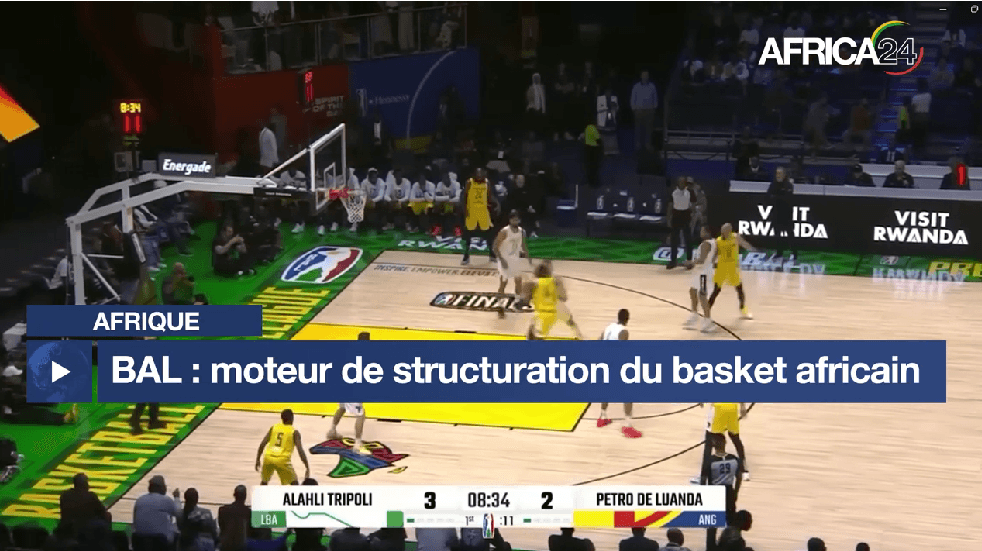
Africa24 TV adds that the BAL is broadcast in 214 pays and in 17 langues, with more de 250 professionnels des médias accrédités, while keeping a standards model inspired by the NBA. Africa24 TV also says clubs must propose professional contracts with a minimum remuneration of about 1 200 euros mensuels, while the league grants subventions that can reach 70 000 dollars per team.
Voices on growth
Africa24 TV quotes Matar Bâ, Ancien ministre des Sports du Sénégal, describing the BAL as a “moteur de structuration du basket africain” that increases the visibility and mobility of African players. The same Africa24 TV article points to the path of Jean-Jacques Boissy, described as “vainqueur et MVP de la saison 5 avec Al Ahly Tripoli,” as an example of how a player after a passage en Europe joined a BAL club. Le360 Afrique attributes to Amadou Gallo Fall, président de la BAL, the view that “accueillir cinq nouvelles équipes au sein de la famille de la BAL est un signe fort de la croissance continue de la ligue”.
Le360 Afrique also describes the league’s conference structure, naming the Conférence du Kalahari à Pretoria and the Conférence du Sahara à Rabat, and then placing the final phases in Kigali. In the same Le360 Afrique account, the calendar and locations are presented as a strategy of rotation and regionalisation, with the phases finales in Kigali linked to spreading economic and media returns across sub-regions.
Economy and stakes
Beyond the court, Africa24 TV says the BAL attracts investments and stimulates partnerships, citing Afreximbank, and it links the league to the construction of modern sports infrastructures in Rwanda, Sénégal and Afrique du Sud.
“Sport still accounts for only 0.5% of Africa’s GDP, compared with 2% of GDP in other regions of the world.”
Africa24 TV also ties the BAL to training programs including the NBA Academy Africa and Basketball Without Borders, while framing the league as combining development and social impact “notamment auprès des jeunes”.
AFD’s local Western piece argues that sport economy in Africa can be an accelerator of economic and social development, and it states that sport still accounts for only 0.5% of Africa’s GDP compared with 2% in other regions of the world.
AFD adds that “More investments, less charity. This is what Africa aspires to,” summarizing Masai Ujiri’s position in an op-ed for The Athletic.
In that same AFD article, the book Economy of Sport in Africa: Realities, Challenges and Opportunities is described as published by the African Sports & Creative Institute (ASCI) with the support of the AFD, and it is listed as available since January 15, 2022.