Benny Gantz Reopens Gate Marking Israel’s 18-Year South Lebanon Occupation Ending
Key Takeaways
- Gantz ordered the gate closed, signaling end of the 18-year South Lebanon occupation.
- Media debate the withdrawal's legacy and fears of renewed occupation in southern Lebanon.
- Israel's announced ground campaign plans raise concerns of prolonged occupation and mass displacement.
A gate closes, then opens
On the night of May 24, 2000, Brig. Gen. Benny Gantz—then the 40-year-old commander of the Lebanon Liaison Unit—passed through a gate in the fence between Lebanon and Israel, bringing up the rear of a convoy of tanks and military trucks carrying IDF troops back home across the border.
“Saturday, 02/05/2026 ArEnFrEs [](http://almanar”
Gantz gave the order to close and lock the gate, ending the 18-year IDF presence in Lebanon, and the Times of Israel says the key turning “also served to seal away the national memory” of the “frustrating, messy occupation of southern Lebanon.”
Last week, Gantz, now defense minister, spoke at a ceremony described as the climax of a “long, complex effort” to have the period recognized as a distinct military campaign, with medals distributed to its veterans.
“We are all reopening the gate today that I myself closed,” Gantz said, “to memories, to recognition, to healing the wounds, to embracing the soldiers.”
The Times of Israel frames the push for recognition as coming from conscripts rather than “generals and cabinet ministers like Gantz,” saying “the gate had already been pried open” by servicemen over the past two years.
It also describes the security zone as “a belt of land in southern Lebanon some 15 miles (24 kilometers) wide from the sea to the Shebaa Farms,” where the IDF and its proxy South Lebanon Army attempted to keep Palestinian and Hezbollah terrorists away from the Israeli border.
The article links the legacy of that period to Israel’s current security debates, arguing that “One cannot understand Israel’s leaders or the country without understanding the occupation of southern Lebanon.”
From 1978 to 2000
The Times of Israel traces how Israel’s engagement with Lebanon’s south evolved from ties with Maronite Christian villages into direct military support, describing a shift in the late 1970s as Syrian forces moved into Lebanon and PLO terrorists carried out attacks in Israel.
It says that in the 1970s, as Lebanon descended into a multifaceted civil war, Israel “in concert with Iran” backed Christian militias facing off against the Palestine Liberation Organization, providing “arms, equipment, training, and medical aid,” while “Israel expressly ruled out entering the fight.”

Northern Command chief Rafael Eitan is quoted saying, “We will not fight for them. We will help them… so they’ll be able to fight themselves,” and the article says what had been quiet cooperation “evolved into direct military support in the late 1970s.”
In 1978, after Palestinian terrorists hijacked an Egged bus and left 35 Israelis dead, the IDF responded with Operation Litani, including “massive airstrikes and a ground incursion.”
The Times of Israel then describes Israel’s aims during the second Menachem Begin administration, which began in 1981, as seeking the expulsion of Syria and the PLO and for the Maronites to be put in control of Lebanon.
The Indian Express, in an opinion framing, places Lebanon in a longer pattern, calling it “a theatre of other people’s wars for 50 years” and saying the current conflict between Israel and Hezbollah “is likely to reinforce the pattern.”
It adds that “This is the seventh time it has been invaded by Israel in the last 50 years,” and it argues that “Conflict is managed, not resolved.”
Voices on escalation and fear
As fears of a new occupation take shape, Lebanese and Israeli officials are quoted in ways that echo the past while disputing intentions.
“Israel’s announcement on Monday of a ground campaign in new areas of southern Lebanon is fuelling fears of a prolonged occupation among hundreds of thousands of displaced Lebanese”
Arab News reports that Lebanon’s President Joseph Aoun called the escalation a “prelude to ground invasion” and an “attempt to sever the geographical connection between the southern Litani region and the rest of Lebanese territory,” warning of “suspicious schemes to establish a buffer zone along the Israeli border, solidify the reality of the occupation, and seek Israeli expansion within Lebanese territory.”
Arab News also quotes Israel’s permanent representative to the UN, Danny Danon, denying annexation ambitions: “We have no interest in being there,” he said, adding, “Our goal is to make peace with Lebanon, but for that to happen, the Lebanese government must take control of the region, push Hezbollah south of the Litani, and respect Resolution 1701.”
Yet Arab News contrasts Danon’s denial with other Israeli officials, including Chief of the General Staff Eyal Zamir, who said: “We are now preparing to advance the targeted ground operations and strikes according to an organized plan.”
The same article quotes Finance Minister Bezalel Smotrich saying the campaign “needs to end with a different reality entirely,” and it includes his line: “The new Israeli border must be the Litani.”
In the Guardian, Israel’s defense minister Israel Katz is quoted warning that displaced residents “will not return to areas south of the Litani line until the safety of northern residents is ensured,” and he added that Israel has “instructed the IDF [Israel Defense Forces] to destroy the terror infrastructure in the contact villages near the border in Lebanon,” “just as was done against Hamas in Rafah, Beit Hanoun and the terror tunnels in Gaza.”
For displaced residents, the Guardian includes Abbas Awadeh of the municipality of Naqoura saying, “God forbid we return to the days of the previous border-strip occupation,” and he described the difficulty of returning: “It took us years before we were able to return to Naqoura. To return to that would be very difficult.”
Numbers, displacement, and destruction
The Guardian and Arab News both quantify the scale of the current fighting and displacement, while also describing how the geography of the Litani line and the buffer-zone language is shaping fears.
The Guardian says Israel has displaced “about 1 million people from wide swathes of the country,” and it reports that “Reports indicate more than 800 people have been killed, with some reports citing 826 to more than 850 deaths since the escalation began.”
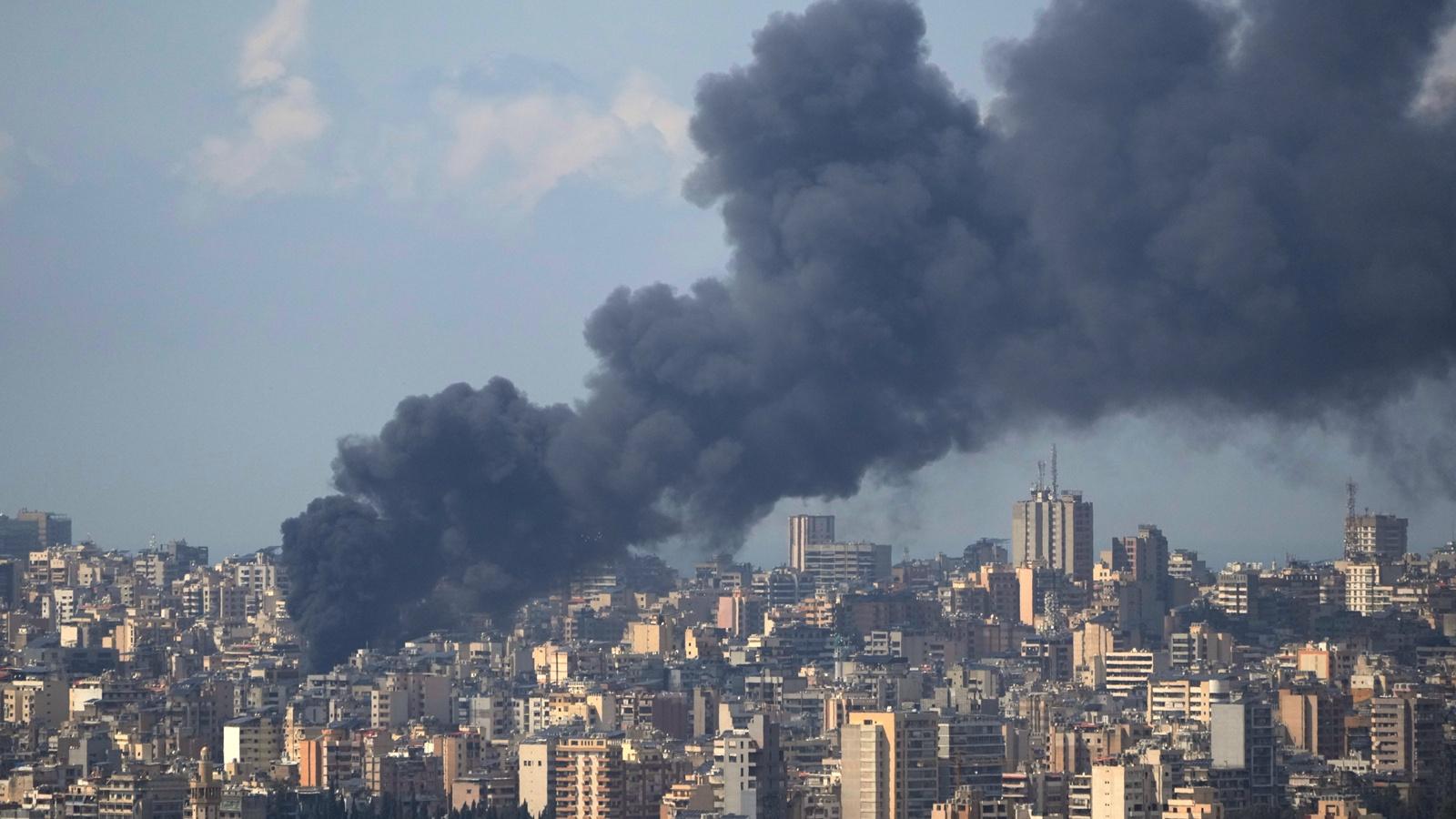
It also states that “Virtually everyone has fled Naqoura, a beach resort town on the Lebanese-Israeli border, since the Israeli military issued a displacement order last week,” and it describes the IDF ordering residents south of the Litani to “temporarily” move north on 4 March before what it said were strikes on Hezbollah targets, followed by “two more sweeping displacement orders in different areas of the country.”
Arab News provides additional figures, saying that “Since the latest outbreak of fighting, at least 1,000 people have been killed, 2,500 injured, and nearly a fifth of the population displaced, according to government figures,” and it adds that Dr. Ali Faour, head of the Center for Population and Development, puts the displacement figure at “1.3 million people across southern Lebanon, the southern suburbs of Beirut and the Bekaa Valley.”
Arab News reports that “Some 45,000 residential units have been partially or fully damaged or destroyed,” and it says “more than 70 percent of infrastructure — water, electricity, telecommunications and roads — destroyed in some towns.”
The Guardian also describes the November 2024 ceasefire agreement, saying Hezbollah was to pull back and “the Lebanese military was to take over, in exchange for Israel ceasing its bombardment,” and it says Israel said Lebanon never upheld its part of the deal while “the Israelis continued to carry out near-daily airstrikes.”
The Guardian’s Abbas Awadeh adds a lived description of the conditions, saying, “People really want to return to their towns, because the situation is very difficult. Sometimes a person can’t even secure food. Displacement is humiliating.”
Competing narratives of history
Across the reporting, the same historical reference—1982 to 2000—appears in sharply different ways, from Israeli security doctrine to Hezbollah’s messaging and international legal concerns.
“Lazar Berman is The Times of Israel's diplomatic reporter On the night of May 24, 2000, Brig”
The Guardian explicitly frames Katz’s statement as raising the risk of forced displacement and quotes Human Rights Watch researcher Ramzi Kaiss saying it would be “a war crime,” while also quoting Abbas Awadeh warning, “God forbid we return to the days of the previous border-strip occupation.”
Arab News similarly describes how Lebanese fear the buffer-zone language will “solidify the reality of the occupation,” quoting Aoun’s warning about “suspicious schemes to establish a buffer zone along the Israeli border.”
The Times of Israel, by contrast, treats the 18-year occupation as a legacy to be recognized and healed, quoting Gantz’s ceremony line about “reopening the gate” and describing how the “security zone” was “a belt of land” from the sea to Shebaa Farms.
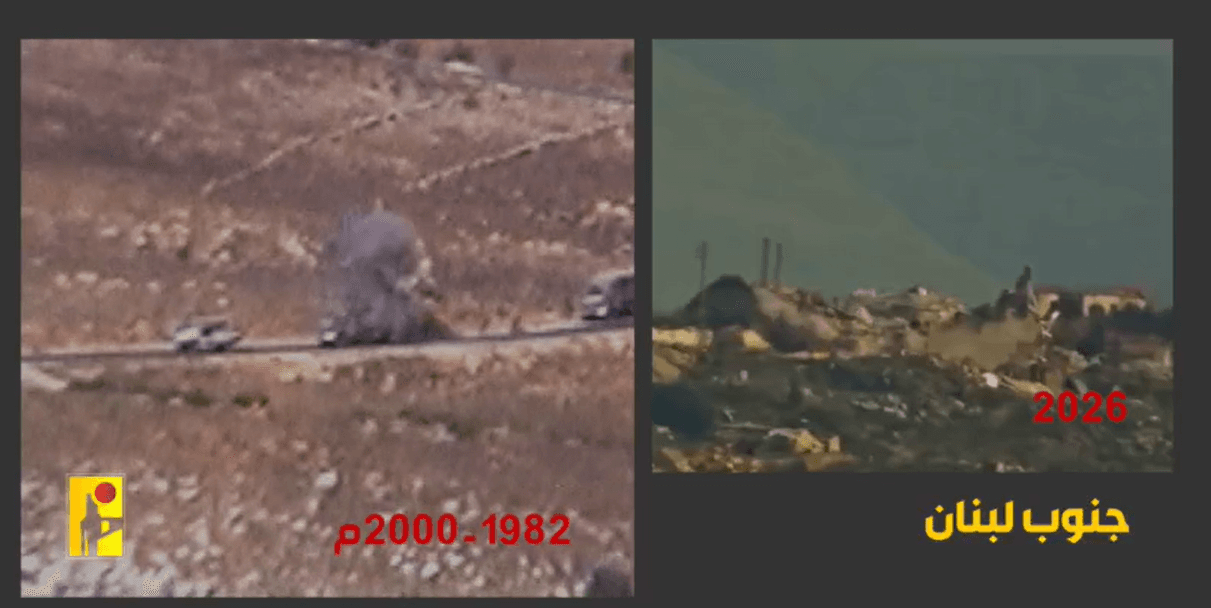
In a different register, Al-Manar TV Lebanon presents Hezbollah’s own narrative, saying a Hezbollah military media video “Reminds Israeli Enemy with 1982-2000 Period: History Will Repeat Itself,” and it describes the video “titled ‘Remember Well’” showing “the history of Resistance against the Israeli occupation in South Lebanon is repeating itself.”
The Al-Manar item says the video shows “After very attack by Hezbollah fighters, the Zionist helicopters carry the dead or injured soldiers to Rambam Hospital in Haifa,” and it repeats the claim that “Whether between 1982 and 2000 or in 2026, the same story of Israeli defeat is narrated.”
Taken together, the sources show how the same past occupation is invoked to support competing claims about what is happening now—recognition and healing in the Times of Israel, fears of prolonged occupation in the Guardian and Arab News, and a “history will repeat itself” framing in Hezbollah’s media.
More on Lebanon
Israeli Strikes Kill At Least 12 In Southern Lebanon Despite Ceasefire
19 sources compared

Israeli Strikes Kill At Least 15 In Southern Lebanon Despite Ceasefire
17 sources compared

Israeli Airstrikes Kill Nine in Tyre and Ain Baal as Lebanon Toll Reaches 1,368
14 sources compared
Israeli Army Kills Three Lebanese Civil Defense Volunteers at Majdal Zoun Funeral in Sour
10 sources compared