Britain22 June, 20263 min read
Brexit At 10: United Kingdom’s Economy Faces Weaker Growth, Higher Costs, Ongoing Uncertainty
This article is an automated aggregation of coverage from news outlets. Our editorials offer in-depth analysis curated by the NewsCord team.
Growth remains weaker than EU peers a decade after Brexit. Costs rise and investment and trade activity stay depressed due to Brexit.
CNN was read line by line by the Watchdog: 2.8. See the score →
Brexit’s ten-year bill
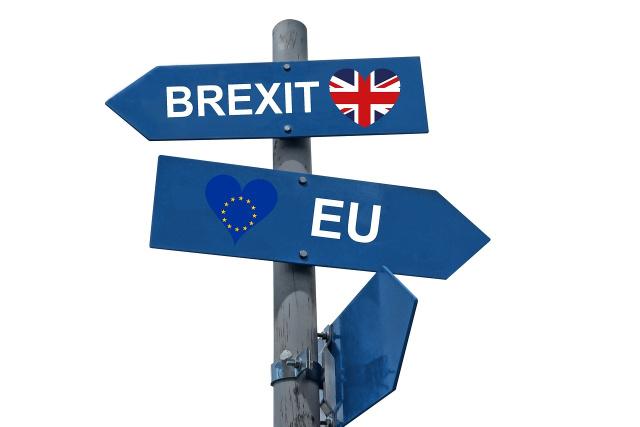
On June 23, 2016, Britain held the Brexit referendum, with 51.9% of Britons opting to leave the EU and 48.1% to remain, setting off a drawn-out divorce that still shapes debate a decade later. The United Kingdom left the European Union on 31 January 2020 and completed its exit from the Single Market and the customs union on 1 January 2021, while the economic and political benefits promised during the campaign remain contested. CNN says economists broadly agree that leaving the EU has weighed on the UK’s economic growth potential, with estimates ranging from 2% to as much as 8% of foregone output.
ABC reports that a study based on Bank of England data estimates Brexit entailed a loss of around 6% of UK economic activity, and it adds that the economy minister Rachel Reeves has cited estimates pointing to a hit of up to 8% on GDP. ABC also says the think tank UK in a Changing Europe concludes there is broad consensus among economists and researchers that Brexit has caused the British economy to generate less wealth than it would have produced had it remained in the EU.

Voices split on impact
Michael Saunders, a senior adviser at consultancy Oxford Economics and a former Bank of England official, told CNN that “Brexit is a constant drag on the economy,” adding that it “continues to reduce the level of gross domestic product compared to what it would otherwise be.” Julian Jessop, a Leave-supporting independent economist, told CNN that the “initial impact” of leaving the EU has “clearly been negative,” while arguing the costs are “smaller than feared” and likely to “fade over time.” ABC reports that Andrew Bailey, the governor of the Bank of England, acknowledged that “if the size of the markets we trade with is reduced, that tends to have a negative impact on growth.”
The same ABC piece says Prime Minister Keir Starmer has been driving a “reset” strategy with Brussels since taking office at Downing Street, aiming to strike deals in trade, energy, education, culture, and security that would reduce some of the frictions created by Brexit. ABC also frames the policy debate through four major options in a report published by UK in a Changing Europe: a customs union, a model similar to Switzerland’s, joining the European Economic Area, or rejoining the European Union.

What comes next for Britain
ABC says the government’s “reset” strategy aims to reduce frictions created by Brexit without formally challenging the exit, and it reports that UK in a Changing Europe estimates the long-run GDP increase from planned agreements would hardly exceed 0.5%. The same ABC article lists four future relationship options, including a customs union and rejoining the European Union, while noting that analysis is complicated by other shocks such as the Covid-19 pandemic and the energy crisis triggered by Russia’s invasion of Ukraine. CNN adds that the promised benefits from less regulation and reduced rates of immigration have been “even less clear,” and it points to official figures showing UK-EU trade worth £856 billion ($1.1 billion) last year.
CNN also reports that net migration to the UK has averaged 550,000 a year since 2021, when the post-Brexit immigration system came into force, compared to 250,000 in the 2010s, citing the Migration Observatory at the University of Oxford. In the same CNN account, a software developer from the West Midlands named Geraint said that “We were promised as a country we’d be better off (outside the EU) and I just don’t feel as if that’s been true,” and he said he would “100%” vote to remain in the EU if given a second chance.