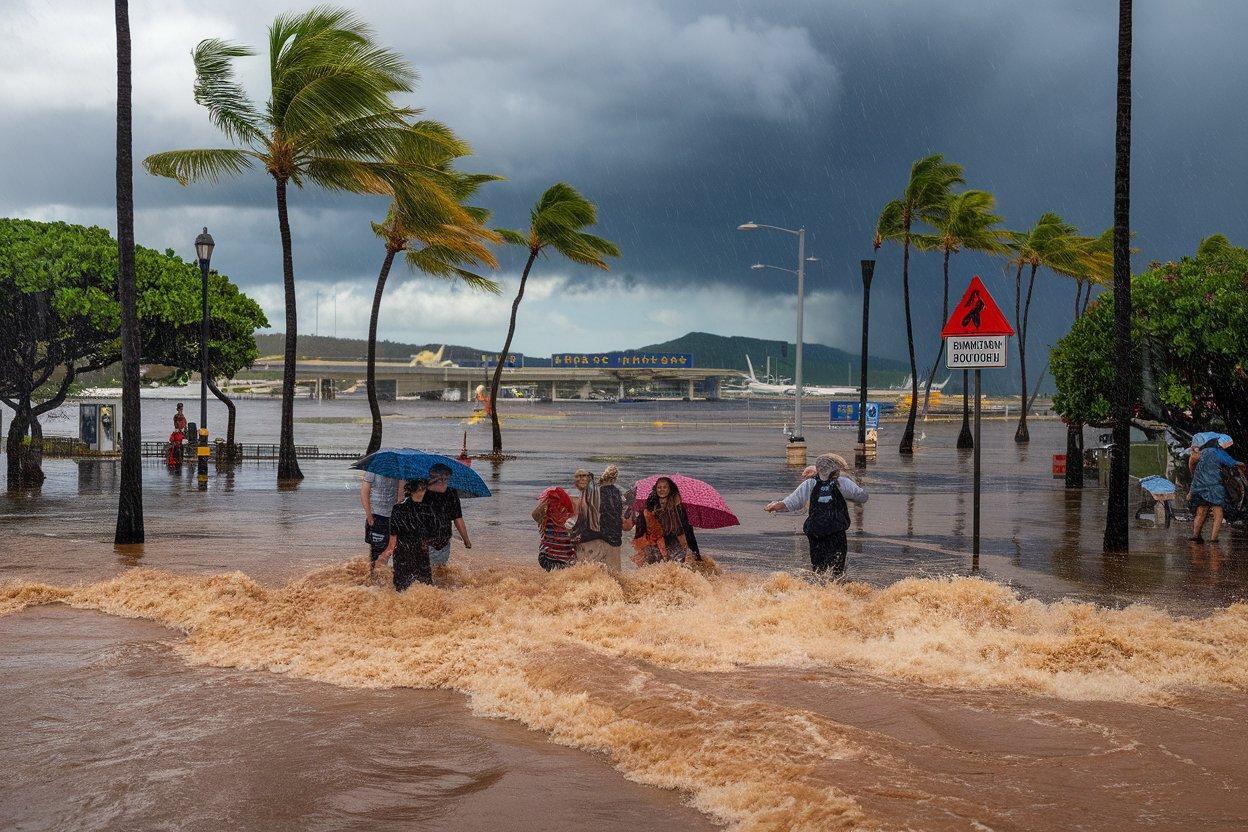
Canada Expands Travel Advisory Amid Hawaii Flood Emergency
Key Takeaways
- Canada expanded its Hawaii travel advisory due to ongoing flood emergency as of March 20.
- Wahiawa Dam's imminent failure prompted a flash flood warning for Oahu.
- Maui was added to the advisory alongside Oahu and other islands.
Advisory Expansion
Canada has expanded its travel advisory for Hawaii due to severe weather conditions affecting multiple islands including Maui, Oahu, the Big Island, and Kauai.
“Canadians travelling to Hawaii or those with upcoming trips to the state are urged to be extra cautious”
The Government of Canada's updated guidance highlights widespread flooding and ongoing flash flood risks across the archipelago, urging travelers to monitor local alerts and expect disruptions.

This advisory follows days of intense rain and historic flooding that began on Oahu and the Big Island and have since impacted other islands.
Canadian travelers are being encouraged to review their plans, stay in close contact with airlines and accommodation providers, and follow any safety information issued at their destination.
Travel analysts note that Canada's move aligns with similar cautionary messaging from other countries during recent severe weather events in popular tourist regions, focusing on short-term risk management rather than avoiding Hawaii entirely.
Flooding Severity
The current flooding is described as Hawaii's worst in more than two decades, with heavy rains saturating soils already soaked by earlier winter storms.
On Oahu's North Shore, muddy floodwaters have swept through residential areas, lifting vehicles, damaging homes and cutting power to thousands of customers.

The Big Island remains under flash flood watches in several districts as storm bands continue to pass over the island, while Maui has moved into the center of the severe weather discussion with intense rainfall affecting communities in West Maui.
Local authorities are paying particular attention to burn scar zones from the 2023 Lahaina wildfire, where the loss of vegetation increases runoff into coastal neighborhoods.
Weather briefings from the National Weather Service in Honolulu highlight a persistent kona low pressure system responsible for the prolonged rainfall and thunderstorms that have impacted the entire state.
Travel Disruptions
For Canadian visitors and international travelers alike, the severe weather has translated into practical challenges including delayed flights, reworked itineraries, and accommodation disruptions.
“More news on this day Canada has widened its travel advisory for Hawaii as severe weather, widespread flooding and ongoing flash flood risks now affect Maui alongside Oahu, the Big Island, Kauai and other islands in the archipelago”
Major airlines serving Hawaii have issued weather waivers allowing passengers to change travel dates without standard fees when flights involve affected airports such as Honolulu on Oahu, Kahului on Maui, Lihue on Kauai and Hilo or Kona on the Big Island.
Hotel and vacation rental operators in the most affected islands have shared information about flexible rebooking options and safety measures, particularly for guests in low-lying coastal areas.
Travelers are advised that conditions can vary significantly over short distances, with sunny weather in some resort areas while hazardous conditions persist elsewhere on the same island.
The updated Canadian advisory serves as an important reminder that even popular destinations can host unpredictable weather conditions that require careful planning and awareness.
Safety Guidance
Safety authorities are emphasizing the importance of caution during recovery efforts, with Honolulu experiencing multiple traffic advisories due to hazardous conditions from fallen utility poles, damaged roads, and flooding.
Some areas remain under boil water notices as authorities work to restore infrastructure and assess damage across the archipelago.
Meteorologists are warning that while the immediate threat from the storm has passed, saturated ground and overflowing streams mean that even moderate additional rain can trigger new rounds of flooding and debris flows.
Travelers are urged to continue monitoring official updates and to avoid entering floodwaters or unsafe areas.
The advisory specifically encourages Canadians to confirm flight arrangements, check destination weather frequently, and build flexibility into their travel plans to accommodate rapidly changing conditions.
Insurance Preparedness
Insurance industry experts are advising travelers from Canada and other countries to verify their coverage for weather-related disruptions, as policy terms can vary widely on issues such as trip cancellation, delays, and emergency accommodation during natural hazards.
“Canadians travelling to Hawaii or those with upcoming trips to the state are urged to be extra cautious”
While Canada's advisory doesn't discourage travel entirely, it emphasizes practical awareness and readiness to ensure journeys remain enjoyable and safe.
Registered Canadians abroad may receive direct updates from Global Affairs Canada in the event of emergencies, beyond general travel advisory notices, through the Registration of Canadians Abroad service.
The guidance suggests that taking extra moments to stay aware of current conditions, heed evacuation notices, and prepare for possible weather-related changes can make all the difference between an ordinary holiday and one that ends with regret.
Regional meteorological agencies had already highlighted an elevated risk of significant rainstorms and flash flooding across Hawaii during the 2025-2026 wet season, indicating these extreme weather events may become more frequent.
More on Technology and Science

Google Unveils TurboQuant Compressing KV Cache Sixfold, Sparking Memory-Chip Selloff
11 sources compared

US Demands Mexico End Cuban Medical Missions
14 sources compared

NASA Pauses Gateway to Focus on Building Permanent Moon Base
44 sources compared

OpenAI shuts down Sora, ends Disney partnership
31 sources compared