Technology and Science26 March, 20262 min read
Google Unveils TurboQuant Compressing KV Cache Sixfold, Sparking Memory-Chip Selloff
Google unveils TurboQuant AI memory compression, reducing KV cache usage up to sixfold. Memory-chip stocks fell sharply after TurboQuant reveal, with Samsung and SK Hynix among declines.
Announcement and tech details
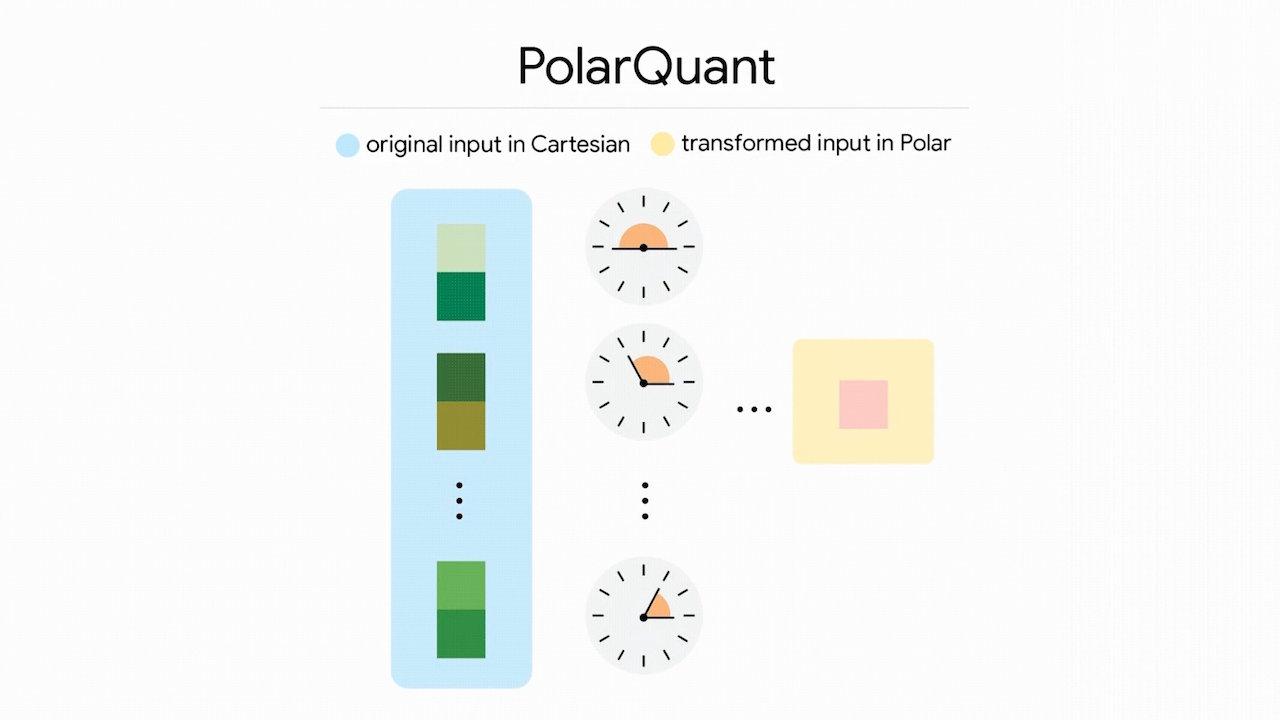
Google researchers unveiled TurboQuant, a software approach to compress the key-value cache used in AI model inference, promising memory reductions of sixfold while preserving accuracy. TurboQuant relies on two methods, PolarQuant and QJL, forming a two-stage pipeline to shrink memory while maintaining performance. According to Google, the technique targets the KV cache bottleneck and they plan to present at ICLR 2026.
“The compression method, which uses a form of vector quantization to clear cache bottlenecks in AI processing, would essentially allow AI to remember more information while taking up less space and maintaining accuracy, according to the researchers.”
The release is described as a lab breakthrough that has not yet been deployed broadly. Cloudflare CEO Matthew Prince likened the development to Google's DeepSeek moment, underscoring the perceived potential impact on AI hardware costs.

Market reaction and stocks
Memory-chip stocks slid on the news, as investors reassessed AI memory demand and the potential impact on DRAM and high-bandwidth memory markets. The Next Web reports memory stocks fell, with Micron down around 3 percent, Western Digital about 4.7 percent, and SanDisk down roughly 5.7 percent.
EconoTimes notes Samsung Electronics and SK Hynix also fell, highlighting a broader market reaction to TurboQuant and its implications for AI hardware. Boursier notes that the declines extended to Micron, SanDisk, and SK Hynix, mapping the nervous reaction across the memory supply chain.

Tech specifics and methods
Technically, TurboQuant uses a two-stage framework that replaces conventional vector quantization with a PolarQuant transformation followed by Quantized Johnson-Lindenstrauss, or QJL, to compress the KV cache while preserving inner-product quality. The approach avoids storing normalization constants, which traditional quantization incurs, enabling a claimed sixfold memory reduction without sacrificing accuracy. Google describes TurboQuant as data-oblivious and training-free, with benchmarks across LongBench, Needle-in-a-Haystack, and ZeroSCROLLS showing strong results at reduced precision.
“The compression method, which uses a form of vector quantization to clear cache bottlenecks in AI processing, would essentially allow AI to remember more information while taking up less space and maintaining accuracy, according to the researchers.”
The work will be presented at ICLR 2026, building on PolarQuant and QJL as its core components. Analysts and press notes emphasize that TurboQuant remains a lab breakthrough, not a production-ready solution.
Broader uses and benchmarks
Beyond the immediate memory question, TurboQuant is positioned as enabling more efficient vector search and semantic retrieval for enormous vector databases, which could lower costs for AI services and help power real-time analytics. VentureBeat notes that TurboQuant speaks to a broader push for massive, efficient, and searchable vectorized memory that can run on hardware users already own. The Next Web highlights benchmarks and datasets used to test the approach, including Needle-in-a-Haystack and LongBench, underscoring the potential for improved retrieval in long-context models.
Numerama adds that the PolarQuant approach reframes how AI memory is structured, suggesting wide applicability beyond pure compression. SDxCentral reiterates that TurboQuant is designed as a data-oblivious, training-free solution with a two-stage process centered on PolarQuant and QJL.

Cautions and outlook
Despite the hype, analysts caution that TurboQuant is still experimental and not production-ready; validation and independent testing will be crucial to assessing real-world viability. TechBuzz explicitly calls the development a lab breakthrough with no clear path to production deployment yet.
“Still, it’s worth noting that TurboQuant hasn’t yet been deployed broadly; it’s still a lab breakthrough at this time.”
TechCrunch similarly frames TurboQuant as a lab breakthrough pending broader deployment and verification. The Next Web cautions that while the approach is promising, real-world deployment remains unproven and depends on further validation.
