Canada · 08 September, 2026 · 3 min read
Mark Carney’s Canada Tariffs Take Effect After U.S. Trade Talks Collapse
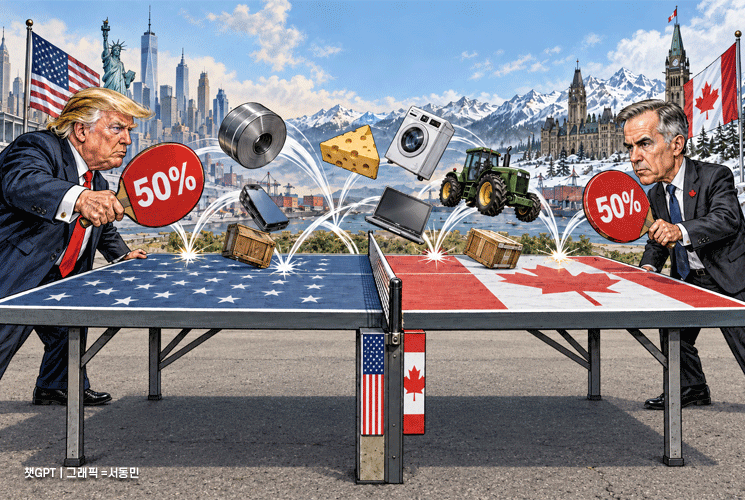
Canada’s retaliatory tariffs on about $20 billion of U.S. goods take effect. Tariffs range from 15% to 50% on hundreds of U.S. products.
Whether protective justification or escalation risk is foregrounded.
8 of 9 outlets skipped it: trump uses Smoot-Hawley Section 338 tool for unilateral 50% tariffs.
117outlets compared
Same story, two versions
tap a side to read it in full
The New York Times
“The more pressing concern is a potential cycle of retaliation, one that results in even higher”Read the original ↗
BBC emphasises Carney’s worker-protection rationale, while the New York Times emphasises the retaliation cycle risk.
Tariffs snap into place
Canada’s retaliatory tariffs on U.S. goods took effect just after midnight on Tuesday as Prime Minister Mark Carney increased economic pressure after negotiations collapsed last month, intensifying an 18-month-old trade war.
“Canada's retaliatory tariffs on U.S. goods took effect just after midnight on Tuesday”
The counter-tariffs cover $20 billion of U.S. goods, with duties ranging from 15% to 50% across products from steel and furniture to clothing and electronics, and Canada said the measures were a “dollar-for-dollar” response.

Carney said in a video address that the counter-tariffs against the U.S. “are necessary to protect our workers,” while also telling Canadians that “That pivot will come at a cost.”
The BBC reported Canada’s levies would apply to nearly C$28bn ($20bn; £15bn) of American products, from steel to furniture to cotton T-shirts, and would be as high as 50%.B
The dispute also includes threats tied to Bombardier, after Trump threatened to bar the sale of planes made by Canada-based aerospace company Bombardier unless the firm agreed to manufacture products in the U.S.
Carney, Trump trade barbs
Carney framed the trade fight as a pivot away from the U.S. as its largest trading partner, saying the counter-tariffs “are necessary to protect our workers” and that “That pivot will come at a cost.”
Trump, meanwhile, threatened to block sales of Bombardier in the United States, posting on Truth Social: "NO MORE SELLING BOMBARDIER IN THE UNITED STATES!"

The BBC added that U.S. trade representative Jamieson Greer said Washington would consider imposing tit-for-tat tariffs on Canada as early as Tuesday, telling CBC News, "We'll see this afternoon,".B
In a separate ABC News account, Trump warned of escalation and said, "If they want our Market, they must build here, and stop treating America like a 'piggybank,'" while Canada said its retaliatory measure would target about $20 billion worth of U.S. products.
ABC News also reported Trump signed an executive order on Aug. 27 changing the name of Lake Ontario to "Lake America," while Carney said on X late last month, "This lake is called Lake Ontario -- today and forever."
What’s at stake next
Reuters said the rising tensions create uncertainty about the broader U.S.-Mexico-Canada free trade agreement, which is up for annual reviews after President Donald Trump declined to extend it for another decade.
“uncertainty about the broader U.S.-Mexico-Canada free trade agreement”
Reuters also quoted Michael Harvey, executive director of the Canadian Agri-Food Trade Alliance, saying, "What we are worried about is an escalatory spiral," while adding that the prime minister needed leverage.
The BBC reported that both U.S. and Canadian officials said they would like to strike a deal, but no new talks had been scheduled since negotiations collapsed in late August.B
The CBC News framing in the BBC piece also included that Carney said his government would support workers affected by the ongoing trade war with the U.S. "for as long as it takes," as the tariffs range up to 50%.B
ABC News reported that for now, levies apply to a sliver of goods that travel between the U.S. and Canada, but it said a potential escalation threatens to deepen the pain for both economies, citing Campbell Harvey’s warning that the situation could become a “really bad equilibrium.”