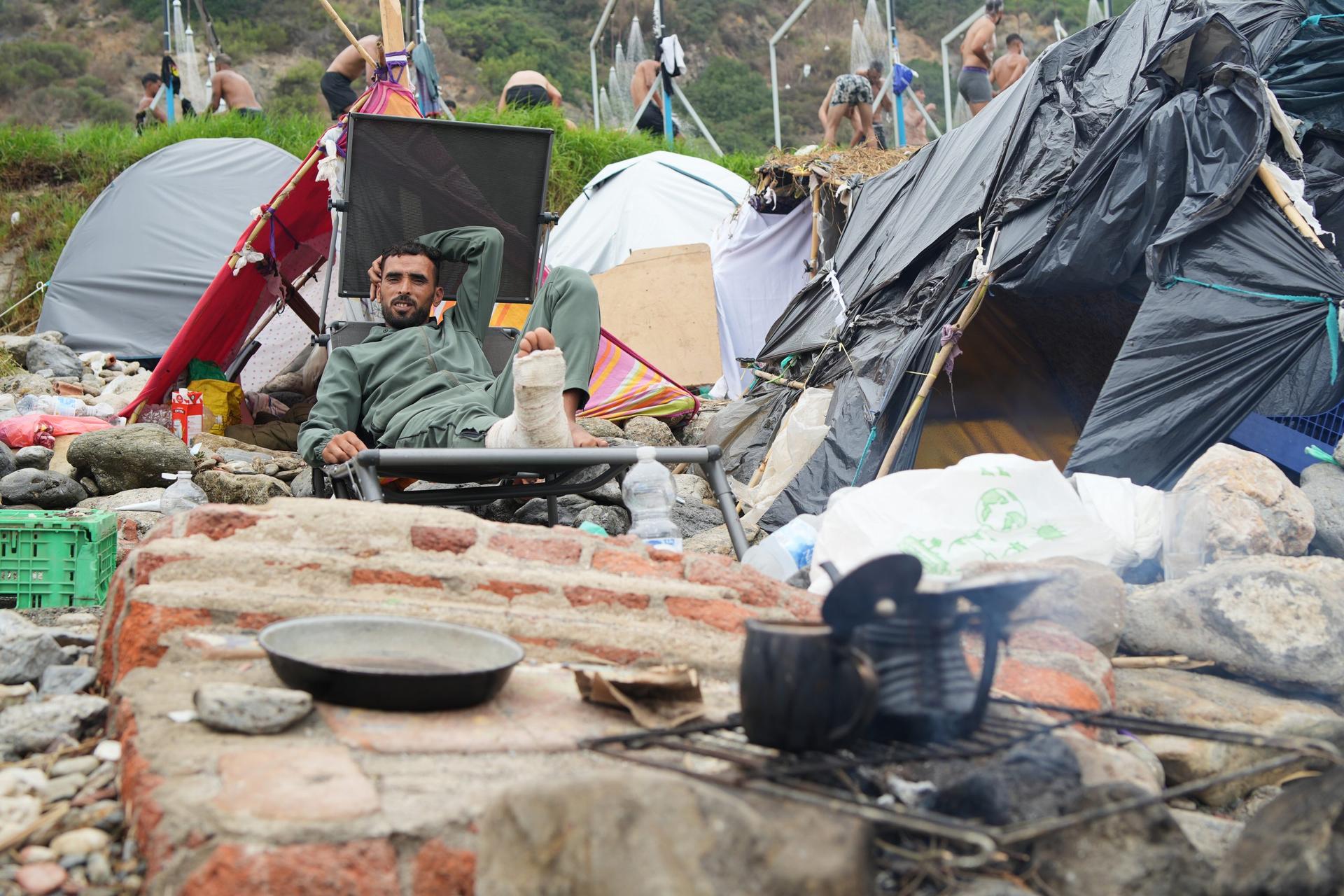
Full story
Ceuta violence after influx
A month after tens of thousands of migrants entered Spain’s autonomous city of Ceuta from Morocco, violence erupted as tensions mounted between locals and foreign arrivals, with the BBC describing outbreaks that followed anti-migrant demonstrations becoming increasingly violent.
“At least 72,000 migrants crossed from Morocco into Ceuta on 30 and 31 July”
The BBC reported that at least 72,000 migrants crossed from Morocco into Ceuta on 30 and 31 July, most swam around a border fence, and at least 100 people died during the mass crossing according to figures from Ceuta’s mayor.
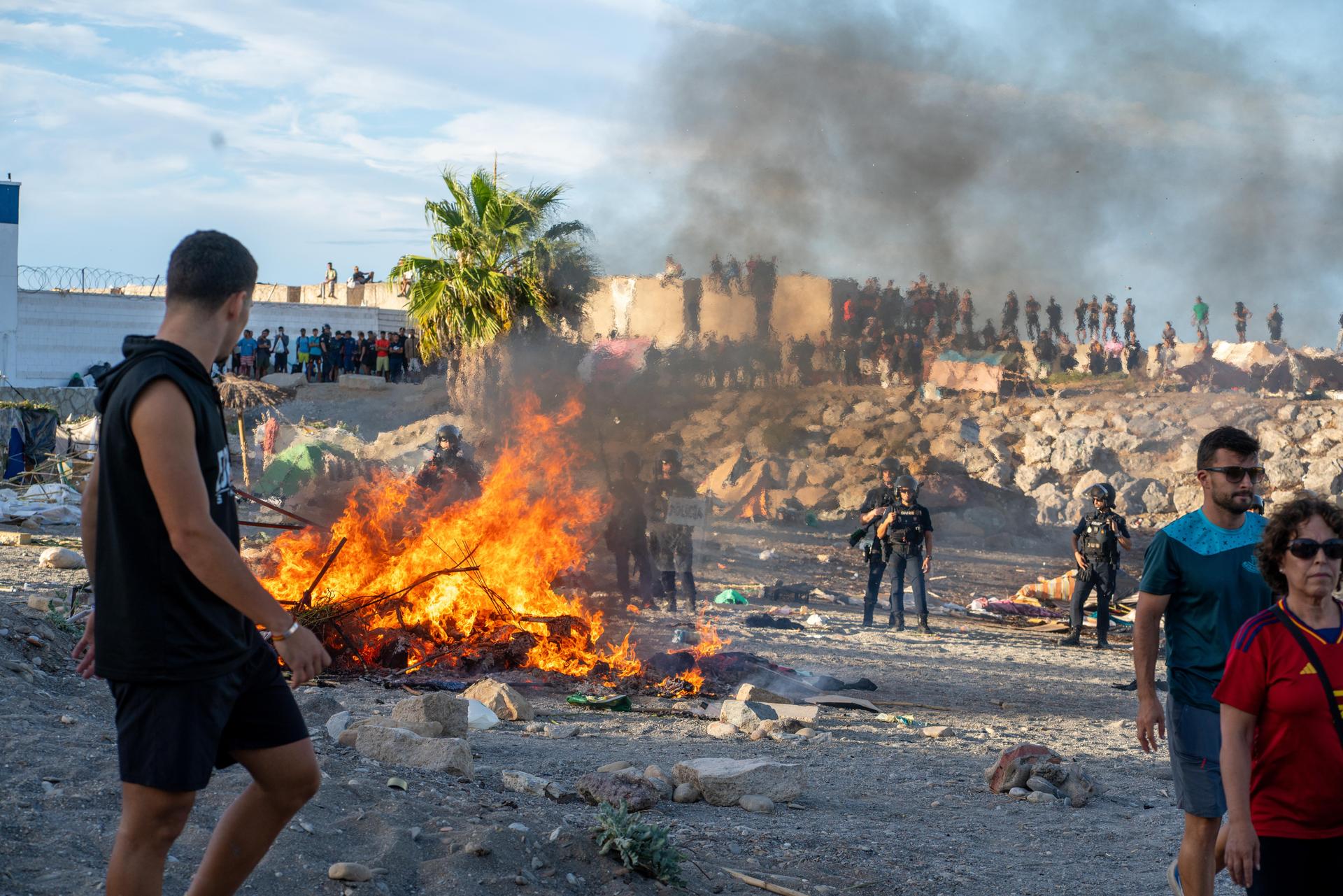
In the same period, the BBC said several dozen locals prevented Red Cross personnel from distributing food and water to migrants, and afterwards some set fire to migrant camps on Trampolín beach and there were clashes with police.
The BBC also tied the unrest to the arrest of 12 migrants accused of throwing stones at a military vehicle, breaking its windows and injuring the four men inside, and it said journalists and film crews reported being threatened.
Ceuta’s mayor, Juan Jesús Vivas, told Antena 3 television, "This is a city which has been under pressure, […] which has the right to normality," as Spain’s government appealed for calm and accused Vivas’s People’s Party (PP) and the far-right Vox of stoking tensions.
Competing blame and quotes
In Congress, Interior Minister Fernando Grande-Marlaska told a committee that "We have heard during these weeks rhetoric and comments that contribute to the stigmatisation of immigrants" as he sought to counter claims that the government was struggling to manage the crisis.
The BBC reported that José María Figaredo, a member of Congress for Vox, is being investigated for a possible hate crime after saying soon after the migrants’ arrival that they should be "hunted down, one by one".

Opposition and local leaders framed the crisis differently, with Javier Celaya of the PP accusing the government of treating "the invaders as victims when the real victims are us, the people of Ceuta".
The BBC said Defence Minister Margarita Robles apologised to people in Ceuta who "may have felt, or who even still feel, abandoned or not sufficiently cared" as the government unveiled plans to overhaul Spain’s immigration laws.
Spain’s Foreign Minister José Manuel Albares told the congressional committee that he "roundly rejected" Morocco’s comments about territorial integrity, while the BBC said Morocco has maintained a longstanding claim to Ceuta and Melilla.
EU help, aid, and next steps
Spain asked the European Commission for support from the European Border and Coast Guard Agency (Frontex) and Europol to classify and organize care for foreigners who remain irregularly in Ceuta, with the request sent by Interior Minister Fernando Grande-Marlaska to Beate Gminder.
“Spain has requested the European Commission’s support from the European Border and Coast Guard Agency (Frontex) and Europol”
Elma Saiz, Minister of Inclusion, Social Security and Migrations, told Congress that Spain’s obligation is to protect the border and, in parallel, "preserve Europe’s humanitarian values," as she closed her appearance invoking "the values of social democracy".
The BBC said the government would launch an immediate investigation into violence, while other coverage described a Ceuta local assembly declaration that "strongly condemns the use of any type of violence" in a city "on the verge of collapse."
The government also increased emergency aid for Ceuta’s humanitarian response, with ABC reporting an increase of up to 44.5 million euros and saying Saiz thanked the Red Cross after a sabotage attempt in food distribution.
As the crisis continued, the BBC said several thousand migrants remain in Ceuta, many sleeping rough on beaches or streets, and it reported that the vast majority returned to Morocco within hours of arrival.