China31 October, 20253 min read
China’s Xi Defends Global Free Trade and Multilateralism at APEC Summit After Deal with Trump
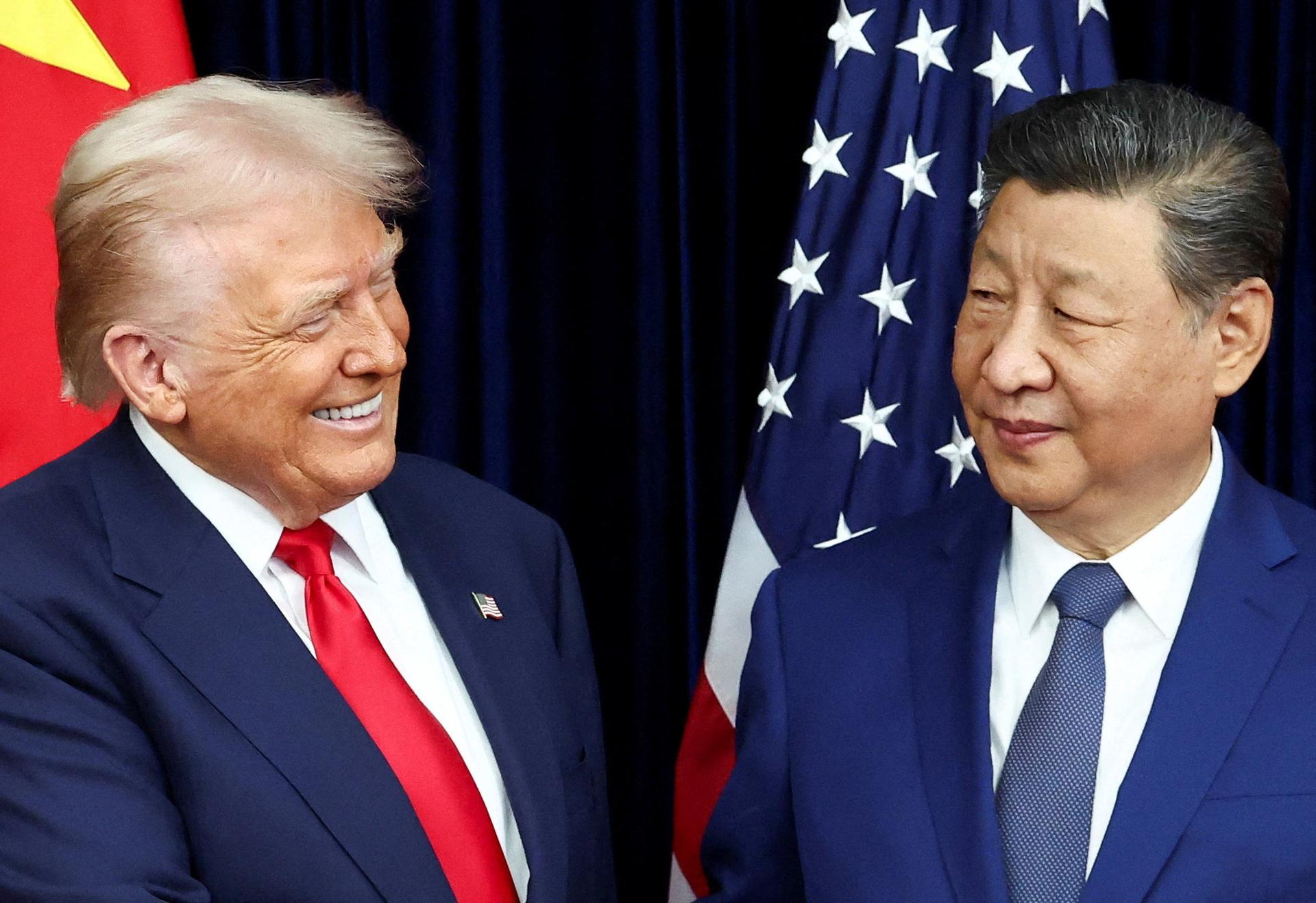
Xi Jinping pledged to defend global free trade and multilateralism at the APEC summit. Xi and Trump agreed to a trade truce, reducing U.S. tariffs and easing rare earth export curbs.
24 outlets told this the same way.
China-US Relations at APEC Summit
At the APEC summit in Gyeongju, South Korea, Xi Jinping portrayed China as a defender of global free trade and multilateral cooperation. This came shortly after a thaw with Donald Trump that included tariff reductions, resumed U.S.-bound soybean purchases, and a relaxation of Chinese rare earths restrictions. Multiple outlets reported Xi’s calls to stabilize supply chains, expand green-industry cooperation, and anchor “true multilateralism” in WTO rules.
“Chinese leader Xi Jinping emphasized China's commitment to defending global free trade and multilateral cooperation amid rising trade tensions.”
Trump exited early or skipped the main forum, drawing criticism over U.S. standing in a bloc representing a large share of the world economy. Treasury Secretary Scott Bessent led the U.S. delegation as Xi met or planned meetings with regional leaders. The summit narrative was dominated by the rivalry between the U.S. and China and the search for a post-trade-war recalibration.

Trump-Xi Trade Relations Update
Details of the Trump–Xi trade thaw vary by outlet. Devdiscourse reports a numerical framework including U.S. tariffs reduced from 57% to 47%, halved fentanyl-precursor tariffs, a one-year pause on rare earths export controls, and steps on TikTok and port fees. Rappler summarizes a 10% U.S. tariff cut and a one-year suspension on rare earths limits alongside resumed soybean purchases.
Several Western outlets describe an easing but differ on formality. NBC News says no formal trade deal was finalized.

RTE.ie and others call it a tentative or fragile truce that restores relations closer to the pre-trade-war baseline. Unresolved issues like Nvidia’s Blackwell chips and Taiwan were left off the table.
Xi's APEC Multilateralism Focus
Xi’s APEC message emphasized strong support for multilateralism. Anadolu Ajansı reported his call for “true multilateralism centered on the WTO,” open regionalism, and inclusive growth. The Meghalayan Express and WRAL highlighted his appeals for supply-chain stability and cooperation in green industries.
“Xi highlighted the importance of working together during turbulent times, called for supply chain stability... and expressed interest in expanding cooperation in green industries and clean energy.”
These efforts were explicitly framed as a response to U.S. attempts to decouple economically. Al Jazeera provided a procedural update, noting that Seoul sought a joint statement endorsing free trade.
However, experts cautioned that the final text might be weakened due to divisions among members. These divisions stem from the rivalry between the U.S. and China as well as structural challenges like an aging population and the labor impacts of artificial intelligence.
Summit Diplomacy and Meetings
Diplomacy on the summit sidelines broadened beyond trade optics. Al Jazeera notes Xi’s meeting with Canada’s Mark Carney—the first formal leaders’ talks since 2017—and a scheduled meeting with South Korea’s Lee Jae Myung on denuclearization. WRAL lists planned meetings with Lee and Japan’s Sanae Takaichi.
Western Alternative coverage from theqldr.au and The Sun Malaysia emphasizes Bessent representing the U.S. and a fragile truce on rare earths, plus additional color like Nvidia’s CEO appearing at a related event. Meanwhile, NBC situates the Trump–Xi sit‑down in Busan (as distinct from the APEC venue in Gyeongju), underscoring how different outlets locate the week’s center of gravity.

Diverse Perspectives on Xi's Trip
Beyond trade, sources diverge sharply on the trip’s wider implications. Pakistan Observer and TRT World adopt an upbeat tone—Xi lauds 5.2% growth and a “vast ocean of opportunity.” Both outlets praise partnership language and, according to TRT World and RTV English, credit Trump with advancing a Gaza ceasefire.
“Trump announced he had ordered the Pentagon to resume nuclear weapons testing... Taiwan was notably not discussed.”
Western mainstream coverage highlights hard-edge moves like Trump’s order to resume U.S. nuclear testing and notes that Taiwan was not discussed. Atlantic Council shifts focus to enduring espionage threats and U.S. vulnerabilities. Al Jazeera highlights structural headwinds—demographics and AI—testing APEC’s ability to function in an era of great-power rivalry.