Technology and Science07 July, 20262 min read
Discord Bug Wrongfully Banned More Than 8,000 Users Over Harmless Images Since May
This article is an automated aggregation of coverage from news outlets. Our editorials offer in-depth analysis curated by the NewsCord team.
Discord AI moderation wrongly banned about 8,000 accounts for harmless grid images since May 2026. The ban fault stemmed from a hash-matching system confusing grid patterns with harmful content.

Discord grid-image bans
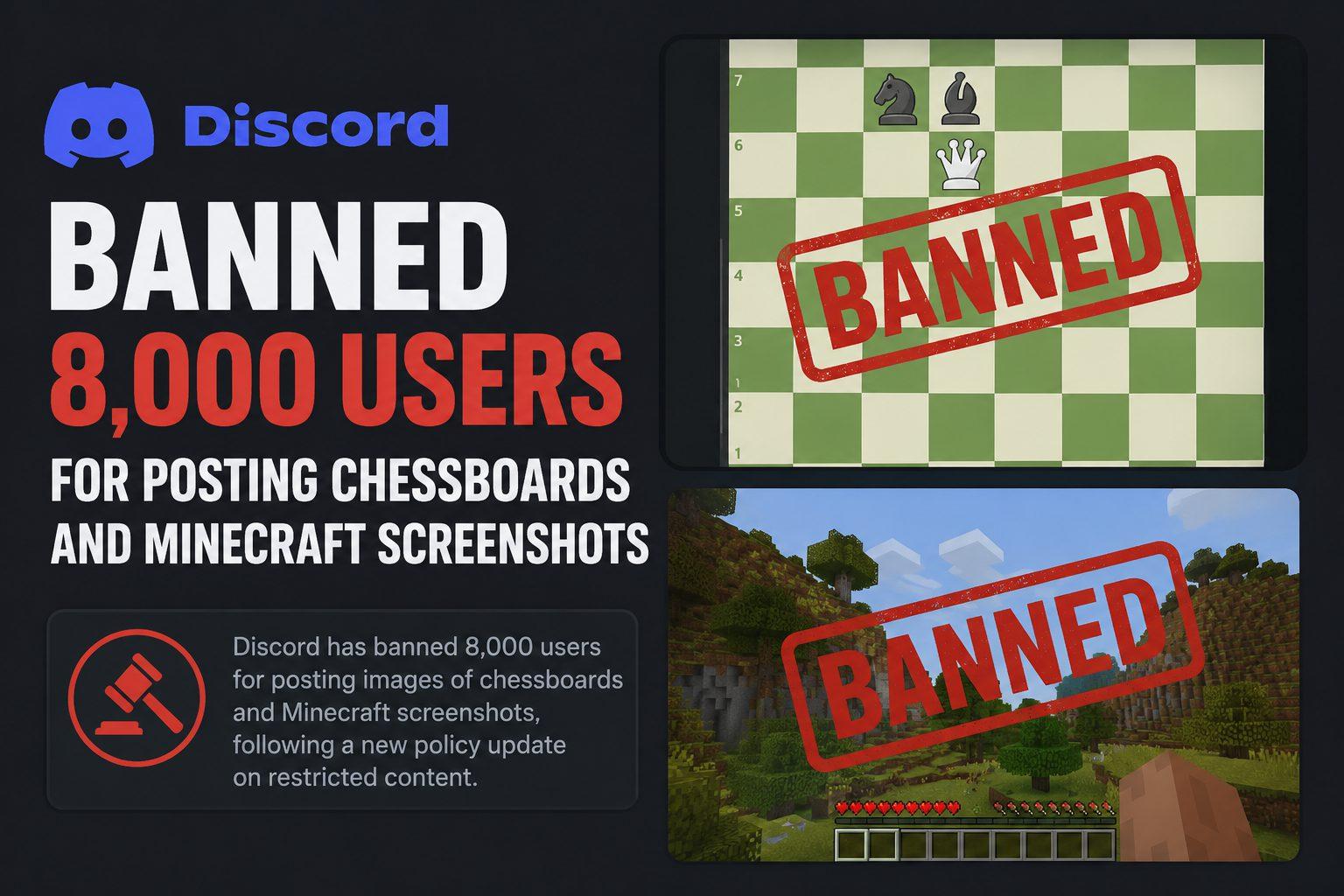
Discord acknowledged a bug in its AI moderation system that mistakenly banned more than 8,000 users over harmless images, with the issue affecting accounts since May and an additional 200 users banned over the weekend before the problem was fixed. TechCrunch reported that the harmless images included spreadsheets, chessboards, game textures, and white and gray transparent backgrounds, while Discord said its systems flag content by matching it against known harmful material.
In a thread on X, Discord Support wrote, “Our systems flag content by matching it against known harmful material,” and the company added that “This kind of similarity matching can produce false positives.” Discord said the intended behavior was for a human moderator to review flagged content, but a bug caused the system to immediately ban affected accounts instead of pausing uploads during review.

Restoration and the bug
Discord Support also said, “We’re working on better safeguards so this can’t happen again,” after the company confirmed that all affected accounts were in the process of being restored. Engadget reported that about 200 accounts were caught by the issue over this weekend, while the problem may have impacted around 8,200 accounts since May 2026.
Engadget quoted Discord’s support explanation that “The intended behavior is to temporarily pause uploads during that review, not ban the account,” and that “We had a bug that caused the latter.” Engadget further said the same bug prevented the ban from being lifted automatically after staff reviewed and cleared the accounts, leaving bans in place until Discord’s fix took effect.
How similarity matching works
PetaPixel described how perceptual hashing can be used in identifying images by converting an image to grayscale, downscaling it to a much lower resolution, dividing it into sections of squares, and assigning each square a unit value based on brightness relative to neighboring squares. PetaPixel said that Ofcom notes perceptual hashing is among the two most effective means of detecting, deleting, and preventing the spread of CSAM online, alongside metadata analysis.
PetaPixel also connected the approach to technologies such as Microsoft’s PhotoDNA, which is used specifically to combat the spread of child sexual abuse material (CSAM) online, and to Apple’s 2021 plan to scan iPhone photo libraries based on perceptual hashing. Against that backdrop, TechCrunch reported that Discord’s automated safety system works by matching uploaded content against databases of known harmful material, and that the company acknowledged it can sometimes generate false positives even when a human moderator reviews flagged content.