
Full story
Trump’s “Economic D-Day”
U.S. President Donald Trump announced severe new economic sanctions against Iran on Wednesday, describing them as an “ECONOMIC D-DAY” and calling on allied nations to join in the sanctions effort.
“ECONOMIC D-DAY”
In a post on social media, Trump warned that “ANY country that allows its financial institutions, businesses, airports, or government entities to provide any type of lifeline to Iran will itself face TREMENDOUS Economic Consequences.”
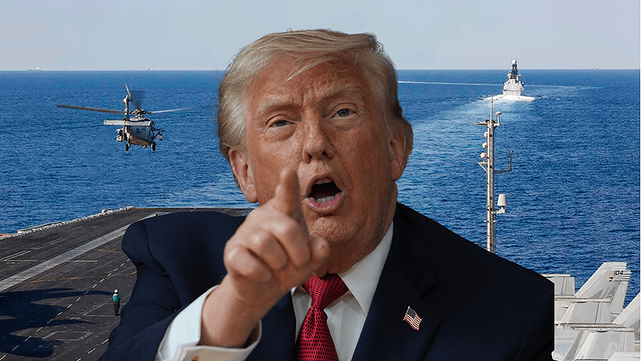
Trump did not provide immediate detail on the nature of the expected U.S. sanctions, but he suggested the economic pressure could increase while the strait was still open.
The Iranian response, carried in coverage of the threat, came through Iranian Foreign Minister Seyed Abbas Araghchi, who said, “The so-called ‘Economic D-Day’ is a diversion from America’s own crisis: unprecedented debt & surging interest costs.”
Iran rejects pressure, U.S. escalates
Iran dismissed Trump’s “Economic D-Day” threat as he sought to pressure the country into reaching a deal to end the war, with Araghchi arguing that “Doubling down on failed policies will only bring further defeat—and enmity of Iranians.”
Trump, in the same set of coverage, warned that other countries could face consequences if they continued doing business with Iran, repeating that “Oil smuggling, swap lines, cash transfers, exchange houses, ship registries, front companies — It all needs to stop NOW.”

U.S. Treasury Secretary Scott Bessent warned Iran it could face what he called the “greatest coordinated economic isolation in the history of the world,” saying the United States was preparing additional economic measures aimed at cutting Iran off financially.
In response to the pressure campaign, Iranian officials rejected U.S. pressure and accused Washington of using economic threats as a political weapon, while the coverage also quoted Bessent’s framing of the effort as coordinated isolation.
Stakes: deal talks and blockade
The sanctions push is playing out as the 60-day memorandum of understanding between the U.S. and Iran to lay groundwork for an end to the war has expired and there is no other agreement to replace it.
“no talks or conversations going on”
In analysis coverage, Trump wrote that there were “no talks or conversations going on” with Iran, while the same reporting said the U.S. was previewing new sanctions still to be announced alongside its naval blockade of the Strait of Hormuz.
The analysis also cited data that “28 vessels transited the Strait in a three-day period between Friday and Sunday,” contrasting it with the claim that the strait was “open and operating.”
Iran’s parliament speaker and lead negotiator Mohammad Ghalibaf wrote on X that Bessent was “way out of [his] league” and that the U.S. was “trying to pull a rabbit out of their hat,” as the economic pressure campaign threatened to reshape the negotiating environment.