
USA · updated 1h ago · 2 min read
Donald Trump Bans Canadian Dairy, Motorcycles, and Many Alcoholic Beverages in Trade War
United States bans Canadian dairy products, most alcoholic beverages, and motorcycles. Ban takes effect September 29, enacted via executive orders amid retaliatory tariffs.
Whether the alcohol ban is majority-wide or limited.
10 of 11 outlets skipped it: bans were signed under Section 338 of the Tariff Act of 1930.
14outlets compared
Same story, two versions
tap a side to read it in full
CBS News
“there will be an outright ban on a majority of Canadian alcohol coming into the U.S.”Read the original ↗
The New York Times
“The limited ban, which is set to take effect in late September, was part of a series of retaliatory measures”Read the original ↗
CBS News frames the alcohol action as an outright majority ban, while The New York Times describes a limited import ban.
Bans begin Sept. 29
President Donald Trump signed executive orders on Tuesday to ban the sale of Canadian dairy products, motor vehicles and many alcoholic beverages in the U.S., with the bans taking effect on Sept. 29.
“The import bans, which go into effect on September 29”
The White House said the import bans were published on the White House website and came after Canada’s retaliatory tariffs on U.S. goods took effect after midnight on Tuesday.
Reuters reported the U.S. bans covered most alcohol products, including beer and various types of wine, whisky, bourbon, rum, vodka, vermouth, tequila, mezcal, and brandy, while the dairy ban covered whey protein, invert molasses, cane molasses and non-alcoholic beer.
In the same escalation, the U.S. also added various cheese products to a list of products subject to a 50% tariff, but not banned outright, and an American official said Trump’s pre-existing threat to increase tariffs on Canadian autos from 25% to 50% on January 1 remained in effect.
Carney warns of cost
Canada’s Prime Minister Mark Carney said in a video address that the pivot away from the U.S. as its largest trading partner "will come at a cost," as the U.S. import bans were announced.
Carney also said, "We have everything we need to pivot and prosper," adding, "That pivot will come at a cost. There's always a cost to action. But it doesn't come close to the cost of standing still," according to Reuters.
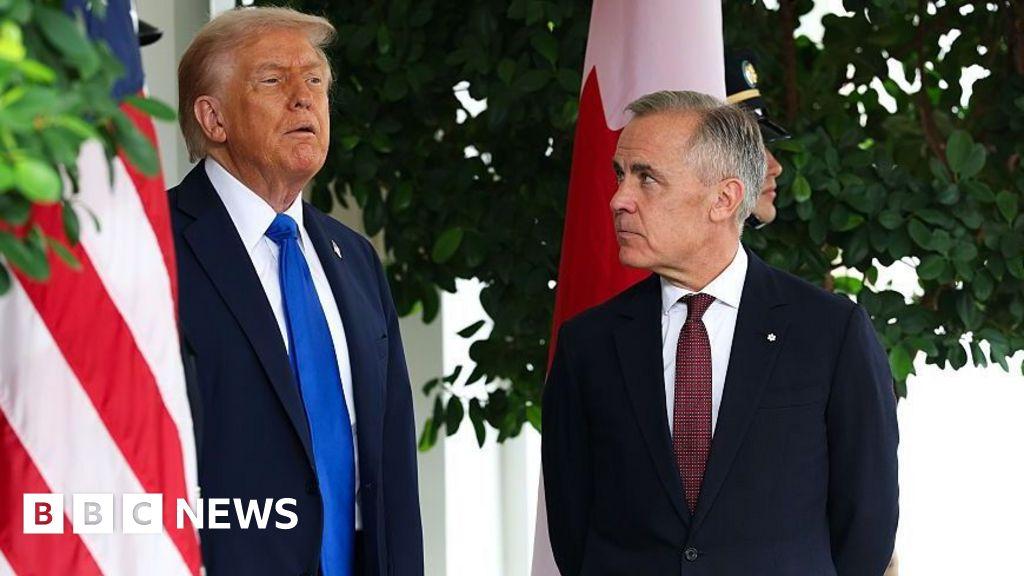
The White House said Canada was "discriminating" against the U.S. by restricting American goods while not doing the same to the same products from other countries, and the BBC said the U.S. outlined the import ban beginning 29 September.
The BBC reported that both sides have said they would like to strike a trade deal, but no new talks had been scheduled since negotiations collapsed in late August, leaving the dispute to deepen alongside the tariff fight.
Contracts and retaliation
Beyond the import bans, Trump directed the General Services Administration to remove Canadian products from its Multiple Award Schedule "unless Canada restores full and fair reciprocity" for American farmers and companies.
“unless Canada restores full and fair reciprocity"”
Reuters reported that the U.S. Trade Representative Jamieson Greer spoke with Dominic LeBlanc, Canada’s minister responsible for bilateral U.S. trade, and that the pair were expected to speak again in the coming days to see if there was an alternative path.
LeBlanc criticized the latest U.S. measures in a social media post, writing, "As has been the case for the last 18 months, our first priority remains on protecting and supporting Canadian workers, farmers, families, and businesses from these unjustified measures," as Reuters reported.
The Hill said Trump cited Canadian “discrimination” against U.S. dairy, motor vehicles and alcoholic beverages, while the BBC described the actions as the latest strike in a months-long trade war that followed Canada’s retaliatory tariffs on $20bn of American goods.