USA18 July, 20263 min read
Donald Trump Claims China Accessed 220 Million Voter Records in Primetime Election Address
This article is an automated aggregation of coverage from news outlets. Our editorials offer in-depth analysis curated by the NewsCord team.
Trump's primetime address claimed foreign interference in U.S. elections. Coverage frames the speech as a move to justify expanded federal action.
Primetime Election Claims
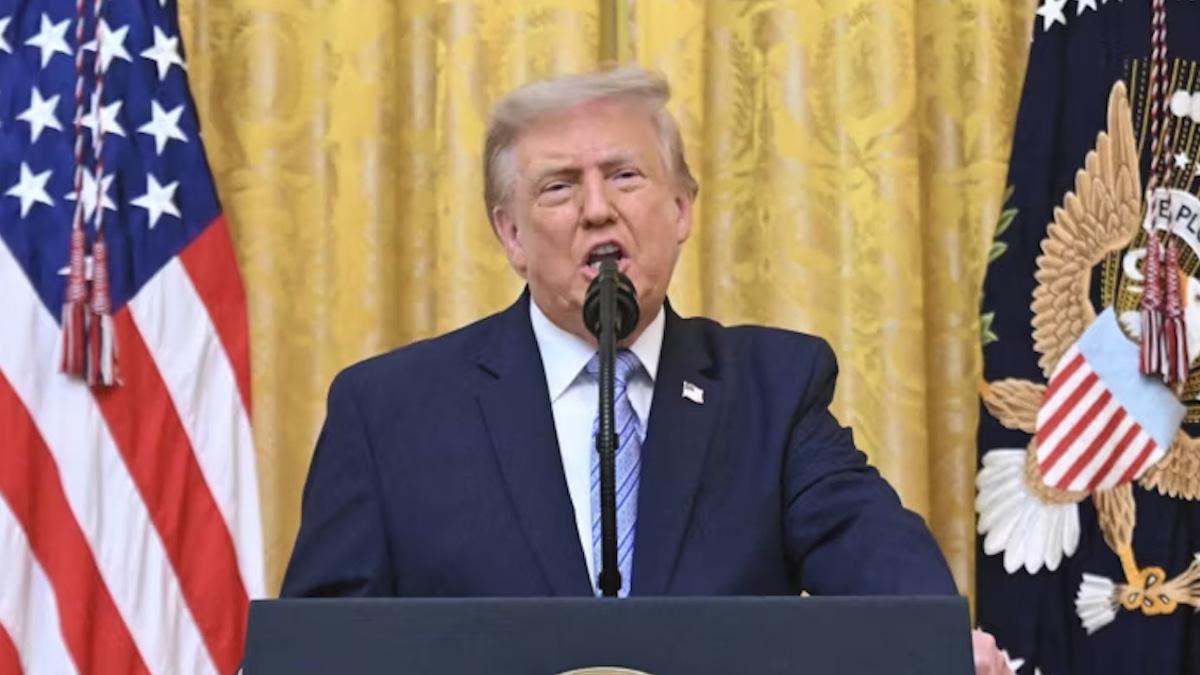
President Donald Trump used a primetime address to the nation Thursday to elevate his yearslong push to raise doubts about the legitimacy of U.S. elections and dispute his 2020 loss while urging more restrictive voting laws ahead of the midterms. The speech hinged on Trump’s claims about countries attempting to harm his prospects while staying silent on steps taken by other nations to boost him, and it included his release of previously classified documents related to the 2020 and 2018 elections. Trump focused on China in the address, asserting that China had gained access to the personal information of 220 million American voters, and he also claimed that the American voting system was “left vulnerable to being rigged and stolen.”
The AP reported that Trump’s remarks presented allegations of interference and influence without key context and did not produce evidence that votes had been manipulated or that the election outcome had been altered. The Guardian said Trump described a system “so broken and so vulnerable that no one can possibly defend it,” while factcheckers agreed he proved nothing.
Rebuttals and Rival Frames
In response to Trump’s claims, Rep. Raja Krishnamoorthi (D-Ill.) said in a statement that Trump “selectively declassified intelligence to try to rewrite the history of an election he lost.”
Krishnamoorthi added that “Even his own document release does not support his claim that the 2020 election was stolen,” and he argued that Trump was “reviving conspiracy theories about mail voting, pushing voter suppression.”

The Guardian framed the same address as permission for federal intervention already under way in Fulton county, saying Trump assembled “old intelligence, vulnerabilities and lies into a conspiracy.”
Sue Gordon, principal deputy director of national intelligence in Trump’s first term, called the president’s address “a dangerous speech about an incredibly important topic,” and she said the intelligence community throughout his first term was alarmed about foreign interference in elections.
John Solomon later told MS NOW that “the intelligence community has zero evidence that someone has flipped – that a foreign power flipped -- a vote in 2020, '22 or '24.”
Federal Power and Next Moves
The Guardian reported that in January, FBI agents seized roughly 700 boxes of 2020 election materials from Fulton county, including about 150,000 mail ballots, and it said the bureau redirected 260 analysts nationwide to work on an investigation into that year’s election. The Guardian also said the White House gave Bill Pulte broad declassification authority and that the speech named Michigan but omitted Georgia, while a White House official told the Atlantic that no evidence showed a foreign power changed votes. It further described how Trump’s falsehoods made targets of Ruby Freeman and Shaye Moss, two Black women who counted ballots, and said the federal project now extends suspicion to their county.
The Guardian added that the day before Trump’s speech, ProPublica reported the FBI explored using artificial intelligence to re-examine ballot-envelope signatures, possibly against only one registration signature. In the same reporting thread, the Guardian said House Republicans attached Trump’s Safeguard American Voter Eligibility Act, or Save America Act, to a state department spending bill and passed it, 217–209, with the bill imposing new identification requirements on mail voting and requiring documentary proof of citizenship to register.