USA19 July, 20262 min read
Luis Manuel Otero Alcántara Arrives in U.S. After Five-Year Prison Sentence in Cuba
This article is an automated aggregation of coverage from news outlets. Our editorials offer in-depth analysis curated by the NewsCord team.
U.S. approved travel parole allowing his departure from Cuba; he arrived in Miami. Supporters welcomed him in Miami, greeting with Cuban anthem at the airport.
Arrival After Prison
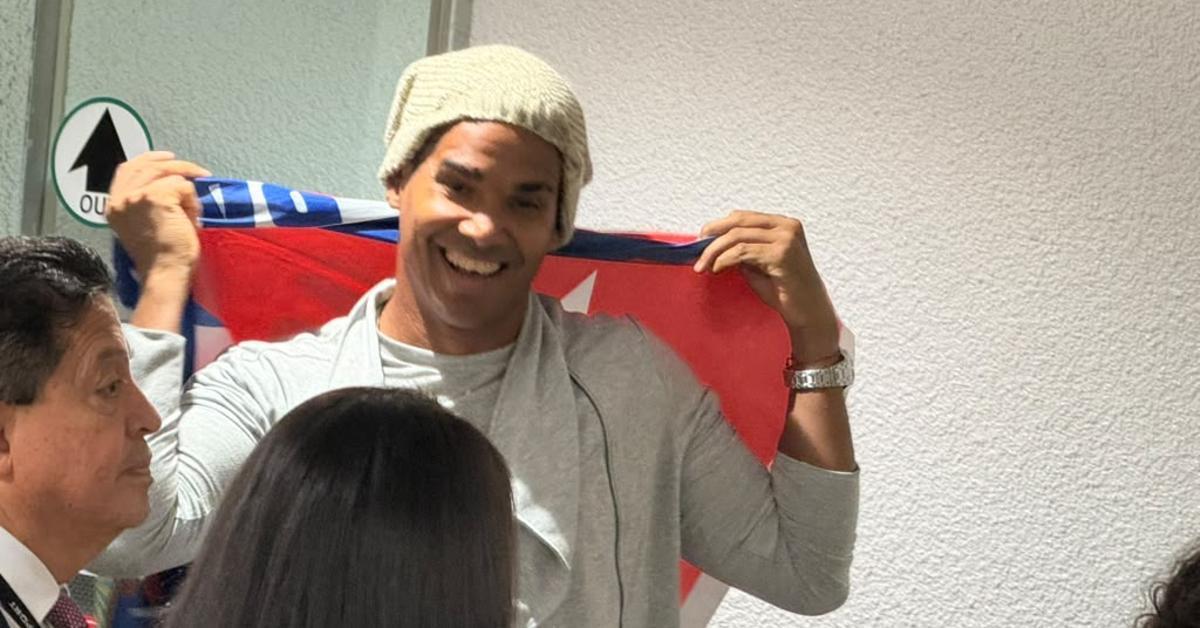
Cuban dissident artist Luis Manuel Otero Alcántara arrived in the United States on Saturday after completing a five-year prison sentence on the communist-run island, and he was welcomed in Miami by supporters after arriving in the United States.
NBC News said Otero Alcántara, co-founder of Cuba’s opposition San Isidro Movement, visited the National Shrine of Our Lady of Charity after being released from a five-year prison sentence.
U.S. Secretary of State Marco Rubio announced Otero Alcántara’s arrival and said the Cuban government’s crackdown was a reminder of “the unique misery and evil that is innate to the communist system.”
Multiple outlets tied the release to humanitarian parole, with the AnewZ report saying a U.S. Embassy official in Havana said he had been granted humanitarian parole and NPR describing the release as arriving in Miami after the United States granted him parole on the condition that he leave his country.
Rubio and the Mission
Otero Alcántara told supporters after arriving in Miami that he would keep fighting, saying, “I believe the dictatorship has to end, and the Castro dynasty has to end, as well,” and he added that “Because as long as there is a Castro in power, there will be corruption.” El Mundo framed his stance as continuing the fight from forced exile, quoting him saying, “I am going to keep fighting, I have a mission, which I do not know where it came from.”
Rubio also used the arrival to press for political prisoners, urging the release of all political prisoners in Cuba and saying Otero Alcántara’s “only ‘crime’ was refusing to stay silent and using his art to demand the basic freedoms everyday Cubans have been denied for almost seven decades.” NPR reported that advocates had been unable to contact him for days before he boarded a plane Saturday, and it said his first stop on American soil would be at the Shrine of Our Lady of Charity to make an offering.

What Comes Next
The release in Miami came as U.S. officials linked Otero Alcántara’s case to broader pressure on Cuba’s political prisoners, with the State Department highlighting a demand for the immediate release of 700 political prisoners.
El Mundo said Otero Alcántara described a path to freeing “The more than 1,300 political prisoners who fill the revolutionary dungeons,” saying, “The next day, they all go out into the street. And there are no more political prisoners.”
NPR and other coverage also kept attention on other detainees, noting that other political prisoners remained imprisoned, including his fellow artist Maykel “Osorbo” Castillo Pérez, and that advocates hoped his release would prompt insistence that Pérez also be set free.
France 24 described the exile as accepted after the United States granted him humanitarian parole, and it said he co-founded the San Isidro Movement, a collective that protests against the Cuban government.