Iranupdated 1h ago2 min read
Iran Demands Credible Guarantees Before Resuming Talks With the United States
This article is an automated aggregation of coverage from news outlets. Our editorials offer in-depth analysis curated by the NewsCord team.
Iran demands credible guarantees against future attacks before resuming US talks. Iran remains open to dialogue but rejects negotiations under pressure, demands respect.

Al Jazeera was read line by line by the Watchdog: 1.8. See the score →
Conditions for Talks
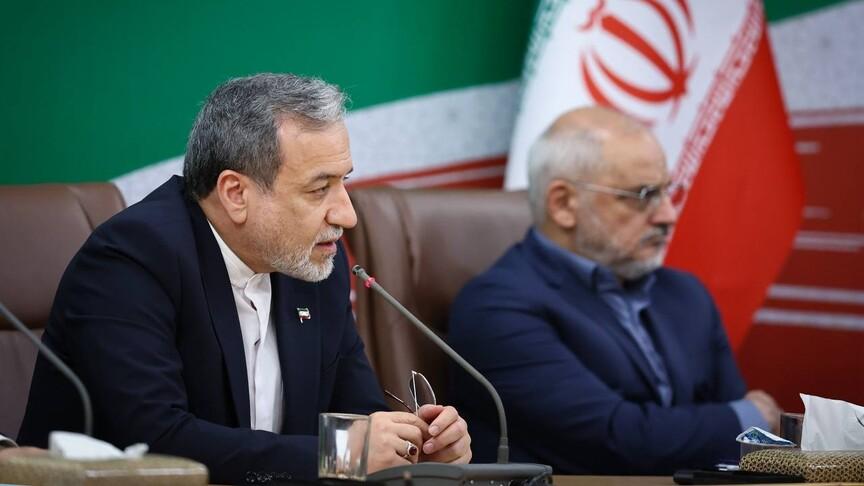
Iran’s Foreign Minister Abbas Araghchi told the Organisation of Islamic Cooperation Council of Foreign Ministers in Baghdad that Tehran would not abandon its sovereign rights under pressure and would not accept coercion, threats and intimidation while demanding credible guarantees before resuming negotiations with the United States. Araghchi said Iran remained ready for dialogue based on mutual respect and credible guarantees, and he linked the demand to deep mistrust after previous diplomatic efforts were followed by attacks. Araghchi also said Iran’s seven-day proposal, conveyed through Qatar, would reopen the Strait of Hormuz and restore normal maritime traffic if necessary conditions were met.
“‘Our situation is clear and based on the seven-days proposal presented to the US.”
Araghchi added that maritime traffic recovered to around 60% of its pre-war level within two weeks before implementation of the understanding stalled. Araqchi said the way to reopening was “obvious” if the United States showed “honesty.”

Why Talks Fail
Al Jazeera argued that US-Iran negotiations keep failing because a diplomatic stalemate is shaped by a syndrome rooted in the 1979 siege of the US embassy in Tehran and by US hostility after the 2018 withdrawal from the Iran nuclear deal. The embassy siege complex produced an informal rule in US decision-making that Iran must concede first and its concession must be verified before it receives anything in return. The Iranian complex reached its peak in May 2018 when US President Donald Trump withdrew from the Joint Comprehensive Plan of Action despite the International Atomic Energy Agency’s confirmation that Tehran was complying with it.
The knot deepened in June 2025 when the US took part in the Twelve-Day War and struck nuclear facilities at Fordow, Natanz and Isfahan while a new round of indirect negotiations was scheduled in Muscat. Washington’s initiatives consistently required Iranian action before a quid pro quo and verification before trust, while Iranian decision-making required binding guarantees before any step and no concession before pressure was lifted.
Hormuz, Yemen, and Guarantees
Iran’s Foreign Minister Abbas Araghchi said the war in Yemen could not be resolved through military means and called for an inclusive political process based on negotiations while Iran remained prepared to help facilitate dialogue under a previously agreed peace roadmap. Araghchi also reiterated Tehran’s position on Palestine and urged OIC member states to coordinate their efforts in support of Palestinian rights during the two-day OIC foreign ministers’ meeting in Baghdad. Iran’s conditions for reopening the Strait of Hormuz included lifting the US blockade on its ports, lifting US sanctions on its oil exports, and ending hostilities on all regional fronts.
Araqchi told Iranian media outlets that if Washington accepted Tehran’s conditions, the strait could reopen within six days and talks could resume the following day. Araghchi rejected negotiations under pressure and said Iran remained open to dialogue based on mutual respect and credible guarantees, while also citing the June 17 Islamabad understanding reached through Pakistan’s mediation and with Qatar’s support.