Iran21 April, 20266 min read
Donald Trump Extends Iran Ceasefire Indefinitely, Keeps U.S. Blockade in Strait of Hormuz
This article is an automated aggregation of coverage from news outlets. Our editorials offer in-depth analysis curated by the NewsCord team.
Ceasefire extended; U.S. blockade of Iranian ports remains in effect. Diplomacy in Islamabad; extension came after Pakistan urged talks and sought unified proposal.
BBC was read line by line by the Watchdog: 5.5. See the score →
Ceasefire extended, blockade stays
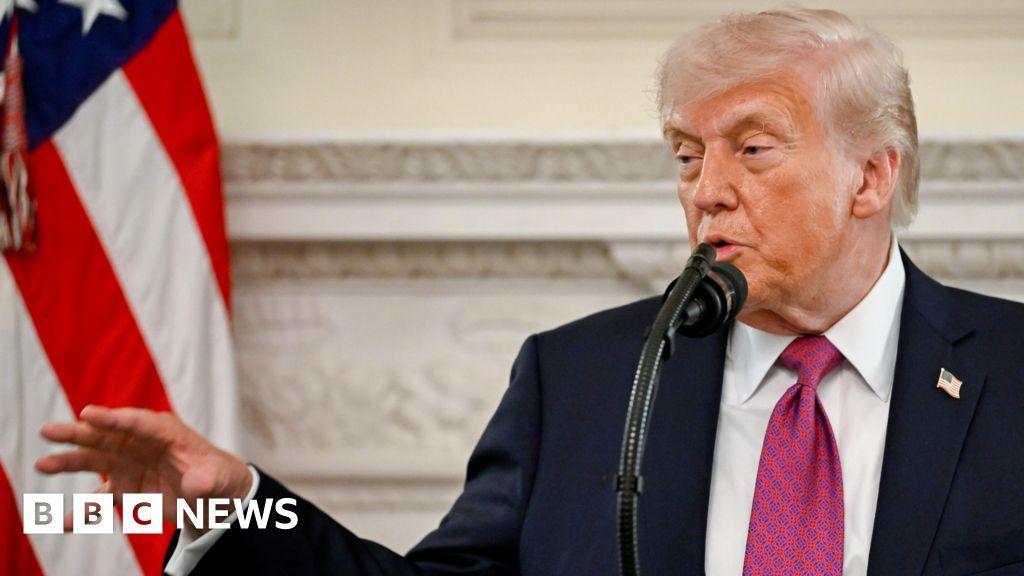
President Donald Trump extended the ceasefire with Iran indefinitely, saying the pause would remain in effect “until such time as their leaders and representatives can come up with a unified proposal,” while also directing the U.S. military to continue the blockade of Iranian ports. NBC News reported that Trump said he was giving Iran’s leaders time to “come up with a unified proposal” in peace talks, but that “the U.S. naval blockade will continue.” Al Jazeera’s Alan Fisher said there were “signs of movement as Trump shifts towards discussing a ‘unified proposal’,” describing the extension as occurring “but with the US blockade still in place.”
“President Donald Trump said he was extending the ceasefire with Iran indefinitely so its leaders ‘can come up with a unified proposal,’ but that the naval blockade Tehran considers an act of war will continue.”
The truce had been set to expire that day, and Trump had vowed not to extend it, according to NBC News. The U.S. position was also reflected in Trump’s own language on blockade continuity, with the London Evening Standard quoting him: “I have therefore directed our Military to continue the Blockade and, in all other respects, remain ready and able, and will therefore extend the Ceasefire until such time as their proposal is submitted, and discussions are concluded, one way or the other.” Even as diplomacy was prolonged, the Strait of Hormuz remained a flashpoint, with NBC News reporting that “Two ships were attacked in the Strait of Hormuz this morning,” further inflaming tensions over the waterway.

Attacks in the Strait
As Trump extended the ceasefire, ships in the Strait of Hormuz were attacked, complicating the effort to stabilize the situation.
NBC News said “Two ships were attacked in the Strait of Hormuz this morning,” and it described Tehran’s claim that a container ship that suffered damage had “ignored the warnings of the Iranian armed forces.”
NBC News also said “A cargo ship was also fired upon, the British military said,” linking the incidents to the broader escalation around the key waterway.
CBS News similarly reported that “A second ship came under attack Wednesday in the Strait of Hormuz,” noting that it was “just a short time after Iran’s paramilitary Revolutionary Guard opened fire on a container ship.”
The Guardian added operational detail, quoting UK Maritime Trade Operations (UKMTO) that “A master of an outbound cargo ship reports having been fired upon and is now stopped in the water. Crew are safe and accounted for. There is no reported damage to the vessel.”
The New York Times tied the attacks to the wider shipping disruption, stating that “The threat of Iranian attacks has throttled shipping traffic through the strait,” and it said the U.S. Navy “says it has forced 28 ships to turn around.”
Iran’s response and internal rifts
Iran’s response to the ceasefire extension was dismissive, and multiple reports described internal divisions over how to proceed.
“An Iranian senior adviser said the extension ‘means nothing’ and Tehran should respond militarily.”
CNN reported that “An Iranian senior adviser said the extension ‘means nothing’ and Tehran should respond militarily,” and it said Iran’s UN envoy believed talks would happen “if the US ends its blockade.”
The New York Times quoted the first response from Iran as coming from an adviser to Mohammad Bagher Ghalibaf, writing: “The extension of the cease-fire by Donald Trump has no meaning,” and it added that “The losing side cannot set the terms,” as Mahdi Mohammadi wrote.
Axios described Trump’s rationale as being tied to a “fractured” Iranian government, quoting Trump’s post: “Based on the fact that the Government of Iran is seriously fractured ... we have been asked to hold our Attack on the Country of Iran until such time as their leaders and representatives can come up with a unified proposal.”
Axios also quoted Mahdi Mohammadi’s counterargument that “The losing side cannot set conditions. The continuation of the blockade is no different from bombing and must be responded to militarily.”
CNN added that U.S. officials believed the Iranians lacked consensus on their position and on how to empower negotiators on “uranium enrichment and the country’s current stockpile of enriched uranium.”
Diplomacy, Pakistan, and UN reaction
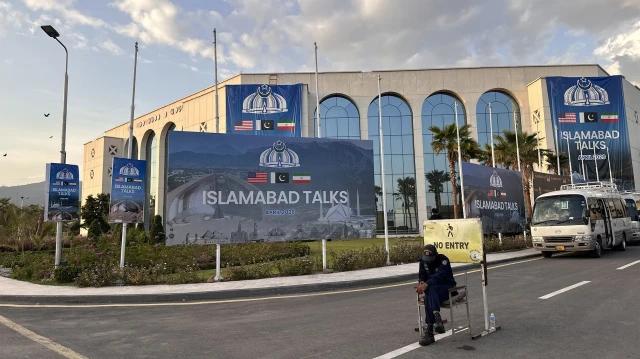
The extension was framed as a diplomatic opening tied to Pakistan’s mediation efforts, even as in-person talks were disrupted. NBC News said Vice President JD Vance had been expected to lead a delegation to Pakistan, but “a second round of negotiations is now uncertain.” Axios reported that the announcement came as Vance’s planned trip to Islamabad was delayed and then postponed indefinitely after Iran refused to participate in a new round of peace talks, and it said the White House official confirmed that “the vice president’s trip would not take place on Tuesday.”
The New York Times described the same sequence, saying Vance’s trip to Pakistan for a second round of peace negotiations was put on hold because, according to a U.S. official, Tehran had failed to respond to American positions. In the New York Times account, Pakistan’s Prime Minister Shehbaz Sharif thanked Trump for accepting the request, with Sharif saying: “I sincerely hope that both sides will continue to observe the ceasefire and be able to conclude a comprehensive 'Peace Deal' during the second round of talks scheduled at Islamabad for a permanent end to the conflict,” and it also quoted Sharif thanking Trump for “graciously accepting our request to extend the ceasefire to allow ongoing diplomatic efforts to take their course.” The New York Times also reported that UN Secretary-General António Guterres welcomed the extension, saying: “This is an important step toward de-escalation and creating critical space for diplomacy and confidence-building between Iran and the United States,” and he added: “We encourage all parties to build on this momentum, refrain from actions that could undermine the cease-fire, and engage constructively in negotiations to reach a sustainable and lasting resolution.”

Stakes: casualties, economics, and threats
The stakes of the ceasefire extension were underscored by reported casualty figures, economic pressure, and explicit threats about what happens if fighting resumes.
“Iran’s forensics chief said nearly 3,400 people had been killed in the country since U.S.-Israeli strikes began Feb. 28.”
NBC News cited Iran’s forensics chief saying “nearly 3,400 people had been killed in the country since U.S.-Israeli strikes began Feb. 28,” and it added that “More than 2,200 people have been killed in Lebanon, 32 have been killed in Gulf states, and 23 have died in Israel.”

NBC News also said “Thirteen U.S. service members have been killed, and two more died of noncombat causes,” tying the conflict’s toll to multiple theaters.
The Guardian reported economic disruption inside Iran, saying “More than two million people have lost their jobs in Iran as a result of the war,” and it described damage to “oil and gas facilities, petrochemical industries, steel plants and aluminium factories.”
CBS News included Trump’s own framing of Iran’s financial strain, quoting him on Truth Social: “Iran is collapsing financially! They want the Strait of Hormuz opened immediately- Starving for cash! Losing 500 Million Dollars a day.”
NBC News added that Iran’s Revolutionary Guard warned it would “deliver crushing and unimaginable blows” to “remaining enemy assets in the region,” and it said the IRGC remained at the “height of readiness and determination.”