China30 October, 20252 min read
Donald Trump Lowers China Tariffs and Ends Rare Earths Blockade After Meeting Xi Jinping in South Korea
This article is an automated aggregation of coverage from news outlets. Our editorials offer in-depth analysis curated by the NewsCord team.
Trump agreed to reduce U.S. tariffs on Chinese goods from 57% to 47% after meeting Xi Jinping. The U.S. and China reached a one-year extendable deal to resume China's rare earth mineral exports.
41 outlets told this the same way.
Trump and Xi Trade Talks
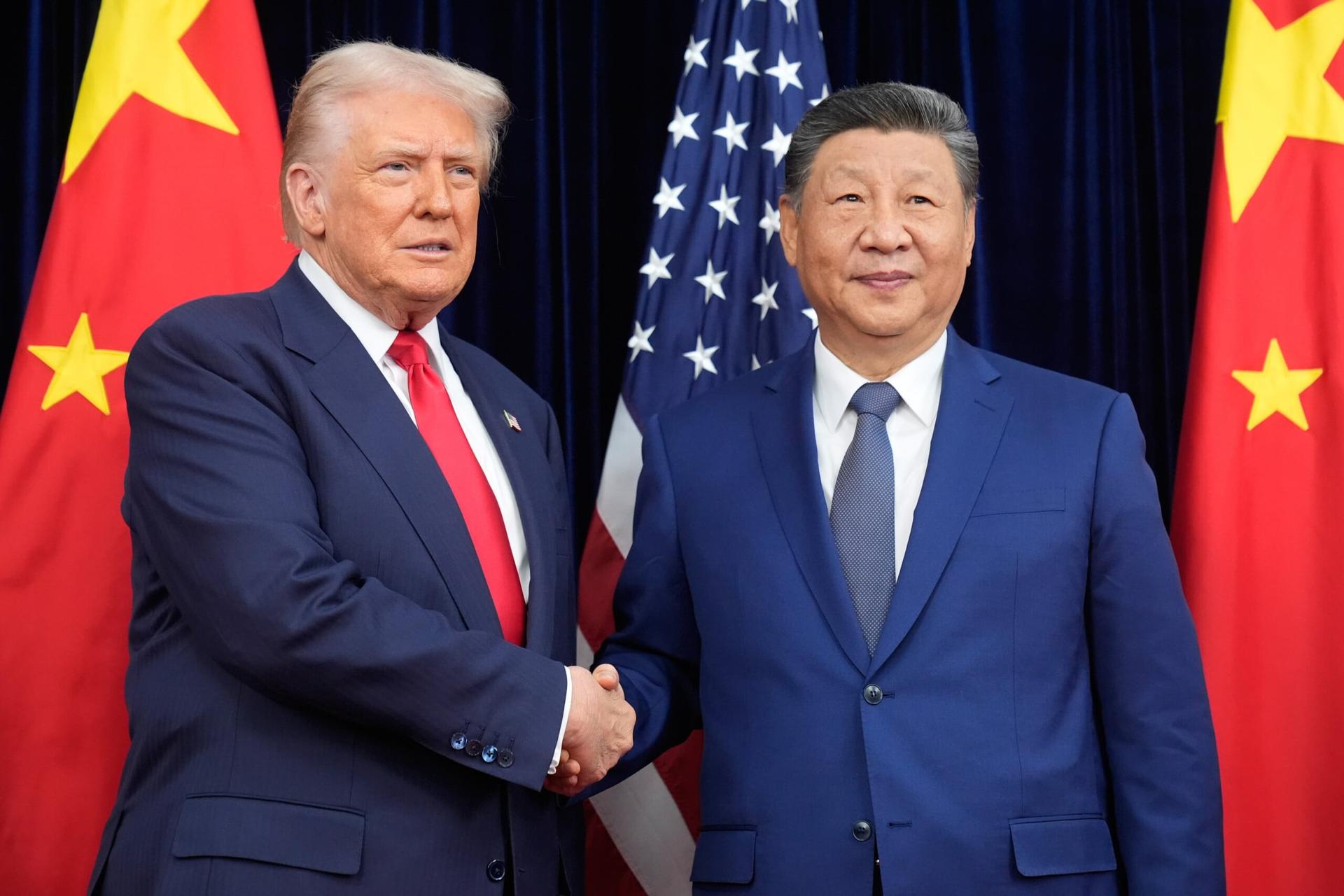
In a high-profile first face-to-face meeting since 2019, Donald Trump and Xi Jinping met in Busan, South Korea. They announced headline concessions including the U.S. cutting overall tariffs on Chinese goods from 57% to 47%. The U.S. also agreed to reduce fentanyl-related tariffs from 20% to 10%.
“Donald Trump described his trade talks... as ‘amazing’... lowering overall tariffs from 57% to 47%... calling it a 12 out of 10.”
China will resume large purchases of U.S. soybeans while maintaining rare earth supplies under a one-year arrangement. Trump described the talks as “amazing,” rating them “12 out of 10” after a session lasting roughly 1 hour and 40 minutes. Several outlets reported the meeting lasted close to two hours.

Multiple reports also mention plans for reciprocal leader visits following the summit. Together, these steps are framed as a one-year trade détente aimed at stabilizing relations after months of tension over export controls and tariffs.
China's Rare Earth Export Policy
Rare earth elements are essential for electric vehicles, electronics, and defense industries. Several sources report that China will ease its export restrictions on rare earths for one year to ensure supply. Former President Trump declared the dispute over rare earth exports as resolved.
Western mainstream and Asian outlets indicate that China will lift or pause export controls and licensing requirements. Some reports emphasize that China had recently tightened these controls and that the details of the new arrangement remain unclear.
The agreement is described as temporary and renewable, aiming to stabilize supply chains. Both sides intend to maintain leverage for future negotiations despite the current easing.
U.S.-China Fentanyl Tariff Deal
A core swap in the deal links U.S. tariff relief to China’s pledge to curb illicit fentanyl. Multiple Western mainstream and Asian outlets report fentanyl-related tariffs will be cut from 20% to 10%, alongside an overall drop from 57% to 47%. Xi agreed to work hard on fentanyl.
“Xi agreed to work hard to curb fentanyl production... In response, Trump will reduce fentanyl-related tariffs from 20% to 10%... lowering overall tariffs from 57% to 47%.”
Investor-focused Asian coverage notes some disappointment that fentanyl tariffs were not scrapped entirely. Others emphasize the political symbolism of the move and its one-year renewal mechanism.
China-U.S. Soybean Trade Update
Agriculture and markets are immediate pressure points. Multiple outlets say China will resume large U.S. soybean purchases, with some reporting initial shipments already underway.
Coverage splits on market reaction: several note volatility and even weakening soybean futures amid uncertainty, while others highlight rallies or a warm reception in Chinese markets. Western mainstream and Asian sources also stress benefits for U.S. farmers after years of retaliatory tariffs and supply disruptions.

Geopolitics and Tech Coverage
Beyond tariffs and commodities, the coverage diverges sharply on geopolitics and technology. Several outlets say the leaders will coordinate on the Ukraine conflict. Some Western mainstream reports add a dramatic U.S. move on nuclear deterrence: orders to resume nuclear weapons testing.
“Trump announced the U.S. would resume nuclear weapons testing... instructing the Department of Defense to begin immediately.”
Tech-policy narratives conflict: some describe semiconductor talks involving Nvidia, while others say Nvidia export issues were not discussed. Coverage also splits on whether a TikTok agreement was considered. Many note what was not discussed—Taiwan—highlighting the limited scope of this truce.
