
Donald Trump Reviews Iran’s 14-Point Peace Proposal, Says Iran Has Not Paid Enough Price
Key Takeaways
- Iran submitted a 14-point peace proposal to end the war.
- Trump said he would review the proposal but questioned its acceptability.
- Trump argued Iran has not yet paid a big enough price for a deal.
Trump reviews Iran plan
President Donald Trump said Saturday that he is reviewing a new 14-point peace proposal submitted by Iran, after Iranian state media reported Tehran delivered the plan to the United States.
“Iran has offered a new 14-point proposal to the United States in the latest diplomatic step to reach a permanent end to the war, which has exposed the limits of US military dominance and shaken the global economy”
CBS News reported that Trump told reporters he was “reviewing a new 14-point peace proposal that was submitted by Iran,” and added that he had not yet seen the exact wording, saying, “I haven't seen it,” before boarding Air Force One.

CBS News also quoted Trump telling reporters, “I'm looking at it up here,” and later, “They told me about the concept of the deal. They're going to give me the exact wording now.”
Trump then posted on Truth Social that he would “soon be reviewing the plan that Iran has just sent to us,” but “can't imagine that it would be acceptable” because Iran had not yet “paid a big enough price” for actions “over the last 47 years.”
Al Jazeera described the same diplomatic step as Iran offering a new 14-point proposal to the United States as a “latest diplomatic step to reach a permanent end to the war,” and said Trump responded that he was “studying it but is not sure he can make a deal with Iran.”
Multiple outlets tied the proposal to Pakistan mediation, with Al Jazeera saying Tehran sent the proposal to Pakistan late on Thursday and that Pakistan got the two sides to agree on the ceasefire.
The New Arab and Jang both echoed the “14-point” framing and the Pakistan channel, while NewsNation likewise said Iran sent the proposal via Pakistan and that the U.S. and Iran have been deadlocked since an April 8 cease-fire.
What Iran’s plan demands
Al Jazeera laid out what it said Iran’s 14-point proposal includes, describing it as a plan that wants to “focus on ending the war instead of extending the truce” and to resolve “all issues within 30 days.”
It said Iran’s proposal calls for “guarantees against future attacks,” “a withdrawal of US forces from around Iran,” “the release of frozen Iranian assets worth billions of dollars,” and “the lifting of sanctions.”

Al Jazeera also reported that Iran’s plan includes “war reparations,” “ending all hostilities, including in Lebanon,” and “a new mechanism for the Strait of Hormuz.”
The outlet added that Iran wants a guarantee against future aggression and that Tehran also wants “its right to uranium enrichment guaranteed as a signatory to the Non-Proliferation of Nuclear Weapons (NPT),” while Trump has made the nuclear issue a “red line.”
Al Jazeera described the maritime dispute as central, saying Iran’s “de facto blockade of the strait came in response to the US and Israel launching attacks on the country on February 28,” and that a “naval blockade of Iranian ports by the Trump administration, despite the ceasefire deal, has heightened tensions.”
The New Arab similarly said Iranian negotiators sent a 14-point proposal via Pakistan and that it would see “Iran re-open the Strait of Hormuz,” “the US lift its naval blockade,” and “guarantees made that the US and Israel would not re-launch the war.”
Jang and the thenational.scot report both described the package as including “withdrawal of US forces from areas surrounding Iran,” “lifting the US blockade on the Strait of Hormuz,” “releasing Iran’s frozen assets,” “payment of compensation,” “lifting sanctions,” and ending the war “including Lebanon,” while also noting that the nuclear issue is not mentioned in the latest proposal and would be discussed later if immediate crises are resolved.
Nuclear, Hormuz, and mistrust
Al Jazeera described the nuclear and shipping issues as the biggest sticking points, quoting associate professor Paul Musgrave and senior fellow Kenneth Katzman on why the two sides remain far apart.
“Skip to main content Updated May 1, 2026 - World Iran offers new response on draft peace deal, Trump "not satisfied" Barak Ravid email (opens in new window) sms (opens in new window) facebook (opens in new window) twitter (opens in new window) linkedin (opens in new window) bluesky (opens in new window) Add Axios as your preferred source to see more of our stories on Google”
Musgrave told Al Jazeera that Iran has “slightly softened” its proposal, saying “The news reports on it indicate that there is a slight softening in the proposal,” and that the Iranian side may have “given up its precondition that the US cease its distant blockade of Iranian traffic [in the Strait of Hormuz].”
But Musgrave said “Beyond that, though, a lot of the things that are reportedly in the proposal include maintaining Iran’s sovereign ability to enrich uranium,” and he added that the proposal also refers to a “control mechanism” over shipping in the Strait of Hormuz.
Musgrave said on the two biggest issues—“enrichment of uranium and transferring its highly enriched uranium”—the U.S. and Iran remain “far apart,” while Katzman said the obstacle is Iran’s mistrust of Trump.
Katzman told Al Jazeera, “The issue is that Iran really mistrusts Trump and the United States and does not want to move, really, into full discussion until this blockade is lifted,” and he added that “The differences on the nuclear issues are actually … not that great a difference any more.”
Al Jazeera also framed the blockade as a response to earlier attacks, saying Iran’s “de facto blockade of the strait came in response to the US and Israel launching attacks on the country on February 28,” and that the U.S. and Iran have continued “to attack, capture, and intercept each other’s ships.”
The New Arab added that the proposal “does not mention the nuclear issue,” saying it “would be discussed in future talks if the two sides can resolve the immediate crises caused by the war.”
Trump keeps military options
While Trump said he would review the proposal, multiple outlets reported that he left open the possibility of renewed strikes if Iran “misbehaves.”
CBS News reported that Trump told congressional leaders he was addressing a decades-old law to limit the use of military force without authorization from Congress, and it also described Israeli Prime Minister Benjamin Netanyahu saying Israeli pilots “can reach anywhere in Iranian airspace,” while Netanyahu said Israel is building up forces including acquiring a squadron of F-35 planes and another of F-15IAs.

The same CBS News report said Netanyahu instructed Israel to invest in domestic production capabilities for munitions and to “develop groundbreaking Israeli-made aerial systems,” and it said Netanyahu would receive “a progress report” in a “special project to counter the drone threat” from Iran and its proxy groups.
In parallel, Trump’s own remarks to reporters in Florida were carried across outlets: the New Region reported Trump said renewed military action was “a possibility” if a deal is not reached and Iran “misbehaves,” and it quoted Trump saying, “If they misbehave, if they do something bad — but right now, we'll see.”
The New Arab similarly said Trump raised the prospect of “renewed strikes against Iran if it refuses to re-open the strait,” and described U.S. military planners briefing “a range of attack options, including large-scale strikes on Iran's civilian infrastructure.”
NewsNation reported that Iran’s Revolutionary Guard critiqued Trump’s letter to Congress and wrote, “There is only one way to read this: Trump must choose between ‘an impossible military operation or a bad deal with the Islamic Republic of Iran.'”
WION also described Trump warning that Washington could restart air strikes if Tehran “misbehaves,” and it quoted the deputy foreign minister Kazem Gharibabadi saying, “Now the ball is in the United States' court to choose the path of diplomacy or the continuation of a confrontational approach.”
Deadlock, ceasefire, and next steps
The diplomatic push is occurring against a ceasefire that multiple reports said has been in effect since April 8, while negotiations remain deadlocked and maritime pressure continues.
“What to know about the Iran war today: - President Trump told reporters Saturday he is reviewing a new 14-point peace proposal that was submitted by Iran”
Al Jazeera said “weeks since the ceasefire began on April 8, Washington and Tehran have been unable to negotiate a peace deal,” and it described how Tehran wants a permanent end to the war while Trump has insisted Iran first end the “effective blockade of the Strait of Hormuz.”

The New Region reported that negotiations have remained at an apparent deadlock since a ceasefire took hold weeks ago, and it said Washington imposed a naval blockade on Iranian ports on April 13 after talks in Islamabad failed to secure a lasting agreement.
NewsNation added that it has been 60 days since the Trump administration notified Congress of U.S. military operations involving Iran, and it said under federal law presidents are required to seek congressional authorization to continue military action beyond that period.
NewsNation also reported that Trump sent a letter to Congress arguing the 60-day clock was paused after the ceasefire began April 7, meaning the administration does not need approval for further strikes at this time, while it noted that “Some Democrats and Republicans have raised concerns about that interpretation.”
POLITICO.eu reported that the U.S. State Department approved military sales totaling more than $8.6 billion to Israel, Qatar, Kuwait and the United Arab Emirates, and it said Secretary of State Marco Rubio expedited the deals using an emergency provision that allows the “immediate sale” of the arms.
Across the reporting, the next step is framed as a U.S. decision on whether to accept the proposal and whether to keep military pressure or return to negotiations, with WION quoting Gharibabadi saying Iran is “prepared for both paths.”
More on Iran
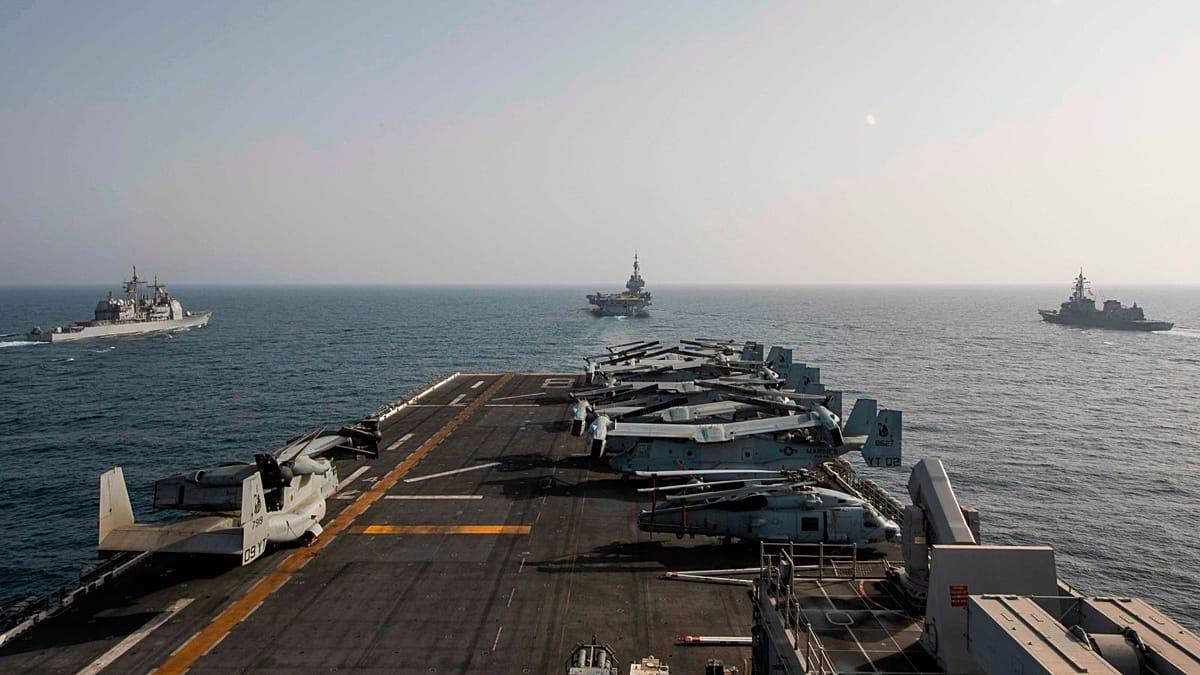
Pentagon Says U.S. Blockade In Strait Of Hormuz Cost Iran $4.8 Billion In Lost Oil Revenue
28 sources compared

Reuters Investigation Links Nobitex Founders Ali And Mohammad Kharrazi To Sanctioned Entities
11 sources compared

Donald Trump Reviews Iran’s 14-Point Proposal, Threatens New Strikes If Tehran Misbehaves
31 sources compared
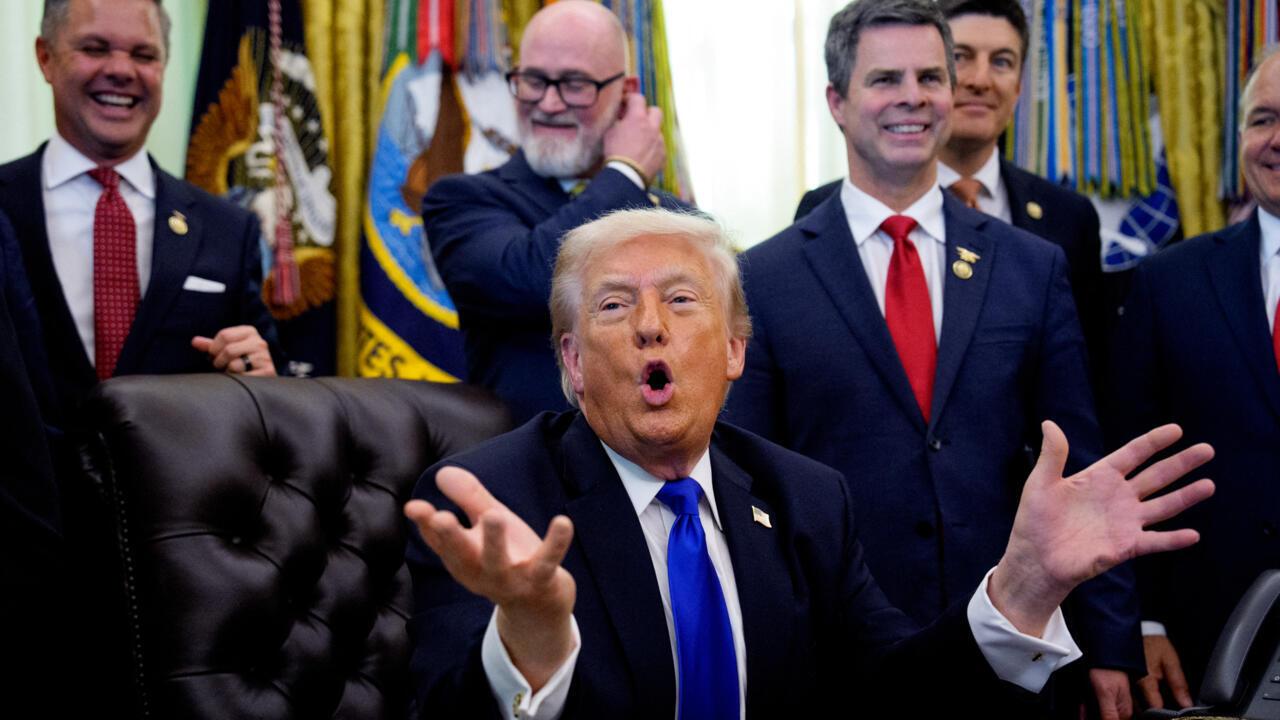
Iran Submits 14-Point Proposal to U.S. Through Pakistan, Trump Reviews Ceasefire Plan
26 sources compared