
Donald Trump Reviews Iran’s 14-Point Proposal, Threatens New Strikes If Tehran Misbehaves
Key Takeaways
- Trump is reviewing Iran's 14-point peace proposal.
- He warned U.S. strikes could resume if Iran misbehaves.
- Trump received a military briefing on potential strikes against Iran.
Trump doubts Iran plan
President Donald Trump said he was reviewing Iran’s 14-point proposal to end his war on the country while warning that Washington could restart air strikes if Tehran “misbehaves.”
“Trump says there is possibility of restarting strikes on Iran [](https://subscribe”
Speaking to reporters in Florida before boarding Air Force One on Saturday, Trump confirmed that he had been briefed on the “concept of the deal.”

When asked if strikes would resume, Trump said, “If they do something bad, there is a possibility it could happen,” and he later added in a post on Truth Social that it was difficult to imagine the Iranian proposal would be acceptable.
Trump wrote that Tehran had “not yet paid a big enough price for what they have done to Humanity, and the World, over the last 47 years.”
The diplomatic opening comes as a ceasefire between the sides has been paused since the announcement of a ceasefire between the sides on April 7, and the truce is described as fragile in multiple reports.
Iran’s Islamic Revolutionary Guard Corps (IRGC) said on Saturday that it remains on “full standby” for a return to hostilities, citing the US’s lack of commitment to previous treaties.
The Iranian proposal, as described in the reporting, calls for lifting the US naval blockade, war reparations, and the release of all frozen assets, and it also seeks a 30-day window to finalize terms for peace.
What Iran is offering
Iran’s proposal is framed in the reporting as a structured package that links maritime access, financial issues, and a staged negotiation timeline.
Al Jazeera reports that Tehran’s 14-point plan reportedly calls for the lifting of the US naval blockade, war reparations, and the release of all frozen assets, and it seeks a 30-day window to finalize the terms of peace.

Axios adds that Iran on Thursday gave the U.S. a 14-point updated proposal for a framework agreement, setting a one-month deadline for negotiations on a deal to reopen the Strait of Hormuz, end the U.S. naval blockade, and permanently end the war in Iran and in Lebanon.
Axios further reports that, under the Iranian proposal, only after such a deal is reached would another month of negotiations begin to reach a deal on the nuclear program.
The Jerusalem Post reports that Reuters had said an Iranian proposal rejected by Trump would open shipping in the Strait of Hormuz and end the US blockade while leaving talks on Tehran’s nuclear program for later.
In the Jerusalem Post account, a senior Iranian official said the war would end with a guarantee that Israel and the United States would not attack again, and that Iran would open the strait while the U.S. would lift its blockade.
The same report says future talks would then be held on curbs to Iran’s nuclear program in return for lifting sanctions, with Iran demanding Washington recognize its right to enrich uranium for peaceful purposes even if it agrees to suspend it.
Trump’s position, as described across outlets, is that he is not satisfied with the proposal’s terms and is reviewing the “exact wording” of the concept he was briefed on.
Threats, piracy claims, and IRGC stance
Trump’s review of the proposal is paired with repeated statements that the U.S. could resume strikes, and the language used by both sides has sharpened the diplomatic standoff.
Al Jazeera reports that Trump warned Washington could restart air strikes if Tehran “misbehaves,” and it quotes him saying, “If they do something bad, there is a possibility it could happen.”
Axios similarly reports Trump said he could order renewed military action against Iran if it “misbehaves,” quoting, “If they misbehave, if they do something bad — but right now, we'll see. It's a possibility that could happen, certainly,”.
The reporting also includes Iran’s response to Trump’s characterization of the blockade, with Al Jazeera saying Tehran’s Ministry of Foreign Affairs seized on the remarks, labeling them a “damning admission of piracy.”
In the same account, the IRGC said on Saturday it remains on “full standby” for a return to hostilities, citing the US’s lack of commitment to previous treaties.
Gulf News reports that Iran’s Revolutionary Guards said on Sunday that the United States faced a choice between an “impossible” military operation or a “bad deal” with the Islamic republic, and it quotes the statement carried by state television: “Trump must choose between 'an impossible operation or a bad deal with the Islamic Republic of Iran'”.
The Jerusalem Post adds that a senior Iranian official said fighting with the U.S. was “likely” to resume after Trump rejected the deal, citing Mohammad Jafar Asadi in Iran’s military’s central command.
Together, these accounts show a negotiation process that is being conducted while both sides keep contingency language in view.
War powers and diplomatic staffing
As the U.S. weighs whether to keep pressure on Iran while reviewing the proposal, domestic legal and political questions about military authority are also highlighted in the reporting.
The Hill reports that Sen. Todd Young (R-Indiana) said on Friday that the Trump administration would need to seek congressional approval before renewing military action against Iran, after officials asserted the “60-day war powers clockstopped running when the ceasefire took effect.”

Young said in a statement to The Hill, “The purpose of the War Powers Act was to assert the constitutional responsibility of Congress to declare war,” and he added, “We must ensure that the people, through their elected representatives, weigh in on whether to send our military into combat. This should not be controversial.”
The Hill says Trump notified Congress of the “military operation” in a March 2 letter, which put the conflict’s length at 60 days as of Friday, the deadline set by the War Powers Act for the president to wind down the war unless he obtains congressional authorization.
The Hill also reports that a senior Trump administration official argued Thursday that the campaign was effectively “terminated” when Trump announced a temporary truce with Tehran on April 7, resetting the clock “for War Powers Resolution purposes.”
It notes that Defense Secretary Pete Hegseth made the same argument during a Senate Armed Services Committee briefing earlier in the day.
The Hill further says Steadfast Republican support for the war showed signs of strain when Sen. Susan Collins (R‑Maine) joined Democrats and Sen. Rand Paul (R‑Ky.) in voting to curtail Trump’s authority to wage further military action without congressional approval, and that the war powers vote was ultimately defeated for a sixth time.
In CBS News reporting, the White House confirmed that Nick Stewart, described as a former lobbyist and member of the State Department during President Trump’s first term, joined the diplomatic team working to end the war with Iran.
What happens next
The reporting portrays the next phase as a narrow window in which negotiation terms, maritime access, and the possibility of renewed strikes all remain in play.
“Iran war live updates: US President Donald Trump considering a new Iranian proposal but says resuming strikes is 'a possibility' — as it happened US President Donald Trump has told reporters he was reviewing a new peace proposal from Iranian negotiators, but said resuming strikes in Iran was "a possibility"”
Al Jazeera says the impasse is complicated by technical obstacles to reopening the Strait of Hormuz, including the presence of Iranian sea mines, and it describes a growing rift with NATO allies following Trump’s decision to withdraw 5,000 US troops from Germany.
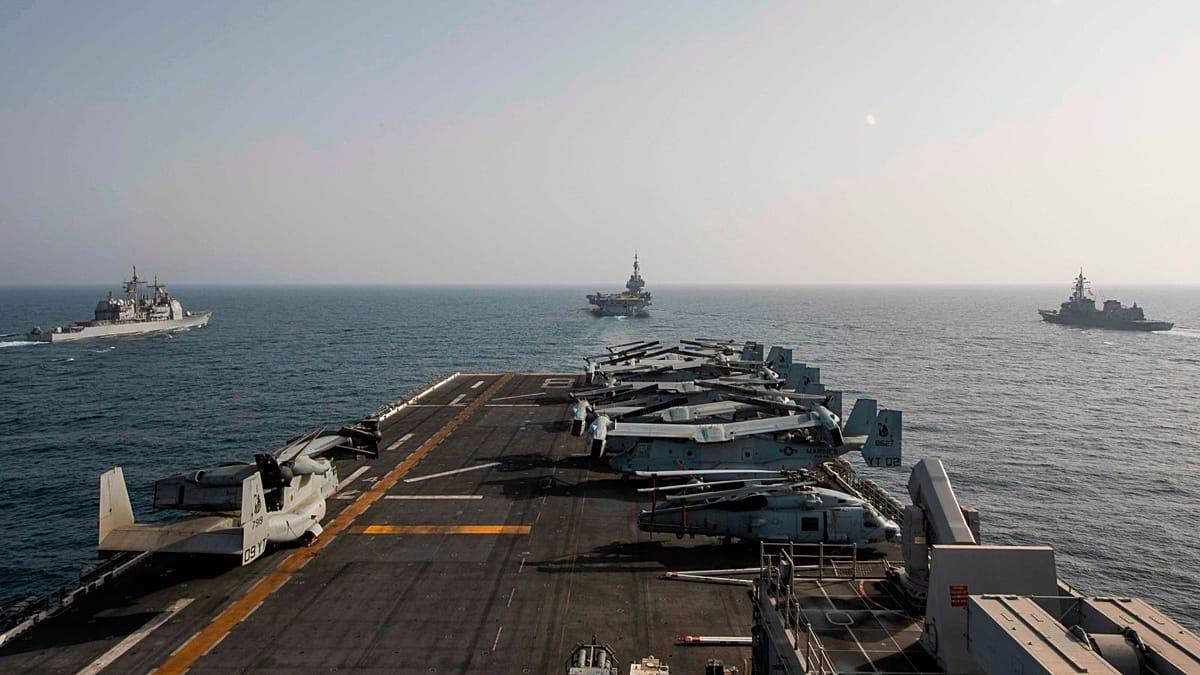
Axios reports that Trump was briefed on Thursday by CENTCOM commander Adm. Brad Cooper about new plans for military strikes against Iran, and it says Cooper met soldiers on the USS Tripoli in the Arabian Sea.
The Hill frames the legal timeline as still contested, with Sen. Todd Young saying the administration should work with lawmakers on a military force authorization should fighting resume, while Trump dismissed the possibility of seeking approval by saying, “It’s never been sought before, there’s been numerous, many, many times and nobody’s ever gotten it before, they consider it totally unconstitutional.”
Meanwhile, the Jerusalem Post reports that Iran’s Fars cited Mohammad Jafar Asadi as saying a “renewed conflict between Iran and the United States is likely,” and it says the IDF was reported by Kan to be preparing for the possibility of the U.S. resuming strikes on Iran.
Gulf News adds that Iran’s Revolutionary Guards said the U.S. faced a choice between an “impossible” military operation or a “bad deal,” and it ties that to what it calls an Iranian “deadline” over the US naval blockade.
In parallel, CBS News reports that Israel’s Prime Minister Benjamin Netanyahu said Israeli pilots “can reach anywhere in Iranian airspace,” and it quotes Netanyahu saying Israel is prepared to do so “if required.”
Even as Trump says he is reviewing the plan and that strikes are only a “possibility,” the combined accounts depict a situation where both sides are preparing for multiple outcomes, with the ceasefire’s pause since April 7 remaining fragile.
More on Iran
Pentagon Says U.S. Blockade In Strait Of Hormuz Cost Iran $4.8 Billion In Lost Oil Revenue
28 sources compared

Reuters Investigation Links Nobitex Founders Ali And Mohammad Kharrazi To Sanctioned Entities
11 sources compared

Donald Trump Reviews Iran’s 14-Point Peace Proposal, Says Iran Has Not Paid Enough Price
26 sources compared
Iran Submits 14-Point Proposal to U.S. Through Pakistan, Trump Reviews Ceasefire Plan
26 sources compared