Full story
Control Claims, No Talks
Iran’s armed forces and senior Basij-linked commanders insisted they maintain control and management of the Strait of Hormuz while rejecting U.S. President Donald Trump’s claim that the United States has “total control” of the strategic waterway.
“No ship, without Iran’s permission and supervision, is able to travel safely through the Strait of Hormuz”
Lieutenant Colonel Ebrahim Zolfaghari, spokesman for the Khatam al-Anbiya Unified Operations Command, said in a video that “No ship, without Iran’s permission and supervision, is able to travel safely through the Strait of Hormuz,” and the military added that the U.S. claim was “lies.”
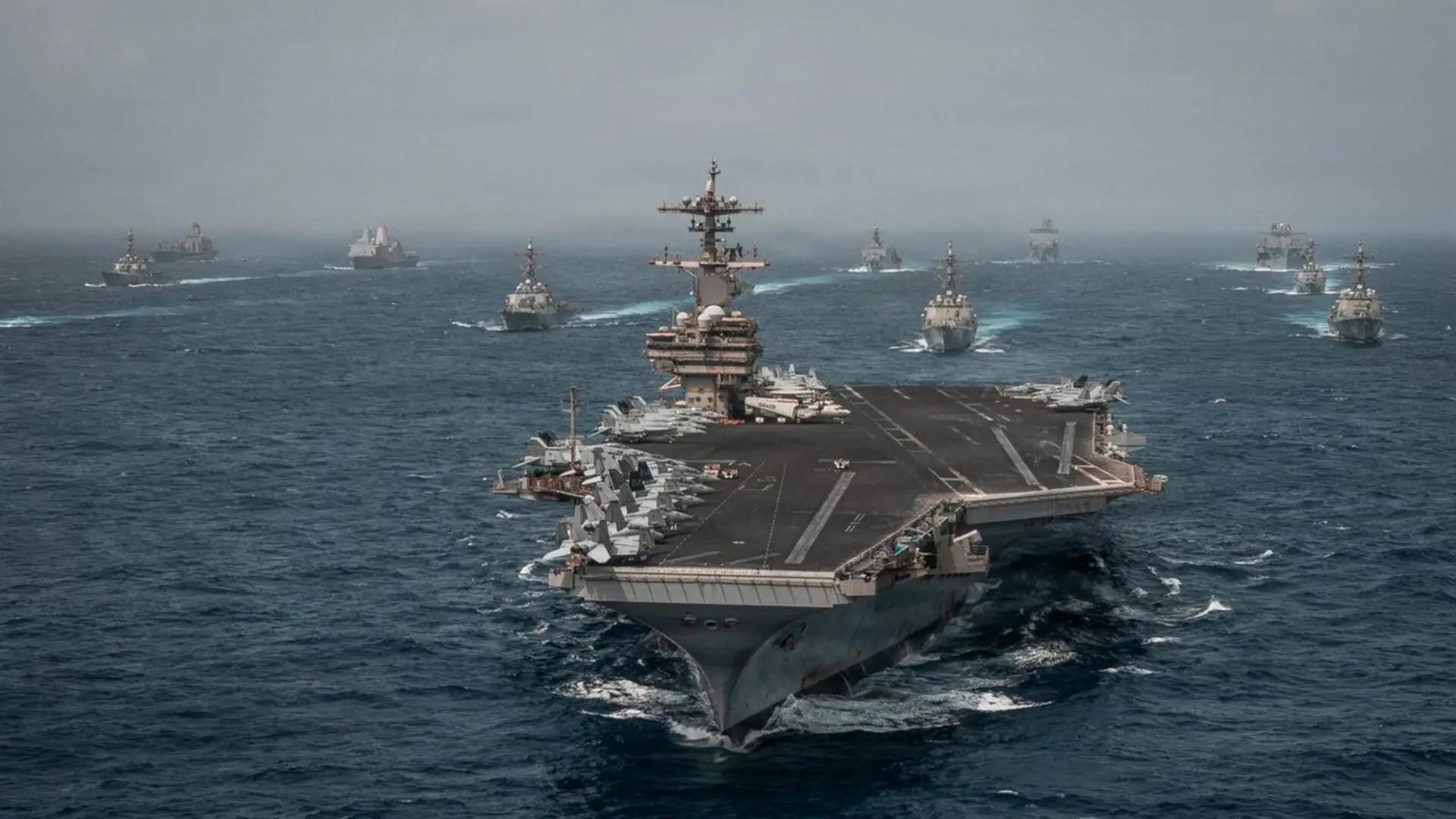
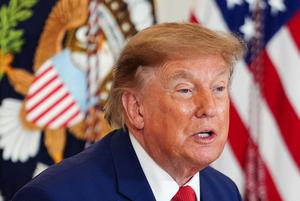
Trump, meanwhile, said there are no negotiations with Iran, stating “There are no conversations or dialogues ongoing, nor scheduled, with the Islamic Republic of Iran,” and also asserted that the naval blockade remains fully in effect.
The two sides’ dispute sits inside a broader standoff that began with U.S.-Israeli strikes on Iran on February 28 and has left the Strait of Hormuz as the primary flashpoint, with Iran having closed the passage in mid-July after new U.S. bombings against southern Iranian territory.
NBC News reported Iranian Foreign Minister Abbas Araghchi said talks with Washington are not underway despite Trump’s repeated claims that efforts to end the war are progressing.
Demands and Threats
Iran’s conditions for reopening the Strait include a permanent end to the war and further threats against Iran, an end to the U.S. blockade, the withdrawal of American military forces, the lifting of sanctions, and the return of Iranian assets, according to NBC News citing Iranian state media.
NBC News also said Vice President JD Vance argued the Trump administration continues to apply diplomatic, economic and military pressure as it works toward an agreement, while Connecticut Sen. Chris Murphy criticized the handling of the conflict and said the price of reopening the Strait of Hormuz continues to increase.
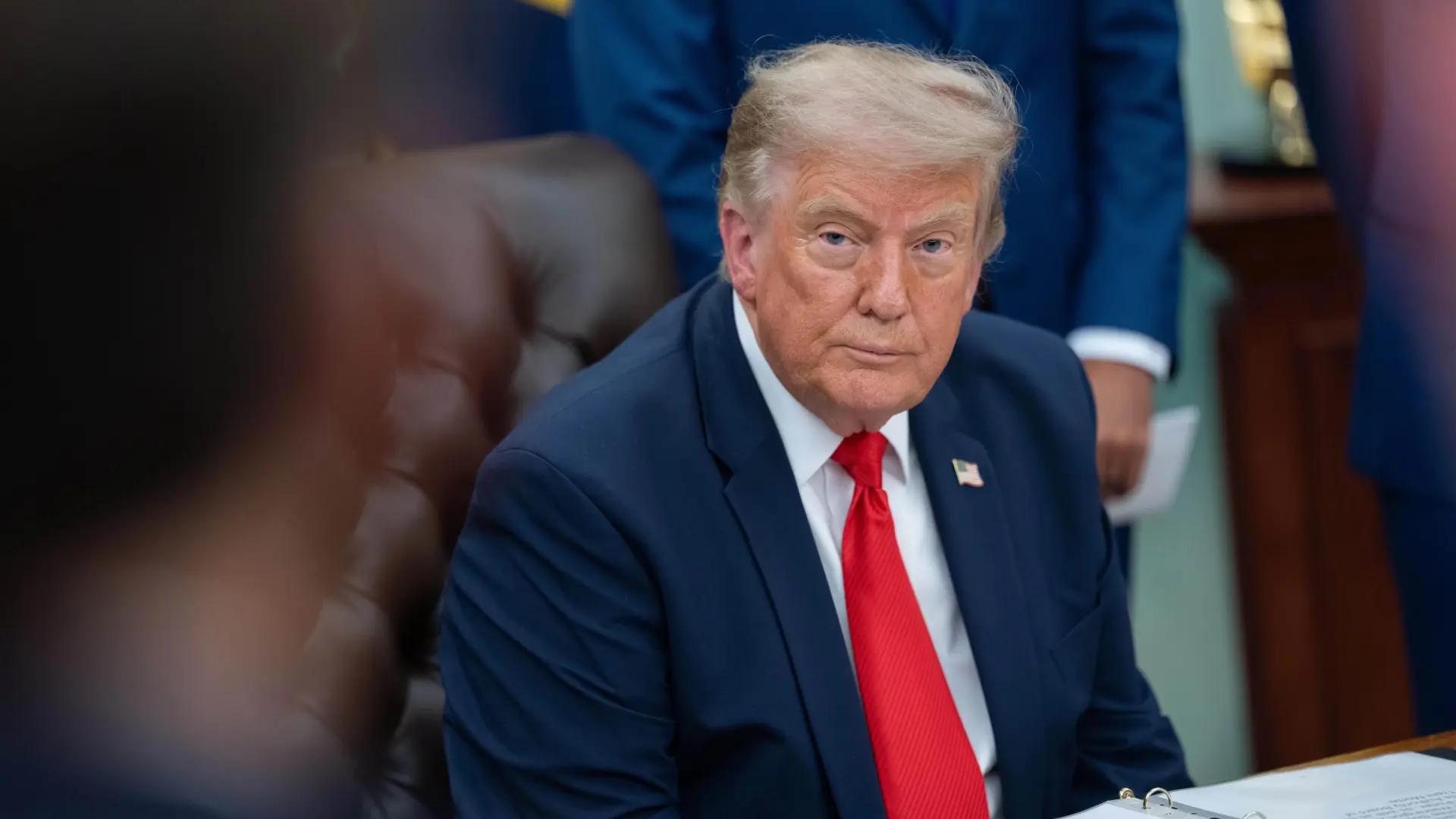
In parallel, Trump escalated his rhetoric toward regional partners, telling Fox News, “If Oman meddles, we’ll crap all over them with … bombs,” after Iran’s Foreign Ministry spokesperson Esmaeil Baghaei announced an “understanding” with Oman to establish a maritime route in Hormuz.
ABC News reported that Hossein Taeb, head of the Basij paramilitary forces affiliated with the Islamic Revolutionary Guard Corps, said on state television, “Today, as you can see, the Strait of Hormuz is under the administration and control of the Islamic Republic,” after Trump asserted the U.S. had “total control.”
Shipping Pressure and Stakes
The dispute has translated into direct pressure on shipping, with ABC News describing a U.S. Navy MH-60 helicopter firing two Hellfire missiles into the Panamanian-flagged cargo vessel M/V Vela Nova’s engine room after the ship’s civilian crew ignored repeated warnings from American forces.
“A U.S. Navy MH-60 helicopter fired two Hellfire missiles into the Vela Nova’s engine room”
ABC News said CENTCOM stated the ship is no longer transiting to Iran in violation of the U.S. blockade, which remains in full effect, and that it was the third ship disabled since the restart of the blockade in July, with two other ships boarded and 55 redirected.
The stakes are also framed in terms of global energy flows and U.S. domestic politics, with ABC | Western Mainstream noting that the strait is a key maritime passage through which a fifth of the world’s oil and gas flows and that gasoline prices have become politically sensitive for Trump.
In the background of the Hormuz standoff, ABC News reported International Maritime Organization Secretary-General Arsenio Dominguez condemned Tuesday’s deadly attack on a cargo ship off the coast of Yemen and said, “These continued attacks on shipping only serve to escalate tensions and threaten global supply chains on which everyone depends,” linking the crisis to broader maritime risk.
The same ABC News update also said Trump told reporters at Joint Base Andrews that the situation in Iran is “progressing ‘absolutely fine,’” while again insisting the U.S. has total control of the Strait of Hormuz.