Technology and Scienceupdated 1h ago3 min read
MapDR Congo Begins Ebola Vaccine Trial In Bunia Using Merck’s Ervebo Shot
4 Asian3 Other1 African2 Other source typesMap: © OpenStreetMap contributors, ODbL · Cropped for layout
This article is an automated aggregation of coverage from news outlets. Our editorials offer in-depth analysis curated by the NewsCord team.
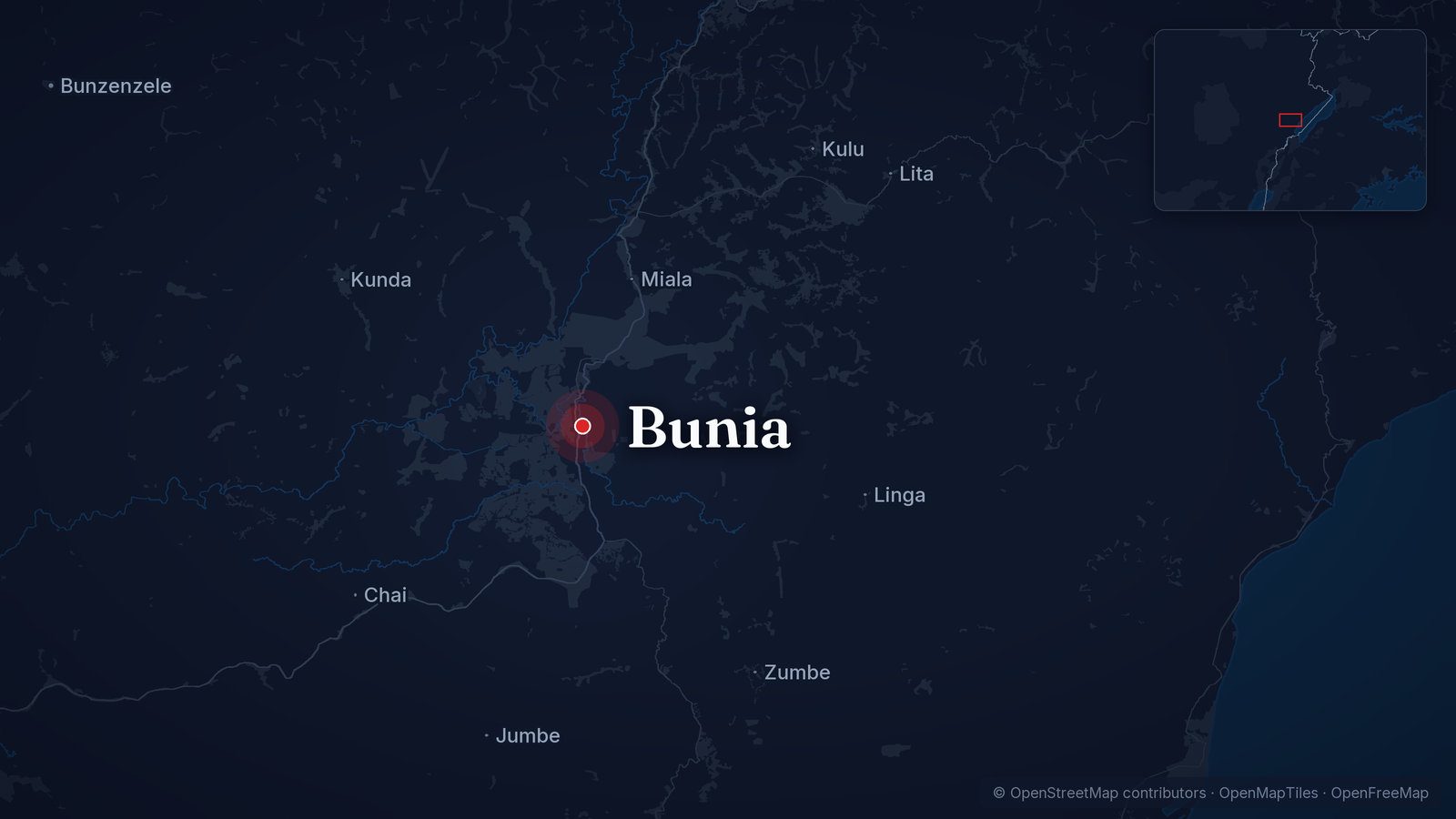
Tumaini trial begins in Bunia, Ituri, evaluating Bundibugyo Ebola vaccines among contacts of cases. First participants vaccinated with Ervebo in Bunia as WHO announces start.
10 outlets told this the same way.
Outlets did split on PHP Project Releases Patches For CVE-2026-109618 And CVE-2026-109619 After php2shell Attacks →
Tumaini trial starts in Bunia
The Democratic Republic of Congo began a clinical trial of Ebola vaccines against the Bundibugyo strain with the first participant vaccinated in Bunia, eastern Congo, on Friday. The trial used Merck & Co.’s Ervebo shot, which has been approved to guard against a different Ebola species, while the study could also test experimental alternatives developed by Moderna Inc. and by the University of Oxford and Serum Institute of India within weeks. The World Health Organization said Congo recorded 9,704 confirmed cases and 4,687 deaths as of October 20, and the outbreak is the largest Ebola outbreak ever recorded in the country, irrespective of virus species.
Richard Hatchett said, “I’m pretty confident that we have the window because the outbreak is not being brought under control,” as the trial moved forward despite the embedded outbreak. The World Health Organization framed the trial as a DRC-led effort, with WHO director-general Tedros Adhanom Ghebreyesus saying participants were vaccinated with Ervebo in Bunia, the capital of the DRC’s northeastern Ituri province, which is the epicentre of the Ebola outbreak.
Ring vaccination and candidates
The Tumaini trial evaluated candidate vaccines against Ebola caused by the Bundibugyo virus among contacts of confirmed cases, using a ring vaccination approach that immunises contacts deemed to be at high risk of infection. Major General Kasongo Gaby, governor of Ituri Province, said the launch marked “a significant moment in the fight against the outbreak,” and he tied the trial to mobilising resources rather than “passively accept[ing] health threats.” The trial was led by the National Institute for Biomedical Research (INRB), which serves as Congo’s national public health laboratory, with technical, scientific and logistical support from the World Health Organization.
WHO emergencies director Chikwe Ihekweazu said the trial was set up to generate “the rigorous evidence needed to determine whether the participating vaccines could protect people at risk,” as it incorporated pregnant women and children aged 12 years and older. The trial was designed as a single framework that could test multiple vaccines, with a ChAdOx1 adenoviral vector jab developed by the University of Oxford and an mRNA vaccine from Moderna expected to be incorporated “shortly.”
Regional spread and stakes
The outbreak has spread beyond the DRC, with Kenya reporting nine cases and Nigeria confirming its first case this week, while Uganda was declared Ebola-free in August after reporting 20 cases. The World Health Organization said the current outbreak has been reported in four countries across eastern, central and western Africa, giving it the widest geographic spread of any Ebola outbreak on the continent to date. The trial’s progress also unfolded alongside WHO’s public health emergency of international concern, its second-highest alert level, which the WHO triggered in response to the outbreak.
The Coalition for Epidemic Preparedness Innovations said the Tumaini trial would help determine whether vaccine candidates designed for Bundibugyo virus work, and it framed the effort as supporting a DRC-led search for answers and saving lives. Richard Hatchett said the trial would remain challenging because the outbreak was not under control, and he linked the need for evidence to whether vaccines could protect people at risk in the largest and deadliest recorded Ebola outbreak in the DRC.