
Drone Activity Disrupts AWS Bahrain Operations Amid Middle East Tensions
Key Takeaways
- AWS Bahrain disrupted by drone activity amid West Asia conflict; customers urged to migrate workloads.
- Second disruption in about a month; AWS migrating customers to alternative regions.
- AWS works with local authorities and prioritizes personnel safety during recovery.
AWS Disruption Confirmed
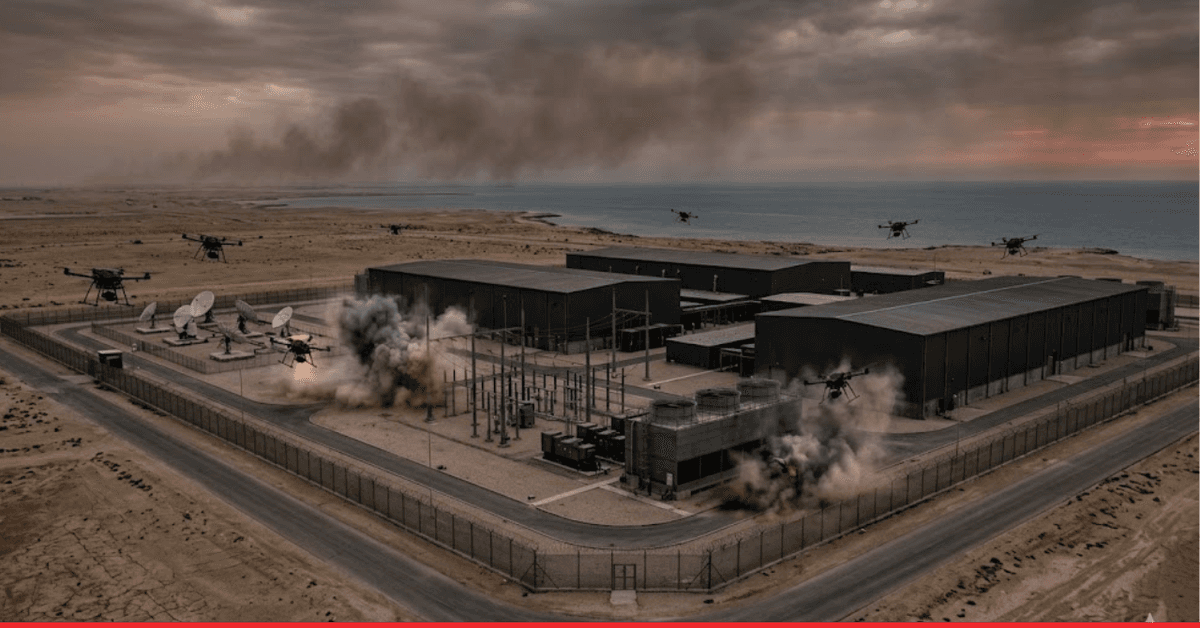
Amazon Web Services (AWS) has confirmed that its cloud computing region in Bahrain experienced significant disruption due to drone activity linked to the ongoing Middle East conflict, marking the second such incident in approximately one month.
““As this situation evolves and, as we have advised before, we request those with workloads in the affected regions continue to migrate to other locations,” Amazon told Reuters in a statement Monday night”
 Al Jazeera
The disruption was first reported by Reuters and confirmed by an Amazon spokesperson, who stated that drone activity in the area had affected operations, though the company did not immediately confirm whether the Bahrain facility itself was directly hit or if the impact was caused by nearby strikes.
 Al Jazeera
This incident highlights the escalating impact of regional conflicts on global technology infrastructure, as AWS powers numerous high-profile websites, enterprises, and government services worldwide.
The disruption comes amid growing tensions in West Asia, where Iran has claimed it is targeting US assets across the Gulf Arab states in retaliation for the joint attack on Iran by the US and Israel that began on February 28.
Customer Migration Response
In response to the disruption, Amazon has implemented emergency measures to maintain service continuity, actively assisting customers in migrating their workloads to alternative AWS regions while recovery efforts continue.
The company issued a statement advising customers with workloads in affected regions to 'continue to migrate to other locations' as the situation evolves.

 Analytics Insight
This proactive approach reflects AWS's built-in redundancy system, which allows enterprise clients to shift operations between regions during unexpected outages or emergencies.
However, Amazon has not disclosed specific details about the extent of the damage, the number of customers impacted, or a timeline for when operations might be fully restored.
The company emphasized that it is 'coordinating extensively with regional authorities and placing staff safety as our highest priority during restoration operations.'
Multiple sources confirm that official services in Bahrain have been inaccessible, with government portals and telecommunications services experiencing technical problems.
Pattern of Attacks
The Bahrain disruption is part of a concerning pattern of attacks targeting US technology infrastructure since the outbreak of the US-Israel war against Iran in late February.
“Amazon's cloud subsidiary services in Bahrain are disrupted after drone attacks in the region, the supplier told AFP on Tuesday, confirming Reuters' report”
 BFMTV
BFMTVEarlier this month, AWS facilities in both Bahrain and the United Arab Emirates experienced power outages after being impacted by military activity, with the UAE strike marking the first known instance of military action disrupting a major US technology company's data center operations.
Amazon had previously reported that 'these strikes have caused structural damage, disrupted power delivery to our infrastructure, and in some cases required fire suppression activities that resulted in additional water damage.'
Iranian state media has described the attacks as intentionally targeted, claiming they were launched to 'identify the role of these centers in supporting the enemy's military and intelligence activities.'
The Iranian regime has threatened to strike economic centers, banks, and tech companies in the Gulf region, naming Microsoft, Google, Palantir, IBM, Nvidia, and Oracle as potential targets.
Business Impact
The disruption of AWS operations in Bahrain carries significant business implications given the critical role of cloud infrastructure in modern digital ecosystems.
AWS represents Amazon's primary profit driver and serves as the backbone for numerous major websites, enterprises, and government services globally.

 Blockonomi
The Bahrain region, which opened in 2019, is a key hub for Middle East cloud operations, and its disruption can affect enterprise applications, digital services, and continuity plans across markets that depend on that infrastructure.
Disruptions at AWS facilities can have a ripple effect on thousands of organizations globally, potentially impacting their operations and investment inflows into the region.
This episode demonstrates how geopolitical conflict can directly affect digital infrastructure, forcing enterprises to think more seriously about multi-region design, failover planning, and workload mobility.
The incident also highlights the broader vulnerability of hyperscale cloud infrastructure, which is not typically designed for active warzone conditions.
Security Vulnerabilities
The security situation in Bahrain remains serious, with reports indicating the country has faced multiple Iranian drone attacks, including incidents involving Patriot interceptions over residential areas.
“Continue without accepting → Logo To support the work of our newsroom and to bring you reliable, high-quality information every day, we and Click 'Accept' to consent or adjust your preferences”
 Boursier
This active threat environment demonstrates that regional cloud concentration now carries a new kind of risk for businesses and governments.
 CIOL
CIOLExperts note that drones operating near sensitive facilities can cause both physical and operational disruptions even without direct hits, as seen in the power outages and structural damage reported earlier.
The Bahrain region's vulnerability has been exacerbated by the escalating security situation in the Gulf, where Iranian forces have threatened to target digital and energy infrastructure in the region if Israel and the US continue their bombing campaign.
This developing scenario underscores the need for enhanced contingency planning and multi-region strategies to ensure business continuity in an increasingly volatile geopolitical landscape.
More on Technology and Science

Google Unveils TurboQuant Compressing KV Cache Sixfold, Sparking Memory-Chip Selloff
11 sources compared

US Demands Mexico End Cuban Medical Missions
14 sources compared

NASA Pauses Gateway to Focus on Building Permanent Moon Base
44 sources compared

OpenAI shuts down Sora, ends Disney partnership
31 sources compared