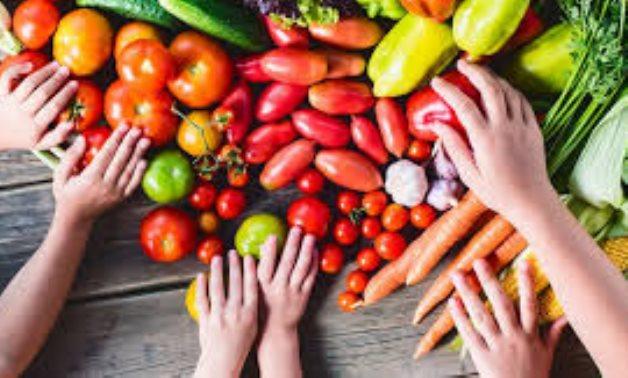
Egypt’s Government Says Desert Reclamation, High-Yield Varieties Secured Food Security for 108 Million
Key Takeaways
- Desert reclamation and high-yield varieties underpin Egypt's food security strategy.
- New Delta Development Project demonstrates state commitment to food security and development.
- Technology improves agricultural land efficiency to secure meals amid global crises.
Egypt’s food-security push
Egypt’s government says it achieved sustainable food security in strategic commodities by combining large-scale desert reclamation projects, breeding high-yield varieties, and using technology to raise the efficiency of agricultural land.
“Rich Wilson is CEO of the Iswe Foundation and co-founder of theGlobal Citizens’ Assembly”
Alaa Farouk, Minister of Agriculture and Reclamation, said Egypt broke dependence on foreign markets in five major commodity groups, including fresh dairy, table eggs, and poultry, as well as rice and sugar producers.

Farouk linked the approach to a need to provide food for 108 million citizens plus about 9 million guests among residents and refugees who share in subsidized and essential goods.
He said the ministry’s strategies rest on two axes: horizontal expansion through desert reclamation projects such as Future of Egypt and the New Delta, and vertical expansion through breeding high-yield varieties and modern technology.
The ministry also set a roadmap to reduce reliance on hard currency in importing vital crops, with targets for wheat, corn, and red meat tied to procurement prices, drought- and salinity-tolerant varieties, and projects including the National Fattening Project.
New Delta and water reuse
Politicians and MPs praised President Abdel Fattah el-Sisi’s inauguration of the New Delta Development Project in El-Dabaa as a qualitative leap toward food security and the utilization of resources.
Dr. Afet Al-Sadat, head of the Sadat Democratic Party and deputy chair of the Foreign Relations Committee in the Senate, said the New Delta project is among the largest agricultural and developmental projects in Egypt’s history and reflects long-term planning to secure future generations.
Al-Sadat said the project involves massive investments totaling around 800 billion pounds and includes an integrated infrastructure with thousands of kilometers of roads and lifting stations and energy facilities.
She added that the project’s significance extends to water resources management through treating agricultural wastewater and establishing an advanced system for its reuse.
The Egyptian Liberal Party, led by MP Essam Khalil, also praised the inauguration, describing the New Delta as one of the greatest national and agricultural projects in modern Egyptian history that strengthens the country’s food security system.
Food shocks, climate science
Climate Home News framed the stakes of food security through global numbers and price dynamics, saying that according to the 2026 Global Report on Food Crises, 266 million people across 47 countries experienced high levels of acute food insecurity last year.
“Party leaders and politicians praised President Abdel Fattah el-Sisi's inauguration of the New Delta Development Project in El-Dabaa, stressing that the project marks a qualitative leap in the comprehensive development path pursued by the Egyptian state and reflects a conscious political will aimed at achieving food security and maximizing the utilization of resources”
It also cited disruptions to oil, gas and fertiliser flows through the Strait of Hormuz, saying they drove a 46% month-on-month spike in urea prices early this year and sent agricultural price indices up 8%.
Rich Wilson, CEO of the Iswe Foundation and co-founder of the Global Citizens’ Assembly, said the EAT-Lancet Commission concluded that food systems account for roughly 30% of total greenhouse gas emissions and are the largest single contributor to the climate crisis.
Wilson described a Global Citizens’ Assembly process where participants spent seven weeks examining evidence on food and climate, then voted to protect forests and phase down industrial animal food production.
He added that the assembly’s Calls to Action were passed with over 85% support, and said the group explicitly rejected the idea that the burden of change should fall on individual consumers.
More on Technology and Science

NHS England Launches Marathon-A-Month Walking Challenge With Rewards for 30 Minutes Daily
15 sources compared

Aspen Acres Fire Forces Thousands to Evacuate in Colorado, Destroys 160 Structures
11 sources compared

Heat Wave Closes Great American State Fair on Washington’s National Mall, Cancels Philadelphia Parade
12 sources compared

Citizen Lab Says NSO Group Pegasus Repeatedly Infected Stelios Kouloglou on PEGA Committee
15 sources compared