Europe03 May, 20267 min read
Erdoğan Declares Türkiye’s Demographic Decline an Existential Threat, Launches Decade of Family Plan
This article is an automated aggregation of coverage from news outlets. Our editorials offer in-depth analysis curated by the NewsCord team.
Erdoğan declares demographic decline existential threat and launches 2026–2035 Decade of Family and Population. Policies emphasize family-centric measures to boost births amid Turkey’s aging population.

Europe’s demographic shadow
Turkey’s demographic decline is being framed by President Recep Tayyip Erdoğan as a challenge that Europe already faces and that Ankara fears could arrive in a harsher form. Erdoğan is quoted in İlke Haber Ajansı saying, “Almost all of the countries cited as global models of a prosperous society are lamenting the decline in their population growth rates,” and he adds that “some nations now rely heavily on immigration to sustain basic services and economic activity.” In the same report, Erdoğan describes Türkiye’s fertility rate as “alarming,” saying it has remained below the population replacement level of 2.1 since 2017, with the rate falling to 1.48 in 2024 and expected to decline further in 2025.
“Erdogan called it an 'existential threat'... Will Turkey escape Europe's demographic decline?”
Al-Jazeera Net similarly says Erdoğan called the demographic shift an “existential threat” and announced “the next decade (2026-2035) will be the Decade of Family and Population.” The Anadolu Ajansı projection report places Türkiye’s youth share at 15.1% and says projections could take it below 10% in 2050 and 2100.
Courrier international adds that Erdoğan’s repeated injunctions to have “at least three children” have not reversed the trend, citing TurkStat figures that put the average number of children per woman at 1.51 for 2023. Together, the sources connect Turkey’s internal demographic numbers to a European comparison point, with Erdoğan and Turkish outlets explicitly invoking Europe’s aging and low-fertility experience.
The policy turn
To counter the demographic decline, Erdoğan has launched a long-horizon family and population program that is explicitly dated and framed as a response to falling fertility. İlke Haber Ajansı reports that Erdoğan inaugurated Türkiye’s “Decade (2026-2035) of Family and Population Vision,” urging “stronger measures to protect the family institution amid falling fertility rates and rapid societal changes.” At the Haliç Congress Center, Erdoğan defended his family-centric policies against criticism, saying, “The absurdity of the claims made by those who accuse us of trivializing the individual or undermining women simply because we prioritize and value the family, will become clear.”
He also said, “The validity of our efforts to protect and strengthen the family will be much better understood in the future.” Al-Jazeera Net describes the same initiative as a “Family and Population Contract Vision Document” built on “five strategic priorities,” with the “most prominent” being “protecting the family institution, encouraging marriage, and achieving a balanced distribution of the population.” The Al-Jazeera Net account adds that the government has already begun in 2026 by raising the marriage loan to “250,000 lira with no interest,” and it ties the program to child support “up to 5,000 lira for the first child.”

IFRI’s local Western report describes the domestic policy response as conservative, with Erdoğan calling for women to have “at least three children” and with a family planning campaign launched in January 2025 proclaimed “Year of the Family” (Aile Yılı). IFRI further specifies that this plan provides “5,000 Turkish lira (TL) for a first child,” “a monthly payment of 1,500 TL for the second child,” and “5,000 TL for each additional child,” while also saying “Access to contraception and abortion has also been restricted.”
Numbers and projections
The sources lay out a detailed demographic picture that Turkish authorities and Turkish media use to justify the policy shift, while also comparing Turkey to Europe. İlke Haber Ajansı says Erdoğan highlighted that Türkiye’s median age has risen to 34.9 as of 2025 and that the proportion of elderly citizens has reached 11.1 percent, while in rural areas “the elderly population has now surpassed the number of children.” It also reports household and marriage metrics, including that the average household size has declined to 3.08 and that single-person households account for 20.5 percent of the total.
The same report gives marriage-age figures of 28.5 for men and 26 for women, and it states that “a significant proportion of young adults remain unmarried,” with “79 percent of women and 94 percent of men in the 20–24 age group yet to marry.” Al-Jazeera Net similarly ties the demographic decline to Europe by stating that Turkey remains younger by about ten years than the European Union, with “average age 34.9 years versus 45 in Europe,” and it says the official data show fertility dropping from 2.38 children per woman in 2001 to 1.48 in 2024. Anadolu Ajansı provides youth-specific projections, saying Türkiye’s youth population rate is 15.1% and that projections show it could fall below 10% in 2050 and 2100.
It also cites a baseline scenario in which youth population in 2050 should be about 9.1 million and its share 9.66%, while a low scenario would decrease to 8.3 million in 2050 and 9.29%. Courrier international adds a longer time series, saying the average number of children per woman fell from 6.38 in 1960 to 2.38 in 2001 and then to 1.51 for 2023, while also noting that the figure is “well below the 2.1 children required to ensure natural population renewal.”
Debate inside Turkey
While Erdoğan’s demographic framing treats population decline as a national-security issue, other sources describe the drivers as economic and structural, and they also document how Turkish authorities restrict choices. Al-Jazeera Net says the official view in Turkey goes beyond the economic crisis and places the issue “in the realm of national security,” with Erdoğan believing the population issue represents an “existential threat.” It also quotes the Ministry of Family and Social Services as warning that “the decline in the number of young people and the increasing burden of caring for the elderly place heavy pressures on education and labor sectors,” and it adds that the ministry sees challenges including “weak family ties and the spread of individual consumerist tendencies.”
Courrier international offers a different emphasis by citing demographer Selin Köksal, who says, “The lack of economic means and the fear of tomorrow can push people to renounce having children, or to postpone this decision to a later date,” and it adds that demographer Alanur Çavlin links the trend to access to education and contraception. IFRI describes the political response as conservative and says that “Access to contraception and abortion has also been restricted,” in the name of a pro-natalist policy that also seeks to limit cesarean deliveries. IFRI further argues that the surge in cesarean birth rates is “a direct consequence of the health system reform launched in 2003,” which led to the closure of many maternity wards and obstetrics and gynecology services in public hospitals.
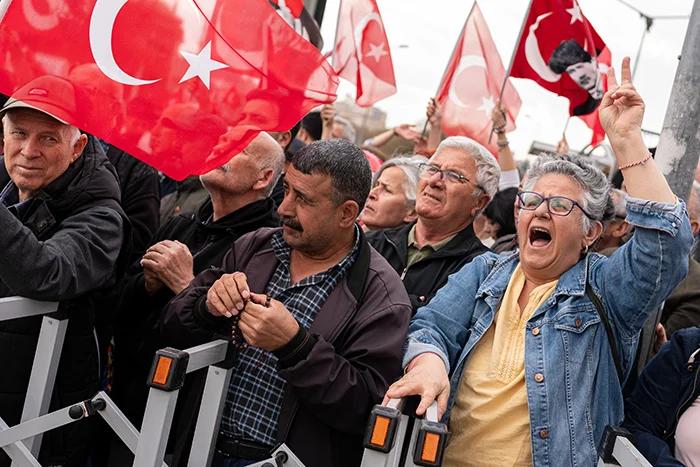
Al-Jazeera Net also includes a sociologist’s critique, reporting that sociologist Mustafa Solmaz said the decline in fertility results from a “complex interplay of structural, economic, and cultural factors,” and that “financial incentives alone are not enough.” The same Al-Jazeera Net piece describes internal tensions between “Youth Turkey” and “Old Europe” as extending “inside Turkey itself,” contrasting an “educated urban generation” with a political authority seeking to curb lifestyle changes “in the name of protecting the family and defending Turkey’s existence and strength.”
Europe-facing consequences
The sources connect Turkey’s demographic trajectory to future labor and social pressures, and they also show how Turkish authorities and Turkish media anticipate consequences by using European benchmarks. İlke Haber Ajansı says Erdoğan emphasized that Türkiye remains in a relatively stronger position than many European countries, stating, “Europe’s median age stands at 45, Türkiye’s is approaching 35—still about 10 years younger than the European Union average.” It also frames the policy as preparing for long-term risks, with Erdoğan saying, “As the leadership bearing the responsibility for 86 million people, we are striving to prepare Türkiye for the future by anticipating the potential risks, threats, and opportunities.”
Al-Jazeera Net similarly warns that Ankara fears “a repetition of the European model,” where low fertility rates in Germany and Italy led to “a sharp labor shortage and pressures on pension funds.” Anadolu Ajansı’s youth projections reinforce the idea of a shrinking younger cohort by showing scenarios in which youth numbers could fall to 7.3 million by 2100 in the baseline scenario and to 3.9 million in the low scenario, with shares of 9.55% and 7.2% respectively. Courrier international adds that the question of anticipating massive aging arises, and it states that “There are no nursing homes, nor a subsidized home-care system for the elderly,” while also noting that 65% of the Turkish population is under 40 and only 12% over 65, compared with 22% in France.
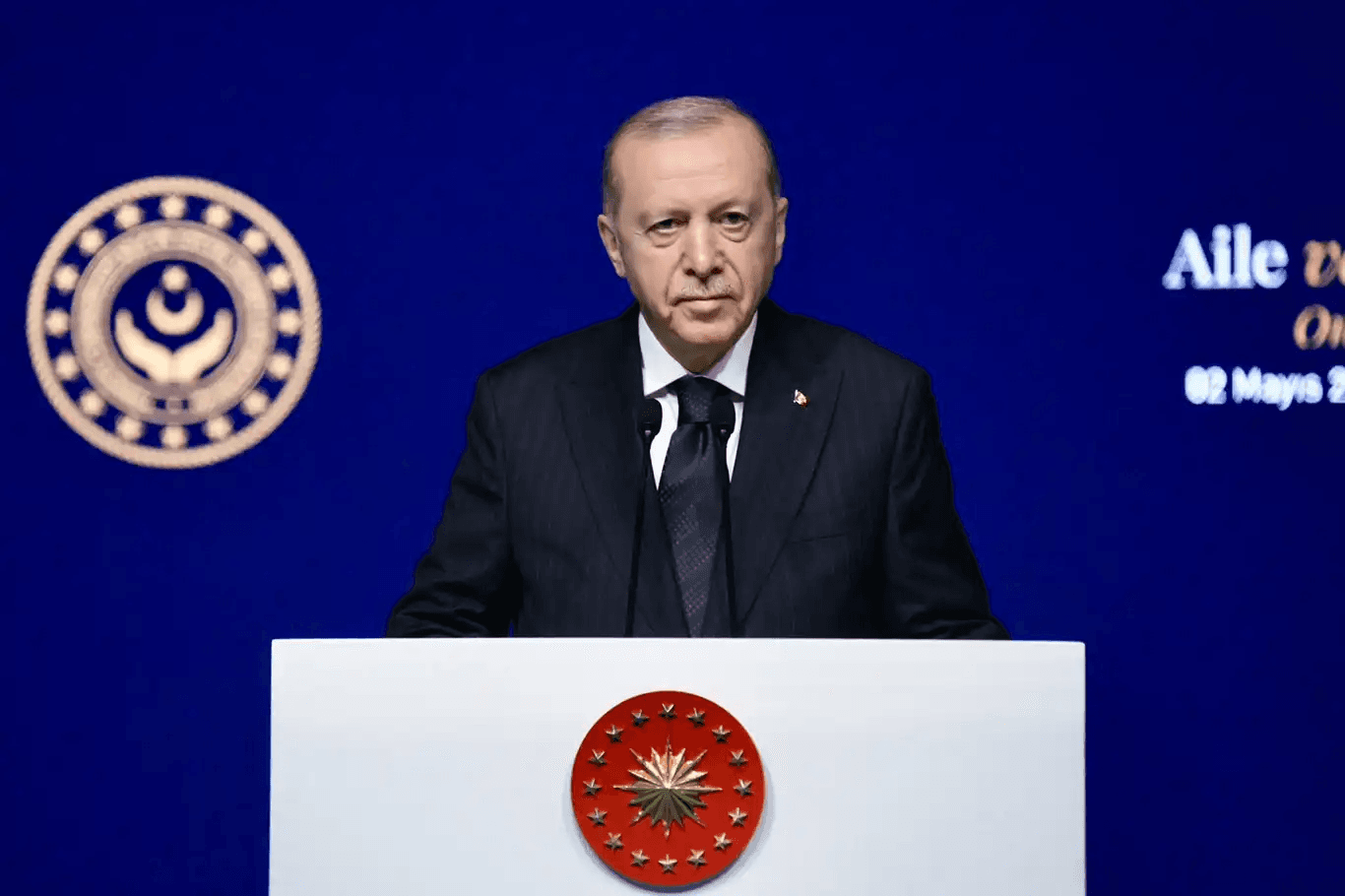
IFRI describes the demographic decline as attributed by the AKP to “individualism, consumerism as well as feminist and LGBT+ movements,” and it says the political response is to advocate a return to “family values” by reaffirming gendered roles. In the background of these demographic debates, IFRI also ties domestic economic pressures to the broader environment, describing how the textile sector lost 65,000 jobs in 2024 and how exports depend on Europe, with “60% of exports go” to Europe, which can intersect with demographic policy goals. Across the sources, the “Decade of Family and Population Vision” is presented as the formal mechanism to address demographic shifts over ten years, with Erdoğan’s remarks positioning Europe’s aging as the comparative reference point for what could happen in Türkiye.