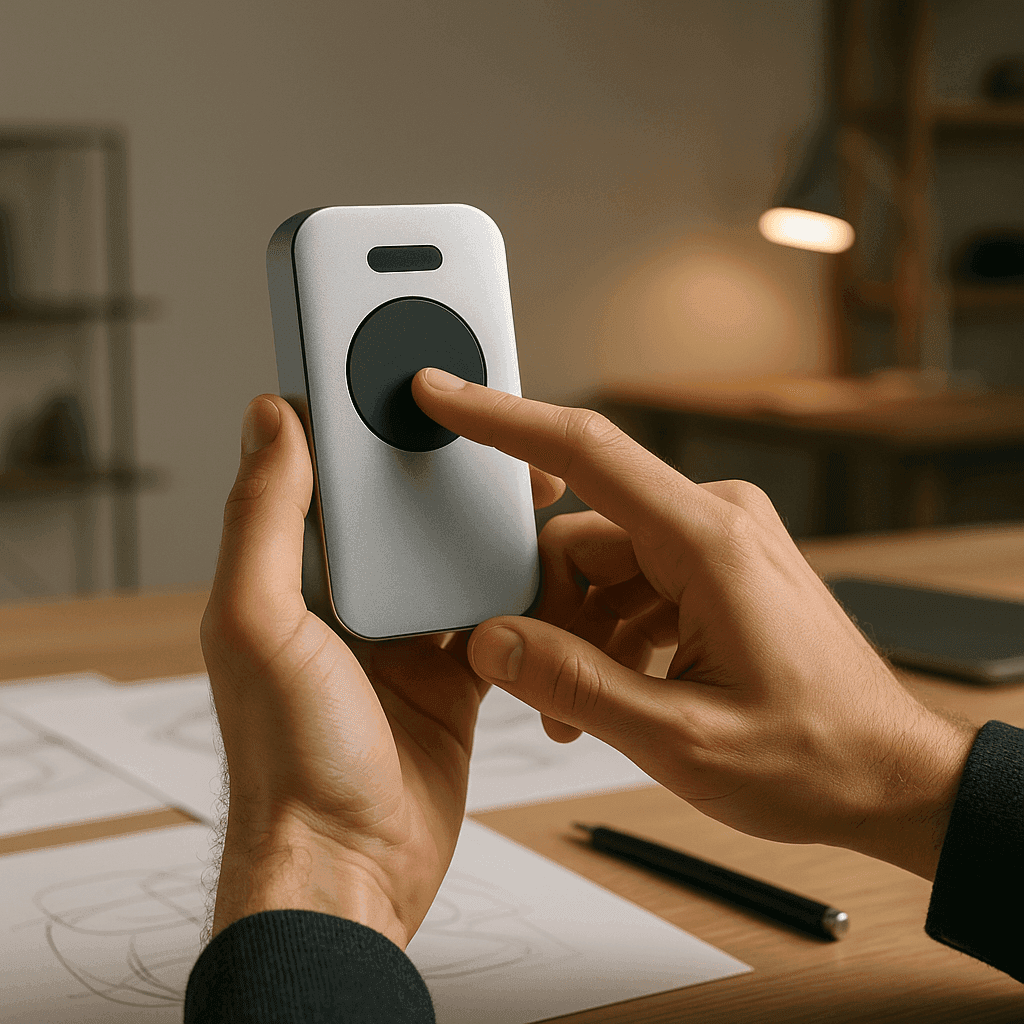
Ex-Apple designer launches Hark to Reimagine AI Hardware
Key Takeaways
- Abidur Chowdhury, former Apple industrial designer, leads Hark's design.
- Hark designs models, hardware, and interfaces in tandem for seamless end-to-end personal intelligence.
- Brett Adcock, serial entrepreneur, founded Hark.
Startup Vision
A secretive AI startup called Hark has emerged from the shadows, founded by serial entrepreneur Brett Adcock and featuring a team led by former Apple industrial designer Abidur Chowdhury.
“A stealthy AI startup called Hark is betting that the next leap in computing will come from aligning three things that rarely launch in sync: cutting-edge models, bespoke hardware, and a radically simpler user interface”
The company aims to tackle one of artificial intelligence's most persistent challenges: making the technology feel as intuitive and seamlessly integrated into daily life as the iPhone.

Hark plans to design AI models, hardware, and user interfaces simultaneously to deliver what it calls a 'seamless end-to-end personal intelligence product' that can listen, see, and interact with the world in real time.
This system will maintain persistent memory of the user's life while anticipating, adapting, and genuinely caring about people using them according to the company's vision.
This ambitious venture reflects Silicon Valley's ongoing search for the definitive consumer AI application that could transform how humans interact with intelligent software beyond current kludged implementations.
Design Philosophy
Hark's design philosophy draws heavily from Apple's legendary playbook of vertical integration and user-centric design, as embodied by its Director of Design Abidur Chowdhury.
Chowdhury previously led the design team behind the iPhone Air and other recent Apple models, bringing extensive experience in creating intuitive consumer interfaces.
He envisions an approach where intelligence should recede into the background rather than intrude into users' lives, expressing skepticism about current wearable AI devices.
The company's very name 'Hark' telegraphs its ambition to pay attention on behalf of the user, reflecting a design philosophy that aims to make technology feel inevitable rather than obtrusive.
This approach mirrors Apple's quiet radicalism in consumer device design that once made certain products feel naturally integrated into everyday life.
Technical Strategy
Technically, Hark is pursuing a strategy of hardware co-design that represents a broader return to vertical integration across the AI industry.
“A secretive AI lab founded by serial entrepreneur Brett Adcock shared new details about what it believes is a novel marriage of model-building and hardware design that will change how humans interact with intelligent software”
The company recognizes that hardware choices fundamentally shape sensor quality, power budgets, and thermal envelopes which determine how responsive an AI assistant can be.
Hark is spinning up a cluster with thousands of NVIDIA GPUs, signaling its intention to own core model development rather than relying entirely on off-the-shelf systems.
The company plans to train its models with data from Figure, Adcock's separate humanoid robotics venture, creating a feedback loop where robots produce sensorimotor data that helps agents interpret the real world.
This approach could enable faster, more private interactions by keeping more inference local rather than requiring constant data-center hops.
Hark's multimodal end-to-end approach contrasts with current AI implementations that often retrofit intelligence to existing interfaces rather than designing cognition and interface affordances together from the ground up.
Team & Resources
Hark's competitive positioning is strengthened by its substantial resources and experienced team composition.
The company employs about 45 engineers and designers including veterans from Meta's AI teams and alumni from Apple and Tesla.
These team members are colocated with Adcock's other ventures, creating potential synergies across his various technology ventures.
Backed by $100 million in personal seed capital from founder Brett Adcock, Hark enjoys unusual runway to recruit top talent and iterate before a public reveal.
This financial advantage is crucial in a market where compensation packages for leading AI professionals regularly exceed seven figures.
The company's first release of AI models is anticipated for summer 2026, though specific details about the implementation remain intentionally sparse.
Market Implications
The emergence of Hark signals a significant shift in how the industry thinks about consumer AI.
“A stealthy AI startup called Hark is betting that the next leap in computing will come from aligning three things that rarely launch in sync: cutting-edge models, bespoke hardware, and a radically simpler user interface”
The company represents movement beyond incremental software-only improvements to fundamentally reimagining the entire technology stack from silicon to user interface.
This reflects a bet that the next breakthrough won't come from simply scaling up language models, but from rethinking human-AI interaction through purpose-built hardware and interfaces.
Adcock's vision aligns with a growing recognition that current AI implementations are 'fundamentally pre-AI' and require seamless integration across all technology layers.
As competition for compute resources intensifies, Hark's approach of owning both model development and hardware could provide advantages in creating more responsive, private AI assistants.
This strategy mirrors how Tesla fused autonomy research with vehicle deployment to accelerate model learning, but aims for general-purpose personal interfaces rather than single vertical applications.
More on Technology and Science
Google Unveils TurboQuant Compressing KV Cache Sixfold, Sparking Memory-Chip Selloff
11 sources compared

US Demands Mexico End Cuban Medical Missions
14 sources compared

NASA Pauses Gateway to Focus on Building Permanent Moon Base
44 sources compared
OpenAI shuts down Sora, ends Disney partnership
31 sources compared