Entertainmentupdated 1h ago2 min read
Federico Veronesi Wins 2026 Wildlife Photographer Of The Year With "The Aftermath"
This article is an automated aggregation of coverage from news outlets. Our editorials offer in-depth analysis curated by the NewsCord team.
Federico Veronesi won the 2026 Wildlife Photographer of the Year. The image shows a mother elephant mourning her dead calf in Huab River Valley, Namibia.
Elephant photo wins
Federico Veronesi’s photo of a mother elephant carrying her dead calf won the 2026 Wildlife Photographer of the Year grand prize, with the image titled "The Aftermath." Kathy Moran, chair of the jury for the 2026 competition, described the photo as working on "so many levels" and wrote in a news release announcing the winners that "Emotionally it's a gut punch, heartbreakingly poignant." The Wildlife Photographer of the Year competition, the 62nd edition, attracted 65,403 entries from 121 countries and territories, and it awards top prizes to both an adult photographer and a young photographer under 18.
Oscar Whitfield won the Young Wildlife Photographer of the Year prize with a close-up of a dung beetle pushing a ball of dung, and the photo was also the winner in the 11 to 14 years age bracket. The Natural History Museum in London developed and produced the competition, and it said its stated goal is to share nature’s stories and insights about environmental challenges that need our attention.

Carcasses fuel ecosystems
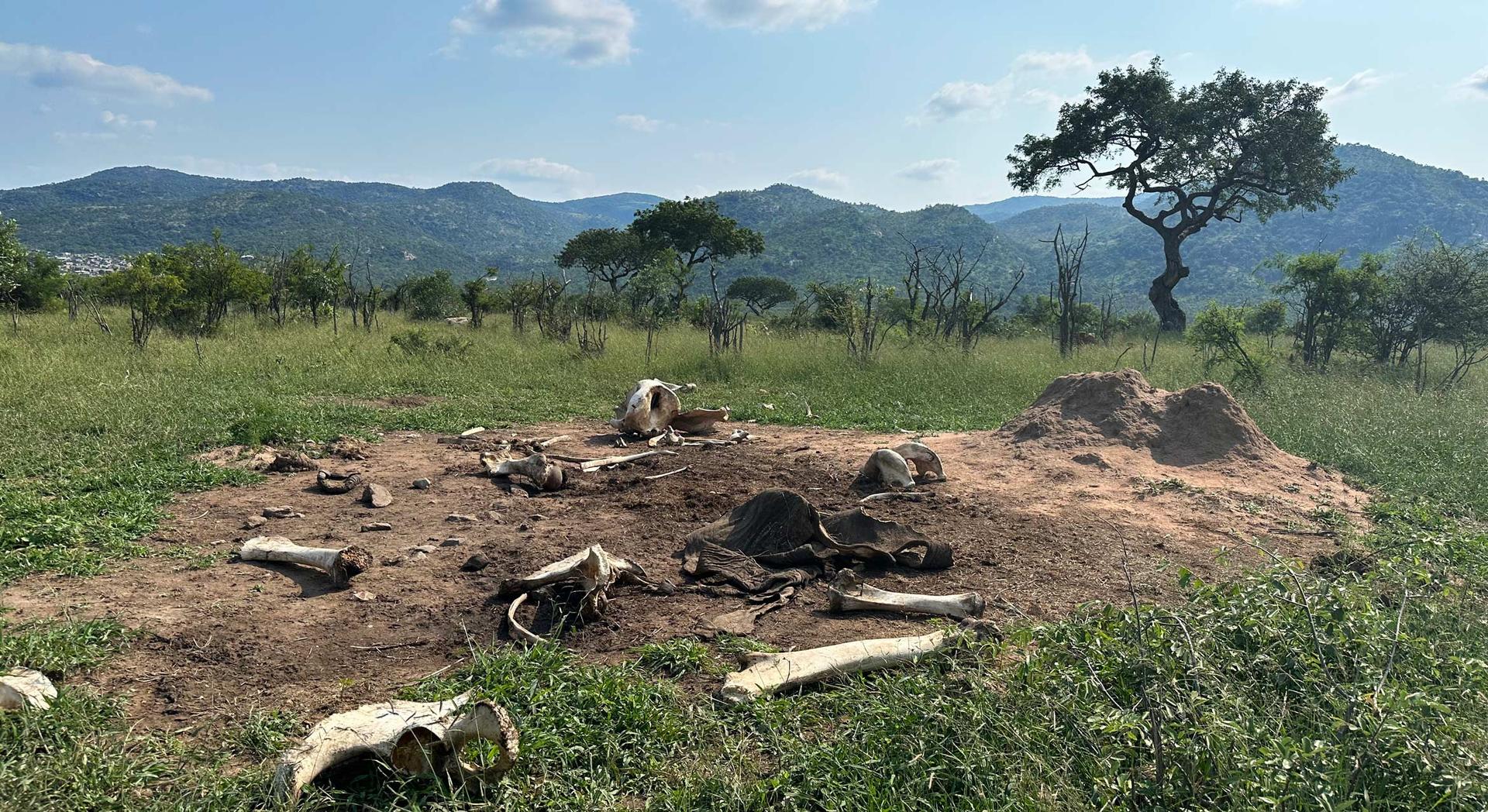
Courtney Reed led a study published in the Proceedings of the National Academy of Sciences that found elephant carcasses create nutrient hotspots that can persist on savanna landscapes for years, possibly even decades. Deron Burkepile explained that an elephant carcass "essentially resets the plant communities to zero" immediately after death, but nutrients soon percolate into the ground from elephant remains. Researchers found that at fresh carcass sites, soil nitrogen concentrations can be up to 3,000 times higher, and the spike initially prevents plants from growing back due to nutrient toxicity.
The study described a biodiversity "coldspot" where only a few fast-growing species become dominant, and it said grazers continue to revisit carcass sites for years. The researchers compared elephant carcasses to whale falls, and they acknowledged that decay happens much faster in sunny African savannahs than in icy ocean depths.

Alexander’s decade-long legacy
Dave Thompson watched the decomposition of a lone bull elephant called Alexander after it died in 2009 beside a road in South Africa’s Kruger National Park, and he said, "Watching the decomposition of that carcass got me curious." Izak Smit said, "My intuition was that, since the carcass was only physically present for a relatively short period, its effect would also be rather muted and transient," but he added that "a very different picture emerged when the lab results came back." The research team studied elephant carcasses of different ages and found that effects persisted for at least eight years after the death of an animal.
Courtney Reed said, "At really fresh carcass sites, soil nitrogen concentrations can be up to 3,000 times higher," and she added, "That's just insane." Deron Burkepile compared the nutrient-driven shift in vegetation to a salad change, saying, "It turns these grasses from watery iceberg lettuce into a juicy romaine," while herbivores kept returning to feed on the nutrient-rich forage.