Russia · updated 40m ago · 3 min read
Finland And Sweden Intercept Russian Aircraft Over Gulf Of Finland In First Joint Mission
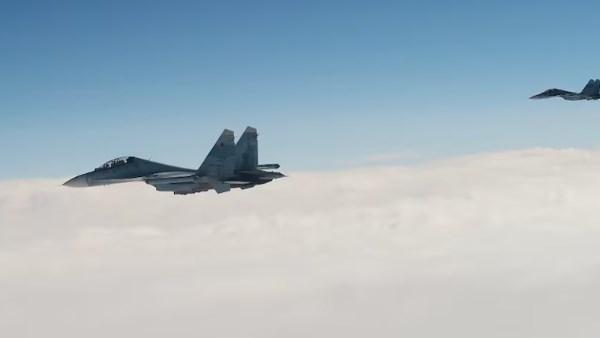
Finland and Sweden scrambled fighters to intercept Russian aircraft over the Gulf of Finland. It was the first joint operational identification mission by the two Nordic countries.
How strongly to foreground invasion risk.
4 of 5 outlets skipped it: a month ago they agreed to strengthen air defence cooperation.
18outlets compared
Same story, two versions
tap a side to read it in full
Reuters
“The Baltic Sea region, of which the Gulf of Finland is part, is on high alert”Read the original ↗
Euronews emphasises a growing Russian invasion risk, while Reuters frames the alert as regional high vigilance after past incidents.
First joint intercept mission
Finland and Sweden intercepted and identified Russian military aircraft in international airspace over the Gulf of Finland on Thursday, marking the first joint operational identification mission between the two Nordic air forces. The Finnish Air Force Operations Center directed the operation, and the intercepting aircraft included Finland’s F/A-18 Hornet fighters and Sweden’s JAS 39 Gripen aircraft. The Russian group consisted of a Tu-134 transport aircraft and MiG-31 and Su-30 fighter aircraft, and the mission took place while the aircraft were flying in international airspace over the Gulf of Finland.
Swedish Prime Minister Ulf Kristersson framed the outcome as a demonstration of readiness, writing that "the Baltic Sea has never been as vulnerable as it is now - but it has also never been better protected than it is right now." Colonel Vesa Mäntylä said the increased cooperation starting this autumn enables joint identification missions and allows fighters on active quick-reaction alert to operate from each other’s air bases.

Nordic leaders and NATO
Swedish authorities acknowledged that the region was in a tense security situation while they also sought to reassure the public, saying, "The Baltic has never been more exposed than now, but it has also never been better protected than at this moment," in a statement carried by Antena 3 Noticias. General Jonas Wikman, Commander of the Swedish Air Force, emphasized that close cooperation translates into practice, saying, "Now we can operate together without problems, as air forces, as nations and as allies," as Finland and Sweden carried out the intercept. Finland and Sweden agreed about a month ago to deepen cooperation in air defense to bolster security in the northern region and on NATO’s eastern flank amid rising geopolitical tensions with Russia following the war in Ukraine.
The Finnish Air Force said the identification mission was part of the Quick Reaction Alert (QRA) service of both nations, aimed at ensuring surveillance and protection of their territorial integrity. ABC described Russia’s denials of any intention to attack a NATO country while noting that the overflights had become constant for several weeks, and it cited Vladimir Putin’s denial at the latest BRICS meeting.

Wider threat framing
ABC connected the Baltic intercept to a broader pattern of Russian pressure, stating that "this type of incident has become constant" and describing Russia’s actions as part of a hybrid war to destabilize European order. ABC also tied the moment to a sequence of other incidents, including Germany’s accusation that Russia was responsible for a drone attack at Leipzig airport and Berlin’s warning about attacks on the country’s electrical infrastructure. Danish Defence Intelligence Service assessments described the risk of Russian military action against NATO countries as low but growing, with Thomas Ahrenkiel saying, "There is a low but growing risk that Russia will launch a limited military attack against one or several NATO countries bordering Russia," during a press conference.
Euronews reported that the Kremlin dismissed allegations about unidentified incursions in Europe as "unfounded," while it said the DDIS assessment expected Russia to intensify hybrid attacks, including destructive cyber attacks that cripple critical societal functions. EThe intercept therefore arrived as NATO strengthening in the Baltic and northern flanks was already underway, with the Finnish Air Force describing the mission as part of growing cooperation to monitor and protect airspace.