Russia25 September, 20262 min read
Joshua Cammidge Denies Torch UK Drone Factories Plot For Russia's Intelligence Services
This article is an automated aggregation of coverage from news outlets. Our editorials offer in-depth analysis curated by the NewsCord team.
Joshua Cammidge denies planning to torch UK drone factories for Russia's intelligence. Prosecution says he researched four Swindon drone sites and conducted reconnaissance.
Plot to sabotage drone sites
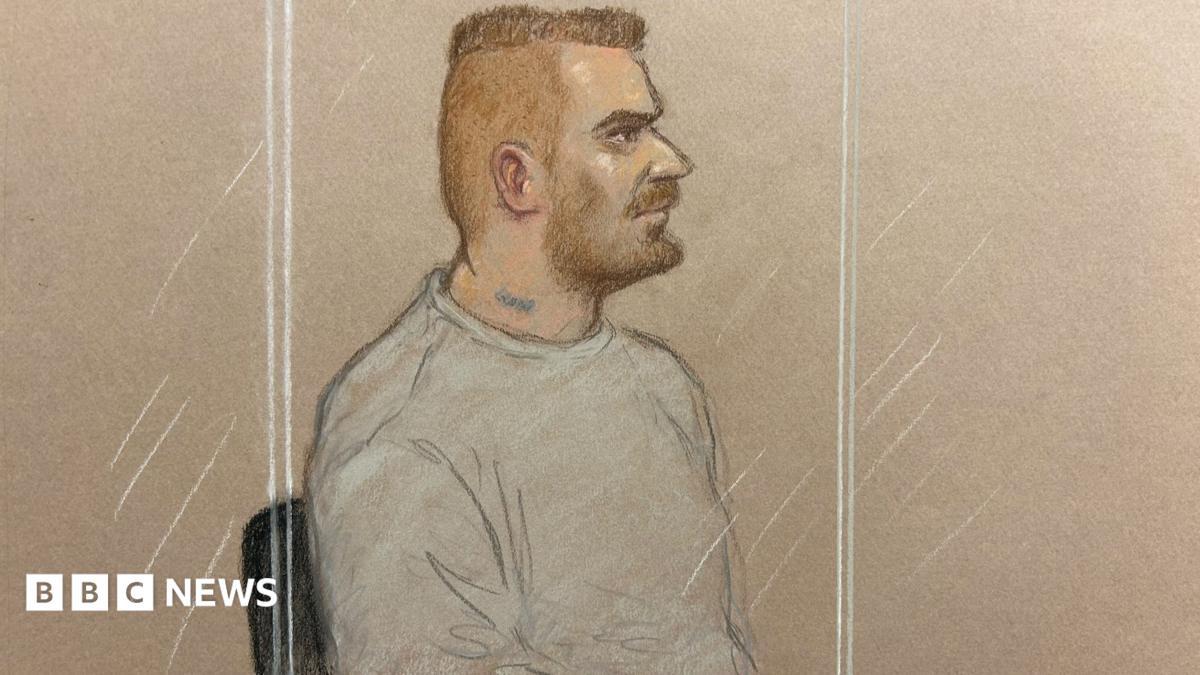
Joshua Cammidge, from Swindon in Wiltshire, denied planning to "torch" UK drone factories on behalf of Russia's intelligence services in an alleged sabotage plot. Prosecutor Sarah Przybylska told the Old Bailey that Cammidge was in contact in Ukraine with Aiden Minnis, who "tasked the defendant with locating drone manufacturing sites in the UK". The prosecution said Cammidge allegedly sent coordinates of four drone manufacturing sites and "offered to conduct sabotage" against those sites to assist the Russian war effort.
John Oliver, for the defence, told the court: "There was no intention [for the defendant] to assist or take part in sabotage or for anyone else to do so." The court scheduled a three-week trial to start in April 2027 at Winchester Crown Court, after Cammidge appeared at the Old Bailey via video-link from HMP Wandsworth.
Europe warns of expanding sabotage
European governments warned of a widening pattern of sabotage, cyberattacks, airspace violations and other covert activity attributed to Russia, as NATO faced pressure to respond to hostile actions that do not fit neatly into its collective defence model. EU foreign policy chief Kaja Kallas said Europe was facing a rapid proliferation of sabotage attacks and airspace violations, while Polish Foreign Minister Radosław Sikorski pointed to arson, explosions and drone incursions as examples of hostile activity. Poland’s Operational Command said a Russian Mi-8 military helicopter briefly entered Polish airspace from the Kaliningrad region, remaining inside Polish airspace for 42 seconds and penetrating about 300 metres across the border.
Romanian Foreign Minister Oana Țoiu said Bucharest had recorded more than 100 cases involving Russian drones or drone fragments entering Romanian territory, while arguing that Russia remained responsible for creating the risk. Estonian Foreign Minister Margus Tsahkna said Russia remained too heavily committed in Ukraine to prepare an immediate large-scale attack on NATO countries.
Danish intelligence flags risk
Danish defence intelligence warned of a "low but growing risk" that Russia could launch long-range strikes on Nato infrastructure supporting Ukraine, or carry out a limited incursion into a neighbouring country with a small number of troops. Krzysztof Gawkowski, the deputy prime minister of Poland, said a fire at a Starlink satellite station in central Poland had been "deliberately designed to disable the station", disrupting internet access for institutions including the Ukrainian military. The Danish services said Russia could seek to test Nato’s article 5, and the report warned there was "a risk that Russia assesses that the Nato countries will not respond collectively".
Volodymyr Zelenskyy told the UN general assembly that Russia continued to threaten countries beyond Ukraine, including Moldova, Poland and the Baltic states, while showing "no respect" for the sovereignty of countries in the south Caucasus and central Asia. The Kremlin denied conducting sabotage operations in Nato countries or plotting any confrontation, while the Danish report said it "cannot be ruled out" that Russia could launch an outright invasion of a Nato country.