Russia18 September, 20263 min read
India Leads 2026 BRICS Summit In New Delhi, Adopts Declaration By Consensus
This article is an automated aggregation of coverage from news outlets. Our editorials offer in-depth analysis curated by the NewsCord team.
India steered BRICS toward multipolar diplomacy and balanced leadership. New Delhi 2026 showcased a calmer, pragmatic diplomatic tone under Modi.
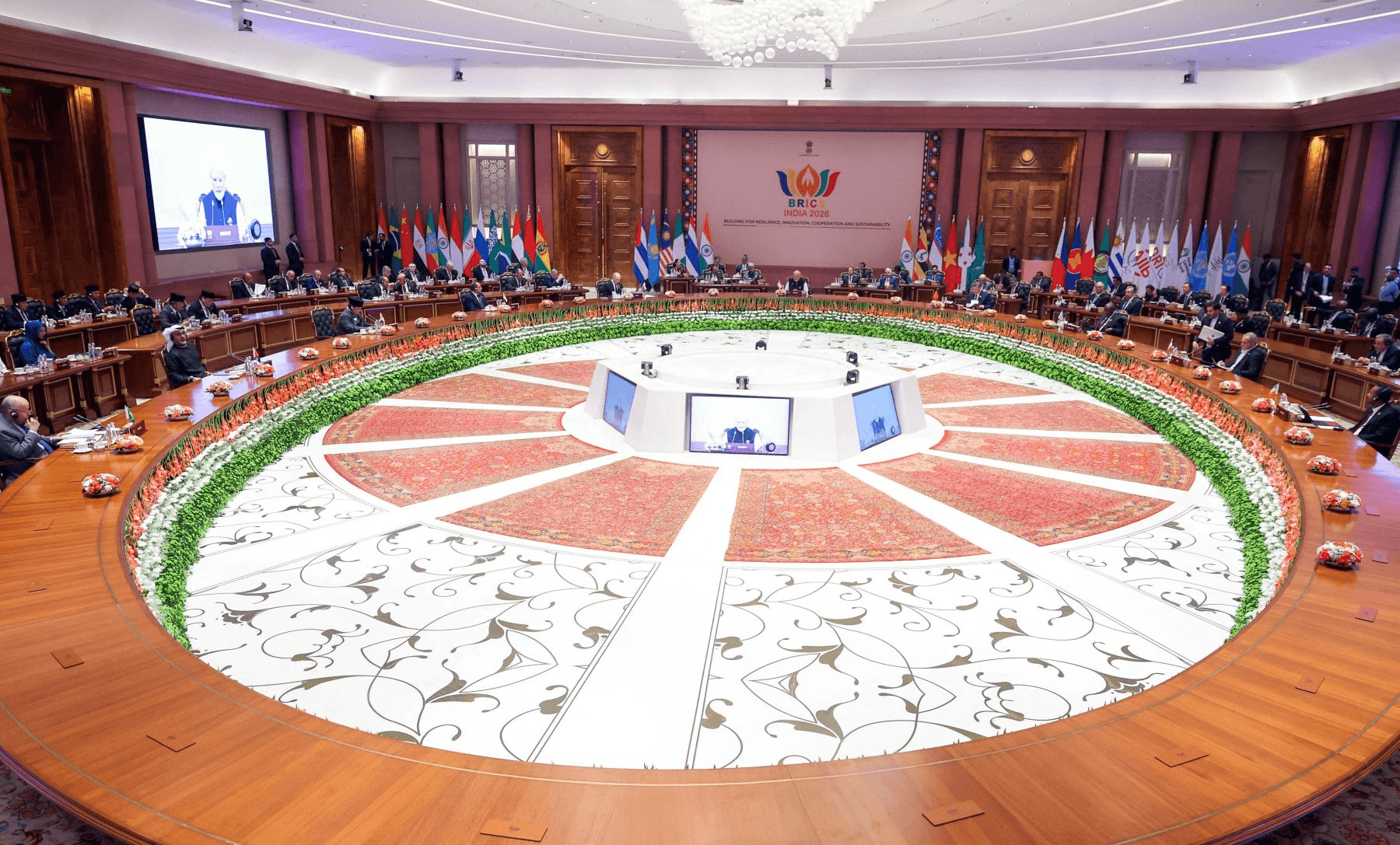
BRICS in New Delhi
India steered the 2026 BRICS Summit in New Delhi toward a pragmatic, development-oriented multilateralism that sought to keep BRICS a platform for the Global South without turning it into an explicitly anti-Western coalition.
“India’s role in this process has been distinctive.”
orfonline.org traced BRICS’s evolution from Jim O’Neill’s 2001 “BRIC” formulation to the 2009 first leaders’ summit in Yekaterinburg, and it said the 2023 Johannesburg summit marked a decisive change as new members expanded BRICS into a more geographically dispersed and politically heterogeneous grouping.
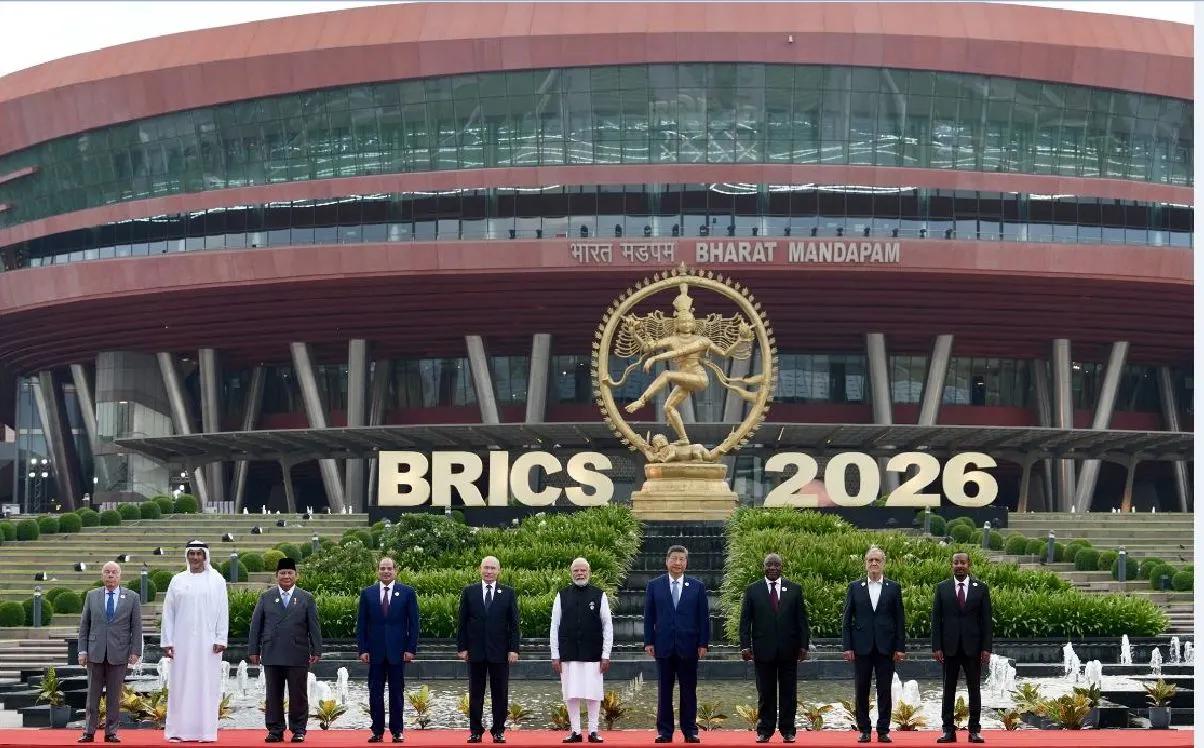
The 2026 New Delhi summit produced a lengthy declaration after difficult negotiations, and the declaration was adopted by consensus as the principal political achievement.
The declaration covered issues ranging from reform of global governance and stronger representation for India and Brazil in the UN Security Council to trade, development finance, digital public infrastructure, artificial intelligence, health and energy, while it condemned terrorism with explicit reference to the April 2025 Pahalgam attack.
The BRICS summit held in India in the midst of a massive global reset of economic and geopolitical power equations led some commentators to question the very utility of India remaining inside the organisation, and it quoted former finance minister P Chidambaram saying, “We are part of BRICS, we are part of SCO, we are part of G20, and we are part of QUAD. What benefits are we getting out of that?”
Consensus, tensions, and diplomacy
India’s approach to BRICS’s internal diversity showed up in the way the summit managed disagreements, with India Legal describing shuttle diplomacy that reportedly continued until 4 am before the New Delhi Declaration was adopted. India Legal said differences between Iran and the UAE threatened to derail consensus, and it added that wars had put members on opposing sides while a parallel Indian effort worked to keep Moscow and Beijing within a “carefully managed strategic orbit.” The BRICS foreign ministers’ meeting in May failed to produce a joint statement, and the failure was undone in part by the widening gulf between Iran and the UAE over the war in the Gulf.
The leaders eventually produced a unanimous Declaration as a diplomatic achievement, and India’s solution to the Iran-UAE impasse used calibrated language calling for “maximum restraint” while allowing members to “recall their respective national positions”. BRICS stopped short of defining itself as an anti-Western alliance, and India helped maintain that distinction by pushing BRICS toward practical cooperation as a founding participant and a four-time chair including in 2012, 2016, 2021 and 2026.
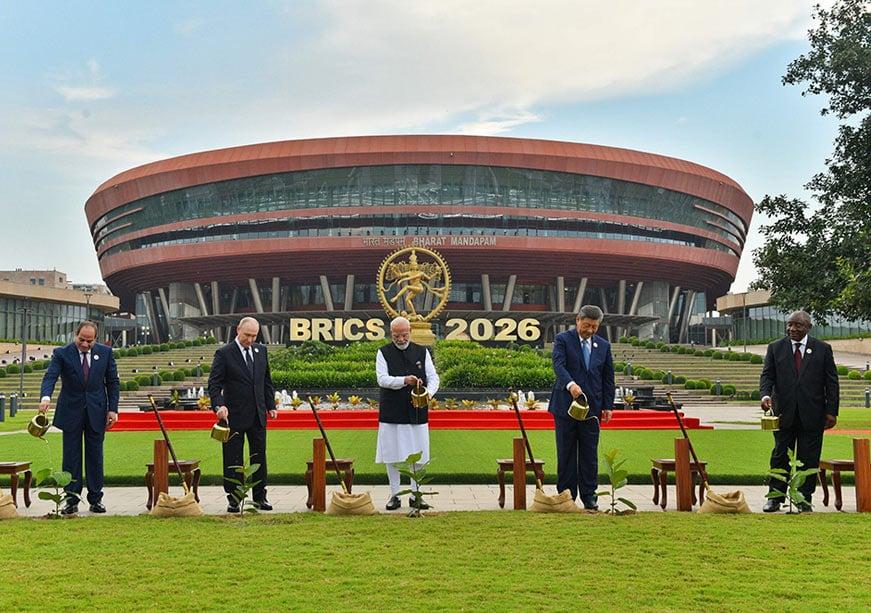
What BRICS is for next
orfonline.org said the 2026 presidency carried forward an emphasis on DPI, payment systems, local-currency financing and development-oriented cooperation, and it highlighted India’s presentation of DPI systems including UPI and Aadhaar. The Declaration strengthened the mandate of the BRICS Payment Task Force on local-currency settlement, called for reform of IMF quotas, backed efforts to restore the WTO’s dispute-settlement mechanism, and criticized carbon-border measures as disguised protectionism. Artificial intelligence governance was formally added to the agenda, and the summit’s clearest political success was terrorism, with the April 2025 Pahalgam attack explicitly condemned.
Vietnam.vn described the New Delhi Declaration 2026 as calling for reform of the United Nations, the World Trade Organization and the International Monetary Fund, and it said BRICS criticized unilateral tariffs and protectionist technical barriers that threaten the stability of global supply chains. The summit ended the prospect of a “BRICS common currency” by saying disparities in economic structure, balance of payments, and capital flow control made a centralized monetary union impossible at present, and the bloc chose a de-dollarization path through interbank payment connectivity and encouraging the New Development Bank to increase domestic currency financing.