
Full story
Flash floods near Tibet
A flash flood swept through Nepal’s Rasuwa district on Wednesday, killing at least nine people and leaving 105 Indians reported missing, as the Nepal Tourism Board said around 400 travellers were missing after the deluge near the China border.
“At least nine people were killed after a massive flash flood swept through Nepal’s Rasuwa district”
The flood on the Bhote Koshi River struck at around 9 a.m. local time, washing away villages and damaging roads, bridges and hydropower infrastructure, while rescue operations were underway.
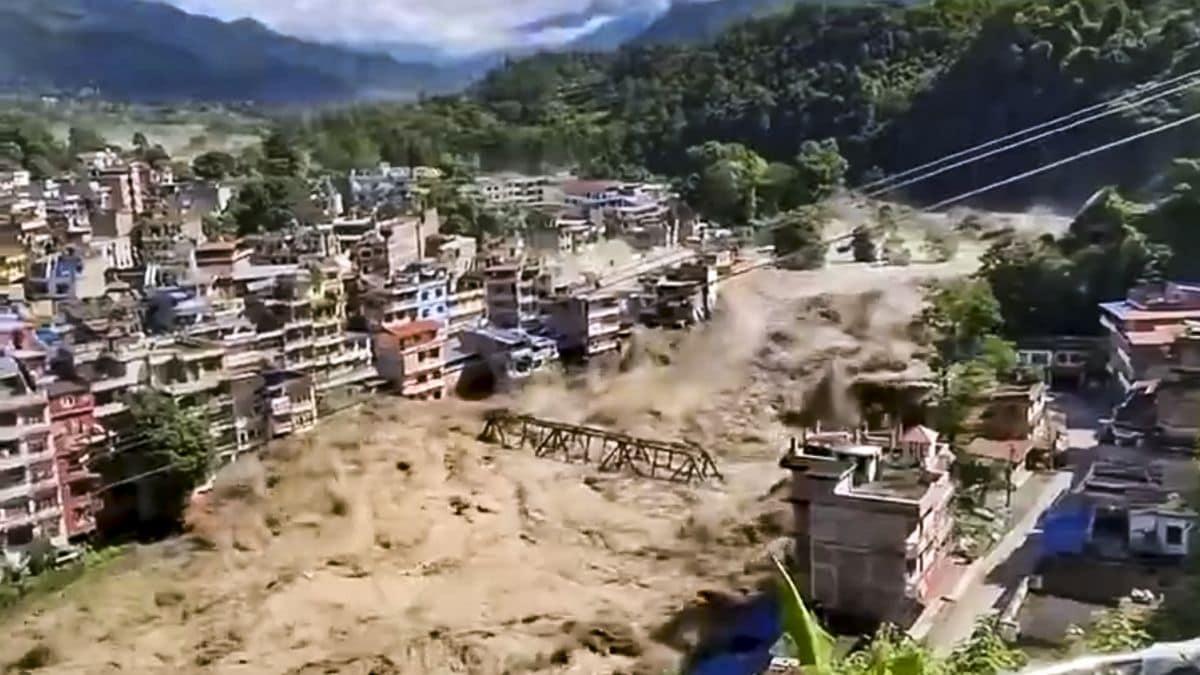
The Nepalese army said it deployed helicopters and disaster response personnel, but Reuters reported rescue helicopters cannot land in the affected areas of Syapru Besi and Timure in Rasuwa until the waters recede.
Authorities suspected a glacial burst or another upstream event in Tibet as the cause, and an advisory urged people living along riverbanks in Rasuwa, Nuwakot, Dhading, Gorkha and Chitwan to remain alert.
Across the border, Chinese state media reported “major casualties” after a mudslide hit a land crossing between China and Nepal in Tibet’s Gyirong County, with Xinhua reporting people missing after the mudslide.
Helicopters grounded, warnings
District administrator Narendra Pariyar told Reuters that “There could be heavy casualties or loss of property,” while urging those living on the banks of the Bhote Koshi River to seek higher ground as nearby villages and infrastructure project sites were washed away.
Al Jazeera reported that the waters were too high for helicopters to land in Nepal’s affected areas of Syapru Besi and Timure, where officials said the population was about 50,000.

In Tibet, Xinhua said Chinese President Xi Jinping urged “all-out” efforts to search for the missing and called for strengthening monitoring and early warning systems to prevent secondary disasters.
Climate experts cited by Al Jazeera said an avalanche from a glacier likely triggered the flooding, with Saswata Sanyal describing how the Lhende Khola River was flooded twice in 14 months and was triggered by an ice rock avalanche from a glacier.
The Nepal Electricity Authority said about 430 megawatts of production capacity, including from hydropower and solar facilities, have been damaged, and it said the disaster disrupted the Authority’s production, transmission and distribution facilities.
What’s at stake next
The scale of missing travellers remained a central focus, with the Nepal Tourism Board’s preliminary agency-wise record identifying 384 travellers, including 291 foreign nationals and 93 Nepali nationals, who were reported missing from affected areas.
““A preliminary agency-wise record received from tourism and travel companies has identified 384 travellers”
Al Jazeera said the missing included hundreds of people and that electricity supply was disrupted, while the Nepal Electricity Authority reported about 430 megawatts of production capacity damaged.
On the Nepal side, the Prime Minister Balendra Shah convened an emergency meeting of the National Disaster Risk Reduction and Management Authority and said “Work has started to take necessary steps in coordination with the medical team, scouts, and Red Cross.”
On the Chinese side, Xinhua reported Xi Jinping ordered “comprehensive efforts” to search for and rescue the missing, while CCTV quoted Xi saying “The most urgent task is to do our utmost to search for the missing and rescue them... to treat the injured quickly and minimize losses to the maximum extent.”
With the cause still under investigation and authorities warning of possible secondary disasters, the International Centre for Integrated Mountain Development’s climate experts said the Lhende Khola River’s flooding was triggered by an ice rock avalanche that blocked the river and released a sudden surge downstream.