Fuel Shortages Halt Vehicles in Gaza, Residents Rely on Bicycles for Daily Work
Key Takeaways
- Fuel shortages halt vehicle movement, forcing Gaza residents to rely on bicycles.
- Destruction causes near-total collapse of formal transport, prompting informal mobility patterns across Gaza.
- Analytical studies urge reorganizing Gaza's transport sector amid widespread infrastructure destruction.
Bicycles as Lifeline
In the besieged Gaza Strip, fuel shortages and a halt in vehicle movement have pushed residents to rely on bicycles as a primary means of transportation, with the bicycle becoming a daily work tool amid “extremely harsh living and security conditions.”
“In the besieged Gaza Strip, fuel shortages and a halt in vehicle movement have imposed a new reality, pushing residents to rely on bicycles as a primary means of transportation, and even turning them into a tool for work and daily resilience in the face of extremely harsh living and security conditions”
Al-Jazeera Net describes residents saying the bicycle has become “the most used means of mobility within the strip, given the lack of fuel needed to operate vehicles,” and it quotes one resident saying, “The bicycle is the foundation of society as a whole, and there is no easier or cheaper way to get around, and its use now includes all age groups without exception.”

The same Al-Jazeera Net report says bicycle mechanics face a “severe crisis due to the scarcity of spare parts and their unprecedented price increases,” and it adds that the market is “almost paralyzed due to the absence of chains, pedals, and essential repair parts.”
One mechanic told Al Jazeera that he was forced to return to “patching,” using crude substitutes such as “rubber tubes inside the tires,” after prices of some parts rose from “10 shekels ($3) to 350 shekels ($116).”
The report also links bicycles to income, saying bicycles have become a key instrument in delivery services for young people, and it quotes a delivery worker describing how “the absence of cars due to fuel shortages has led residents to rely widely on home delivery.”
Al-Jazeera Net further says a student who works in delivery “combines study and work,” explaining that conditions have forced this reality, and it notes that the bicycle has become “the only available means” to travel long distances within the strip given “the ban on entering cars and motorcycles.”
Transport Collapse and Fuel Shortage
Multiple reports tie the bicycle shift to a broader collapse of Gaza’s transport system driven by destruction and fuel shortages, describing how the war has disrupted roads, vehicles, and movement networks.
The Palestinian Center for Policy Studies, as quoted by وكالة الصحافة الفلسطينية, says “the destruction of roads, vehicles, and movement networks, along with a severe fuel shortage, caused a wide paralysis of traditional transportation,” with “operational capacity declining like never before.”
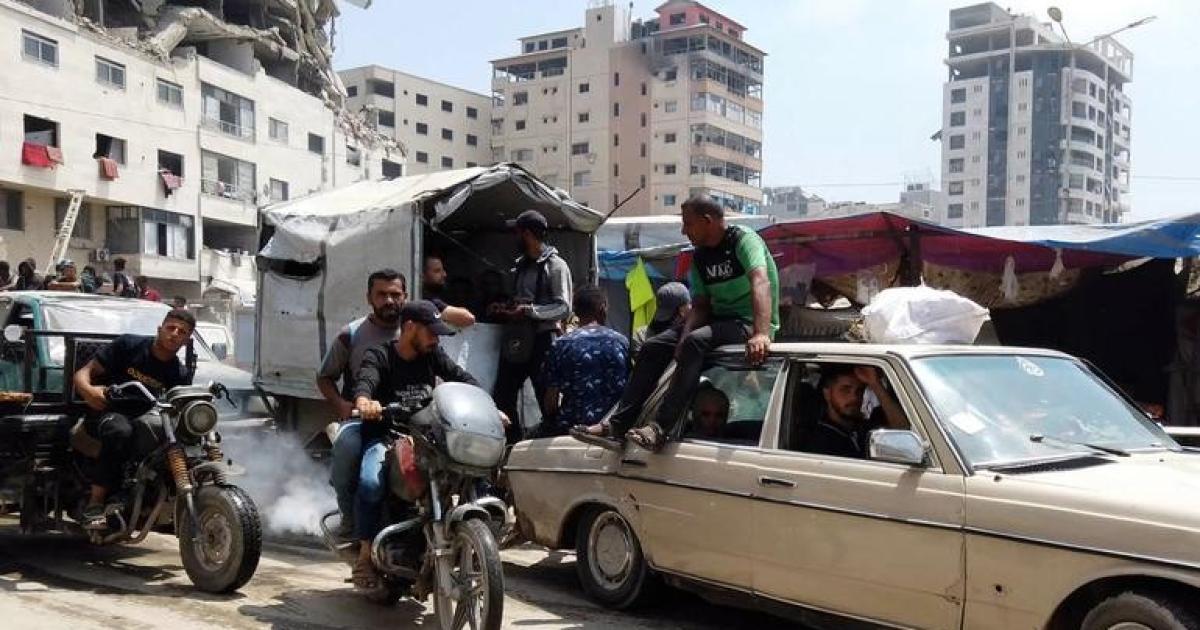
The same study, as presented by الــرسالة نت, says the destruction of infrastructure “has led to an almost complete collapse of the formal transport sector,” and it describes “daily movement becoming associated with high levels of hardship, cost, and risk.”
The Palestinian Information Center report dated “Tuesday, April 21, 2026; Saturday, April 11, 2026” similarly says the infrastructure destruction has led to “a near-total collapse of the transportation and mobility system,” pushing residents to “devise unofficial alternatives.”
In Al-Jazeera Net’s account, the fuel shortage and halted vehicle movement are described as imposing “a new reality,” and it says residents rely on bicycles because of “the lack of fuel needed to operate vehicles.”
It further describes daily security risks, quoting one worker saying that “movement on the roads has become fraught with danger due to shelling and repeated targeting,” and it adds that workers “go out daily knowing the possibility they might not return.”
A New “Movement Economy”
The sources describe the transport breakdown as producing an alternative “Movement Economy” built on informal mobility modes, with bicycles positioned alongside other makeshift transport.
“Tuesday, April 21, 2026; Saturday, April 11, 2026; Palestinian Information Center”
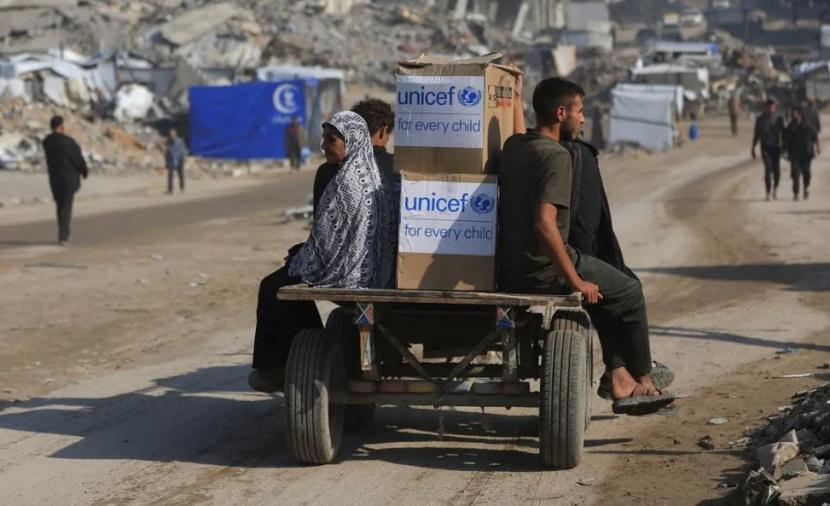
وكالة الصحافة الفلسطينية says the study found that the collapse “did not halt life, but rather produced an 'movement economy' based on informal means such as hand-pulled and animal-drawn carts, bicycles, tuk-tuks, in addition to unregulated collective transport via trucks and available vehicles.”
الــرسالة نت presents the same analytical study and states that the collapse “produced an 'Movement Economy' based on informal transport such as hand-pulled and animal-drawn carts, bicycles, tuk-tuks,” and it adds “unregulated collective transport via trucks and available vehicles.”
The Palestinian Information Center report similarly says the study described “what it described as a 'movement economy' based on simple and informal transport modes, such as hand-pulled and animal-drawn carts, bicycles, and tuk-tuks, in addition to trucks used for collective transport.”
Beyond describing modes of travel, the studies connect mobility to the economic structure of society, saying the shift “reshaped the economic structure within society” and “through the emergence of new professions related to alternative transport.”
The Palestinian Center for Policy Studies also links mobility to the economic structure of society, saying the shift “reshaped the economic structure within society” and “through the emergence of new professions related to alternative transport.”
Voices on Risk and Adaptation
The reporting includes direct voices describing both the necessity of bicycle use and the hazards that come with moving under siege conditions.
Al-Jazeera Net quotes a resident saying, “The bicycle is the foundation of society as a whole, and there is no easier or cheaper way to get around, and its use now includes all age groups without exception,” framing bicycles as universal mobility in Gaza.
It also includes a mechanic’s account of how the bicycle repair economy has been disrupted by scarcity, saying the market was “almost paralyzed due to the absence of chains, pedals, and essential repair parts,” and describing a return to “patching” with “rubber tubes inside the tires.”
For the delivery work that depends on bicycles, Al-Jazeera Net quotes a delivery worker explaining that “the absence of cars due to fuel shortages has led residents to rely widely on home delivery,” while also emphasizing that “unsafe roads and frequent accidents make the work risky.”
The same report quotes a worker describing security danger, stating that “movement on the roads has become fraught with danger due to shelling and repeated targeting,” and it adds that workers “go out daily knowing the possibility they might not return.”
The Palestinian Information Center report uses stronger language, describing the reality as “a coercive model of social adaptation in the face of collapse,” and it says it reflects “the population's capacity to innovate.”
What Happens Next
While the sources document how Gaza residents have adapted to transport collapse, they also converge on the need for urgent intervention to reorganize the transport sector within a reconstruction vision.
“In the besieged Gaza Strip, fuel shortages and a halt in vehicle movement have imposed a new reality, pushing residents to rely on bicycles as a primary means of transportation, and even turning them into a tool for work and daily resilience in the face of extremely harsh living and security conditions”
وكالة الصحافة الفلسطينية says the Palestinian Center for Policy Studies “stressed that these transformations require urgent intervention to reorganize the transport sector within a comprehensive reconstruction vision,” and it adds that the goal should be “ensuring the restoration of the right to movement as a fundamental part of humanitarian and economic recovery in Gaza.”
الــرسالة نت similarly concludes that the model is “fragile” and says the Palestinian Center for Political Studies “stresses that these transformations require urgent intervention to reorganize the transport sector within a comprehensive reconstruction vision that ensures the restoration of the right to movement as a core component of humanitarian and economic recovery in the Gaza Strip.”
The Palestinian Information Center report also calls for urgent action, saying it “called for urgent intervention to reorganize the transport sector within a comprehensive plan for rebuilding,” and it specifies “ensuring the restoration of the right to mobility as a fundamental part of humanitarian and economic recovery in the Gaza Strip.”
In Al-Jazeera Net’s reporting, the immediate stakes are visible in the daily economics of mobility, including the claim that “the cost to fix a single puncture can exceed the value of the delivery order itself,” which ties repair access directly to whether workers can keep earning.
The studies’ framing of transport as linked to food and humanitarian aid adds another layer of consequence, with وكالة الصحافة الفلسطينية saying “transport became directly linked to the distribution of food and humanitarian aid,” and that “access to basic needs became contingent on individuals' ability to bear the costs of movement.”
More on Gaza Genocide

Spain, Ireland, and Slovenia Push to Suspend EU-Israel Deal as Germany and Italy Block
10 sources compared
RDNA Finds Gaza Needs More Than $71 Billion Over Next Decade for Recovery
11 sources compared
EU, UN Estimate Gaza Recovery Needs $71.4 Billion Over Next Decade
24 sources compared
Northern Israel Residents Shut Schools And Shops To Protest Lebanon Ceasefire
11 sources compared