Full story
Funeral, chants, schedule
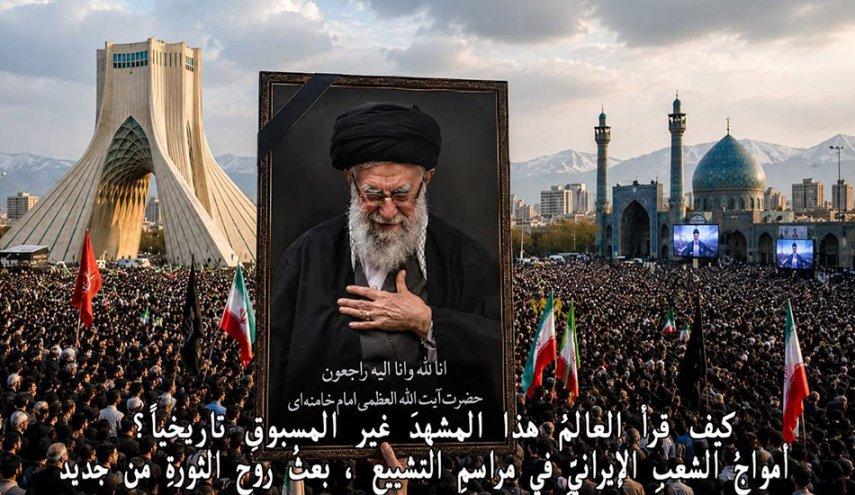
A funeral prayer for the late Iranian Supreme Leader Ayatollah Ali Khamenei was held on the second day of his funeral processions, with crowds filling the Imam Khomeini Shrine and spreading into surrounding streets to take part in the prayer.
The rites are scheduled to run for six days, with Khamenei mourned tomorrow, Monday, in the streets of Tehran before transferring his body to the city of Qom, then to Iraq for funeral ceremonies in Najaf and Karbala on Wednesday, and then returning to Mashhad where he will be laid to rest at the sacred Razavi shrine.

During the procession, participants chanted slogans calling for "revenge" and retaliation for Khamenei’s assassination, and some shouted against U.S. President Donald Trump, urging retaliation against him.
The funeral rites included transferring Khamenei’s body and four members of his family to the farewell site, after the Imam Khomeini Shrine was opened to crowds gathered in surrounding streets.
In Tehran, the funeral rites were described as set to last six days and to include stops in Iraq, before the body is laid to rest in Mashhad in the northeast of the country.
Threats and competing voices
Iranian officials and military figures used the funeral to project retaliation, with the Leader’s aide Mohammad Mokhber telling Iranian TV that Khamenei’s killers "will not die a natural death, and the regime will take revenge."
Iran’s Army Commander Amir Hatami told IRIB that "we will not leave those who killed our leader without punishment," while the army spokesman Mohammad Reza Akramnia said the Iranian armed forces would respond to "any mistake by the enemies with a firm response."

At the same time, the Iranian opposition voice carried a different message, with former Iranian Crown Prince Reza Pahlavi writing on X: 'To the foreign representatives in Tehran who are here to offer condolences on the death of Iran's dictator, Ali Khamenei: Iran is not mourning him.'
Pahlavi also framed the funeral as propaganda, saying the regime is spending "enormous sums from the Iranian people's wealth to organize this propaganda display," and he described what he called "a legitimate anger" as leading to the overthrow of what he termed the 'remaining criminal regime.'
The funeral also drew foreign participation and official messaging, as Iran’s Foreign Minister Hossein Amir-Abdollahian thanked representatives in a message posted on X for joining the farewell and burial, saying "Iran is pleased to welcome representatives from more than seventy countries".
Aftermath and what’s at stake
Iranian state media and officials tied the funeral’s end to a continuing campaign, with the Iranian Foreign Ministry saying Tehran will continue to follow the path of the late leader Ali Khamenei and will seek justice against those described as the 'American and Israeli criminals.'
The ministry’s statement said: 'The martyrdom of our great leader is not the end of the road, but the beginning of a new phase on the path to lifting Islam and beloved Iran,' and it added that accountability for those responsible for the 'crimes' would remain a constant demand.
In Tehran, the commemoration continued with a message of gratitude delivered by Hojjatoleslam Seyyed Mostafa Khamenei during a memorial service, where he said patience "is in no way incompatible with revenge and confronting the world’s evildoers who were involved in these great crimes."
The funeral was also linked to the assassination described as occurring on February 28 in a joint US-Israeli airstrike targeting his office in downtown Tehran, which PressTV said killed Ali Khamenei along with four members of his family and senior military officials.
As the ceremonies moved from Tehran to Mashhad and into Iraq, PressTV said the burial came after five days of public funerals in Tehran, the central city of Qom, and in Iraq, where millions paid their homage to Ayatollah Khamenei.