Technology and Science · 16 June, 2026 · 3 min read
G7 Leaders Discuss Ukraine, Middle East, China Supply Chains, and U.S. AI Export Controls
Exports of Nvidia AI chips to China require licensing and testing under U.S. export controls. Trump-Xi summit yielded limited progress on US-China technology disputes.
Whether the main G7/US-China issue is AI export “weaponization” vs broader leverage.
2 of 3 outlets skipped it: china expanded export controls beyond rare earths.
10outlets compared
Same story, two versions
tap a side to read it in full
Bloomsbury Intelligence and Security Institute (BISI)
“selective interdependence, with non-sensitive trade continuing”Read the original ↗
Shifts focus from AI punishment to managed competition across technologies.
G7 weighs AI and minerals
Leaders of the seven largest and wealthiest democracies are set to discuss how to solve pressing issues like Ukraine and the Middle East through Wednesday in a French Alpine town known for bottled water, while the Evian agenda also reflects anxieties about the Group of Seven’s dependence on China’s supply chains and reliance on the United States’ AI.
“The Trump administration’s decision to place export controls on Anthropic’s frontier models Fable 5 and Mythos 5 will be a “key topic””
Fortune reports that the Trump administration’s decision to place export controls on Anthropic’s frontier models Fable 5 and Mythos 5 will be a “key topic” on the summit’s AI conversation, with Andrea Renda of the Centre for European Policy Studies saying the U.S. move is “inaugurating an era” of weaponizing U.S AI against traditional allies.F
Renda told Fortune that the other six G7 members were “quite annoyed and upset” by the U.S. “differential treatment” in access to Claude Fable 5 for non-U.S. users, as the summit’s AI alignment goals face limits tied to the U.S. and China.
Fortune also frames the minerals side of the same dilemma, citing a memo prepared for the G7 by a group of leading economists that says China’s control of critical minerals underpinning green energy technologies can “fuel protectionist policies” and “heighten national security concerns” among U.S. allies.F
The same Fortune reporting quotes Matt Pearl of the Center for Strategic and International Studies warning that if Europe “suddenly lacked critical minerals from China” or had AI model supply chains interrupted, it would be “pretty catastrophic,” and that Europe “feel[s] like they need to solve both of them.”F
Export controls and leverage
Beyond the G7, The Washington Post describes China expanding its export control regime against the United States and American allies, reaching beyond rare earth minerals to pinch choke points that affect key U.S. industries, according to investors, business leaders and supply chain analysts.
BISI’s Martyna Chmura writes that the May 2026 Beijing summit between Donald Trump and Xi Jinping produced limited progress on disputes shaping U.S.-China technology competition, with AI chips, critical minerals, cybersecurity and market access remaining central points of contention.

Chmura adds that China accounted for 59% of global rare-earth mining and 91% of rare-earth refining in 2024, giving Beijing leverage over sectors including semiconductors, electric vehicles, energy infrastructure and defence production.
In the same BISI account, the White House framed the summit as producing commercial and diplomatic gains, citing Chinese commitments to buy 200 Boeing aircraft and purchase at least USD 17b per year in U.S. agricultural products between 2026 and 2028.
Chmura concludes that the summit confirmed commercial engagement and security competition would coexist, while advanced technology sectors remain subject to export controls, investment screening and national-security rules, leaving a “more managed but still fragmented operating environment” for multinational firms.
Chip access remains conditional
While the G7 and Trump-Xi diplomacy circle around dependencies, ITdaily reports that the United States gave the go-ahead for the export of Nvidia H200-AI chips to China, but only after inspection by an independent testing laboratory.
“China cannot receive more than 50% of the number of H200 chips sold to American customers”
ITdaily says the H200 chips can be shipped to China only after inspection by an independent testing laboratory that must confirm their AI capabilities, and it adds a quantitative constraint that China cannot receive more than 50% of the number of H200 chips sold to American customers.
The same ITdaily account says President Donald Trump announced he would authorize the export in exchange for a 25% tax in favor of the U.S. government, while critics warned the measure could strengthen China’s AI capabilities and be difficult to enforce.
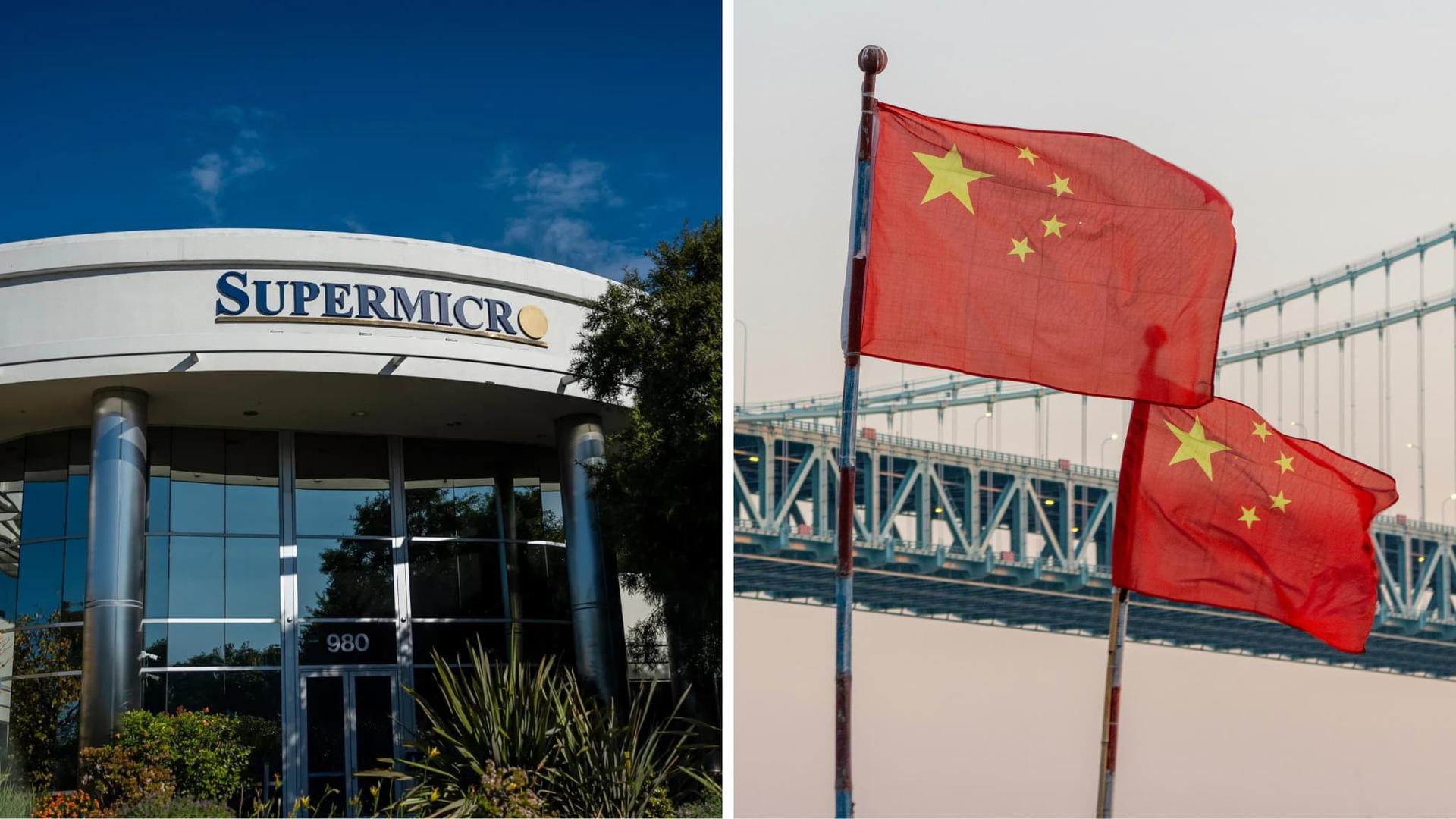
Separately, BFM reports that a senior executive of Super Micro Computer, Yih-Shyan 'Wally' Liaw, was indicted by a New York prosecutor and accused of orchestrating the diversion to China of servers incorporating NVIDIA AI chips in violation of U.S. export controls.
BFM states that prosecutors said the defendants used a shell company in Southeast Asia to ship to Chinese customers servers assembled in the United States and equipped with NVIDIA B200 and H200 chips, for a total of at least $2.5 billion since 2024, and it quotes prosecutor Jay Clayton describing the schemes as posing a direct threat to American national security.