
Gabbard, Director of National Intelligence, says Iran not rebuilding enrichment capacity, undermining Trump's war rationale
Key Takeaways
- US intelligence says Iran did not relaunch nuclear enrichment after 2025 strikes.
- Findings undermine Trump's central rationale for the current war.
- Gabbard presented these conclusions in prepared Senate testimony.
Gabbard Contradicts Trump
Tulsi Gabbard, Director of National Intelligence, delivered testimony that directly contradicted President Trump's justification for the ongoing war with Iran.
In her written statement to the Senate Intelligence Committee, Gabbard asserted that Iran's nuclear enrichment program was 'destroyed' following the 'Midnight Hammer operation' strikes on June 21-22, 2025.

She noted that 'no effort has been undertaken to attempt to restore their enrichment capabilities,' which undermines Trump's central argument for the war.
This assessment contradicts the administration's position that Iran posed an imminent nuclear threat requiring military action.
While Gabbard provided this contradictory assessment in her written testimony, she notably did not reiterate these remarks when speaking directly to senators.
Intelligence Division
The intelligence community's assessment of Iran's nuclear capabilities has become deeply divided, with Gabbard's testimony contradicting CIA Director John Ratcliffe's position.
Gabbard cast doubt on the argument that Iran was racing to rebuild its nuclear program, providing evidence that no such efforts were underway.
CIA Director John Ratcliffe took a harder line on Tehran's intentions, testifying that Iran had not been serious in its diplomacy with Washington.
Ratcliffe rejected the assessment of former National Counterterrorism Center chief Joe Kent, who resigned over Iran threat concerns.
This internal contradiction within the intelligence apparatus suggests significant disagreement about Iran's actual threat level.
The divided assessments further undermine the administration's unified narrative for continued military action.
Iranian Regime Assessment
Gabbard's testimony revealed that despite severe damage from US attacks, the Iranian state remains largely intact but degraded.
She told senators that the US intelligence community believes the regime is 'intact but largely degraded due to attacks on its leadership and military capabilities.'
This assessment includes the killing of Iran's longtime supreme leader, Ayatollah Ali Khamenei, yet suggests the regime continues to function.
Gabbard warned that if the current regime survives, it will likely seek to restore its military strength over time.
'If a hostile regime survives, it will probably try over time to restore its military, missiles and UAV forces,' she said.
This nuanced assessment contrasts with Trump's more simplistic threats and suggests the war has damaged but not eliminated the underlying threat.
Congressional Scrutiny
Congressional Democrats seized upon the contradictions in administration testimony to pressure officials on the war's justification.
Democratic Senator Michael Bennet accused Trump of abandoning his own anti-interventionist message, contrasting Trump's current actions with his campaign rhetoric.
The hearing became a major test for the administration's case for war, with Democrats pressing officials on broader consequences.
Democrats raised concerns about Iran potentially striking Gulf countries or disrupting the vital Strait of Hormuz oil route.
This scrutiny comes amid reported concerns over a US missile strike that allegedly hit an elementary school in Iran and killed more than 165 people.
The White House said the school incident is under review, reflecting growing bipartisan concern about the war's conduct and regional impact.
Global Threat Assessment
Beyond the Iran conflict, Gabbard provided intelligence assessments on other global threats that contextualized the administration's strategic priorities.
She told senators that Russia still holds the advantage in its four-year war in Ukraine, with US intelligence assessing that 'Russia has maintained the upper hand in the war against Ukraine.'
While US-led peace talks between Moscow and Kyiv are continuing, Gabbard warned that Russia is likely to keep fighting a slow war until a deal is reached.
She also cautioned about the danger of an 'escalatory spiral' in Ukraine or elsewhere that could potentially lead to nuclear weapons use.
On China, Gabbard said Beijing is rapidly modernizing its military with the long-term goal of being able to seize Taiwan.
The intelligence community believes China would still prefer to create conditions for eventual 'peaceful reunification' without war.
These broader threat assessments suggest the administration's focus on Iran may be diverting attention from other security challenges.
More on Iran
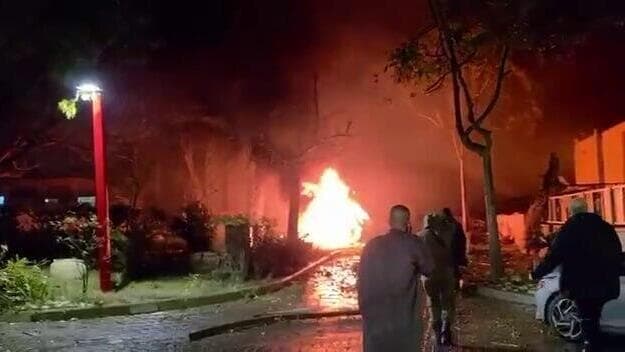
Iran Attacks Israeli Towns Dimona and Arad Near Israel's Main Nuclear Research Center, Dozens Wounded
43 sources compared
Iran Attacks Dimona in Retaliation for Natanz Strike
44 sources compared

Iran Attacks Diego Garcia with Long-Range Missiles, Targeting U.S.-UK Base
82 sources compared
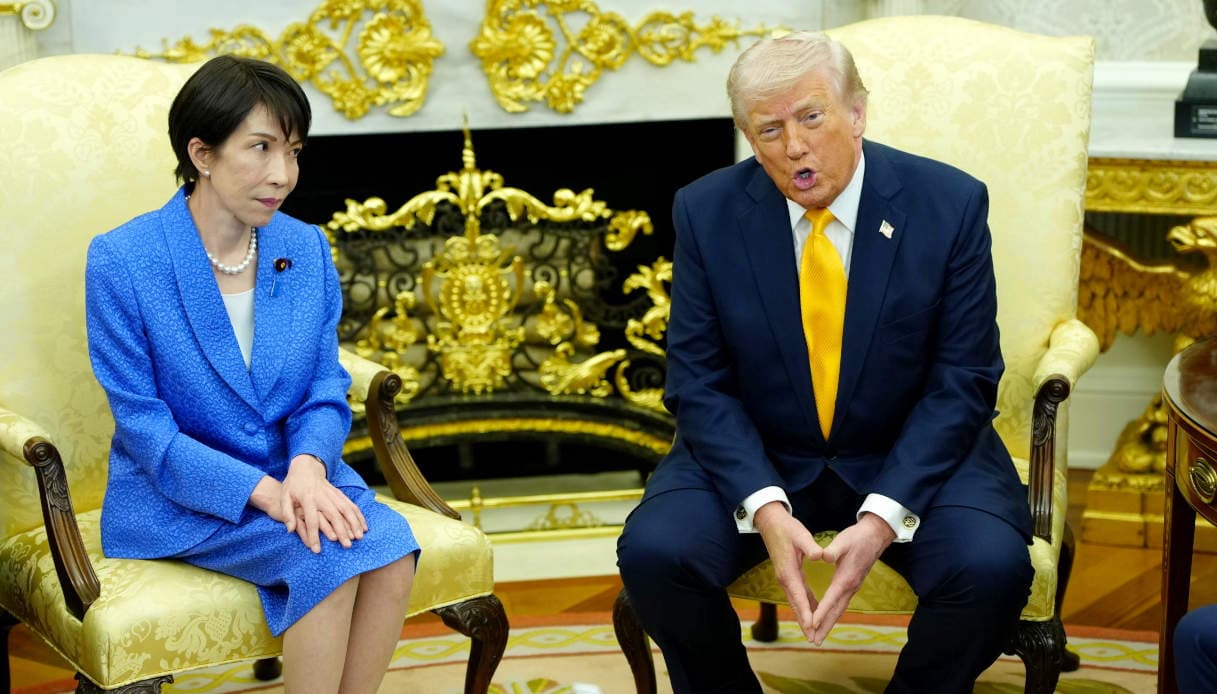
Trump Defends Iran War by Citing Pearl Harbor
12 sources compared