
Global instability, energy prices, and the cost of living in 2026
Key Takeaways
- US and Israel launched attack on Iran to degrade its nuclear program and capabilities.
- Iran responded with drone and missile attacks on Israel and US allies in the Gulf.
- Strait of Hormuz remains vital for global energy, amplifying price volatility.
Geopolitics and oil impact
On 28 February 2026, the US and Israel launched an attack on Iran with the wide-ranging intentions of degrading Iran’s nuclear program, ballistic missiles, navy, drones, and control of its terror proxies.
“Introduction On 28 February 2026, the US and Israel launched an attack on Iran with the wide-ranging intentions of degrading Iran’s nuclear program, ballistic missiles, navy, drones, and control of its terror proxies”
Iran has responded by launching drone and missile attacks on Israel and on US allies in the Gulf region.
This region, and in particular the Strait of Hormuz, is important for global oil markets, and the conflict has resulted in significant increases in the cost of oil globally.
Scotland cost-of-living context
The David Hume Institute’s latest analysis suggests that the cost of living was already among the top issues for Scottish voters ahead of the May 2026 election.
This concern is likely to have increased following the conflict in the Middle East and memories of the initial impact that the Russian invasion of Ukraine caused in 2022.
Given that Russia’s illegal invasion of Ukraine continues to this day, the launch of the US and Israeli war with Iran is likely to result in an increased impact on UK energy prices.
What is less clear at this stage is how long the US and Israeli action against Iran will continue for, and therefore how severe the impact on energy prices will be and for how long that price shock will continue.
Oil price impacts and Ukraine context
While there is a lot of uncertainty around the duration of the conflict and the impact on oil prices, there are several ways in which it is already impacting consumers in Scotland.
“Introduction On 28 February 2026, the US and Israel launched an attack on Iran with the wide-ranging intentions of degrading Iran’s nuclear program, ballistic missiles, navy, drones, and control of its terror proxies”
There has already been a significant impact on the cost of oil for those who live off the gas grid and rely on deliveries of oil for heating.
The Guardian notes that some customers have seen prices increase nearly threefold following the start of the conflict.
The latest data shows that 20% of Scottish households were not connected to the gas grid in 2024.
On 15 March the UK Prime Minister announced £53 million in support for households facing increased heating oil costs – £4.6 million of this will be provided to the Scottish Government to distribute.
In addition to this funding, the Scottish Government has announced a £5.4 million fund for lower income households who rely on heating oil to warm their homes. The fund will be launched on 1 April.
The increase in the price of oil has also started to impact the cost of diesel and petrol – the RAC notes that the average price of diesel has increased by 19.7 pence between 28 February and 17 March, while the average price of unleaded petrol has increased by 9.5 pence over the same period.
Beyond products which use oil, there has also been an immediate impact on the cost of some financial products.
Markets in the UK had been expecting a steady decline in inflation throughout 2026, such as that forecast by the Office for Budget Responsibility (OBR) earlier this month, and as a result expected that the Bank of England would continue to reduce interest rates.
However, concerns around the impact on inflation from the conflict have already seen some banks increase the interest rates on fixed rate mortgages, with the Guardian noting that average interest rates offered have increased above 5%, and hundreds of fixed rate products have been withdrawn.
The BBC notes that since the start of the Iran war, the cost of a ‘typical’ mortgage has increased by nearly £800.
In the coming months, there are likely to be further products and markets impacted by the conflict.
Ofgem set a price cap for consumer energy bills in the UK which is influenced by the wholesale costs of gas and electricity, among other factors.
This price cap is fixed quarterly, and Cornwall Insight forecasts that the July price cap could rise by £160 compared to the April price cap.
This is the price increase that an average household would expect to pay, but it would only affect those on a variable tariff or taking out a new fixed tariff after July.
It’s also worth noting that energy bills are expected to fall for an average household by £117 from April 2026, largely due to policy announced by the UK Government in the 2025 Autumn Budget.
There is scope for further impacts depending on the duration of the conflict.
The National Institute for Economic and Social Research has suggested that if the effects on the cost of oil last for just one quarter, inflation will be 0.3 percentage points higher in the UK in 2026 with a small impact on GDP.
However, if the impact persists for a year inflation would be 0.7 percentage points higher, GDP growth in the UK could be 0.2 percentage points lower, and the Bank of England may need to raise interest rates above 4%.
What has been the economic impact of the Russian invasion of Ukraine? The price of oil and economic performance are closely linked, with the University of Warwick noting that the price of oil has large negative effects upon profitability and that nearly all post-World War II recessions have been preceded by oil-price shocks.
Ofgem publishes regular data on the wholesale prices that energy suppliers in the UK face.
This shows that in 2021, wholesale gas prices were increasing steadily to above 100 pence per therm, however following the Russian invasion of Ukraine this peaked at 592 pence per therm on 22 August 2022.
By mid-February 2023 the price had reduced to under 150 pence per therm, and since April 2025 has been below 100 pence per therm.
The significant increase in the price of gas had a material impact on energy costs across the UK.
There is a direct impact on the price that energy companies pay to distribute gas to consumers, but it also has an impact on the price of electricity due to the way that the market is structured.
In 2021, 39.8% of UK electricity was generated from gas, an increase of around four percentage points since 2020.
As of 2024, this has reduced to 35.6%.
Since 2019 Ofgem has operated an energy price cap which limits the unit price that suppliers can charge households on default tariffs in the UK (business and other non-domestic properties like schools and hospitals are not covered by the Ofgem price cap).
Ofgem calculates the price cap reflecting the costs suppliers face in delivering energy to consumers, including the wholesale cost of gas and electricity.
This price cap was originally updated twice a year, but since summer 2022 it has been reformed and is now updated quarterly.
As the price cap factors in wholesale costs faced by energy companies, the increase in the price of gas had a significant impact on the cap – so much so that between 1 October 2022 and 30 June 2023 the price cap was superseded by the UK Government’s Energy Price Guarantee, which limited consumer bills.
The chart above shows the prices that a household with typical energy usage would face, determined by Ofgem’s price cap or the energy price guarantee since 2020.
In addition to the impact on the international price of gas, the Russian invasion of Ukraine also impacted other global trade and commodities, including a significant impact on the cost of food production.
Taken together, these price spikes across goods resulted in a significant increase in the headline rate of inflation faced by consumers in the UK.
The Bank of England (BoE) targets a rate of consumer price index (CPI) inflation of 2% per year, but following the conflict, inflation increased to nearly five times this rate.
Although the rate of CPI inflation has reduced from this peak, it has still not returned to the BoE’s 2% target.
There were other economic and geopolitical factors contributing to this significant period of inflation – not least the recent volatility in international trade, but the Russian invasion of Ukraine contributed significantly to the sustained increased cost of energy and food in the UK.
Policy implications for Scotland
While international relations and energy policy are reserved, the consequences of geopolitical developments have clear impacts on areas of devolved competence.
The economic consequences of the conflict in the Middle East will set the context for the next Scottish Government.
Anything making the cost of living more acute will increase pressure on the new government to provide support to businesses and households.
The Scottish Government’s Medium Term Financial Strategy (June 2025) and Spending Review (January 2026) highlight the considerable pressure on budgets expected during the next Parliament, so this pressure to provide additional support will add to the financial pressures on the new government.
The Climate Change Plan (November 2025) sets out the actions that the Scottish Government proposes to take to achieve emissions reduction targets.
These actions aim to reduce the use of oil and gas in energy consumption in the medium term, which if successful will reduce the reliance on oil and gas imports, and therefore reduce the impact that changes in the price in international markets will have in Scotland.
The UK Climate Change Committee states that: While achieving Net Zero requires investment, for every £1 spent there will be £2 to £4 in benefits.
A decarbonised UK will provide greater energy security and be cheaper to operate and maintain than the system we have today.
The cost of wasted energy will be halved.
In the short term, however, Scotland and the UK are likely to remain reliant on imports of oil and gas.
The next Scottish Government will have to consider how it provides households and businesses support with the cost of living, while balancing other commitments such as achieving statutory child poverty targets.
More on Iran

Iran Attacks Israeli Towns Dimona and Arad Near Israel's Main Nuclear Research Center, Dozens Wounded
43 sources compared
Iran Attacks Dimona in Retaliation for Natanz Strike
44 sources compared

Iran Attacks Diego Garcia with Long-Range Missiles, Targeting U.S.-UK Base
82 sources compared
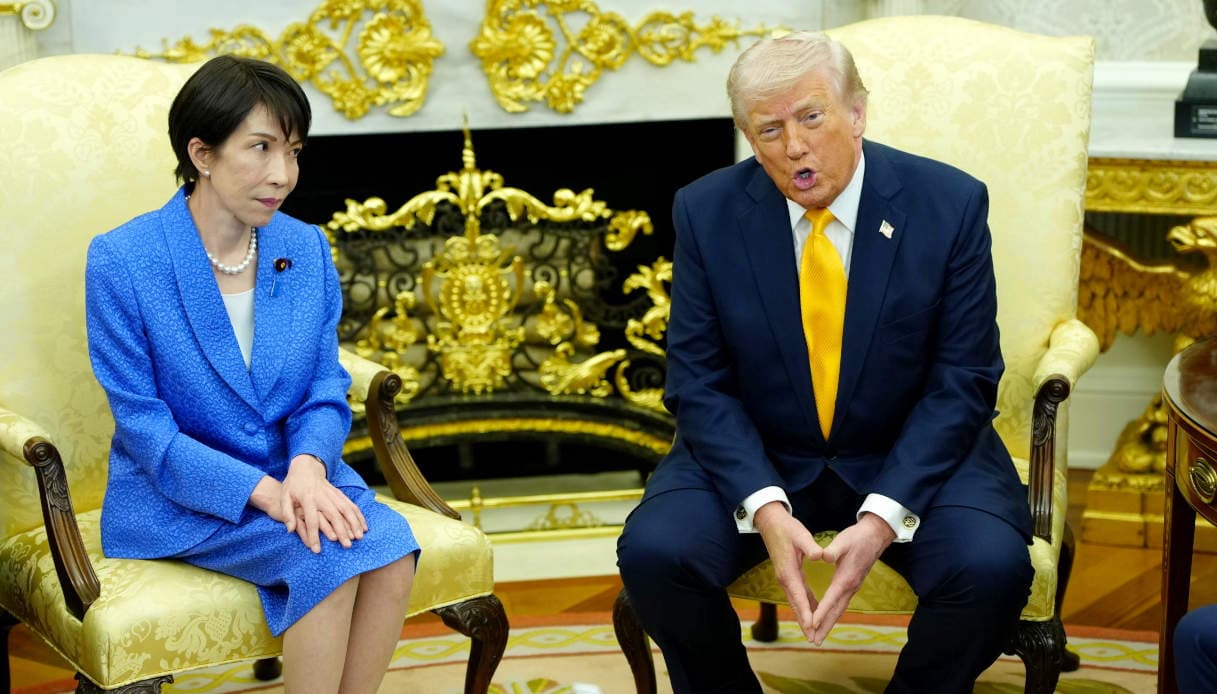
Trump Defends Iran War by Citing Pearl Harbor
12 sources compared