Lebanon02 May, 20265 min read
Gold Slips as Oil Prices Rise, Keeping Interest Rates Elevated in Lebanon-Linked Tensions
This article is an automated aggregation of coverage from news outlets. Our editorials offer in-depth analysis curated by the NewsCord team.
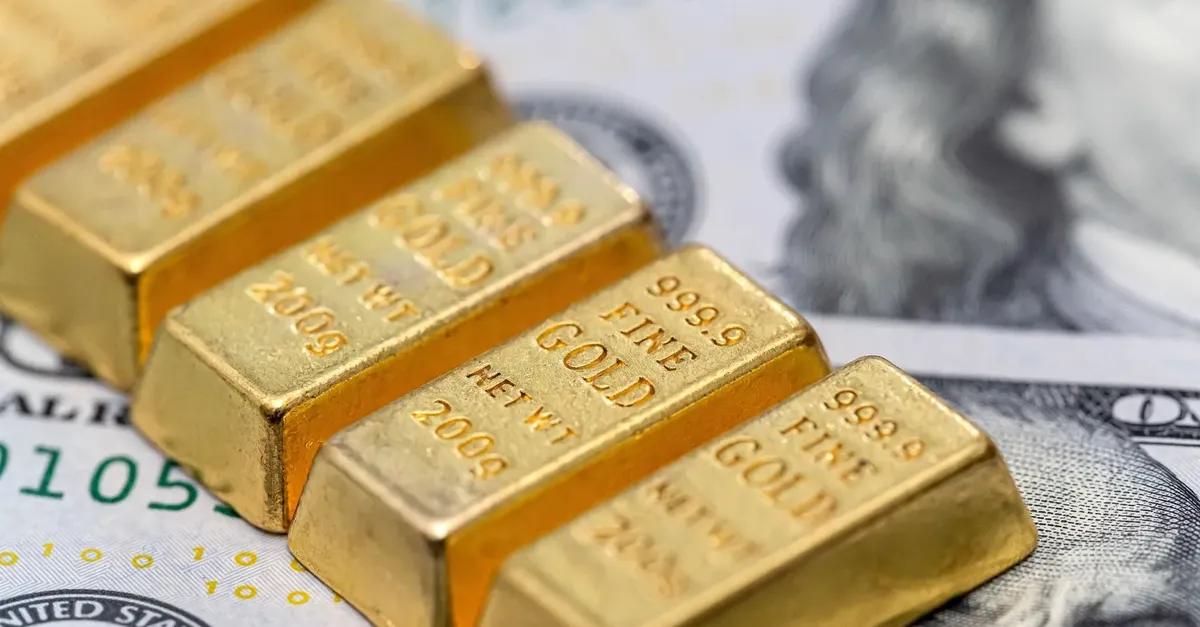
Gold fell about 1% on Friday, on track for a weekly loss. Rising oil prices and inflation concerns kept interest rates elevated, depressing gold.

Gold slides as oil surges
Gold prices in the context of Lebanon-linked Middle East tensions moved lower on Friday, with multiple market reports tying the decline to elevated oil prices and inflation concerns that keep central banks from cutting interest rates. Baystreet.ca said spot gold “skidded 1.1% at $4,568.82 U.S. per ounce” and was “on track for a weekly loss of 1.2%,” while Mitrade similarly described gold as “heading for a second straight weekly decline” as higher-for-longer rate expectations dominated price action. Marketscreener, citing Reuters, reported that “Gold prices fell more than 1% on Friday and were headed for a weekly loss of a similar magnitude,” adding that “Spot gold was down 1.1% at $4,573.33 per ounce at 1149 GMT.”
In the same Reuters-linked account, Brent crude “have touched double the levels seen at the start of the year,” raising “concerns about a global economic slowdown and higher inflation as fuel prices surge.” CNN الاقتصادية also framed the move as oil-driven, saying “Gold is on track to post a weekly loss as oil prices rise,” with spot gold “slipped 0.7% to $4,661.33 per ounce by 04:26 GMT.” Across these reports, the common thread is that oil price strength is reinforcing inflation fears and therefore keeping borrowing costs elevated, which can pressure gold’s appeal as a non-yielding asset.

Central banks keep rates
While gold fell, the reports emphasized that major central banks maintained their policy stance, which reinforced the “higher-for-longer” narrative. Baystreet.ca said “The European Central Bank and the Bank of England left interest rates unchanged on Thursday,” following “similar decisions this week by the Fed and the ?Bank of Japan.” Mitrade described the same group of institutions—“the Federal Reserve (Fed), European Central Bank (ECB), Bank of England (BoE) and Bank of Japan (BoJ)”—as having “kept interest rates unchanged in their latest policy announcements,” while noting that policymakers emphasized a “data-dependent approach.”
Economies (Other) added that the Federal Reserve kept rates unchanged “for the third consecutive meeting,” and specified the vote as “8 to 4” to keep the “benchmark federal funds rate at the 3.50% to 3.75% range.” That same Economies report said the policy statement noted inflation remains “elevated” above the “2% target,” impacted by “high energy and shipping costs resulting from the naval blockade of Iran and the closure of the Strait of Hormuz.” In the Reuters-linked marketscreener account, UBS analyst Giovanni Staunovo said, “Gold remains negatively correlated to oil in the short term, as it impacts interest rate expectations.”
Strait of Hormuz and threats
Several reports connected the gold market’s direction to Middle East developments that include the Strait of Hormuz and explicit threats tied to the U.S.-Iran conflict, with Lebanon referenced in one account through Israel’s bombing of Beirut. Economies said oil price rises were driven by “fears of renewed military confrontations between the United States and Iran and the continued closure of the Strait of Hormuz,” and it added that “Iran stated it would respond with "long and painful strikes" on U.S. sites if Washington renews its attacks.” CNN الاقتصادية similarly tied the oil and gold relationship to the Strait of Hormuz, stating that “Brent crude rose more than 17% during the week to exceed $105 a barrel, with the Strait of Hormuz closure continuing almost in full despite the extension of Iran’s ceasefire.”
In the Reuters-linked marketscreener report, Iran reiterated its position, saying it would respond with “long and painful strikes” on U.S. positions if Washington renewed attacks, “reiterating its claim to the Strait of Hormuz.” The Arabic-language التعمير report explicitly linked geopolitical tensions to gold demand, stating that “geopolitical tensions in the Middle East, such as Israel's bombing of Beirut and Iran's missile attacks on Saudi Arabia, helped support demand for the precious metal.” That same report also described energy-market impact, saying “Brent crude rose above $105 per barrel due to disruptions in shipments through the Strait of Hormuz.”
Different gold narratives across outlets
Although the reports agree that oil and rates are central, they diverge in how they frame gold’s near-term outlook and the magnitude of losses. Baystreet.ca emphasized a “similar-sized weekly loss,” saying gold was “headed for a similar-sized weekly loss” after “Spot gold skidded 1.1% at $4,568.82 U.S. per ounce” and “on track for a weekly loss of 1.2%.” Mitrade described gold as trading “around $4,577,” hovering “just above the one-month low of $4,510,” and said traders priced “a hold through this year,” with the probability of a rate hike by April 2027 rising to “24.2%, up from just 1.9% a week ago.”
Economies reported a different set of price points, stating “Gold fell by 1.25% to ($4,564.42)” and that it was “on track for its second consecutive weekly loss,” while also describing a “four-week low of $4,510.32 per ounce.” marketscreener, again citing Reuters, gave another weekly-loss figure: “on track for a weekly loss of 2.8%,” and it quoted UBS’s Giovanni Staunovo on gold’s correlation with oil. CNN الاقتصادية put the weekly loss at “3.5%” after a “four-week rally,” saying spot gold “deepening its weekly loss to 3.5%.”
What comes next for markets
Looking ahead, the sources describe markets waiting on catalysts tied to both monetary policy and Middle East developments, with gold’s direction framed as sensitive to oil and rate expectations. Mitrade said “there are no signs of an end to Middle East tensions,” adding that “supply through the Strait of Hormuz [is] largely disrupted,” which “keeps Oil prices elevated and inflation concerns in focus.” It also pointed to the CME FedWatch Tool, saying “traders are now pricing in a hold through this year,” while the probability of a rate hike by April 2027 was “24.2%.”
Economies quoted analyst Kyle Rodda of Capital.com, stating, “Market trading volume will be relatively thin due to public holidays, so we are at a crossroads, or at least waiting for the next catalyst that will cause a change in the market direction.” CNN الاقتصادية described how technical levels and the Middle East link remain central, noting that gold was “range-bound” between “his 50-day moving average near $4,900 and the 20-day average around $4,645.” The Reuters-linked marketscreener report added that UBS retained a “constructive outlook over the next six to 12 months,” with Staunovo saying factors could “drive prices towards $5,900/oz by late 2026.”