Europe07 June, 20263 min read
Greece Ends ESTIA Housing Program, Transfers Salim’s Children From Lesbos Apartment
This article is an automated aggregation of coverage from news outlets. Our editorials offer in-depth analysis curated by the NewsCord team.
ESTIA ends definitively at end-2022, EU-funded housing for asylum seekers in Greece. Salim, Afghan father, to transfer his three children from Lesbos apartment to a refugee camp.

ESTIA ends in Greece
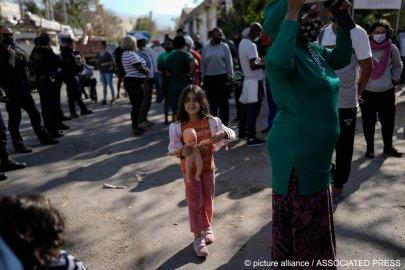
In Greece, the ESTIA housing program for asylum seekers is set to end definitively at the end of 2022, and Salim, a single father from Afghanistan, learned that his three children would be transferred from their apartment to a refugee camp. Salim said, "When my daughters hear the word camp, fear and terror fill their eyes," after spending eight months on the island of Lesbos where the Moria refugee camp was located. The Greek Ministry of Immigration had announced earlier this year that it would not renew the program in 2023, despite the European Commission's commitment to continue funding it until 2027.
InfoMigrants reported that in December 2021 Migration Minister Notis Mitarachi confirmed the outright end of the program by the end of the year, justifying the decision by the decrease in arrivals to the country. The same article said the Greek authorities published in August figures showing that the number of asylum seekers and refugees in the country (excluding Ukrainians) had been halved compared with 2022.

Walls and UN warnings
At the opening of the Global Refugee Forum, the UN High Commissioner for Refugees, Filippo Grandi, condemned the tendency of some industrialized countries to erect walls at their borders to stem the mass flows of migrants and refugees. Grandi said, "We cannot and must not—especially now—turn our backs on people who need safety and protection," and added that "as long as the drivers of displacement continue to force people to leave their homes, international protection will be necessary." UN News said the UN's grave concerns included "border closures, sometimes very violent pushbacks, the construction of walls and barriers" and "the outsourcing of international (and moral) obligations regarding the right of people to seek asylum."
The UN News report also tied the issue to displacement at scale, citing UNHCR's description of "more than 84 million people forcibly displaced from their homes in the world today." In the same speech, Grandi urged states to implement more solutions in third countries, saying, "Resettlement is, of course, an essential path," and thanking states that maintained or increased resettlement quotas in recent years.
From welcome to control
In 2016, Internazionale described a shift from the 2015 refugee welcome motto to restoring internal border controls, building walls, and repatriation agreements, alongside a record number of deaths in the Mediterranean. The article said the year included the decision by German Chancellor Angela Merkel in the summer of 2015 to suspend the Dublin Regulation, and it described how the politically disintegrated Europe then saw openness close "in the year that has just passed." Internazionale said the agreement Brussels signed on March 18 with Ankara aimed to definitively close the route that brought thousands of people to Greece from the Turkish coast, and it described the exchange as "three billion euros in aid" for Ankara to commit not to let refugees depart from its shores.
The piece also said that one of the consequences was that "55,000 refugees who were in Greece were blocked" in makeshift camps like Idomeni or in government camps, unable to access asylum or family reunification. It added that the humanitarian emergency on the Greek islands left "sixteen thousand refugees" blocked on Lesbos, Chios, and Samos, described as "open-air prisons."