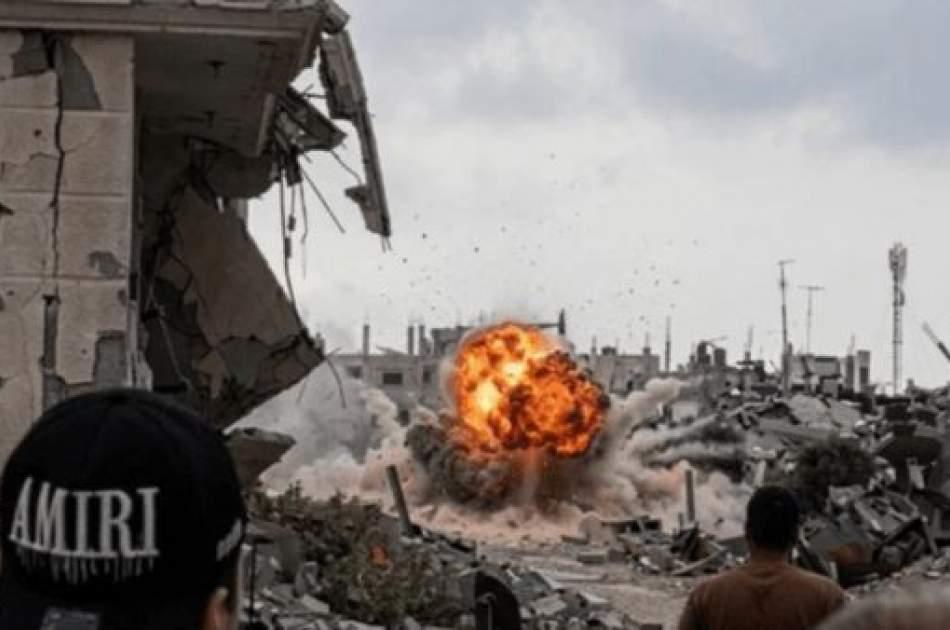
Hamas Ambushes Israeli Mercenaries in Khan Younis, Killing Militants Collaborating With Occupation
Key Takeaways
- Palestinian resistance ambushed Israeli mercenary militias cooperating with the occupation.
- Ambush described as tightly planned by one source and complex by another.
- Resistance platforms published details or imagery about the ambush.
Khan Younis ambush
A tightly planned ambush in Khan Younis, in the southern Gaza Strip, targeted militias cooperating with the Israeli occupation, according to Al-Jazeera Net and the Afghan Voice Agency (AVA) report.
“Digital platforms and media widely reacted to footage showing a security force of the Palestinian resistance carrying out a tightly planned ambush against a group of militias cooperating with the Israeli occupation in Khan Younis city in the southern Gaza Strip yesterday, Monday”
Al-Jazeera Net says the Rad’ security platform affiliated with the resistance published details of the event, explaining that the field strike targeted movements of “client gangs in Khan Younis.”

The report states that the resistance spotted more than three vehicles belonging to the gangs crossing the Yellow Line area east of Khan Younis, and that the vehicles were attempting a sabotage operation “under the cover of distributing cigarettes and money,” with the aim of using civilians as human shields.
When the right moment arrived, Al-Jazeera Net says “gunfire was opened on the vehicles,” with the first jeep targeted by a “Tandem missile” that “struck directly,” while the second and third jeeps were targeted with light and medium weapons.
The same account says Israeli aircraft intervened to support the operatives and secure their withdrawal, and that the aircraft also bombed the jeep from which they fled with a missile to conceal failure.
AVA similarly describes a “complex Hamas ambush,” saying the resistance security forces targeted Israeli mercenary agents with bullets and Yasin rockets, including a scene where a mercenary militia member fell after directly targeting resistance forces and then a vehicle next to him was targeted with a Yasin rocket.
AVA also says a security source described the operation as resulting in “killing and wounding of a number of militants collaborating with the Israeli occupation regime in the center of the city of Khan Yunis,” and that the ambush was carried out to confront those who disrupt internal security.
Claims, footage, and rebuttal
Al-Jazeera Net frames the Khan Younis ambush as a clash where the militia narrative is contradicted by field documentation and footage.
The report says activists and eyewitnesses broadcast footage showing militia members “entering the areas of displaced people in Khan Younis and distributing cigarettes and money,” which it presents as consistent with the resistance’s claim about using civilians.
It then describes later scenes in which the withdrawing force was subjected to a “direct shell or explosive attack,” producing “a state of confusion among them,” and it adds that documentation showed “a direct injury to one member” while local media published photos of the targeted vehicle after it was destroyed.
In contrast, Al-Jazeera Net says Hussam Al-Asatl, described as the militia commander based in the Yellow Line area under protection of the Israeli army, appeared in a video mourning one of his men killed in the clash.
Al-Jazeera Net reports that Al-Asatl claimed his forces distributed food parcels and cigarettes, said they were “surprised by gunfire from among the civilians,” accused Hamas of using civilians as human shields, and vowed that the next seizure by his forces would be in the Mawasi Khan Yunis area “which is teeming with hundreds of thousands of displaced.”
The report then states that “on-the-ground footage circulating on platforms and checked by us contradicted Al-Asatl’s claims,” saying the clash occurred “after the vehicles left areas where civilians had gathered.”
AVA’s account also emphasizes the resistance’s framing of the operation as confronting suspicious movements that target “the security of citizens or internal stability,” and it says the ambush took place “less than a few hours after the statements of the mercenary "Ghassan al-Dahini".”
Surveillance, missiles, and retreat
Both reports describe the ambush as the product of observation and rapid targeting, with the Israeli side intervening to protect the targeted elements.
“Digital platforms and media widely reacted to footage showing a security force of the Palestinian resistance carrying out a tightly planned ambush against a group of militias cooperating with the Israeli occupation in Khan Younis city in the southern Gaza Strip yesterday, Monday”
Al-Jazeera Net says the resistance monitored the infiltration of agents in “unmarked vehicles,” and that when they came into the target range, “the first jeep was hit by shells,” while the agents fled “leaving their weapons and wounded behind.”
It adds that “the Israeli air force intervened to strike the vehicles for fear of them falling into the hands of the resistance,” and it describes the agents as “shoes by which the enemy could trample thorny fields.”
The same account says the platform noted that Israeli aircraft intervened “to support the operatives and to secure their withdrawal,” and that it also “bombed the jeep from which they fled with a missile to conceal their failure.”
AVA provides a parallel operational sequence, saying local sources reported that “a group of Kataib al-Qassam forces observed the movements of elements affiliated with an individual named “Hussam al-Astal” (known as the Abu Sefin group) along with vehicles in the Bani Suhail area east of Khan Yunis.”
AVA says that after completing observation, the resistance targeted one of the vehicles with a “tandem” missile, and that “the vehicle was destroyed and its occupants, members of the group, were killed and wounded.”
AVA also states that “the Israeli occupation army intervened directly to protect the targeted elements and secure their retreat,” and that “the occupation drones opened heavy fire around the operation site to provide air cover for the group cooperating with them.”
Reactions and analysis
After the ambush, Al-Jazeera Net reports that writers and analysts reacted to the footage and interpreted what it meant for the broader conflict.
Journalist Mohammed Haniya commented that “the militia leadership sent its elements to fix a deluded sense of security,” and he said the ambush “clearly demonstrates their likely end.”
Activist Tamer Qdeih argued that “the new documentation proves the attack occurred after the vehicles moved away from civilians at a safe distance,” and he said this “confirm[s] that the militia had been under surveillance from the moment they arrived.”
Political analyst Fayez Abu Shamal described the resistance’s approach as monitoring “the infiltration of the agents in unmarked vehicles,” and he said that when the agents came into the target range, “the first jeep was hit by shells,” while the agents fled leaving weapons and wounded behind.
Al-Jazeera Net also quotes writer Ali Abu Ruzk, who said the event was “the first organized attack carried out by the agents on several areas simultaneously,” and he linked the move to “Cairo talks.”
Abu Ruzk’s analysis, as presented by Al-Jazeera Net, says the agents’ leaders wanted to send a message to their operators about their ability “to fill the security vacuum in Gaza,” and to “strengthen Israel’s negotiating position with the United States by presenting a ready substitute.”
The report then says Abu Ruzk concluded that “the failure of this attack does not just undermine the Palestinian position in Cairo,” but also “places these groups in a situation of embarrassment and unprecedented isolation before their people and their operators.”
Negotiations and threatened escalation
Al-Jazeera Net situates the Khan Younis ambush within a negotiation and threat landscape, tying the event to “Cairo talks” and to Hamas’s stated consultations.
“Digital platforms and media widely reacted to footage showing a security force of the Palestinian resistance carrying out a tightly planned ambush against a group of militias cooperating with the Israeli occupation in Khan Younis city in the southern Gaza Strip yesterday, Monday”
The report says “In the context of the Cairo talks, Hamas announced intensive consultations with mediators and factions to discuss implementing the obligations of the first phase of the Sharm el Sheikh Agreement and to prepare for the arrangements of the second phase in light of the Trump plan.”
It also references Israeli Prime Minister Benjamin Netanyahu and the International Criminal Court, stating that “In June 2025, Israeli Prime Minister Benjamin Netanyahu, wanted by the International Criminal Court for war crimes in Gaza, admitted arming militias in Gaza to use against Hamas.”
Al-Jazeera Net further says that “In February 2026, the Izz al-Din al-Qassam Brigades, Hamas’ military wing, threatened those militias with pursuit and killing,” adding that the statement said “the enemy will not be able to protect them.”
Within the same narrative, Al-Jazeera Net includes Hussam Al-Asatl’s vow that “the next seizure by his forces would be in the Mawasi Khan Yunis area which is teeming with hundreds of thousands of displaced,” which sets up a stated target area for future operations.
AVA similarly frames the operation as a confrontation with “any suspicious movement that targets the security of citizens or internal stability,” and it says the resistance emphasized it was “highly prepared to confront” such movements.
Together, the sources present a picture where the ambush is not only a tactical event in Khan Younis, but also part of an ongoing cycle of threats, counter-threats, and negotiations referenced through Cairo and Sharm el Sheikh.
More on Gaza Genocide
Spain, Ireland, and Slovenia Push to Suspend EU-Israel Deal as Germany and Italy Block
10 sources compared
RDNA Finds Gaza Needs More Than $71 Billion Over Next Decade for Recovery
11 sources compared
EU, UN Estimate Gaza Recovery Needs $71.4 Billion Over Next Decade
24 sources compared
Northern Israel Residents Shut Schools And Shops To Protest Lebanon Ceasefire
11 sources compared