Lebanon22 April, 20266 min read
Hezbollah Fires Rockets And Drones Into Northern Israel As Lebanon Ceasefire Tests Limits
This article is an automated aggregation of coverage from news outlets. Our editorials offer in-depth analysis curated by the NewsCord team.
Hezbollah fired rockets and drones toward northern Israel. Israel called the attack a breach of the ceasefire as US-mediated talks proceed.

Ceasefire Tested at Border
Israel and Hezbollah exchanged fire as a 10-day Lebanon ceasefire mediated by Washington tested its limits, with incidents reported after the truce began last Thursday. South China Morning Post reported that Hezbollah said it fired rockets and drones into northern Israel on Tuesday, accusing the Israeli military of violating a ceasefire ahead of US-mediated talks between the Israeli and Lebanese governments this week. The Israeli military earlier said Iran-aligned Hezbollah fired several rockets towards its troops operating in southern Lebanon, describing it as a “blatant violation” of the ceasefire agreement.
It was “not immediately clear if the incidents were the same,” according to the same report. Under the truce terms described by the South China Morning Post, Israel reserves the right to act against “planned, imminent or ongoing attacks,” while Israeli Defence Minister Israel Katz said troops would use “full force” if threatened.
The ceasefire did not remove Israeli deployments, with the report saying Israeli forces remain deployed in a belt of Lebanese land 5 to 10 km (3 to 6 miles) deep along the entire border. The South China Morning Post added that Israel aims to create a buffer zone to shield northern Israel from attacks by Hezbollah, a Shiite Muslim group.
What Each Side Claims
Hezbollah’s account and Israel’s account both framed the Tuesday incidents as ceasefire violations, but they described different targets and actions. Pakistan Today said Hezbollah launched rockets and drones toward northern Israel on Tuesday, accusing Israeli forces of breaching a ceasefire ahead of US-mediated talks between the Israeli and Lebanese governments later this week. It also reported that the Israeli military said the Iran-aligned group fired several rockets toward its troops operating in southern Lebanon, calling it a “blatant violation” of the truce agreement.
Pakistan Today emphasized that “It was not immediately clear whether the incident described by Hezbollah was the same one referred to by the Israeli military.” The Israeli military in Pakistan Today said it struck the launcher used to fire the rockets and that sirens in northern Israel were likely triggered after a drone launched from Lebanon was intercepted.
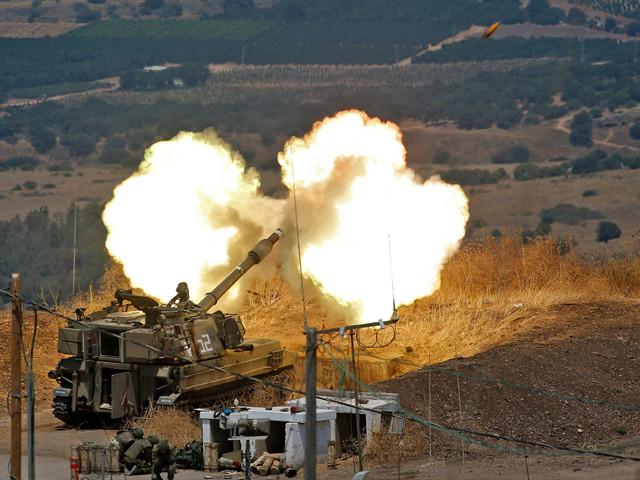
South China Morning Post similarly said Hezbollah accused Israel of attacking civilians and destroying homes in breach of the truce, and that Hezbollah said it fired at a position in northern Israel that had been striking southern Lebanon. Devdiscourse described the same pattern of mutual blame, saying Hezbollah accused Israel of violating the truce by attacking civilian areas and that Israel reported counteraction by targeting the origins of these attacks.
Lebanese Political Voices
Beyond the battlefield claims, Lebanese leaders tied the ceasefire and the upcoming diplomacy to Israel’s continued presence and to Hezbollah’s disarmament. Pakistan Today reported that Parliament Speaker Nabih Berri, Lebanon's most senior Shia statesman and an ally of Hezbollah, told Lebanese newspaper al-Joumhouria earlier that Israeli forces holding positions in the south would face resistance. Berri said, “If Israel maintains its occupation, whether of areas, positions, or by drawing yellow lines, it will smell the scent of resistance every day,” and the report added that he also leads the Shi'ite Amal Movement.
“Lebanese leadership, aligning with Hezbollah, have issued warnings against continued Israeli military presence in Lebanon.”
The same report said Berri repeated his position that direct talks with Israel were unnecessary, saying he had taken part in several rounds of indirect negotiations over the years. Pakistan Today also said Lebanon’s Prime Minister Nawaf Salam told reporters on Tuesday that his government did not want a confrontation with Hezbollah but would not be intimidated by it.
It also quoted Israeli Defense Minister Israel Katz saying the ultimate objective of the campaign against Hezbollah was to have the group disarmed through military and diplomatic means, adding, “If the Lebanese government continues not to keep its commitment (to disarm Hezbollah), the IDF (Israel Defense Forces) will do so by continuing its military activity, Katz said in Tel Aviv,”. Devdiscourse framed Lebanese leadership as aligning with Hezbollah and issuing warnings against continued Israeli military presence in Lebanon, while also describing the leaderships preparing for U.S.-hosted diplomatic talks this week.
Diplomacy Looms, Tension Persists
The ceasefire and the reported exchanges of fire were set against a schedule of U.S.-mediated diplomacy, with multiple outlets describing talks as imminent. Pakistan Today said that on Thursday, the United States is due to host a second round of ambassador-level talks between Israel and Lebanon. South China Morning Post said the incidents were among several that have occurred since the ceasefire came into effect last Thursday, and it described Hezbollah’s Tuesday rockets and drones as occurring ahead of US-mediated talks between the Israeli and Lebanese governments this week.
Devdiscourse likewise said both sides reported incidents of exchanges of fire, blaming each other for violating a recently mediated ceasefire, while leaderships prepared for U.S.-hosted diplomatic talks this week. Pakistan Today also described the ceasefire’s operational limits by saying Israeli forces remain deployed in a strip of Lebanese territory stretching 5 to 10 kilometres deep along the border, even as Washington mediated the truce.

It added that Israel has said it wants to establish a buffer zone to protect northern Israel from attacks by Hezbollah, and it described Israeli demolitions in southern villages as targeting Hezbollah infrastructure located in civilian areas. Lebanese state media reported on Tuesday that Israeli detonations had taken place in at least eight villages and that Israeli artillery had shelled several areas, while Lebanese authorities say Israeli strikes on Lebanon have killed nearly 2,300 people since March 2.
How Outlets Frame the Same Moment
While all three reports describe Hezbollah and Israel trading accusations during the ceasefire window, they emphasize different elements of the same sequence. South China Morning Post foregrounded the truce mechanics and the buffer-zone concept, stating that under the truce terms Israel reserves the right to act against “planned, imminent or ongoing attacks,” and quoting Israel Katz as saying troops would use “full force” if threatened. Pakistan Today, by contrast, foregrounded the diplomatic timeline and Lebanese political messaging, including the claim that the United States is due to host a second round of ambassador-level talks on Thursday and the inclusion of Nabih Berri’s warning about “the scent of resistance every day.”
“On Thursday, the United States is due to host a second round of ambassador-level talks between Israel and Lebanon.”
Devdiscourse framed the situation as an escalation of “exchanges of fire” and described the “fragile peace orchestrated by the U.S. between the two nations,” while also stressing that Lebanese leadership aligned with Hezbollah issued warnings against continued Israeli military presence. The outlets also differed in how they described the uncertainty around the incidents: South China Morning Post said it was “not immediately clear if the incidents were the same,” while Pakistan Today said it was “not immediately clear whether the incident described by Hezbollah was the same one referred to by the Israeli military.”
On the operational side, both South China Morning Post and Pakistan Today reported that Israel struck the launcher and that sirens were likely triggered after interception of a drone launched from Lebanon, but Devdiscourse did not include those specific details. Pakistan Today also added a broader set of claims about demolitions and shelling, including that Lebanese state media reported detonations in at least eight villages and that Israeli artillery shelled several areas.