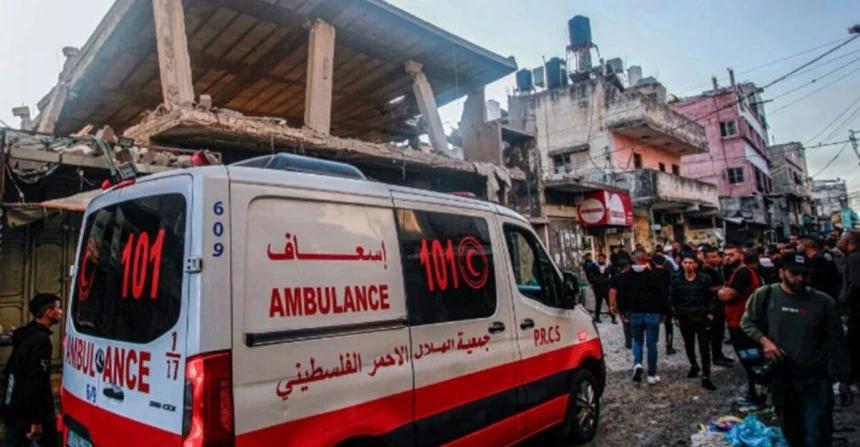
Israeli Attacks Kill Gaza Civil Officials, Expand Control in Eastern Gaza City
Israeli strikes kill four Palestinians as forces expand control in eastern Gaza City. Ceasefire violations persist amid stalled negotiations and renewed Israeli assaults.
Beat 1 · The verdict
Al Jazeera intensifies a pattern framing; Anadolu and An-Nahar lean on incident reporting.
Full story
Ceasefire, then raids
Israeli attacks in Gaza continued despite a months-long “ceasefire,” with Al Jazeera describing a “cycle of chaos” in which Israel killed Gaza civil officials, including the director of a police station and several officers in Jabalia on Tuesday.
“An Israeli attack in northern Gaza’s Jabalia camp on Tuesday killed the director of a police station”
Al Jazeera said the violence has pushed the total death toll since October 7, 2023, to at least 73,233, with 173,707 injured, and it cited the Government Media Office in Gaza for 3,689 recorded Israeli violations during the 275-day “ceasefire,” resulting in 1,122 Palestinians killed and 3,599 injured.

In a separate incident reported by Anadolu Ajansı, Israeli forces killed four Palestinians on Thursday in air and artillery attacks and expanded their control in eastern Gaza City, with the Palestine Red Crescent Society saying 33-year-old Nihad Riyad Arouq was killed when an Israeli drone struck a tent sheltering displaced Palestinians in the port area west of Gaza City.
Anadolu reported that Israeli military vehicles advanced overnight near Dawla Junction under heavy artillery and live fire, moving dozens of meters toward Salah al-Din Street and pushing the concrete barriers marking the so-called Yellow Line farther west.
An-Nahar said an Israeli airstrike in Deir al-Balah killed Omar Abu Qasim, his wife Asma, and their daughter Habiba, while their son survived but was injured, as ceasefire talks aimed at implementing the second phase of the deal brokered by the United States stalled.
Voices and framing
Al Jazeera quoted Ahmed al-Tanani, a writer and political analyst based in Gaza, saying Israel’s pretexts for strikes have shifted from “security events” to “killing on intention,” striking individuals citing baseless claims that they intend to attack Israeli forces.
Al Jazeera also quoted Kalpona Akter’s characterization of the pattern as hostile to Gaza’s civic foundation, describing the killings as part of a strategy that could derail the United States-backed plan for a post-war Gaza and paralyse the so-called Board of Peace set up under the Trump administration plan.

Anadolu Ajansı framed the Thursday fighting as ceasefire violations, saying the attacks came amid continued Israeli violations of the ceasefire that took effect in the Gaza Strip on Oct. 10, 2025.
An-Nahar described the same broader dispute through the stalled negotiations, saying Hamas leaders wrapped up another round of ceasefire talks in Cairo on Tuesday mediated by Egypt, Turkey and Qatar, aimed at implementing the second phase of U.S. President Donald Trump’s peace plan for Gaza.
Shafaq News, citing medics and Reuters, said an airstrike hit a residential building in Deir al-Balah in central Gaza, killing the three family members and wounding another child, as renewed violence overshadowed ceasefire negotiations.
What comes next
Al Jazeera said analysts warn that daily incursions are not isolated security operations but part of a calculated pattern to kill law enforcement officers, medical professionals, government officials and intellectuals, threatening the United States-backed post-war plan for Gaza.
“OHCHR has recorded at least 12 attacks on police, killing 35 personnel”
Al Jazeera reported that since January 2026, the United Nations Human Rights Office (OHCHR) recorded at least 12 attacks on police, killing 35 personnel, including officers targeted while directing traffic or overseeing markets, and it cited a May 23 incident in which an Israeli attack on a Gaza City checkpoint killed at least five officers.
Anadolu Ajansı reported that according to Israeli officials, the military now controls more than 70% of the enclave, up from 53% under the October 2025 ceasefire agreement, while the Gaza Health Ministry said Israeli attacks since the ceasefire took effect have killed 1,123 Palestinians and injured 3,616 others as of Wednesday.
An-Nahar said the plan calls for Israel to withdraw to what is known as the Yellow Line, but it continues to push its forces forward slowly and now effectively occupies more than 60 percent of the Gaza Strip, while nearly two million Gaza residents live in a narrow strip along the coast in temporary tents or damaged buildings.
Shafaq News added that the Gaza Health Ministry said 13 people were killed and 18 wounded over the past 24 hours, and it reported that the death toll since the Oct. 11 ceasefire has risen to 1,123 with 3,616 people injured, while 800 bodies have been recovered during the same period.
Story read · 22 outlets · 3 disagreements · 5 facts unevenly covered
Keep reading
Syrian Court Sentences Ousted President Bashar Al-Assad, Maher, Atef Najib to Death In Absentia
19 sources compared →
Israel Delays Next Lebanon Negotiations After Refusing Withdrawal, KAN Reports
how 10 outlets framed it →
Damascus Fourth Criminal Court Sentences Bashar al-Assad, Maher, Atef Najib to Death In Absentia
38 sources compared →
The divide · 1 of 3
Al Jazeera intensifies a pattern framing; Anadolu and An-Nahar lean on incident reporting.
Coverage map
West Asian (12)
Western Alternative (4)
Western Mainstream (2)
Asian (2)
Israeli (1)
Other (1)
How each outlet frames it
Every outlet we compared, the headline it ran, and a link to the original article.
Our Watchdog read these 2 articles sentence by sentence. 0 means no framing found, 10 means severe. How we score.
‘Cycle of chaos’: Israel killing Gaza civil officials to derail its future
15 July, 2026
West Asian
Israeli attacks in Gaza have claimed 4 martyrs on Thursday: reports
09 July, 2026
Israel kills four Palestinians and expands its control to areas east of Gaza City.
16 July, 2026
Gaza: Israel has killed and injured more than 4,000 Palestinians since the ceasefire.
28 June, 2026
An Israeli airstrike kills a family in Gaza and stalls the ceasefire.
16 July, 2026
4 Palestinians killed as Israeli forces expand control in eastern Gaza City
16 July, 2026
Israeli strikes, gunfire kill 4 Palestinian children in 6 days
08 July, 2026
New ceasefire violation in Gaza: Israel kills at least four Palestinians, including a child.
28 June, 2026
Israeli strikes kill four in Gaza as truce talks stall - Shafaq News | Latest breaking news in Iraq and the world
15 July, 2026
Western Mainstream
Israel kills the person responsible for the giant screens of the World Cup matches in Gaza
09 July, 2026
Israeli strike kills World Cup screening organizer in Gaza just before kickoff
08 July, 2026
Israeli
Asian
Gaza strikes kill four despite fragile Israel-Hamas ceasefire
28 June, 2026
Israel launches an assault on Gaza, killing at least four people.
09 July, 2026
Western Alternative
12 Palestinians killed, 20 injured in Israeli strikes in Gaza amid ceasefire violations
09 July, 2026
Israeli strike kills couple and their daughter in central Gaza
15 July, 2026
Four Palestinians Killed as Israel Continues Ceasefire Violations across Gaza
16 July, 2026
Other
Israeli strikes and shelling in Gaza kill at least 4 Palestinians, health workers say
28 June, 2026
NewsCord Digest
Get every War on Gaza story like this one, in one email
Daily or weekly, only the topics you follow, each with the difference our analysis found across the outlets covering it.
Set up your digestMore on Gaza Genocide

Syrian Court Sentences Ousted President Bashar Al-Assad, Maher, Atef Najib to Death In Absentia
19 sources compared

Israel Delays Next Lebanon Negotiations After Refusing Withdrawal, KAN Reports
10 sources compared

Damascus Fourth Criminal Court Sentences Bashar al-Assad, Maher, Atef Najib to Death In Absentia
38 sources compared
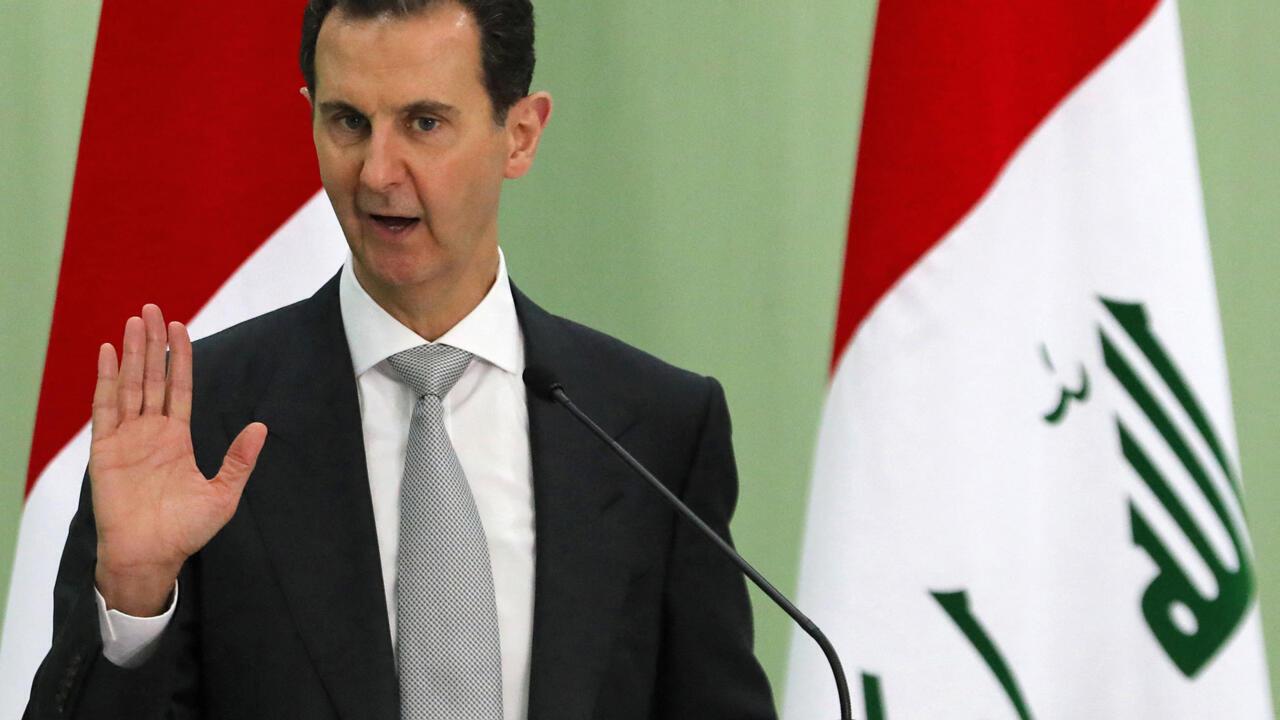
Syrian Court Sentences Bashar Al-Assad, Maher Al-Assad, Atef Najib To Death In Absentia
27 sources compared