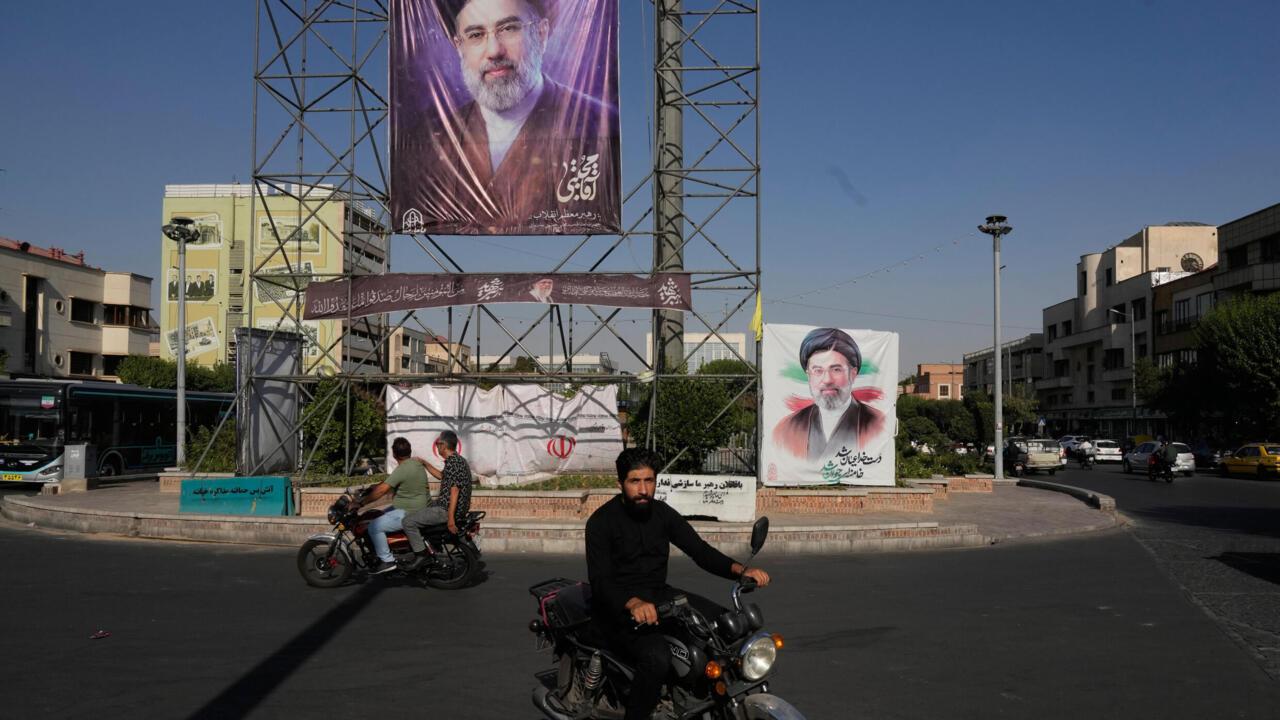
Hezbollah Rejects U.S.-Brokered Israel-Lebanon Framework, Warns of Renewed Domestic Conflict
Key Takeaways
- Iran will send experts to Doha to discuss implementing the framework with the U.S.
- Framework viability is in doubt and potentially effectively frozen amid implementation challenges.
- Doha serves as the talks venue with Iran and the U.S., mediated by Qatar.
Framework met with rejection
A U.S.-brokered framework agreement between Israel and Lebanon is facing an immediate challenge after Hezbollah swiftly rejected it and multiple Lebanese political factions warned of renewed domestic conflict.
“Tehran announced on Monday that a 'delegation of experts' would travel to Doha this week to discuss the implementation of the framework agreement signed on June 17 with the United States, including oil exports and funds frozen that belong to Iran”
Lebanon’s Parliament Speaker Nabih Berri, leader of Amal, declared that Lebanon is on the brink of civil war, while Hezbollah MP Hassan Fadlallah dismissed the agreement within minutes of the signing ceremony and said the organization would oppose its implementation and “hold more firmly to its weapons.”

The framework’s implementation hinges on the Lebanese Armed Forces verifying that Hezbollah and other non-state armed groups have been disarmed and their military infrastructure dismantled, a process that the Israel Today analysis says would require a direct and bloody internal confrontation.
That same analysis says ordering the army to forcibly disarm Hezbollah could fracture its ranks along sectarian lines, precisely the dynamic that ignited the Lebanese Civil War in 1975.
It also frames the political risk as Hezbollah seeking to topple the government by compelling Shi’ite ministers to resign while potentially intensifying attacks on Israeli forces in the southern security zone.
Rubio, Berri, Hezbollah clash
In Lebanon, U.S. Secretary of State Marco Rubio announced a framework agreement between Israel and the Cedars’ country after talks held in Washington, but Nabih Berri said on Sunday, June 28 that the agreement “will not be adopted” and “will not be implemented in its current form.”
Hezbollah said it reserves the right to “defend its homeland” after new Israeli strikes in southern Lebanon, even as the framework is described as aiming for a “lasting peace.”

RFI’s live update also ties the dispute to broader regional diplomacy, noting that Qatar is mediating talks between Iran and the United States aimed at ending the war in the Middle East.
CNews reports that Lebanese President Joseph Aoun expressed determination to assert the state's authority by deploying the army in the south, where pro-Iranian Hezbollah is well entrenched, and that he reaffirmed “the determination of the Lebanese state to extend its authority, through its armed forces,” to the border with Israel.
The same CNews account says the two men discussed preparations for implementing the framework agreement signed with Israel under Washington's aegis, while the pro-Iran Hezbollah statement frames Israeli strikes as a ceasefire violation it monitors and records.
Implementation stalled, stakes rise
As questions mount over whether the Lebanon-Israel framework agreement can move from paper to practice, L'Orient Today reports that circles close to Ain al-Tineh are convinced the agreement is effectively frozen for an indefinite period because of the difficulties surrounding its implementation.
“In practical terms, this means the eventual disarmament of Hezbollah, even though the Shi’ite terrorist organization is never mentioned by name”
L'Orient Today says a meeting between U.S. Central Command official Gen. Brad Cooper and Lebanese Army Commander Gen. Rodolph Haykal is said to have been decisive, with Cooper accompanied by Gen. Joseph Clearfield, head of the committee overseeing the so-called “mechanism.”
The same report frames Parliament Speaker Nabih Berri’s Thursday response to the fate of the framework as offering “his condolences,” describing the reaction as dramatic.
Meanwhile, Israel Today warns that the agreement’s 14 points are likely to remain a diplomatic blueprint rather than an operational reality unless the international community can neutralize Hezbollah’s political and military veto without fracturing the Lebanese state.
In the RFI update, the ceasefire is described as fragile while nearly 400,000 people have already returned to their home region, and the Lebanese Minister of Social Affairs is cited as saying the return has reached that scale.
More on Lebanon
Joseph Aoun Urges Donald Trump To Continue US Support After Israel Framework Agreement
24 sources compared

Israel’s Givati Brigade Completes Mission In Southern Lebanon After Eight Months
15 sources compared

Syria Signals Diplomacy After Asaad Al-Shaibani Lebanon Trip, Rejects Military Intervention Against Hezbollah
29 sources compared
Nabih Berri Says Israel Tries to Drag Lebanese Army Into Confrontation With Resistance
14 sources compared