
Israel’s Givati Brigade Completes Mission In Southern Lebanon After Eight Months
Key Takeaways
- Givati Brigade completed its eight-month mission in southern Lebanon.
- Israeli soldier killed and several wounded in southern Lebanon operations.
- Framework agreement signed; Israel prepared partial withdrawal from Nabatieh District.
Givati Brigade wraps mission
Israel’s Givati Brigade completed its mission in southern Lebanon after operating in the area for eight months, the Israel Defense Forces said in a statement on Thursday.
“Israeli forces were wounded in southern Lebanon, while Tel Aviv continued its military operations there despite the framework agreement signed between the two sides last week”
The IDF said the brigade’s deployment began with a defensive mission along the border and continued with offensive operations throughout southern Lebanon, operating in the areas of Al-Khiam and Bint Jbeil, north of the Litani River, and along the Beaufort Ridge.
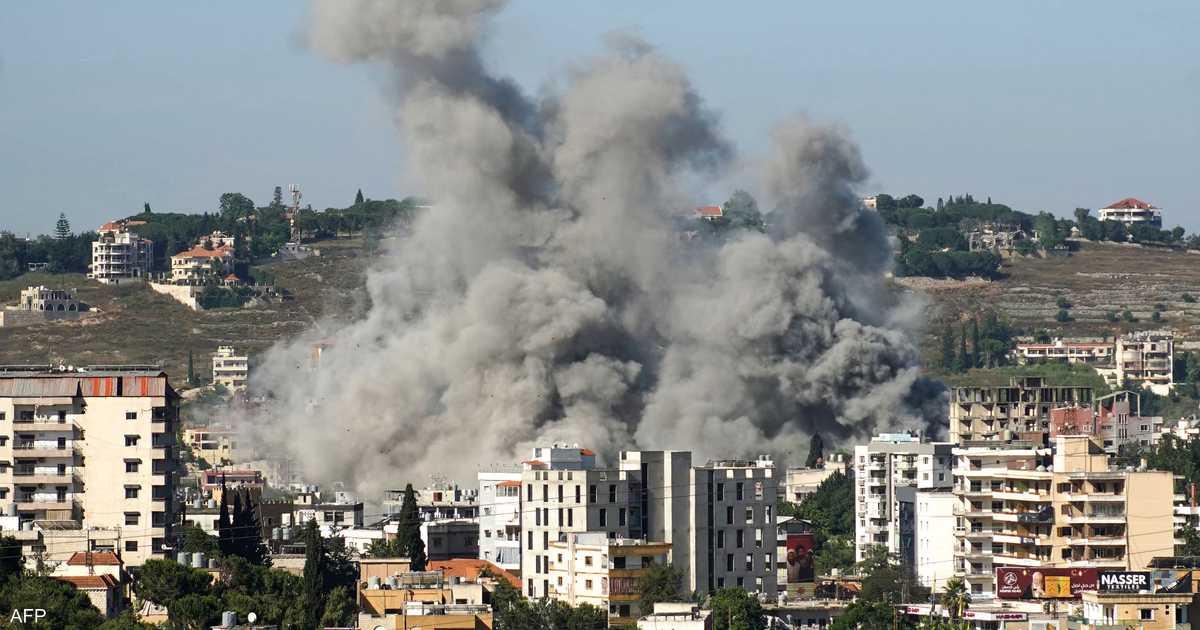
In the same period, Israeli aviation carried out new strikes on Sunday in southern Lebanon, the day after a framework agreement was signed between Beirut and Israel under U.S. mediation, while Israel said it was preparing a first partial withdrawal of its forces from two sectors of the Nabatieh District.
According to the National Information Agency (ANI, official), an Israeli fighter jet bombed the outskirts of the towns of Deir Seryan and Taybé, and strikes also hit Nabatieh al-Faouqa and Bourj Qalaouiyé, while an Israeli drone targeted the town of Braachit.
The Emergency Operations Center of the Lebanese Ministry of Public Health tallied that Israeli military operations have killed 4,247 and wounded 12,195 in Lebanon since March 2.
Withdrawal plans meet retaliation
Israel said it was preparing to begin as early as Monday morning its withdrawal from two 'pilot zones' in the Nabatieh District, in coordination with the Lebanese army via a new direct channel of communication between the two countries.
Israeli authorities require that the Lebanese army take an immediate position in the evacuated sectors to prevent any reinstallation of Hezbollah fighters, while a senior Israeli security official told the Israeli daily Yediot Ahronot that the army would retain 'total freedom of action' against any threat deemed imminent.

The Israeli daily Yediot Ahronot also reported that Israeli authorities expect a possible Hezbollah retaliation in the coming days against the Israeli forces deployed in South Lebanon, quoting a security official saying, "Hezbollah will not sit idly by".
Hezbollah, for its part, announced eight operations targeting Israeli troops and vehicles in southern Lebanon, including shelling gatherings of Israeli soldiers in the towns of Rashaf and al-Beida, and targeting Israeli military vehicles and a bulldozer with assault drones and artillery and rocket fire.
TRT عربي reported that these developments came amid heavy artillery shelling and demolition operations of homes and evacuation notices, resulting in 34 deaths, including a member of the Lebanese Civil Defense, and injuries to others, as a result of more than 80 Israeli strikes since Friday.
Humanitarian toll and political friction
The fighting and strikes continued to shape the humanitarian and military picture in Lebanon, with Israeli operations since March 2 described by TRT عربي as resulting in 2,759 dead and 8,512 wounded, alongside the displacement of more than 1.6 million people.
“The Israeli army announced on Thursday, June 18, the death of one of its soldiers, who died on Wednesday during an incident in southern Lebanon in which seven other soldiers were injured”
In parallel, L'Orient-Le Jour reported that Prime Minister Nawaf Salam said Lebanon would not yield to blackmail or threats of civil war, arguing, "Which state can function with two armies?" as he reaffirmed his intention to place all weapons present on Lebanese soil under the army's authority.
Salam said he had contacted the Speaker of Parliament, Nabih Berry, to thank him for intervention aimed at preventing 'discord' and an escalation in the streets after the tone rose in recent days from the Shiite Amal-Hezbollah tandem following the signing of the framework agreement between Lebanon and Israel.
He also said the government would not abandon its objective of confining arms to the state and told Hezbollah he was only asking it to respect commitments it undertook in the Taëf agreement, UN Security Council Resolution 1701, the declaration of cessation of hostilities and the ministerial declaration.
As Israel prepared withdrawals from 'pilot zones' in the Nabatieh District, Ici Beyrouth reported that the framework agreement signed Friday under U.S. mediation remains rejected by Hezbollah, whose deputy said on Sunday that it 'will not be implemented'.
More on Lebanon
Nabih Berri Says Israel Tries to Drag Lebanese Army Into Confrontation With Resistance
14 sources compared
Israeli Drone Strikes Near Ghandour Hospital as Warplanes Hit Braashit in Bint Jbeil
28 sources compared
Israel Launches Airstrikes in Southern Lebanon Hours After Lebanon Signs Framework Agreement
11 sources compared

Israeli Airstrikes Hit Nabatieh al-Fouqa and Kfar Tabnit After Ceasefire With Hezbollah
11 sources compared