Lebanon · 02 July, 2026 · 3 min read
Israel Launches Airstrikes in Southern Lebanon Hours After Lebanon Signs Framework Agreement
Israel intensified airstrikes in southern Lebanon and its eastern region. Netanyahu announced expansion of operations to crush Hezbollah.
Whether Israel’s Lebanon ceasefire is being respected.
10 of 11 outlets skipped it: framework agreement legitimizes Israeli occupation legally.
11outlets compared
Same story, two versions
tap a side to read it in full
Framing differs between policy justification and ceasefire violation allegations.
Agreement, then strikes
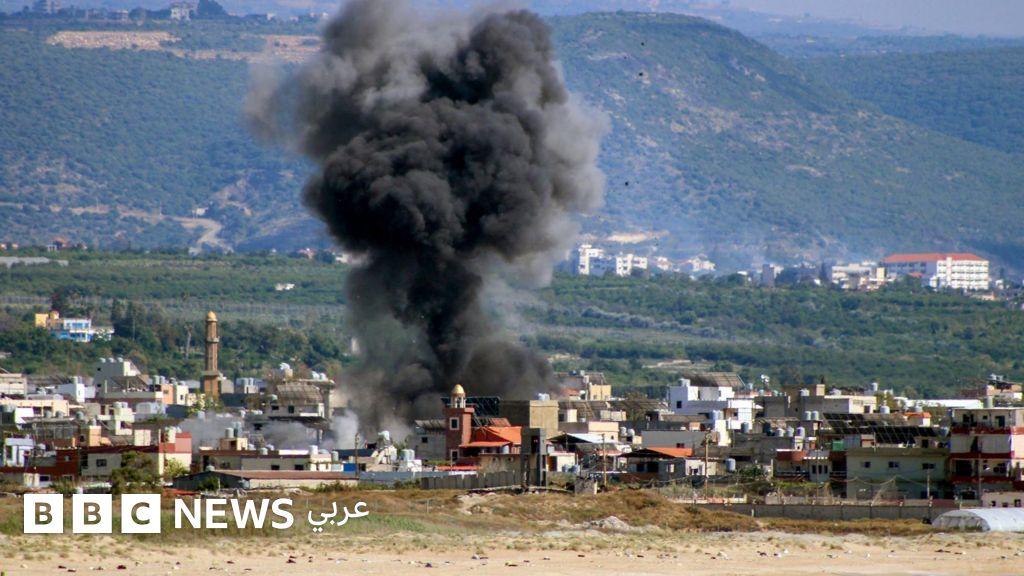
Lebanon’s government signed on Friday, June 26, a framework agreement with Israel that, for the first time in Lebanon’s history, provides legal legitimacy to the Israeli occupation of southern Lebanon while conditioning Israeli withdrawal on the disarmament of Hezbollah across the entire national territory. Less than 24 hours after the agreement was signed, Israel launched multiple attacks in the south of the country, violating the ceasefire announced less than a week earlier, and Quds News Network said Israeli fighter jets and drones carried out multiple strikes in southern Lebanon just a few hours after the signing. According to Lebanese sources cited by ISM-France, the airstrikes targeted Nabatieh al-Fawqa and drone strikes were reported at an intersection adjacent to an amusement park in the same area, while in the Hasbaya district Israeli forces advanced northward supported by machine-gun fire.
ISM-France said the strikes on Nabatiyeh al-Fawqa left one dead and two wounded, and it quoted Israel’s Defense Minister Israel Katz clarifying that the agreement grants Israel the right to remain on Lebanese territory as long as the weapons have not been withdrawn. The BBC also described the broader context of the escalation, saying Israel intensified its airstrikes on southern Lebanon after Netanyahu ordered the Israeli army to widen its military operations in Lebanon to “crush” Hezbollah.B
Hezbollah rejects, France urges
Hezbollah Secretary-General Naim Qassem fully rejected the framework agreement, calling it “humiliating, shameful, and [constituting] a capitulation of sovereignty,” and ISM-France said he urged Lebanese authorities to retract what he described as “sins that destroy Lebanon.” ISM-France reported that Qassem said linking Israeli withdrawal to the disarmament of the Resistance across the entire Lebanese territory was “a very dangerous proposition that crosses all red lines,” and it also said Hezbollah announced it would continue armed struggle and would not renounce resistance on the ground. In parallel, France 24 reported that Prime Minister Benjamin Netanyahu announced Israel would “intensify” its military operations in Lebanon with the aim of “crushing” Hezbollah, despite a ceasefire being in effect.F
France 24 said Israel intensified airstrikes on southern Lebanon and its eastern region, targeting several areas including the coastal city of Tyre and Nabatieh, while the BBC described an Israeli warning to evacuate the city of Nabatieh in anticipation of strikes. The BBC also quoted the Israeli army spokesman writing in Arabic on X telling residents of Nabatieh: 'You must evacuate your homes immediately and move to the north of the Zahrani River.'B

Deaths, medics, and stakes
As the fighting continued, Lebanon’s Ministry of Public Health said the death toll from Israeli airstrikes from March 2 to May 22 had risen to 3,111 people, and it said two Israeli airstrikes on the south of the country killed six medical workers within the last 24 hours. The East quoted the ministry describing the attacks on medical workers as a violation of international law, and it said the ministry condemned the two attacks after an Israeli attack began at night and continued into Friday morning in the town of Hanawiyeh. The BBC tied the wider toll to the war’s start, saying the Lebanese Health Ministry says the Israeli campaign killed 3,185 people and wounded 9,633 others, and it also reported that ten Israeli soldiers have been killed since reaching the initial ceasefire with Lebanon.B
In the same period, the BBC reported that Israeli Finance Minister Bezalel Smotrich announced on Monday that he had approved a special budget of about two billion shekels (692 million dollars) to empower the defense establishment to develop countermeasures to drones. BThe stakes for Lebanon’s governance and security were underscored by Libnanews, which said Brigadier General Wissam Sabra was assassinated on Saturday, June 6, 2026, by an Israeli strike on a military vehicle on the Khardali–Nabatieh road in southern Lebanon, killing his driver and potentially a third soldier.