
Hezbollah Says It Reinforced Fighters in South Lebanon Despite Lebanese Army Claims
Key Takeaways
- Hezbollah says it reinforced fighters in south Lebanon during the war.
- Lebanese army said it finished disarming Hezbollah near the border in January.
- Israeli strikes continue in south Lebanon despite a ceasefire with Hezbollah.
Hezbollah, Litani, and drones
Lebanon’s southern front has remained tense since the start of the war with Israel on March 2, with Hezbollah saying it has continued to move weapons and personnel into the area despite claims by the Lebanese Army that it dismantled Hezbollah’s military structures.
In an interview with a group of journalists including AFP, Hezbollah’s director of media relations, Youssef Zein, said the group had been able to “bring in forces and weapons during the battle.”
Zein also said Hezbollah’s reinforcements did not use routes controlled by the Lebanese Army, which he said “did not close the other access points” leading to the south of the Litani River.
He framed the Lebanese Army as a national institution, saying, “We are convinced that the army is a national army,” which “will not get into a confrontation with Hezbollah.”
The cease-fire agreement that ended the previous war between Hezbollah and Israel in November 2024 included a claim by the Lebanese Army that it dismantled Hezbollah’s military structures between the Israeli border and the Litani, about 30 kilometers further north.
Zein said that if Israel was able to penetrate deep into Lebanese territory—where villages have been occupied and demolished to a depth of up to eight to ten kilometers—it was because “the resistance handed over its weapons south of the Litani” and “its infrastructure, including tunnels, was destroyed.”
Asked about Hezbollah’s use of fiber-optic explosive drones against the Israeli army, Zein said it was a “tactic,” and added that the drones were “made in Lebanon.”
Ceasefire, reinforcements, and strikes
While Hezbollah described continued reinforcement efforts in southern Lebanon, other reporting highlighted how the ceasefire has not prevented lethal incidents and how the wider conflict remains entangled with US-Iran diplomacy.
The New Arab’s live blog said Iran delivered a new proposal for peace talks with the US via mediator Pakistan, with negotiations “frozen despite a weeks-long ceasefire,” and it described the proposal text being handed to Islamabad on Thursday evening.

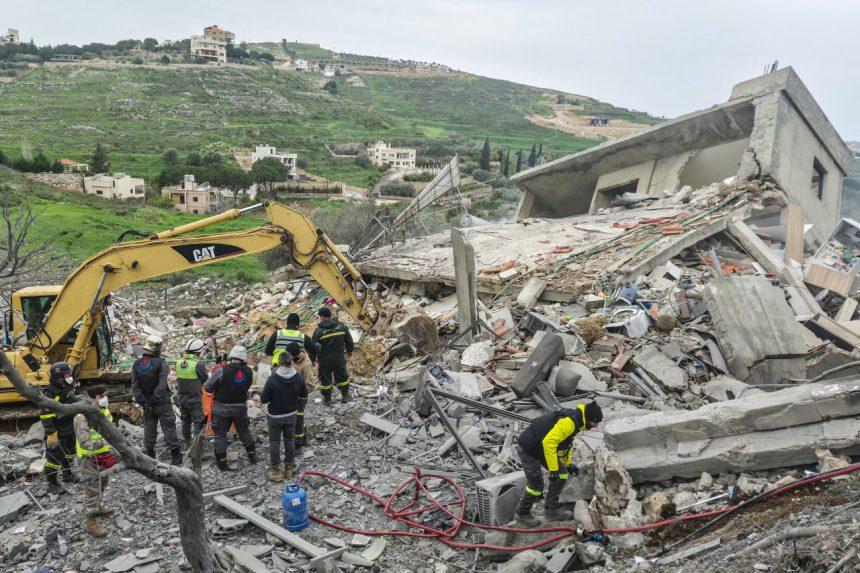
The same live blog reported that on Friday Lebanon’s health ministry said “six people including a woman and a child were killed” in two Israeli strikes on the southern town of Habboush, where Israel’s army had issued an evacuation order despite a ceasefire.
It also said the state-run National News Agency reported casualties after Israeli warplanes “launched a series of heavy strikes... less than an hour after warning” residents there to evacuate.
Al Arabiya English reported that Hezbollah’s director of media relations, Youssef Al Zein, said the group had brought reinforcements and weapons to the south since the war began on March 2, while the Lebanese army said in January it had finished disarming Hezbollah near the Israeli border.
Al Arabiya also quoted Zein saying, “We are convinced that the army is a national army” that “will not enter into a confrontation with Hezbollah,” and it repeated his claim that reinforcements did not use roads controlled by the Lebanese army.
The New Arab further reported that China’s ambassador to the UN said there was a need to revisit the decision to withdraw UNIFIL, with the UN peacekeepers’ mandate concluding at the end of 2026.
In parallel, the New Arab’s live blog described US Treasury warnings to shippers not to pay Hormuz tolls, saying the advisory warned of “sanctions risks” of making payments for safe passage through the Strait of Hormuz.
Voices: Hezbollah, Lebanon, and Syria
The Lebanese and regional security picture also drew in Syria, with reporting describing friction between the Syrian Army and Hezbollah along the Syria-Lebanon border and warnings about spillover.
BBC Arabic reported that there had been tension between the Syrian Army and Hezbollah on the border for days, after the Syrian Army announced it had reinforced its deployment along the border with Lebanon and Iraq to “secure security and prevent arms and drug smuggling,” citing the Army Operations Authority.
The BBC said there were fears in Damascus that Hezbollah could drag Syria into the ongoing conflict between the United States and Israel on one side and Iran on the other.
It also quoted a statement by what it called the Islamic Resistance in Iraq warning the acting Syrian president Ahmad al-Sharaa that any movement by the Syrian Army toward Lebanese territory in coordination with Israel and the United States would be like a declaration of war on the Axis of Resistance, adding: “If you dare to violate Lebanon's sovereignty and its patient and resistant people, we will turn your land into an open firing range.”
In the same BBC account, al-Sharaa affirmed Syria’s support for Lebanon’s stability and safety and for the Lebanese government’s efforts “to restore sovereignty, strengthen security, and disarm what he described as the Hezbollah militia.”
The BBC also reported that Hezbollah’s Secretary-General, Naim Qassem, had repeatedly said that the party’s weapons are “not up for negotiation” and that the role of the resistance has not ended “as long as the Israeli threat remains.”
Separately, L’Orient-Le Jour reported that the Syrian army deployed reinforcements to the border with Lebanon on Monday, including tanks, armored vehicles and medium weapons, citing security sources and residents in the Bekaa.
It said the reinforcements were positioned behind earthen dikes newly built extending from the Syrian village of Rablah to Hoch el-Sayed Ali in the Hermel district, and that the Syrian forces barred entry to and exit from Syrian territory on foot.
Different frames of the same front
Across outlets, the same claims about southern Lebanon were framed through different lenses—ranging from Hezbollah’s insistence on avoiding confrontation with the Lebanese Army to broader questions about how Israel’s strategy affects displacement and the possibility of a “new occupation.”
L’Orient Today and Al Arabiya both foregrounded Hezbollah’s messaging through Youssef Zein/Al Zein, including the line that “will not enter into a confrontation with Hezbollah” and the assertion that Hezbollah’s drones were “made in Lebanon,” while also describing Israel’s stated aim to maintain a “security zone” 10 kilometers deep.

By contrast, Courrier international described Israel’s objective as creating a “buffer zone” up to the Litani River, saying Israel’s war objective was “to create a 'buffer zone' in the southern part of the country up to the Litani River,” and it linked this to “drive away the threat” of Hezbollah about thirty kilometers north of the Israeli border.
Le Monde’s subscriber analysis framed the issue as strategy under scrutiny, stating that Israel continues to widen its operations and raising “fears of a new occupation of southern Lebanon,” while quoting Defense Minister Israel Katz’s promise to destroy Hezbollah’s infrastructure in border villages.
Le Monde also asserted that “More than 600,000 inhabitants, forcibly displaced by evacuation orders from the Israeli army,” would not return “as long as the security of the residents of northern Israel is not ensured,” and it described Israel’s intention to occupy the south up to the Litani River.
Another divergence appeared in how the role of UN peacekeeping was treated: The New Arab reported China’s UN envoy calling for a revisit of the decision to withdraw UNIFIL, while L’Orient Today focused on the cease-fire agreement’s claims about dismantling Hezbollah’s structures between the border and the Litani.
Even within the reporting about Hezbollah’s capabilities, the outlets differed in emphasis: L’Orient Today highlighted fiber-optic explosive drones and said attacks with these drones “have killed two and injured several others in the last three days,” while Al Arabiya English said attacks using such drones “have killed two Israeli soldiers and a civilian contractor in under a week.”
Talks, UNIFIL, and next risks
The immediate future in Lebanon is shaped not only by battlefield claims but also by diplomacy and the status of international monitoring.
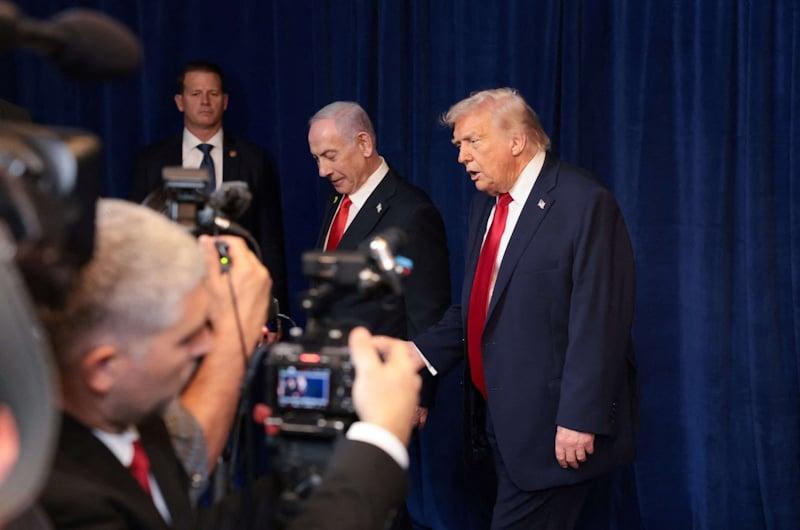
The New Arab said Iran’s proposal for peace talks with the US was delivered via Pakistan, with negotiations “frozen despite a weeks-long ceasefire,” and it reported that US President Donald Trump told reporters he was “not satisfied” with terms presented.
It also said China’s ambassador to the UN argued there was a need to revisit the decision to withdraw UNIFIL, noting that the UN peacekeepers’ mandate will conclude at the end of 2026 and that pressure from the US and Israel was part of the backdrop.
In Lebanon, Reuters-linked reporting in صوت بيروت إنترناشونال said Prime Minister Nawaf Salam and French President Emmanuel Macron were discussing ways to bolster Lebanon’s position in direct talks with Israel hosted by the United States later that week, with the US hosting ambassador-level talks on Thursday.
That same report quoted a French presidential official saying, “France's role is not to intervene between the parties in discussions that are, by their nature, binary and direct,” while adding that France could play a “very tangible role” in strengthening the Lebanese government’s position.
It also reported that the Israeli ambassador to Washington said last week that France should be excluded from any talks, describing Paris as having “no positive influence,” and it said European and Lebanese diplomats feared that direct talks could leave the Lebanese government too weak to resist unrealistic demands.
The report further stated that France proposed initiatives but faced rejection by the United States and Israel, and it said Paris maintains a substantial on-the-ground presence in Lebanon through about 700 UN peacekeepers.
On the security side, L’Orient Today said Israel announced on April 7 that it had completed deployment of its ground troops in southern Lebanon and intended to maintain a “security zone” 10 kilometers deep, while Hezbollah’s Youssef Zein insisted Hezbollah was “prepared for a long battle.”
More on Lebanon

Hezbollah Drone Kills Israeli Contractor Near Aitaroun, Wounds His Son
11 sources compared
RFI Traces Gaza War History From UN Partition Vote on November 29, 1947
10 sources compared
Israeli Strikes Kill At Least 12 In Southern Lebanon Despite Ceasefire
19 sources compared
Israel Strikes Last Bridge Linking Southern Lebanon, Cutting Tyre From Sidon
36 sources compared