Full story
Hezbollah rejects framework deal
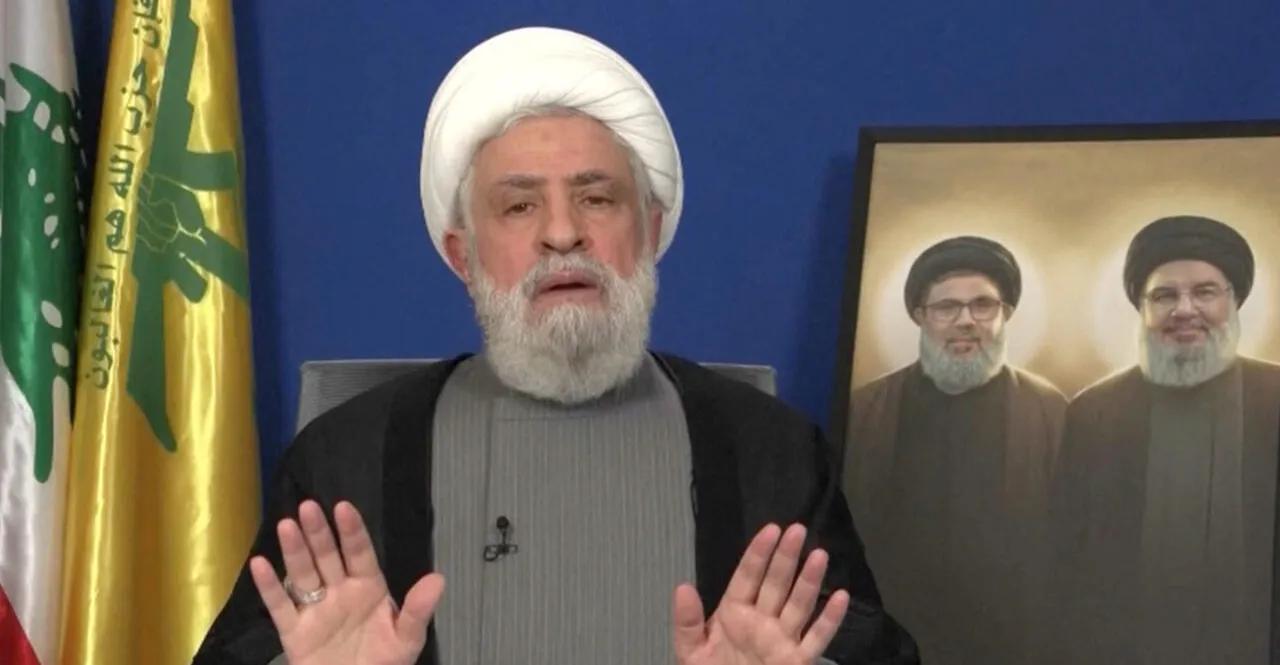
Hezbollah Secretary-General Naim Qassem rejected a US-brokered Lebanon-Israel framework agreement and refused Lebanese direct negotiations with Israel, saying the group would accept only the November 27, 2024 agreement reached under UN Security Council Resolution 1701.
“Naim Qassem on Friday refused the framework agreement”
Qassem said the process had failed to produce either a ceasefire or an Israeli withdrawal and described the situation as “Israeli aggression,” adding that Israel had continued its attacks despite Hezbollah’s adherence to the agreement.
Hezbollah also ruled out calls for the group to surrender its arms and opposed proposed “pilot areas” and a “verification committee,” while Qassem accused the United States of seeking to expand its influence and create conditions for a “Greater Israel.”
Lebanon’s Health Ministry said the cumulative toll from Israeli attacks between March 2 and August 27 reached 4,351 killed and 12,316 wounded, including women and children.
In a separate report, Kurdistan24 said Qassem called the framework agreement “illegal, baseless and insulting,” and said Hezbollah would under no circumstances surrender or submit to Israel.
Talks, pilot zones, and disputes
Kurdistan24 said the framework agreement, signed on June 26 after five rounds of US-supervised negotiations between Lebanon and Israel, includes provisions for Hezbollah’s disarmament, the phased withdrawal of Israeli forces from areas they occupied in southern Lebanon, and the deployment of the Lebanese army in designated areas.
Qassem said Hezbollah was against the framework agreement and demanded its cancellation, adding “We are against the framework agreement and demand its cancellation,” while also rejecting designated areas and outcomes, including the inspection committee mechanism.
Le Monde reported that Qassem said, “We do not agree to the 'pilot zones' or to what comes from them,” and that he also rejected any proposed verification system.
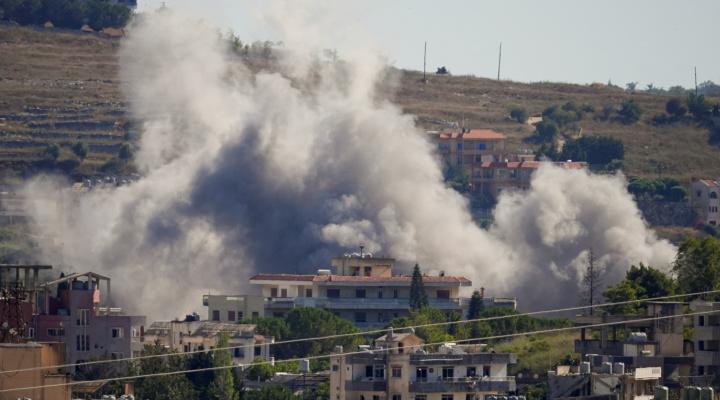
Le Monde added that Israeli forces were operating inside a self-declared “security zone,” which runs around 10 kilometers (six miles) deep inside Lebanese territory along the border, and that Lebanon’s state-run National News Agency reported Israeli airstrikes in the Nabatieh area.
Naharnet similarly quoted Qassem saying, “We will keep our heads high and we will not surrender,” while describing a fresh round of talks planned for early September with no date announced yet.
Regional pressure and next steps
Beyond Lebanon-Israel negotiations, Shafaq News said Qassem urged Beirut to seek another intermediary and argued that “Washington was not neutral between Lebanon and Israel,” while he described Iran and resistance groups as confronting projects of fragmentation, occupation and foreign control.
““Washington was not neutral between Lebanon and Israel,””
Shafaq News also reported that Israel told the United States that a pilot program in southern Lebanon has failed and expressed dissatisfaction with the Lebanese Army’s efforts to dismantle Hezbollah infrastructure, citing Israeli security sources.
Kurdistan24 linked the dispute to broader regional pressure, saying Iran’s Islamic Revolutionary Guard Corps threatened to close the Strait of Hormuz to vessels seeking passage without coordination with Tehran.
Kurdistan24 reported that the IRGC said it had full control of the Strait of Hormuz and had closed the route to vessels attempting to pass without coordination with Tehran, while also describing US statements that the waterway remains fully open.
With Lebanon still reporting regular Israeli strikes, artillery shelling and broad demolitions of civilian buildings in southern villages and towns, Qassem said his group supported the implementation of a November 2024 ceasefire and vowed, “We will keep our heads high and we will not surrender.”